
Blog
3 Times Destructive Testing Is Required After the Fact in FL
Can destructive testing be required for after the fact permits in Florida? Learn when AHJs ask for it, the alternatives, and how to prepare.
Key Takeaways
-
Yes, Florida building officials can require destructive testing or selective wall openings for after-the-fact permits, but it is not an automatic statewide rule and depends on the local AHJ's judgment.
-
Concealed structural work such as framing connections, hold-downs, and truss modifications is the most common trigger for requested openings, and small targeted access points are often enough.
-
Ask the building department in writing which specific items must be exposed and whether sealed engineer documentation, photos, or testing reports can be accepted instead of openings.
-
Hidden electrical, plumbing, and mechanical work skipped during rough-in inspections can be verified through junction box access, pressure tests, or sealed as-built drawings rather than full demolition.
-
Under Florida Statutes §553.80, reinspection fees of up to four times the initial fee may apply in certain cases, so confirm the local fee schedule before starting work.
-
Engage a Florida-licensed engineer early to inspect, document, and propose the least invasive path, and photograph everything before closing openings back up.
So you finished some work without a permit (or inherited it from a previous owner), and now you're facing an after-the-fact permit. Then someone mentions the scariest phrase in the whole process: "They might make you open the walls." Take a breath. You're not alone, and it's not as dramatic as it sounds.
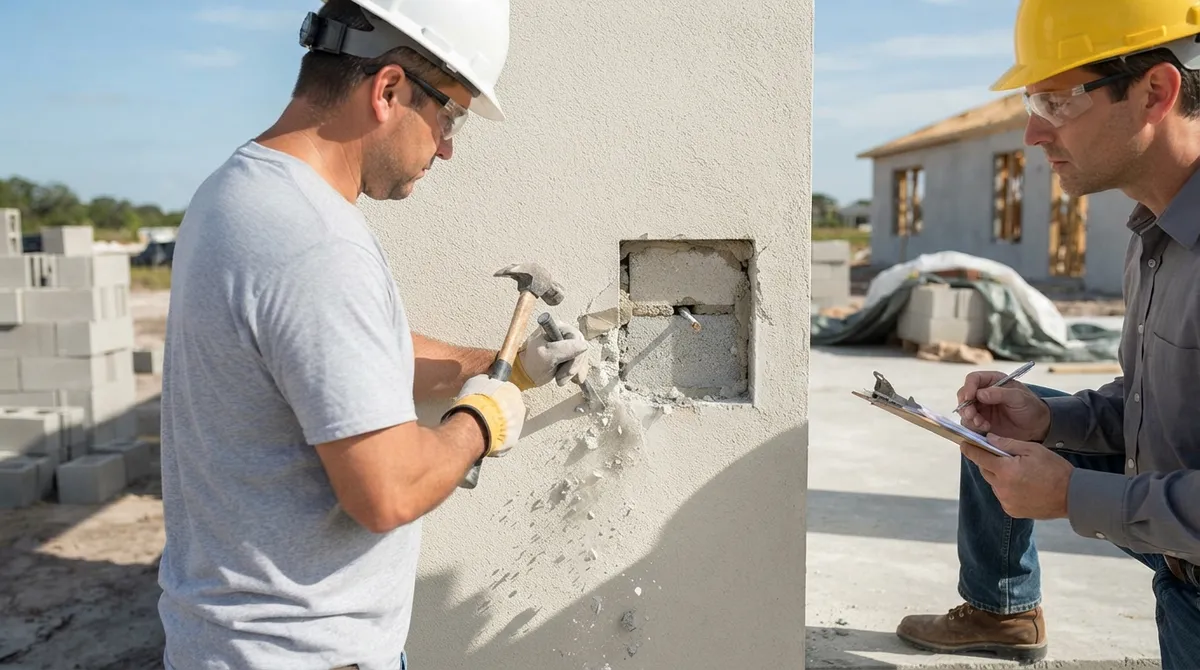
Here's the honest answer to the question many Florida owners, contractors, and agents ask: can destructive testing be required for after the fact in Florida? Yes, it can. A building official may require selective openings when concealed work needs to be verified. But it is not an automatic statewide rule for every case, and it often has friendlier alternatives.
In this guide, we walk through the three situations where opening finished surfaces is most likely, what the law actually says, and how to prepare so you open as little as possible. We'll keep it plain-English and practical, whether you're a general contractor, solar company, realtor, or homeowner trying to get a project (or a closing) back on track in 2026.
The Short Answer: Yes, But It Depends on the AHJ
Florida Statutes §553.79 generally prohibits covered construction, alteration, repair, or demolition without first getting the required permit. An after-the-fact permit doesn't erase that requirement. It simply gives you a path to legalize completed work, and that path still includes plan review, inspections, and code compliance.
Under Florida Statutes §553.80, local governments are responsible for enforcing the Florida Building Code. That means the local building department (the authority having jurisdiction, or AHJ) decides what evidence is enough. There is no single statewide rule that says destructive testing is required in every after-the-fact case.
What the AHJ cares about is simple: can an inspector verify what's behind the finish? If the answer is no, they may ask for one of the following:
- Access openings in drywall, ceilings, or sheathing
- Sealed documentation from a Florida-licensed design professional
- Photographs, testing reports, or other supporting evidence
- A combination of the above
If you're still getting oriented on the basics, our guide on how to get an after-the-fact permit in Florida is a great starting point.
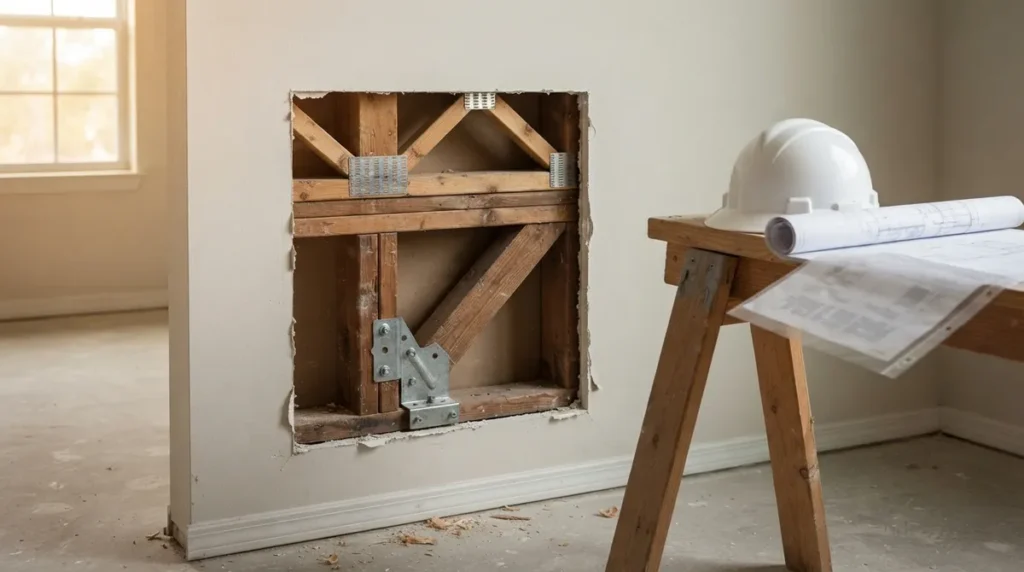
1. Concealed Structural Work Needs Verification
This is the most common trigger. When framing, connections, hold-downs, headers, or truss modifications are hidden behind finished surfaces, an inspector can't simply look and sign off. They need proof that the work meets the Florida Building Code.
What inspectors want to see
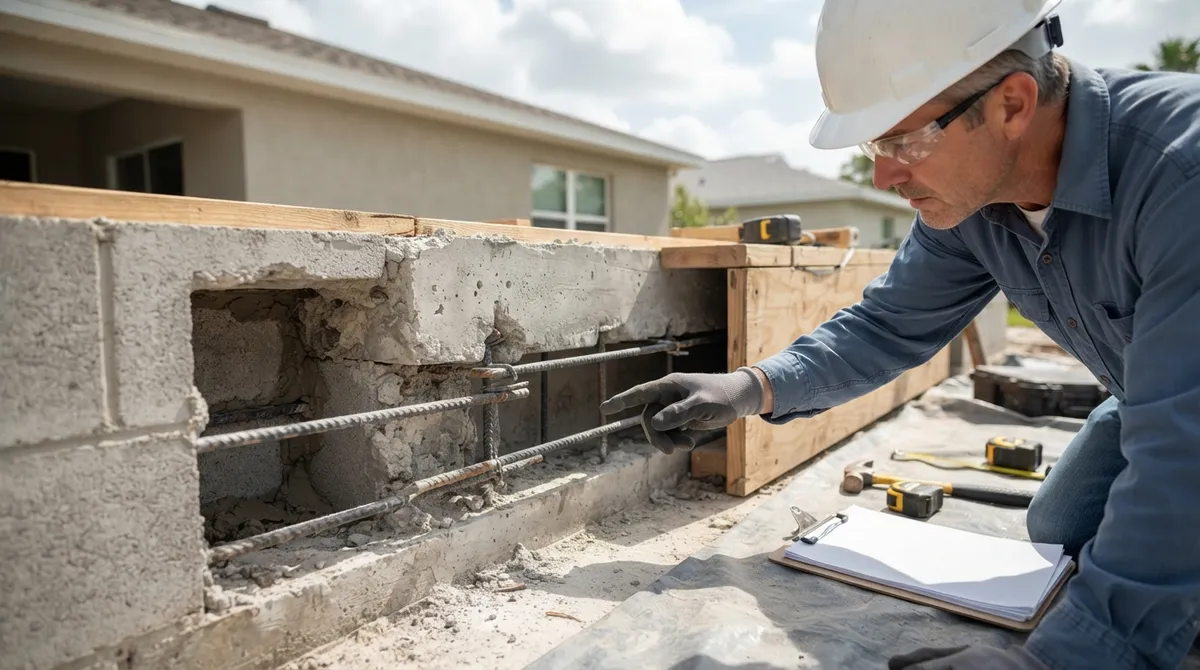
For structural items, the AHJ may ask to see exposed connections, fastener patterns, member sizes, and load paths. A selective opening, say a small section of drywall or a soffit panel, may be all that's needed. In other cases, a licensed engineer can document the condition after direct inspection.
Tampa's published legalization guidance is a helpful local example. It applies to completed, concealed work and calls for a Florida-licensed architect or engineer to base the as-built condition on direct inspection. It also requires a narrative of inspection methods and findings, plus sealed documentation and the results of any testing performed. Keep in mind this is one city's process, not a statewide procedure.
Smart ways to limit the damage
- Ask the AHJ exactly which locations must be exposed
- Open small, targeted sections rather than whole walls
- Have an engineer present or documenting while the openings are made
- Photograph everything before closing the openings back up
If your project involves roof framing, our walkthrough of truss verification after the fact in Florida shows how this plays out in real files. And for the engineering side, our structural engineering team prepares sealed documentation in-house.
2. Concealed Electrical, Plumbing, and Mechanical Work
The second situation involves the systems you can't see: wiring inside walls, plumbing in chases, ductwork above ceilings. If a kitchen, bathroom, or garage conversion was finished without inspections, the rough-in stage never got checked, and the AHJ may want to confirm it now.
Why rough-in matters so much
Normally, inspectors check electrical, plumbing, and mechanical rough-ins before the walls are closed. When that step is skipped, there's a gap in the record. An after-the-fact process tries to fill that gap, sometimes by exposing key points like junction boxes, panel connections, pipe supports, venting, or duct connections.
The research is clear on one thing: Florida sources don't establish a blanket rule requiring destructive testing for every unpermitted electrical or plumbing case. It's a judgment call by the local official based on the work and available evidence. Our deeper dive on unpermitted electrical work in Florida covers what typically comes up.
Quick comparison: what AHJs may ask for
| Concealed Item | Possible AHJ Request | Possible Alternative Evidence |
|---|---|---|
| Electrical wiring in walls | Access openings at boxes and panels | Photos, licensed contractor letter, as-builts |
| Plumbing supply and drain lines | Open access panels; pressure or leak test | Test reports, sealed as-built plans |
| Mechanical ductwork and equipment | Ceiling access; connection verification | Mechanical drawings, engineer evaluation |
| Framing connections | Selective drywall removal | Engineer's sealed evaluation |
Remember: acceptance of alternatives is jurisdiction- and project-specific. Always confirm with your local department first.
3. Structural Distress Inspections Under Florida Law
The third scenario is the one where the statute expressly mentions destructive testing, and it's worth understanding so you don't over-apply it. Florida Statutes §553.79 allows destructive or nondestructive testing at an inspector's direction during certain phase-two inspections of buildings with structural distress.
That provision is tied to structural-distress inspections. It should not be treated as a blanket rule for every after-the-fact permit. Still, it shows that Florida law recognizes testing as a legitimate tool when a building's condition is in question.
Where this can overlap with after-the-fact work
If your property is going through milestone or recertification review, or the unpermitted work has contributed to visible distress (cracking, sagging, water intrusion at modified areas), the conversation about testing can become more serious. In those cases, early coordination with a licensed professional really pays off. Our 40-year recertification and engineer letters services help owners get ahead of those questions.
Alternatives That May Reduce or Replace Opening Walls
Here's the encouraging part. In many jurisdictions, destructive testing is a last resort, not a first move. Depending on the AHJ, these options may satisfy the reviewer:
- Sealed as-built drawings. A Florida-licensed professional documents what exists. See our as-built drawings service.
- Professional evaluation letters. An engineer inspects the visible and accessible conditions and seals findings.
- Photographic evidence. Time-stamped photos of work before it was covered, if they exist.
- Testing reports. Pressure tests, electrical testing, or material testing performed by qualified firms.
- Targeted openings. A few small, strategic access points instead of broad demolition.
No single option works everywhere. The key is asking the AHJ before you start cutting into anything.
What to Ask the Building Department Before Opening Anything
Before a single piece of drywall comes down, get clarity on the scope. A few smart questions can save you real money and a lot of stress.
- What specific items must be exposed or verified?
- Will you accept sealed documentation instead of, or in addition to, openings?
- Must a licensed design professional or testing firm document the work?
- Who needs to be present during the openings?
- What repairs and reinspection will be required afterward?
- Will a reinspection fee apply?
That last one matters. Under §553.80, in specified circumstances, a local government may charge a reinspection fee of up to four times the initial inspection or first reinspection fee for certain subsequent reinspections. Applicability depends on the statutory conditions and your local fee schedule, so ask upfront. For a broader look at costs, see our article on after-the-fact permit costs in Florida.
What Happens If Concealed Work Fails?
It's natural to worry about this. If an opening reveals a deficiency, the work generally has to be corrected and re-approved before the permit can close. That might mean adding fasteners, replacing undersized members, correcting wiring methods, or bringing a plumbing run up to standard.
The good news? Finding an issue now is far better than having it surface during a sale, an insurance claim, or a lender's appraisal. And once corrected and approved, you have a clean, closed permit that supports your property's value. Our guide on what inspections Florida after-the-fact permits require explains the inspection sequence you can expect.
Who pays to repair opened walls?
Generally, the property owner is responsible for the cost of making openings and restoring finishes. Budget for drywall repair, paint, and any trim work, plus the professional fees for documentation. Planning for this upfront avoids unpleasant surprises.
How Different Florida Jurisdictions Compare
Florida has 67 counties and hundreds of municipalities, and each AHJ has its own procedures. What flies in one city may not in the next. Here's a general look at how requirements can vary:
| Factor | Varies By | What It Means for You | |
|---|---|---|---|
| Legalization process | City or county | Different forms, fees, and review steps | |
| Evidence accepted | Building official | Some prefer openings; others accept sealed letters | |
| Required professionals | Local policy | Architect, engineer, or testing firm may be required | |
| Reinspection fees | Local fee schedule | Costs can add up if work fails |
That's why local knowledge matters. If you're in a major market, check our county pages such as Hillsborough County, Miami-Dade County, or Broward County, and use our building department lookup to find the right office.
How to Prepare So You Open as Little as Possible
Here's a friendly step-by-step approach that works well for contractors, solar companies, realtors, and homeowners alike.
- Gather everything you already have. Old photos, invoices, material receipts, contractor names, and any prior permit records.
- Confirm your jurisdiction. City lines can be tricky. Make sure you're talking to the right AHJ.
- Request the AHJ's legalization requirements in writing. Ask what evidence they accept for concealed work.
- Bring in a licensed professional early. A Florida-licensed engineer can often inspect, document, and propose the least invasive path.
- Make only the openings required. Keep them small, documented, and well-photographed.
- Schedule inspections and close the permit. Complete corrections, reinspect, and get final approval.
If you're racing a closing deadline, our article on fixing a Florida closing held up by unpermitted work offers practical timing tips, and our urgent permit rescue service is built for exactly that pressure.
How 1 Contractor Solutions Can Help
Think of us as Florida's outsourced permitting department. Our after-the-fact and expired permits team handles the whole process: confirming your jurisdiction, preparing sealed as-builts and engineer letters in-house, filing the application, tracking it, and working every reviewer comment through approval and closeout.
Because our drafting and engineering are in-house and our own engineer signs and seals the work, we can respond quickly when a reviewer asks for more documentation. We work across all 67 Florida counties and have filed in more than 400 municipalities, so we know how local departments tend to approach concealed work. Want to hear from people we've helped? Visit us on Google — 1 Contractor Solutions to read what customers say.
We'd also love to stay connected: follow us on LinkedIn or follow us on Facebook for Florida permitting tips and updates.
Final Thoughts
So, can destructive testing be required for after the fact in Florida? Yes, it can, particularly for concealed structural work, hidden electrical, plumbing, and mechanical systems, and structural-distress situations. But it's decided case by case by your local building official, and many jurisdictions will consider sealed documentation, photos, or testing reports as part of the picture.
The best move is to ask early, document thoroughly, and work with professionals who know your local department. With the right plan, you can often legalize your work with minimal disruption and walk away with a clean, closed permit.
Ready to take the stress out of your after-the-fact permit? Our team responds within 30 minutes, day or night, and se habla español. Get a free quote today and let's get your project moving.
FAQs
Can a Florida building inspector make me open walls for an after-the-fact permit?
Yes, they can if concealed work can't otherwise be verified. It's up to your local building official, and it isn't a statewide requirement for every case. Many offices will also consider sealed documentation or other evidence, so it's always worth asking first.
Can an engineer's report or photographs replace opening walls?
Sometimes, yes! Some jurisdictions accept sealed as-built documents, professional evaluations, photos, or testing reports instead of (or alongside) openings. Acceptance varies by AHJ and project, so confirm with your local department before deciding.
What happens if concealed work fails inspection during an after-the-fact permit?
You'll generally need to complete corrective work and get it approved before the permit can close. Reinspection fees may apply depending on local rules. The upside is that you're fixing it on your terms rather than discovering it during a sale or insurance claim.
Do Florida cities and counties have different after-the-fact permit requirements?
They do. The Florida Building Code is enforced locally under §553.80, so each AHJ sets its own legalization process, forms, fees, and acceptable evidence. Tampa's published requirements are one example, but yours may look different.
Who pays to repair walls or ceilings opened for inspection?
Generally, the property owner covers the cost of making the openings and restoring finishes, plus any professional documentation fees. It's smart to budget for drywall, paint, and trim repairs from the start so there are no surprises.
We do this work every day across all 67 Florida counties. Call (866) 314-6931 and we will tell you what your situation actually requires — including when you do not need us.
Related services
Permit Facilitation & Filing
You have a crew scheduled, a client asking for dates, and a permit sitting somewhere in a queue you cannot see. We file it, w…
See the servicePlan Review Coordination
A permit in plan review is not one queue. On a commercial project it can be six queues, each with its own reviewer, its own c…
See the serviceReady to get your permit moving?
One call tells you which jurisdiction controls your project, what it will take, and what it will cost. Most of the time we can scope it on the phone.