
Blog
15 Facts: Can I Get After-the-Fact Generator Permits in FL?
Wondering if you can get an after-the-fact permit for a Florida generator install? Learn 15 key facts, documents, inspections, and next steps.
Key Takeaways
-
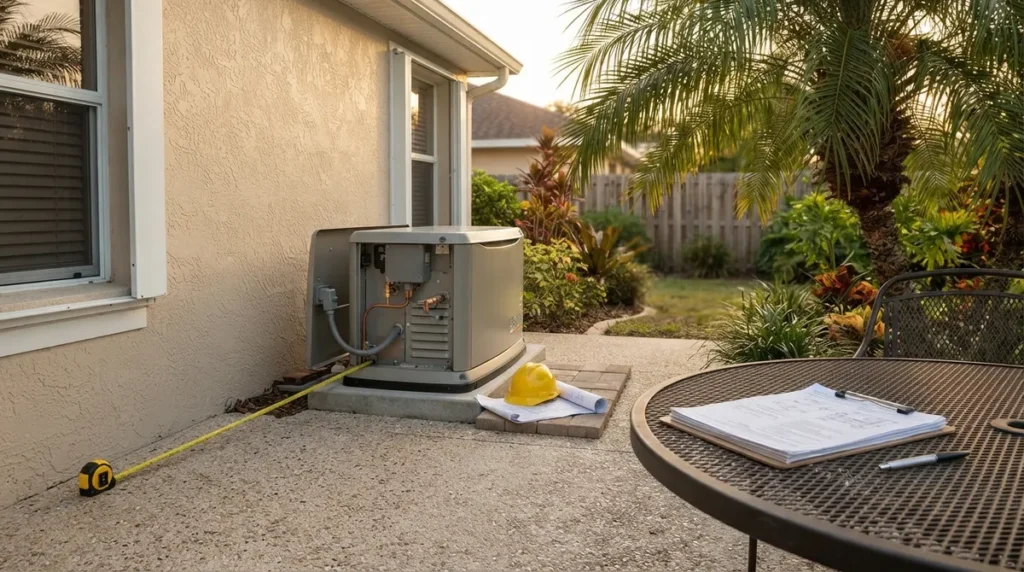
An after-the-fact permit for an installed generator in Florida may be possible, but approval is never automatic; the local building department decides whether to accept a retroactive application.
-
Your city or county controls the rules, so first identify the exact building department that reviews your address before gathering any documents.
-
A permanent generator often needs several permits (building, electrical, and fuel-gas or tank), so confirm with your local office whether they are split or bundled.
-
An after-the-fact permit does not waive inspections; concealed wiring or gas piping may need to be exposed, tested, or corrected before final approval.
-
Setbacks and exhaust clearances vary by jurisdiction; for example, Jupiter requires 10 feet from exhaust to building openings, so verify local distances early.
-
Gas-fired units add requirements such as confirming the existing gas meter and piping can handle the added load, plus bonding and inspection before electrical final.
So the generator is already humming along behind your house, the last hurricane season taught you a lesson, and now somebody has mentioned the word "permit." Take a breath. You are far from the first Florida owner, contractor, or buyer to land in this spot, and there is usually a path forward.
If you have been asking yourself, can i get after the fact for a generator install in florida, the short answer is: often yes, but never automatically. The local building department decides whether it will accept a retroactive application, and what it requires before it signs off. This friendly guide walks you through 15 facts that matter, from documents and inspections to gas lines, setbacks, and costs, so you know exactly what to expect in 2026.
Whether you are a homeowner, a general contractor who inherited a messy job, a solar company adding battery and generator tie-ins, or a realtor staring at a closing delay, you will find something useful below.
Why Generator Permits Matter in Florida
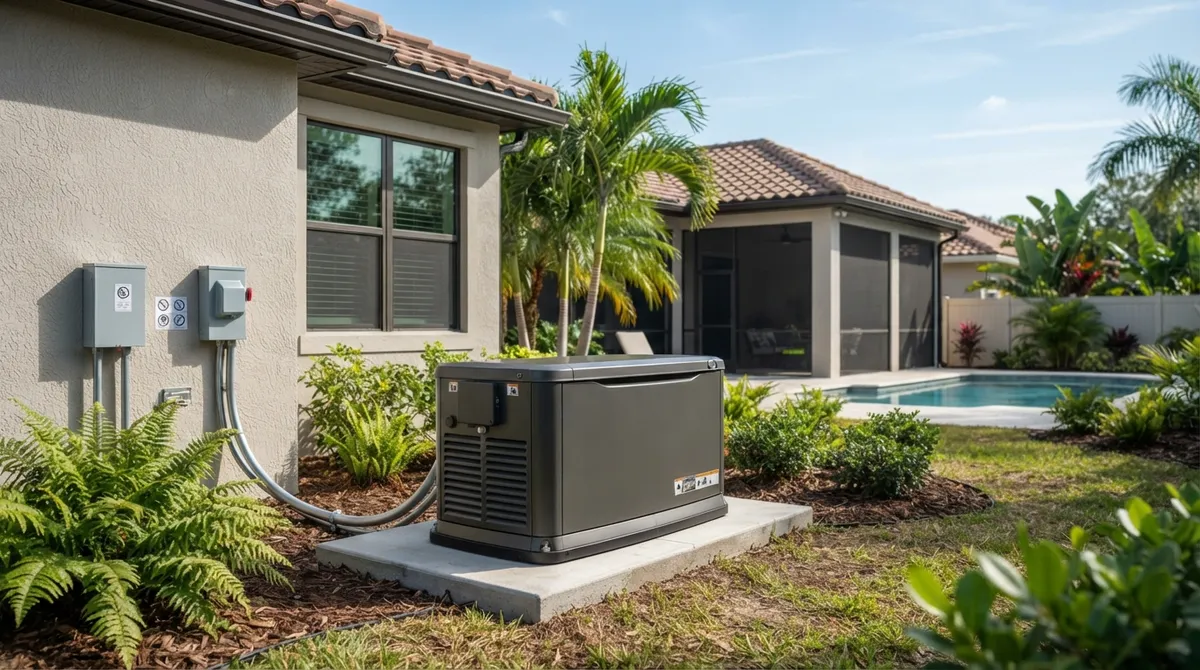
A permanently installed standby generator is not just an appliance. It ties into your electrical panel, often connects to a gas line or fuel tank, and sits near your home's openings. That is why local building departments treat it as regulated work.
Generally, a permanent generator needs permitting even at a single-family home. Depending on your city or county, the application may involve building, electrical, and fuel-gas permits. A permanent fuel tank can trigger additional reviews on top of that.
15 Facts About After-the-Fact Generator Permits in Florida
1. Yes, It May Be Possible, But Approval Is Not Guaranteed
An already-installed permanent generator may be eligible for an after-the-fact permit. The key word is "may." The authority having jurisdiction (your city or county building department) decides whether to accept a retroactive application and what it will demand. Anyone who promises guaranteed approval is overselling.
2. Your Jurisdiction Controls the Rules
Florida does not run one single generator process. Requirements differ from city to county, and sometimes from one side of a street to the other near city lines. Figuring out who actually reviews your address is step one. Our building department lookup tool can help you identify the right office, and our guide on which Florida jurisdiction reviews my project explains the common surprises.
3. You Will Likely Need More Than One Permit
Many jurisdictions split generator work into separate reviews. Here is how that commonly looks:
| Permit Type | What It Typically Covers | When It Applies |
|---|---|---|
| Building | Pad, anchorage, setbacks, zoning, floodplain checks | Nearly all permanent installs |
| Electrical | Transfer switch, wiring, grounding, panel connection | All permanent installs |
| Fuel-gas / Mechanical | Gas piping, meter capacity, bonding, pressure testing | Natural gas or propane units |
| Tank / Fuel Storage | Permanent fuel tank placement and safety review | Diesel or large propane tanks |
Always confirm the exact split with your local office, since some departments bundle these and others do not.
4. The Paperwork Package Is Fairly Predictable
Most departments ask for a similar set of documents. Having these ready makes everything smoother:
- A site plan or property survey showing the generator and any fuel tank
- Manufacturer specification sheets for the generator
- An electrical riser or one-line diagram
- Load calculations
- Transfer switch information
- Gas piping details, when applicable
Exact submittal lists vary by jurisdiction and fuel type, so treat this as a starting point rather than a final checklist. If you need drawings, our site plan services and as-built drawings team can prepare them.
5. As-Built Drawings Are Often the Backbone
When work is already in the ground, reviewers want to see what actually exists, not what someone planned. As-built drawings document the real installation. For a deeper look at how these work in practice, see our guide to getting as-built drawings for Florida permits.
6. An After-the-Fact Permit Does Not Waive Inspections
This surprises many owners. Do not assume that applying late means skipping inspections. If the installation was done without permits, inspectors may need to verify details after the fact. We cover what to expect in what inspections Florida after-the-fact permits require.
7. Concealed Work Can Trigger Exposure or Testing
If an inspector cannot see how something was installed, such as buried conduit or gas piping, the department may require components to be exposed, tested, corrected, or even replaced before approval. It is not fun, but knowing about it early lets you budget time and money wisely.
8. Setbacks and Exhaust Clearances Vary by City
Generators produce exhaust, so clearances matter. For example, Jupiter's generator guidance calls for 10 feet between exhaust and building openings, while other jurisdictions may specify different distances or conditions. That 10-foot figure is a local requirement, not a statewide universal rule. Setbacks from property lines and nearby structures also come into play.
| Check | Why It Matters | Local Variation? |
|---|---|---|
| Exhaust distance from openings | Prevents exhaust entering the home | Yes, varies by city |
| Property line setbacks | Zoning compliance | Yes |
| Equipment anchorage | Wind and flood resistance | Often tied to wind-zone rules |
| Floodplain elevation | Protects equipment in flood zones | Yes, depends on mapped zone |
9. Gas-Fired Generators Add Another Layer
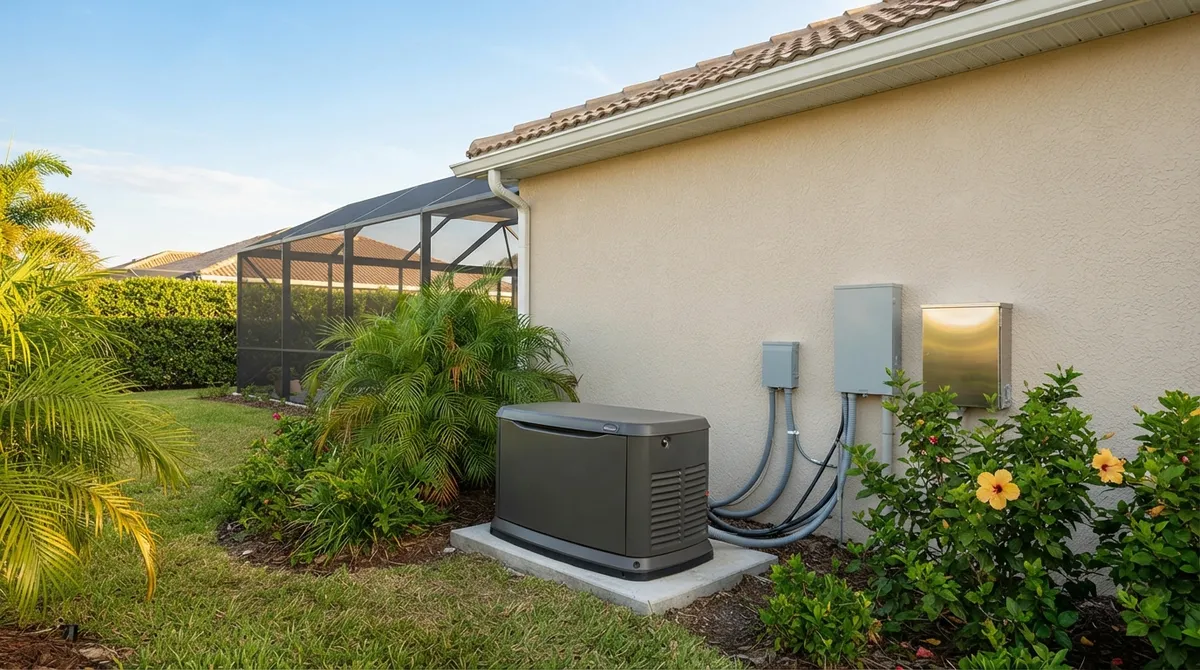
If your unit runs on natural gas or propane, expect a gas permit and inspections. Local guidance may require verifying that your existing gas meter and piping can handle the generator's added demand, plus gas-line bonding and inspection before electrical final approval.
10. Some Counties Have Unique Requirements
Miami-Dade, for instance, calls for a building permit for a permanent outdoor generator and review by multiple agencies. Its checklist includes a 100-foot separation from potable-water wells for generators and fuel supply, excluding gas-powered systems. If you are in South Florida, check our Miami-Dade County and Broward County pages for local context.
11. Notice of Commencement Rules May Apply
Some jurisdictions require a Notice of Commencement above a price threshold. Charlotte County's commercial generator guidance, for example, references improvements with a direct contract price greater than $5,000. Local thresholds and filing rules should be verified for your specific project. Our explainer on the Notice of Commencement in Florida breaks it down.
12. Failed Inspections Can Mean Corrections or Reinstallation
If the work does not meet code, you may need to make corrections or, in a worst case, remove and reinstall the generator. The good news: most issues are fixable, especially with engineering support. A sealed engineer letter can sometimes resolve questions about anchorage or load path.
13. Penalties and Fees Are Set Locally
Unpermitted work can bring enforcement action or additional fees, but the specific penalties and process depend on your jurisdiction. Always confirm directly with the authority having jurisdiction. For a general overview, read about the penalty for building without a permit in Florida and our breakdown of after-the-fact permit costs.
14. Owner or Contractor: Who Can Apply?
Rules about who may pull the permit depend on the work type and your jurisdiction. Electrical and gas work generally require appropriately licensed professionals. Some owners may qualify for owner-builder permits on certain scopes, but electrical and gas portions are often restricted. Review who can pull a permit in Florida and our owner-builder permit service page before assuming either way.
15. Professional Help Saves Time and Stress
A Florida permitting professional can identify the right jurisdiction, assemble the records, coordinate licensed trades, and manage inspections. They cannot guarantee approval, but they can keep you from repeating mistakes. That is exactly where 1 Contractor Solutions fits in, with in-house drafting and engineering across all 67 Florida counties and same-day responses.
A Simple Step-by-Step Path to Legalize Your Generator
Here is a friendly roadmap you can follow:
- Confirm your jurisdiction. Identify the city or county building department that reviews your address.
- Search for open permits. Use an open permit search to see whether any record exists.
- Gather documentation. Collect receipts, manufacturer specs, installer details, and photos of the installation.
- Prepare drawings. Create a site plan, electrical diagram, and as-builts, with load calculations and gas details if applicable.
- File the retroactive application. Submit through your jurisdiction's process and respond to every reviewer comment.
- Schedule inspections. Be ready for exposure, testing, or corrections where inspectors need to verify work.
- Close the permit. Make sure final approvals are recorded so the file is fully closed out.
If you want the broader process, our guides on how to get an after-the-fact permit in Florida and legalizing unpermitted work pair nicely with this one.
Who Benefits Most From Getting This Fixed
Different readers have different pressure points, so here is how it tends to play out:
- Homeowners: Insurance questions, resale concerns, and safety peace of mind.
- General contractors: Cleaning up a sub's missed permit before it stalls a final or a certificate of occupancy.
- Solar companies: Making sure battery, transfer switch, and generator tie-ins are documented properly.
- Realtors and buyers: Clearing a permit hold before a closing date slips. See whether a home sale can close with unpermitted work in Florida.
- Design and trade professionals: Outsourcing drafting, MEP, and permit administration without adding staff.
Common Mistakes to Avoid
A few missteps tend to cost people weeks:
- Assuming the original installer pulled a permit without checking records
- Submitting incomplete site plans that omit the fuel tank or gas line
- Ignoring exhaust and setback measurements until a reviewer flags them
- Covering or modifying work before the inspector sees it
- Skipping the gas meter capacity check on gas-fired units
For related pitfalls, our article on after-the-fact permitting mistakes to avoid is worth a read.
How Long and How Much?
Honestly, it varies. Timelines depend on your jurisdiction's review queue, how complete your package is, and whether inspections reveal corrections. Fees are set locally and can include permit costs plus any additional charges for work done without permits. We recommend asking your building department for its current fee schedule. For timing context, see how long a building permit takes in Florida.
Ready to Legalize Your Generator?
The question "can i get after the fact for a generator install in florida" usually has a hopeful answer, as long as you approach it with solid documentation, honest inspections, and realistic expectations. You do not have to navigate it alone. 1 Contractor Solutions works across all 67 Florida counties, with in-house drafting and sealed engineering, so when a reviewer flags something, we fix it quickly. You can visit us on Google — 1 Contractor Solutions to see what customers say, and you can learn more about our after-the-fact and expired permit services and permit facilitation.
If a stop work order, failed inspection, or closing deadline is looming, our urgent permit rescue team can step in fast. Ready to get moving? Get a free quote today, and follow us on LinkedIn or follow us on Facebook for more Florida permitting tips.
FAQs
Can I get an after-the-fact permit for a generator already installed in Florida?
Often, yes, but it is not automatic. Your local building department decides whether to accept a retroactive application and what documentation, corrections, and inspections it requires before closing the permit.
Will inspectors make me uncover or redo generator wiring or gas piping?
They might. If inspectors cannot verify concealed or inaccessible work, they may require components to be exposed, tested, corrected, or replaced before approval. An after-the-fact permit does not waive inspections.
Do I need separate building, electrical, and gas permits for a standby generator?
Many jurisdictions do split them, especially when the unit runs on natural gas or propane. Some departments bundle the reviews, so confirm the exact structure with your local building department.
What documents do I need to legalize an unpermitted generator in Florida?
Commonly you will need a site plan or survey, manufacturer specs, an electrical one-line diagram, load calculations, transfer switch details, and gas piping information when applicable. Exact requirements vary by city and county.
What happens if my generator fails inspection or does not meet code?
You may need to make corrections, and in a worst-case scenario remove and reinstall the unit. Unpermitted work can also lead to enforcement or added fees, with specifics set by your local jurisdiction.
We do this work every day across all 67 Florida counties. Call (866) 314-6931 and we will tell you what your situation actually requires — including when you do not need us.
Related services
Permit Facilitation & Filing
You have a crew scheduled, a client asking for dates, and a permit sitting somewhere in a queue you cannot see. We file it, w…
See the servicePlan Review Coordination
A permit in plan review is not one queue. On a commercial project it can be six queues, each with its own reviewer, its own c…
See the serviceReady to get your permit moving?
One call tells you which jurisdiction controls your project, what it will take, and what it will cost. Most of the time we can scope it on the phone.