
Blog
10 After-the-Fact Permitting Mistakes to Avoid in Florida
Searching for after-the-fact permitting near you in Florida? Avoid these 10 common mistakes and learn how to legalize unpermitted work in 2026.
Key Takeaways
-
Confirm the exact city or county that controls the property before contacting anyone, since mailing addresses can be misleading and Florida has hundreds of differing municipalities.
-
Stop work immediately if construction is ongoing; continuing unpermitted work can increase costs and lead to citations, such as up to $500 per violation in Hillsborough County.
-
A filed permit application does not mean approval; inspectors verify that the work meets code, and you may need to make corrections before the permit is closed.
-
Prepare for concealed-work inspections by gathering photos, receipts, and documentation, since agencies may request access to walls or ceilings.
-
Expect to provide as-built drawings and possibly sealed engineering letters for structural, electrical, or mechanical work, as vague sketches often lead to rejection.
-
Ask the building department about required documents, fees, inspections, and open violations early, because fees and procedures vary widely by jurisdiction.
So you found out the hard way that a project needed a permit, and now you are typing looking for after the fact permitting near me in Florida into a search bar. First, take a breath. You are far from the first person to land here, and this is a very fixable problem. Maybe a previous owner skipped the paperwork. Maybe a contractor vanished. Maybe a home inspector or a lender just flagged something that was never signed off.
Here is the good news: most unpermitted work can be brought into the system. Here is the not-so-good news: how you handle it matters a lot. A few missteps can add weeks, fees, and stress. In this guide, we walk through ten common mistakes we see Florida owners, contractors, solar companies, and real estate pros make, and how to dodge each one in 2026. Whether you are a homeowner, a general contractor, or an investor, you will find practical steps you can use today.
What After-the-Fact Permitting Actually Means in Florida
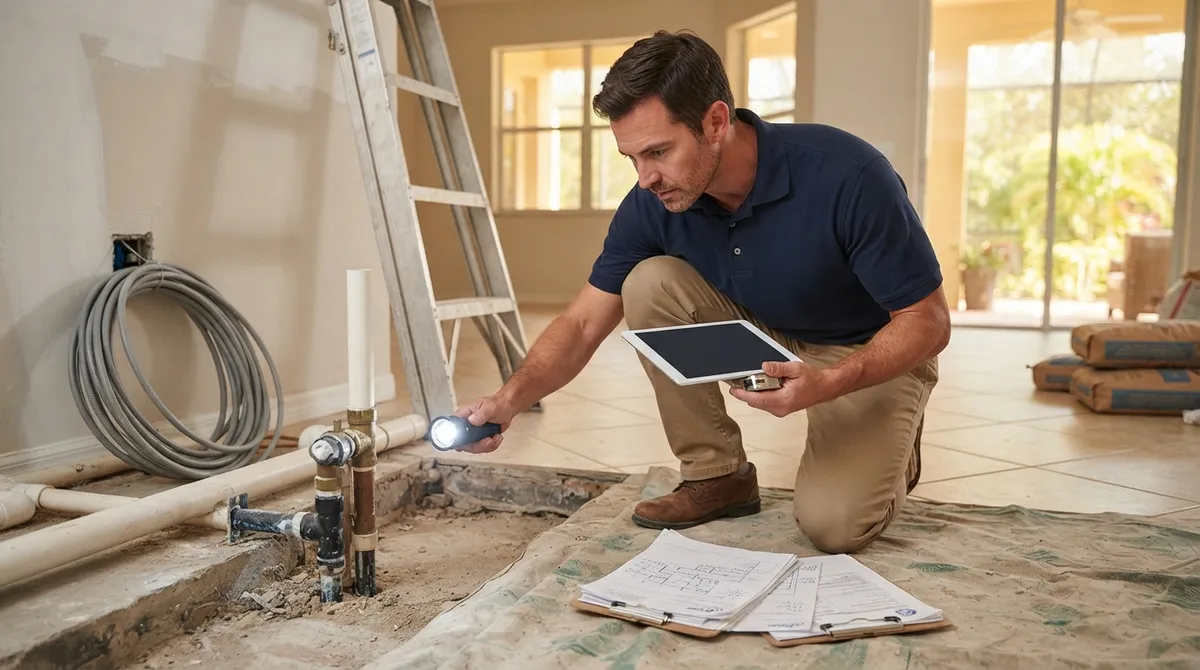
An after-the-fact permit is a permit application for construction or alteration that has already started or finished without the required permit. It is not automatic approval. The local building department reviews the work, may ask for plans or as-built drawings, schedules inspections, and can require corrections before closing the permit.
Florida Statutes §553.79 sets the general rule that covered building work needs a permit before it begins. The enforcing agency is the city or county that controls your property, which is not always obvious near city lines. Fees, documents, and procedures vary by jurisdiction, so there is no single statewide process or price.
If you want the full picture, our guide on what after-the-fact permitting is in Florida breaks it down further. And if your situation involves lapsed paperwork, see our service page for after-the-fact and expired permits.
10 Mistakes That Make After-the-Fact Permitting Harder
1. Searching "near me" Without Confirming the Real Jurisdiction
The most common slip is calling the wrong office. A home with a Tampa mailing address may actually sit in unincorporated Hillsborough County. A property with a Sarasota address might be controlled by a different municipality entirely. The wrong call wastes days.
Start by confirming the exact city and county for the parcel, then search that jurisdiction's official building permit or code enforcement site. Our building department lookup tool can help you find the right office.
2. Continuing Work After You Know It Is Unpermitted
If work is still underway, stop. This one is a big deal. Hillsborough County, for example, directs owners to stop work and contact Building Services about an after-the-fact permit. The county warns that continuing may increase costs and can result in a citation of up to $500 per violation. That is a local example, not a statewide penalty schedule, but the lesson travels: pausing early is almost always cheaper than pushing ahead.
3. Assuming a Permit Means Automatic Approval
Paying the fee and filing the application does not make the work legal. Inspectors verify that what was built meets code. If it does not, you will be asked to fix it. Florida law also requires the agency, when denying or revoking a permit for code noncompliance, to identify the specific noncompliant features and the applicable code provisions, so you should get clear direction on what needs correcting.
4. Hiding the Work Instead of Preparing for Inspection
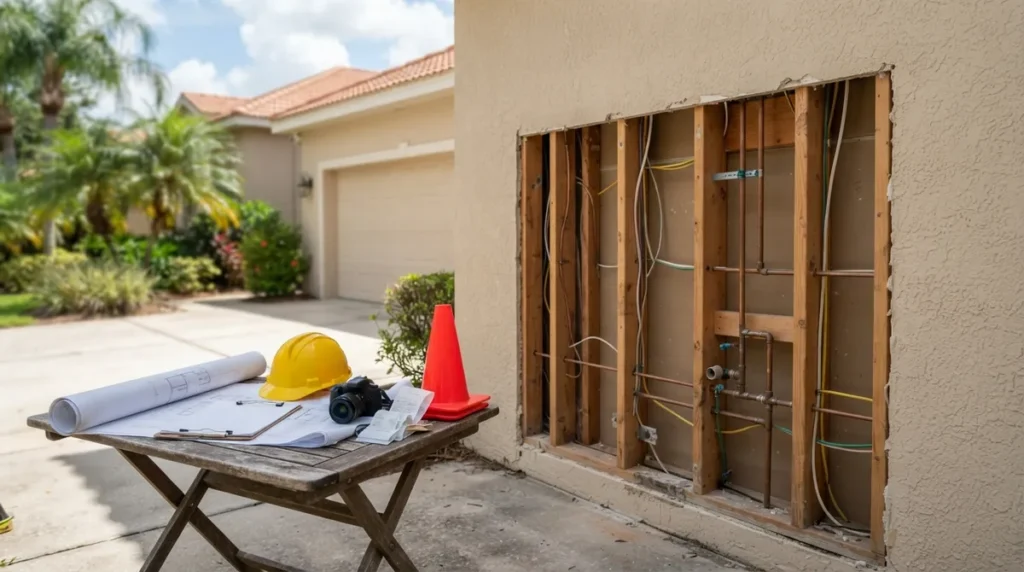
It is tempting to avoid the topic. But inspectors may need to verify concealed work, and a local agency can request access to walls, ceilings, or other covered areas. Being ready for that, with photos, receipts, and documentation, makes the process smoother.
Curious what the visit looks like? Read what happens during a Florida ATF site inspection.
5. Skipping As-Built Drawings and Sealed Documents
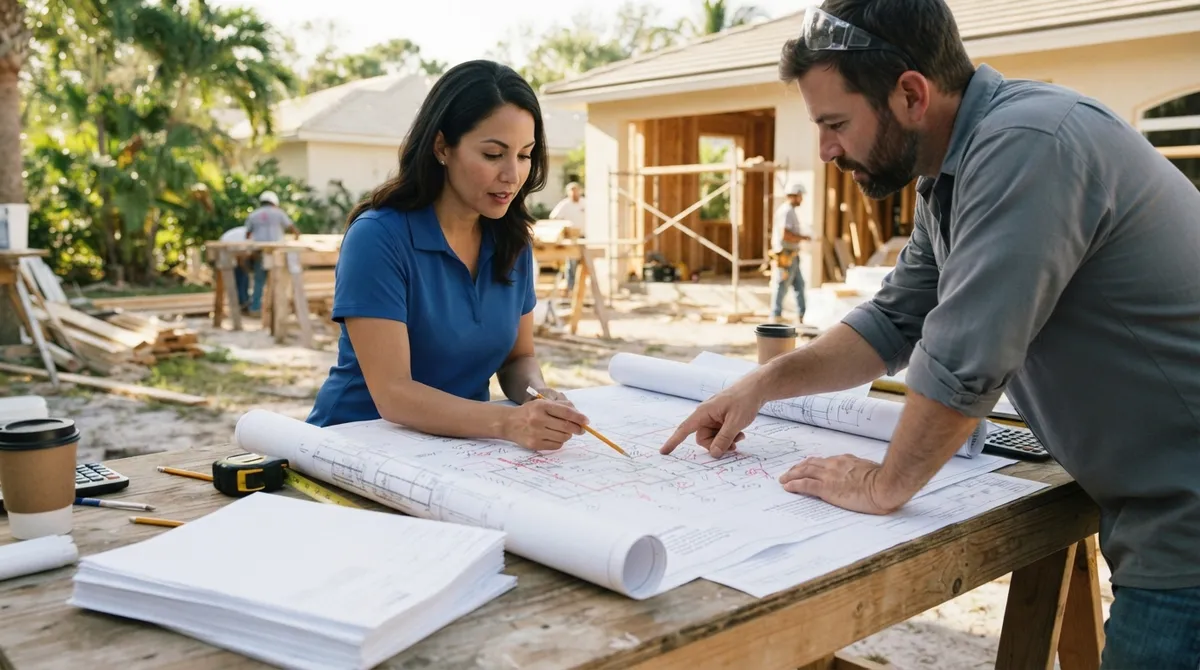
Many jurisdictions want to see exactly what was built. That often means measured as-built drawings, and sometimes an engineer's letter or sealed plans for structural, electrical, or mechanical elements. Showing up with a vague sketch invites rejection and resubmittals.
Our in-house team prepares as-built drawings and engineer letters, and our own engineer signs and seals the work, so reviewer comments get answered fast.
6. Assuming Every Florida County Works the Same
Fees, forms, and review steps differ widely. Some places charge an investigation fee or a multiple of the standard permit fee. Others handle it differently. Never assume a neighbor's experience in another county applies to you.
| Question to Ask the Building Department | Why It Matters |
|---|---|
| Does this work need an after-the-fact permit? | Confirms scope before you spend money |
| Is there an open violation or stop-work order? | Changes your timeline and priorities |
| What documents and drawings are required? | Prevents rejected submittals |
| How are fees calculated? | Fees vary by jurisdiction and project |
| Which inspections will be required? | Helps you plan access to concealed work |
Our Florida county pages cover local differences, including Hillsborough County, Miami-Dade County, and Broward County.
7. Hiring Someone Without Checking Credentials
A permitting-services provider can help identify the correct jurisdiction, assemble applications, coordinate plans and inspections, and track review comments. But hiring help does not guarantee approval, and only the building department can approve or close your permit. Verify experience and any required contractor or design-professional licenses before you sign anything.
Not sure who to call? Our article on who to hire to legalize an after-the-fact permit is a good starting point.
8. Ignoring the Impact on a Sale, Refinance, or Insurance
Unpermitted work has a way of surfacing at the worst moments, like an appraisal, a closing, or an insurance claim. Real estate agents and investors know the sinking feeling of a deal stalling over an open item. Handling it early keeps your options open.
If a transaction is on the line, see how to fix a Florida closing held up by unpermitted work, or learn about our realtor and closing support.
9. Underestimating Costs and Timelines
Costs depend on the jurisdiction, the type of work, and what corrections are needed. Budget for permit fees, any investigation or penalty fee, drawings, engineering, and possible repairs. Timelines depend on how quickly you submit a complete package and how the reviewers respond.
| Cost Factor | What Drives It |
|---|---|
| Permit and investigation fees | Local fee schedule and project value |
| Drawings and as-builts | Size and complexity of the work |
| Engineering letters or sealed plans | Structural, electrical, or mechanical scope |
| Corrections and re-inspections | Whether the work meets current code |
For a deeper look, read about after-the-fact permit costs in Florida.
10. Going It Alone Without a Clear Plan
DIY can work for simple situations, but after-the-fact files get tricky fast: open violations, missing contractor records, or engineering questions. A clear plan helps. Here is a simple roadmap:
- Confirm the property's exact city and county.
- Contact the responsible building department and ask whether an after-the-fact permit is needed.
- Check for open permits, violations, or stop-work orders.
- Gather photos, receipts, and any prior documents.
- Prepare as-built drawings and any needed engineering.
- Submit the application and respond to reviewer comments promptly.
- Schedule inspections, make corrections, and get the permit closed out.
You can also run an open permit search to see what is already on record.
How to Find the Right Help Near You
Searching "near me" is a good instinct, but location is only part of the answer. What matters is whether the provider knows the specific jurisdiction that controls your property. Florida has hundreds of municipalities, and each has quirks.
- Ask about local experience: Has the firm filed in your city or county before?
- Ask about in-house capability: Can they draft, engineer, and seal without outsourcing?
- Ask about communication: Will you get fast responses when a reviewer comments?
- Ask about scope: Who handles filing, tracking, revisions, and closeout?
- Ask for clarity on limits: No honest provider can promise approval.
At 1 Contractor Solutions, we act as Florida's outsourced permitting department. We work in all 67 counties, respond within 30 minutes, and handle everything from filing to closeout. See what customers say on our Google Business Profile.
Who This Helps Most
- Homeowners: Legalizing an addition, remodel, or roof that was never permitted. See our page for homeowners.
- General contractors: Cleaning up files from prior crews or lapsed permits. See general contractor support.
- Solar companies: Resolving installs that went in without proper sign-off. See solar contractor support.
- Realtors and investors: Clearing issues before closing. See realtor support.
- Architects, designers, and trades: Outsourcing drafting and permit administration.
What Happens After You Submit
Once the package is filed, the building department reviews it, and reviewers may issue comments. Respond completely and quickly. After approval, inspections verify the work. If something falls short, you correct it and call for re-inspection. The process ends when the permit is finaled and closed.
If a violation is attached to your file, our guide on code compliance violation help in Florida explains your next moves. And when time is tight, our urgent permit rescue service is built for denials, stop-work orders, and stalled closings.
Stay Connected
Permitting rules keep evolving, and we share updates regularly. You can follow us on LinkedIn or follow us on Facebook for practical tips. For the statute itself, the Florida Legislature's page for Section 553.79 is the official source.
Ready to Get Unstuck?
Unpermitted work feels heavy, but it does not have to stay that way. Avoid these ten mistakes, lean on a team that knows your jurisdiction, and you can move from worry to a closed permit. If you are ready to take the next step, get a free quote and tell us your address and your problem. We will tell you which office controls it, what it will take, and then we will go do it.
FAQs
How do I get an after-the-fact permit in Florida?
Confirm which city or county controls your property, then contact that building department and ask whether an after-the-fact permit is required. You will typically submit an application with supporting documents, allow inspections, and correct any deficiencies. A permitting-services firm can help coordinate, but only the building department can approve and close the permit.
How much does an after-the-fact permit cost in Florida?
There is no single statewide price. Costs vary by jurisdiction and project, and may include permit fees, an investigation or additional fee, drawings, and engineering. Ask your local building department how fees are calculated before you start.
Can inspectors require walls or ceilings to be opened?
Yes, they can. A local agency may request access to concealed work so inspectors can verify construction meets code. Having photos, receipts, and good documentation ready can sometimes reduce how much needs to be opened.
Can a Florida permit expediter help with unpermitted work?
Absolutely. A permitting-services provider can help find the right jurisdiction, prepare and file applications, coordinate plans and inspections, and track review comments. Just remember that no provider can guarantee approval, since the building department makes that call.
What happens if I keep building after being told to stop?
Continuing work can raise your costs and lead to citations. For example, Hillsborough County warns of citations up to $500 per violation, though penalties differ by jurisdiction. The safest move is to pause and contact the building department right away.
We do this work every day across all 67 Florida counties. Call (866) 314-6931 and we will tell you what your situation actually requires — including when you do not need us.
Related services
Permit Facilitation & Filing
You have a crew scheduled, a client asking for dates, and a permit sitting somewhere in a queue you cannot see. We file it, w…
See the servicePlan Review Coordination
A permit in plan review is not one queue. On a commercial project it can be six queues, each with its own reviewer, its own c…
See the serviceReady to get your permit moving?
One call tells you which jurisdiction controls your project, what it will take, and what it will cost. Most of the time we can scope it on the phone.