
Blog
11 After-the-Fact Commercial Construction Florida Steps
Unpermitted commercial work in Florida? Learn 11 practical steps to handle after-the-fact permitting, from documents to sealed certificates.
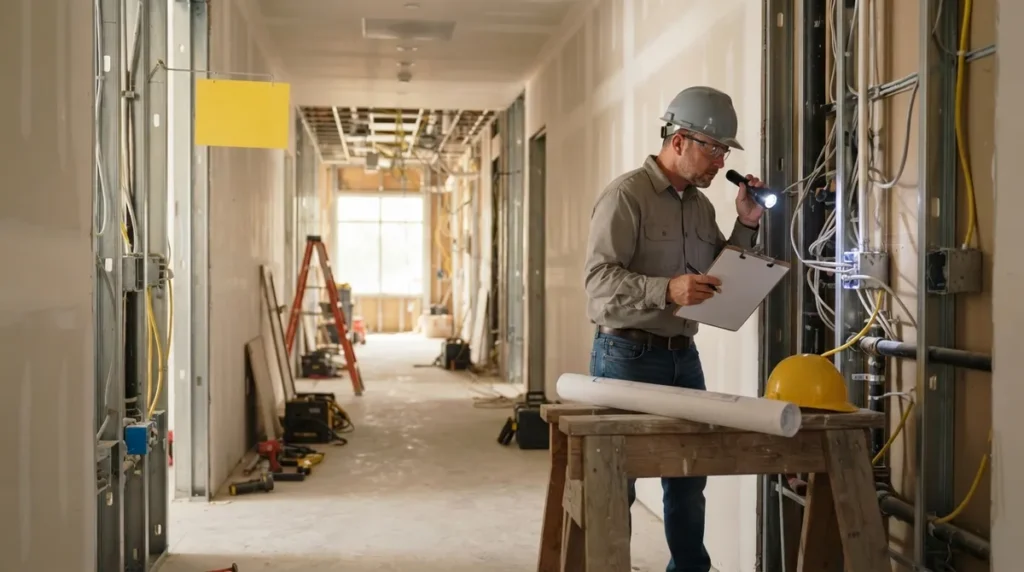
Key Takeaways
-
Florida Statutes §553.79(1)(a) generally requires a permit before commercial construction, alteration, repair, or demolition begins; when that is skipped, the local after-the-fact (ATF) review is the path forward.
-
An after-the-fact permit does not automatically legalize work; the building official may require plans, testing, sealed certifications, corrective work, or removal of noncompliant construction.
-
Stop work before concealing or altering anything, and contact the local building department early, since fees, forms, and processes vary by jurisdiction.
-
Disclose the full scope in a written inventory covering walls, electrical, plumbing, mechanical, structural, occupancy changes, and site work, because partial disclosure costs credibility and time.
-
Miami-Dade's 2026 Work Without Permit guidelines may require a Work Without Permit Certificate sealed by a Florida-licensed architect or engineer based on direct inspection.
-
If a denial or revocation occurs, Florida law requires the agency to identify the specific noncompliant features and code sections, giving you a concrete punch list to correct.
Let's be honest: nobody opens a commercial project hoping to land in permit trouble. But it happens more than you'd think. A tenant improvement gets rushed before a grand opening. A prior owner enclosed a patio and never told anyone. A contractor cut corners and then disappeared. Suddenly you're holding a stop work order, a failed lender review, or a Certificate of Use that won't get issued.
The good news? After the fact commercial construction in Florida is a problem with a real path forward. Florida Statutes §553.79(1)(a) generally requires a permit before commercial construction, alteration, repair, or demolition begins. When that didn't happen, local building departments offer an after-the-fact (ATF) or Work Without Permit review. It isn't automatic legalization, and it isn't identical from city to city, but it is workable when you approach it with a clear plan.
Below are 11 steps and facts that will help you move from "uh oh" to "approved." Whether you're a general contractor, a property manager, a commercial broker, or an owner, there's something here for you.
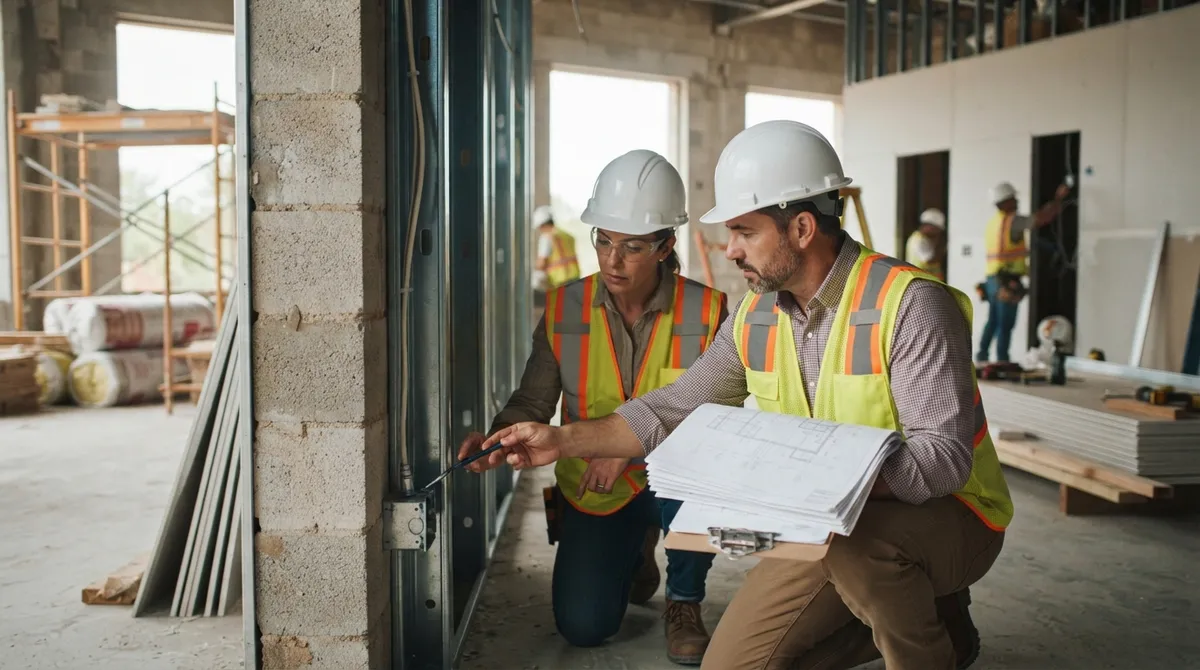
1. Understand What "After the Fact" Actually Means
An after-the-fact permit is a local process that documents and reviews work already performed without the required permit. Think of it as asking the building department to look at what exists and decide whether it meets current code.
Here's the part that surprises people: it does not automatically legalize anything. The building official may require plans, inspections, testing, professional certifications, corrective work, or even removal of noncompliant construction. Paying a fee also doesn't wipe out separate code-enforcement consequences.
If you want a broader primer, our guide on what is after-the-fact permitting in Florida walks through the basics.
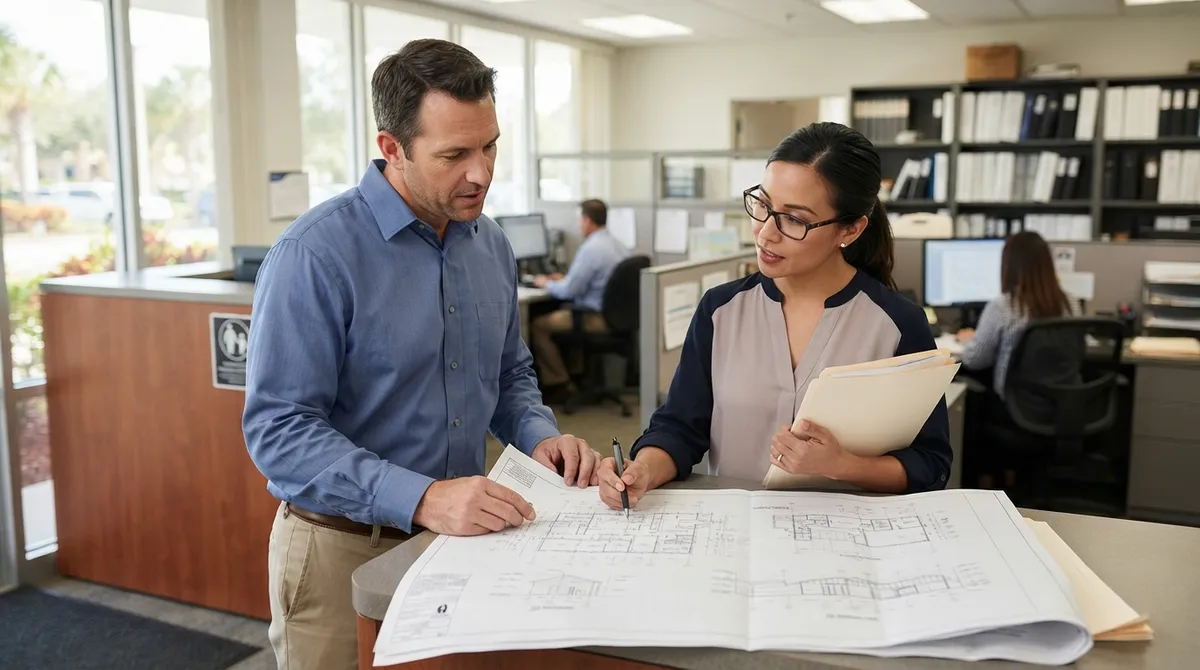
2. Know That Florida Law Sets the Rule, But Locals Run the Process
Florida Statutes §553.79 is the statewide legal basis requiring permits. But applications, fees, forms, and review timelines are administered by the local enforcing agency. That means a Miami project and a Jacksonville project can follow noticeably different paths.
Statewide uniformity is coming in some areas. For example, §553.77 provides for adoption of a uniform commercial building permit application by July 1, 2027. That is a future application standard, though, not a uniform ATF fee or legalization procedure.
Not sure which agency actually controls your address? Our building department lookup tool is a handy place to start, especially near city lines.
3. Stop Work and Talk to the Right Department First
Before you conceal, alter, or continue the work, pause. Covering up framing, wiring, or plumbing behind drywall can turn a manageable ATF into a destructive-testing headache.
Contact the building department for your property's specific jurisdiction. Ask what their process is called (Work Without Permit, ATF, or something similar), and whether commercial projects have special requirements. For example, Fort Lauderdale treats ATF building-code review as a distinct process and says commercial permits and permits requiring ATF review are not eligible for its walk-through service.
If you've already received a notice, our guide to responding to a Florida unpermitted work notice can help you reply calmly and strategically.
4. Define the Full Scope and Location of the Work
Building departments want to know exactly what was built and where. Partial disclosure is a classic mistake. If you list only the obvious change and an inspector finds the mezzanine, the new restroom, and the relocated panel, you've lost credibility and time.
Walk the entire property and create a written inventory. Include:
- New or removed walls and partitions
- Electrical, plumbing, and mechanical changes
- Structural modifications, roof work, and openings
- Change of use or occupancy-load impacts
- Site work such as paving, striping, or accessory structures
This inventory becomes the backbone of your submittal package.
5. Gather the Documents Departments Expect
Do not assume photographs or an owner affidavit alone will satisfy the building department. Depending on the work and local requirements, you may need a mix of the items below.
| Document | Why It Matters |
|---|---|
| Site and floor plans | Shows existing conditions and the scope of unpermitted work |
| Structural or trade documents | Demonstrates load paths, circuits, piping, and ductwork |
| Product information and calculations | Verifies approved products and design adequacy |
| Evidence for concealed work | Addresses what reviewers cannot see |
| Trade affidavits | Documents licensed contractor responsibility where required |
Our as-built drawings and commercial plans services exist precisely for this stage.
6. Expect a Licensed Professional to Certify the Work
For commercial projects, a licensed Florida architect or engineer is very often part of the answer. Miami-Dade County's 2026 Work Without Permit guidelines, endorsed by the Board of Rules and Appeals on January 15, 2026, apply to commercial and residential projects countywide across municipalities. They call for full documentation and minimum permit documents, and depending on the case may require a field inspection, trade affidavits, a property-owner hold-harmless agreement, and a Work Without Permit Certificate prepared and sealed by a Florida-licensed architect or professional engineer.
That certificate is based on direct inspection and includes a narrative explaining how compliance with the current Florida Building Code was verified. The building official may still require additional work or certification before approval.
For more detail, see our article on whether a sealed drawing is required for after-the-fact permits. With in-house sealed drawings at 1 Contractor Solutions, there's no waiting on an outside consultant to call back.
7. Prepare for Inspections and Possible Destructive Testing
Reviewers can't approve what they can't see. If walls are closed up, expect conversations about exposing framing, wiring, fire blocking, or connections. Sometimes a licensed professional's field verification is accepted. Other times the jurisdiction wants openings made.
Here's how to prepare:
- Photograph everything accessible now, before any further finishes.
- Locate and label panels, shutoffs, and fire-rated assemblies.
- Have trade contractors available to open and close walls if required.
- Ask the department which inspections it will require and in what order.
Our guide on what happens during a Florida ATF site inspection sets expectations nicely.
8. Budget for Fees, and Don't Assume One Rate Applies Everywhere
Local fees vary widely. As one jurisdiction-specific example, Miami Springs' published fee schedule states that work begun before a required permit may incur a $100 charge plus a double permit fee. That is not a statewide rate. Another city might use a different multiplier, a flat penalty, or additional review charges.
Budget for these categories:
- Permit and plan review fees, possibly doubled or surcharged
- Architect or engineer inspection and sealed certification
- Drafting for as-built plan sets
- Corrective construction if deficiencies are found
- Re-inspection and resubmittal fees
For deeper cost context, read after-the-fact permit Florida cost.
9. Be Ready for Corrections, Denials, and Removal Orders
Let's talk about the scary scenario, because it's better to plan for it. If work does not comply, the local agency can require corrections and may deny or revoke a permit. In some cases, noncompliant construction may have to be removed.
There is a useful protection in Florida law. Under §553.79, when an agency denies or revokes a permit for code noncompliance, it must identify the specific noncompliant features and the applicable code chapters and sections. That gives you a concrete punch list to fix instead of a vague "no."
When comments come back, respond quickly and precisely. Our revisions and resubmittals team works every reviewer comment so corrections don't drag on.
10. Connect the ATF Permit to Your Certificate, Sale, or Lease
Many owners discover unpermitted work only when something else is on the line: a sale, a refinance, a new tenant, or a Certificate of Occupancy or Certificate of Use. Unresolved work can stall any of these.
Here's a quick comparison of common triggers and the related services.
| Situation | What Usually Matters | Helpful Resource |
|---|---|---|
| New tenant or change of use | Certificate of Use and code compliance | Certificate of Use |
| Completed build-out | Final inspection and occupancy approval | Certificate of Occupancy |
| Property sale or refinance | Open permits and disclosure issues | Realtor closing support |
| Notice from the city or county | Violation resolution and compliance | Code compliance violations |
Also worth a look: can a sale close with unpermitted work in Florida and how to fix a commercial build-out without a permit.
11. Hire a Team That Handles the Whole Process
Here's where having help changes everything. ATF commercial work touches drafting, engineering, filing, tracking, inspections, and reviewer comments. Splitting those across several vendors is how timelines slip.
1 Contractor Solutions acts as Florida's outsourced permitting department. We prepare or review plans, file the application, track it, work every reviewer comment, and carry it through approval and closeout across all 67 Florida counties. Our drafting and engineering are in house, and our engineer signs and seals the work. We take on after-the-fact and expired permits that other firms decline, and we respond within 30 minutes, day or night.
If a stop work order or a closing deadline is breathing down your neck, our urgent permit rescue service is built for exactly that moment. And our permit facilitation and filing team keeps everything moving once the plan is set.
Quick Reference: Who Benefits Most From ATF Support
Different readers face different pressure points. A quick snapshot:
- General contractors: Need sealed as-builts and clean filings to protect reputation and close out jobs. See our page for general contractors.
- Property managers and commercial brokers: Need open items cleared before tenants move in or deals close.
- Design trade professionals: Need dependable outsourced drafting and engineering without adding staff. Our drafting only option is made for you.
- Real estate professionals and investors: Need fast research on what's permitted and what isn't before committing.
- Owners and homeowners with mixed-use or commercial space: Need plain-English guidance and one team to coordinate it all.
Curious how we work with county departments? Here are a few local starting points: Miami-Dade County, Broward County, Hillsborough County, and Orange County.
Final Thoughts: You've Got a Path Forward
Unpermitted commercial work feels heavy, but it's rarely hopeless. The pattern is consistent: define the full scope, gather real documentation, get a licensed professional to verify compliance, respond to comments fast, and keep the department informed. Do those things, and after the fact commercial construction in Florida becomes a solvable project instead of a looming threat.
Keep in mind that an ATF permit does not guarantee approval and does not erase separate enforcement consequences, so the sooner you start, the more options you keep. Always confirm current forms, fees, and timelines with the jurisdiction where your property sits.
Ready to get moving? Get a free quote and we'll tell you which jurisdiction controls your property, what it will take, and then go do it. You can also see what our customers say: Visit us on Google — 1 Contractor Solutions. For permitting tips and updates, follow us on LinkedIn and follow us on Facebook. For statutory background, you can review Florida Statutes §553.79 directly.
FAQs
How do I get an after-the-fact commercial building permit in Florida?
Contact the building department for your property's jurisdiction and ask about its Work Without Permit or ATF process. You'll typically submit plans or as-builts documenting the work, pay applicable fees, and pass any required inspections. A licensed architect or engineer is often involved for commercial projects.
Does Florida require an engineer or architect to certify unpermitted commercial work?
It depends on the jurisdiction and the work involved, but it is very common for commercial projects. Miami-Dade's 2026 guidelines, for example, may require a Work Without Permit Certificate sealed by a Florida-licensed architect or professional engineer. Always confirm with your local building department.
Can a building department make me remove unpermitted commercial work?
Yes, it can. If the work doesn't comply with code and can't be corrected, the agency may require removal or redoing it. The good news is that Florida law requires the agency to identify the specific noncompliant features and the code sections involved when it denies or revokes a permit, so you'll know what to fix.
How much does an after-the-fact commercial permit cost in Florida?
There is no single statewide rate, since fees are set locally. Some jurisdictions charge extra for work begun before a permit, such as Miami Springs, which lists a $100 charge plus a double permit fee. Add engineering, drafting, and any corrective work to your budget as well.
We do this work every day across all 67 Florida counties. Call (866) 314-6931 and we will tell you what your situation actually requires — including when you do not need us.
Related services
Permit Facilitation & Filing
You have a crew scheduled, a client asking for dates, and a permit sitting somewhere in a queue you cannot see. We file it, w…
See the servicePlan Review Coordination
A permit in plan review is not one queue. On a commercial project it can be six queues, each with its own reviewer, its own c…
See the serviceReady to get your permit moving?
One call tells you which jurisdiction controls your project, what it will take, and what it will cost. Most of the time we can scope it on the phone.