
Blog
10 Facts: Does SB 4-D Apply to Three Story Buildings?
Does SB 4-D apply to three story buildings? Learn when Florida's milestone inspection and SIRS rules apply, key deadlines, and what to do next.
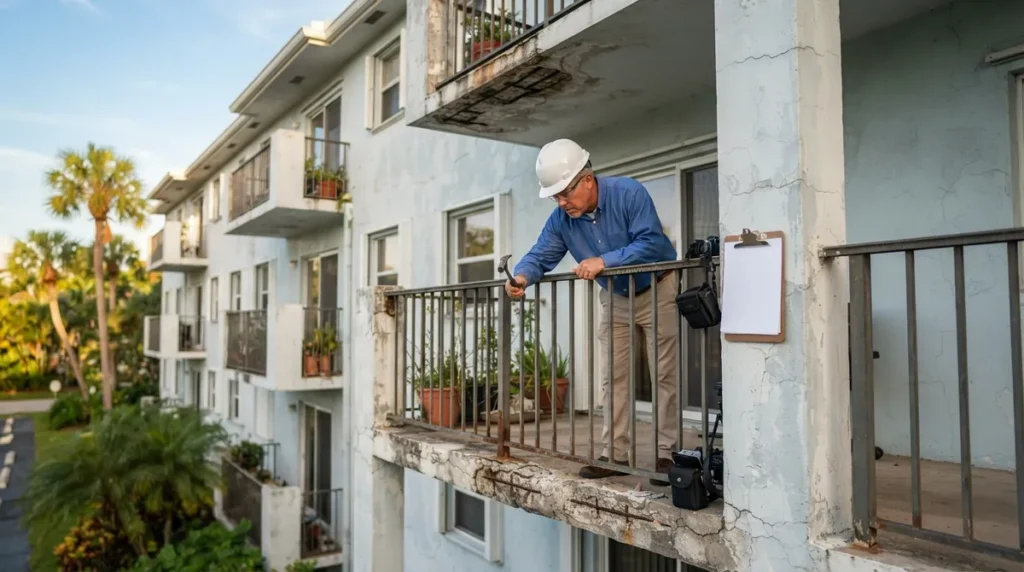
Key Takeaways
-
Under Florida Statute 553.899, SB 4-D milestone inspections can apply to three-story buildings, but only if they have at least three habitable stories and are wholly or partly condominium or cooperative owned.
-
A single-owner rental apartment building is generally not covered by the milestone rule based on story count alone, though other building-safety rules may still apply.
-
Single-family, two-family, and three-family dwellings with three or fewer habitable stories are excluded from the milestone-inspection requirement.
-
The first milestone inspection is generally due by December 31 of the year the building turns 30, measured from the certificate-of-occupancy date, and repeats every 10 years; local agencies may set a 25-year deadline.
-
A milestone inspection and a Structural Integrity Reserve Study (SIRS) are separate requirements, so a qualifying three-story condo may need both, each tracked on its own timeline.
-
Confirm the habitable-story count, certificate-of-occupancy date, ownership form, and local jurisdiction with your building official early, since missing a deadline can lead to enforcement, insurance, lending, and sale problems.
If you own, manage, or sell a three-story building in Florida, you have probably heard the whispers about SB 4-D and wondered, "Wait, does this mean me?" You are in good company. Plenty of condo owners, board members, agents, and contractors are asking the same thing, and the honest answer is a friendly "it depends."
So, does SB 4-D apply to three story buildings? Often yes, but only when the building is at least three habitable stories and is wholly or partly under residential condominium or cooperative ownership. A three-story rental apartment complex, for instance, is not automatically swept in. Use and ownership matter just as much as height.
In this friendly 2026 guide, we walk through ten clear facts so you can figure out where your building stands. We cover milestone inspections, the separate Structural Integrity Reserve Study, deadlines, and what to do next. As a quick note, this article is general information and not legal or engineering advice, so always confirm the details with your local building official.
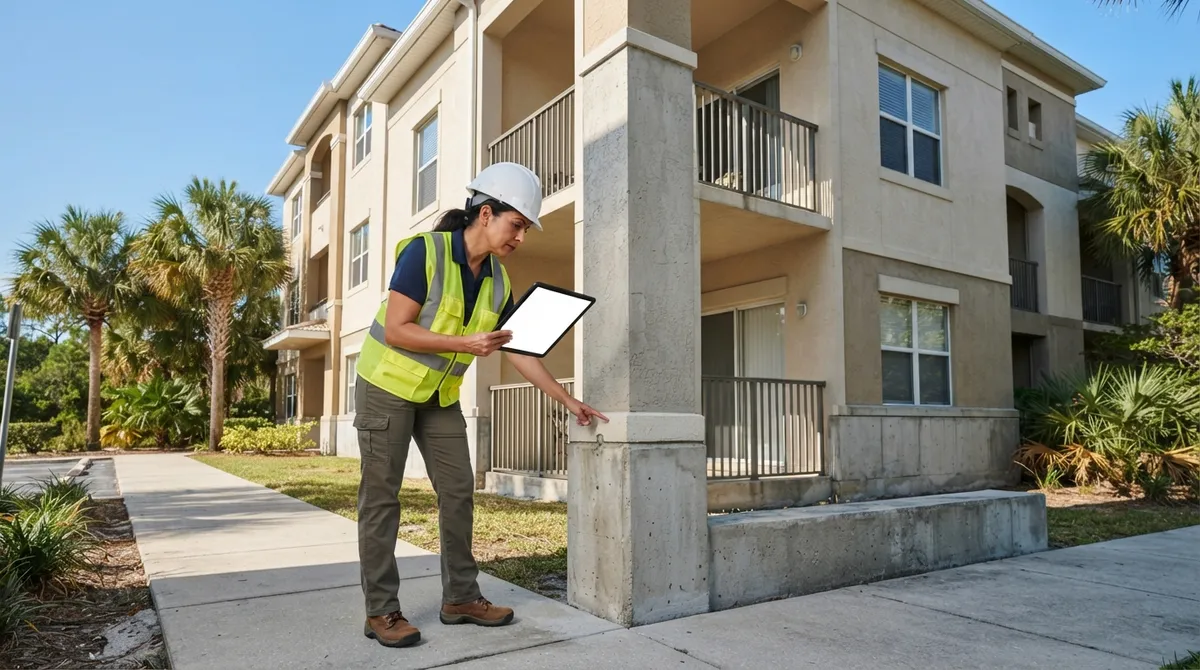
Fact 1: Yes, SB 4-D Can Apply to a Three-Story Building
Let's start with the headline. Florida's milestone-inspection rule, found in Section 553.899 of the Florida Statutes, covers buildings that are three habitable stories or more, as determined under the Florida Building Code, and that are wholly or partly under residential condominium or cooperative ownership.
That means a three-story condo building is squarely in the picture. Many people assume the law only targets high-rises, but the threshold is much lower than that. Once a covered building has three habitable stories, the requirements can kick in.

Fact 2: Ownership Type Matters as Much as Height
Here is where folks get tripped up. The statute does not simply say "every three-story building." It focuses on buildings with condominium or cooperative ownership. If your three-story property is a single-owner rental apartment building, this particular milestone-inspection requirement generally is not triggered by the story count alone.
That said, other building-safety rules, local recertification programs, and lender or insurer expectations may still apply. So a rental building is not a free pass to ignore structural health. It simply means SB 4-D's milestone rule is not the specific obligation at play.
| Building Type | 3+ Habitable Stories? | Milestone Rule Likely Applies? |
|---|---|---|
| Residential condominium | Yes | Generally yes |
| Residential cooperative | Yes | Generally yes |
| Single-owner rental apartments | Yes | Not under this rule alone |
| Single, two, or three-family dwelling (3 or fewer stories) | Yes | Excluded |
| Condo with only two habitable stories | No | Generally no |
Fact 3: Single-Family, Two-Family, and Three-Family Homes Are Excluded
Good news for many homeowners: the statute carves out single-family, two-family, and three-family dwellings that have three or fewer habitable stories above ground. So a townhome-style triplex or a large three-story single-family house is not pulled into the milestone-inspection subsection.
If you are a homeowner planning a remodel on one of these properties, you are probably looking at regular permitting instead. Our team helps with exactly that, from drawings to approvals, through our homeowner permitting support.
Fact 4: The Usual First Deadline Is the End of the Year the Building Turns 30
For a covered building, the first milestone inspection is generally due by December 31 of the year the building reaches 30 years of age. The clock is measured from the certificate-of-occupancy date, not the date someone remembers the building "opening." Then the inspection repeats every 10 years.
Here is a quick example. If your three-story condo received its certificate of occupancy in 1996, it turns 30 in 2026, so the inspection would generally be due by December 31, 2026. Given that today is late November 2026, that is a tight window, so do not wait.
Fact 5: Your Local Agency May Set a 25-Year Deadline
The statute lets the local enforcement agency require the first inspection at 25 years instead of 30, based on local circumstances. Environmental conditions, including proximity to salt water, are the kind of factors that can lead to the shorter timeline.
Notice what the law does not say. It does not automatically make everyone within three miles of the coast subject to a 25-year deadline. It is the local enforcement agency that decides, so check with your building department rather than assuming. If you are in Tampa Bay, our guide on whether your Tampa condo needs a milestone inspection in 2026 shows how local rules can shape the answer.
Fact 6: SIRS Is a Separate Requirement From a Milestone Inspection
This one confuses almost everyone, so let's slow down. A Structural Integrity Reserve Study, or SIRS, is not the same thing as a milestone inspection. They live under different parts of the law and serve different purposes.
- Milestone inspection: a safety inspection performed by a Florida-licensed architect or engineer to assess the building's structural condition.
- SIRS: a reserve-planning study that looks at major structural components and whether the association is setting aside money to maintain them.
Florida DBPR guidance says residential condominium associations must complete a SIRS for each building that is three habitable stories or higher, generally at least every 10 years after the condominium's creation. So a three-story condo building can be on the hook for both.
| Feature | Milestone Inspection | SIRS |
|---|---|---|
| Purpose | Check structural safety | Plan and fund structural reserves |
| Who performs it | Florida-licensed architect or engineer | Qualified professional preparing the study |
| Typical trigger | Age of building (30 years, or 25 locally) | Condominium creation date and building height |
| Repeat cycle | Every 10 years | At least every 10 years |
Fact 7: Only Licensed Professionals Can Perform the Inspection
A milestone inspection is conducted by a Florida-licensed architect or engineer. It begins with a visual inspection of the building. If that professional spots signs of substantial structural deterioration, a more intensive Phase 2 inspection may be required.
Think of Phase 1 as the checkup and Phase 2 as the deeper diagnostic. If you want a plain-English comparison, we break it down in Phase 1 vs. Phase 2 milestone inspections in Florida. And if you are hunting for the right professional, this walkthrough on who can perform a milestone inspection in FL is a handy starting point.
Fact 8: What Counts as a Habitable Story Is Not Always Obvious
Counting stories sounds simple until you actually try it. Florida's rule relies on how the Florida Building Code determines habitable stories. Parking levels, rooftop areas, mezzanines, and partial floors can all raise questions.
Before you decide your building falls outside SB 4-D, gather these facts:
- Pull the original building plans and the certificate of occupancy.
- Identify every level and its use (living space, parking, storage, mechanical).
- Confirm the habitable-story count with the local building official.
- Document the ownership form, such as condominium, cooperative, or single-owner.
A "three-story" building on paper might legally count differently once you apply the code definition. Getting a written determination can save a lot of grief later.
Fact 9: Missing a Deadline Can Create Real Headaches
Nobody likes talking about consequences, but it helps to understand why timing matters. An association that misses its milestone deadline can face enforcement attention from the local jurisdiction, trouble with insurers and lenders, and difficulty when units are listed for sale. We cover the full picture in our article on what happens if a Florida condo misses its milestone deadline.
The takeaway is encouraging, though. Starting early gives you room to schedule the inspection, review the findings, and plan any repairs without a rush. If you are curious about budgeting, our post on how much a milestone inspection costs in Florida helps you plan ahead.
Fact 10: Local Building Officials Run the Program, So Procedures Vary
Here is the practical reality: the statute sets the framework, but local building departments administer it. Filing procedures, submittal formats, and sometimes even deadlines can differ by county or city. That is why a Miami-Dade association may deal with a different process than one in Manatee or Hillsborough.
This is where having a permitting partner pays off. At 1 Contractor Solutions, we work across all 67 Florida counties and have filed in more than 400 municipalities, so we know which jurisdiction really controls your property, even near tricky city lines. We help with filing, tracking, and coordinating with reviewers, and our drafting and engineering are done in house with sealed drawings. You can see how we help condo and building owners through our 40-year recertification and milestone inspection services.
A Simple Game Plan for Your Three-Story Building
Feeling a little overwhelmed? Totally normal. Here is an easy, step-by-step approach you can follow.
- Confirm the basics. Write down the habitable-story count, certificate-of-occupancy date, ownership form, and jurisdiction.
- Check the deadline. Find out whether your local agency uses a 30-year or 25-year initial timeline.
- Separate the two requirements. Track the milestone inspection and the SIRS as distinct tasks with their own timelines.
- Hire qualified professionals. Engage a Florida-licensed architect or engineer for the inspection.
- Plan for follow-up work. If repairs surface, line up drawings, engineering, and permits early.
Our 7 checks to know when a condo needs a milestone inspection is a great companion to this list.
Who Should Care About This Rule?
Different readers feel this law in different ways, so here is a quick snapshot.
- Condo board members and property managers: You carry the responsibility for scheduling inspections and funding reserves.
- Real estate professionals and buyers: Pending inspections or deferred repairs can affect value, financing, and closing timelines.
- General contractors and design pros: Repair scopes that follow an inspection often need permits, sealed drawings, and coordinated reviews.
- Homeowners and residential owners: Most single-family homes are excluded, but knowing why helps you avoid worry.
If you work with sellers or buyers, our realtor and closing support can help keep a deal moving when permitting questions pop up.
When Repairs Follow the Inspection
Sometimes the inspection report is clean. Other times it points to concrete repairs, waterproofing, railing work, or structural reinforcement. Those repairs typically need permits, and many need sealed structural or MEP drawings before a building department will approve them.
That is exactly the stage where an outsourced permitting department shines. We prepare or review plans, file the application, track it, work every reviewer comment, and carry the job through approval and closeout. Because our engineering is in house, a reviewer's comment gets fixed quickly instead of waiting on an outside consultant. You can learn more about our structural engineering services and how we keep projects moving.
Stay Connected and Informed
Florida's building-safety rules keep evolving, and we like to help our community stay a step ahead. You can follow us on LinkedIn for updates, or follow us on Facebook for friendly permitting tips. Want to see what customers say? Visit us on Google — 1 Contractor Solutions and read the reviews. For broader Florida construction and marketing resources, you might also enjoy the team at Brain Buzz Marketing.
The Bottom Line
So, does SB 4-D apply to three story buildings? It certainly can. If your building has at least three habitable stories and is wholly or partly condominium or cooperative owned, expect to deal with both a milestone inspection and a SIRS. If it is a single-owner rental or a small one-to-three family home, the picture changes, though other rules may still apply.
The smartest move is to confirm your facts early and build a timeline you can actually meet. Don't stress alone. If you are unsure where your building lands, or you already have repairs waiting on permits, we are happy to help. Get a free quote and we will tell you which jurisdiction controls your project and what it will take to get it done. We answer around the clock, respond within 30 minutes, and se habla español.
FAQs
Does SB 4-D apply to a three-story condominium in Florida?
Generally yes. A condominium or cooperative building that is at least three habitable stories falls under Florida's milestone-inspection rule, and it also needs a Structural Integrity Reserve Study. Confirm your habitable-story count and certificate-of-occupancy date with your local building official to be sure.
Does a three-story apartment building need a Florida milestone inspection?
Not solely because it has three stories. This milestone requirement targets buildings wholly or partly under condominium or cooperative ownership, so a single-owner rental apartment building is generally not covered by it. Other building-safety rules may still apply, so it is worth double-checking locally.
How old must a Florida condo building be before its SB 4-D inspection is due?
The first milestone inspection is generally due by December 31 of the year the building reaches 30 years of age, measured from its certificate-of-occupancy date. Your local enforcement agency may set the initial deadline at 25 years instead, and the inspection repeats every 10 years after that.
What is the difference between a milestone inspection and a SIRS?
A milestone inspection is a structural safety assessment done by a Florida-licensed architect or engineer. A SIRS is a reserve study that plans and funds the maintenance of major structural components, generally required at least every 10 years for condo buildings of three habitable stories or more. They are separate requirements, and a building can need both.
Who is qualified to perform a Florida milestone inspection?
Only a Florida-licensed architect or engineer can perform it. It starts with a visual inspection, and if signs of substantial structural deterioration appear, a more intensive Phase 2 inspection may be required.
We do this work every day across all 67 Florida counties. Call (866) 314-6931 and we will tell you what your situation actually requires — including when you do not need us.
Related services
Permit Facilitation & Filing
You have a crew scheduled, a client asking for dates, and a permit sitting somewhere in a queue you cannot see. We file it, w…
See the servicePlan Review Coordination
A permit in plan review is not one queue. On a commercial project it can be six queues, each with its own reviewer, its own c…
See the serviceReady to get your permit moving?
One call tells you which jurisdiction controls your project, what it will take, and what it will cost. Most of the time we can scope it on the phone.