
Blog
7 Checks to Know When a Condo Needs a Milestone Inspection
Wondering when a milestone inspection is required for a Florida condo? Use these 7 checks to confirm age, height, deadlines, and next steps.
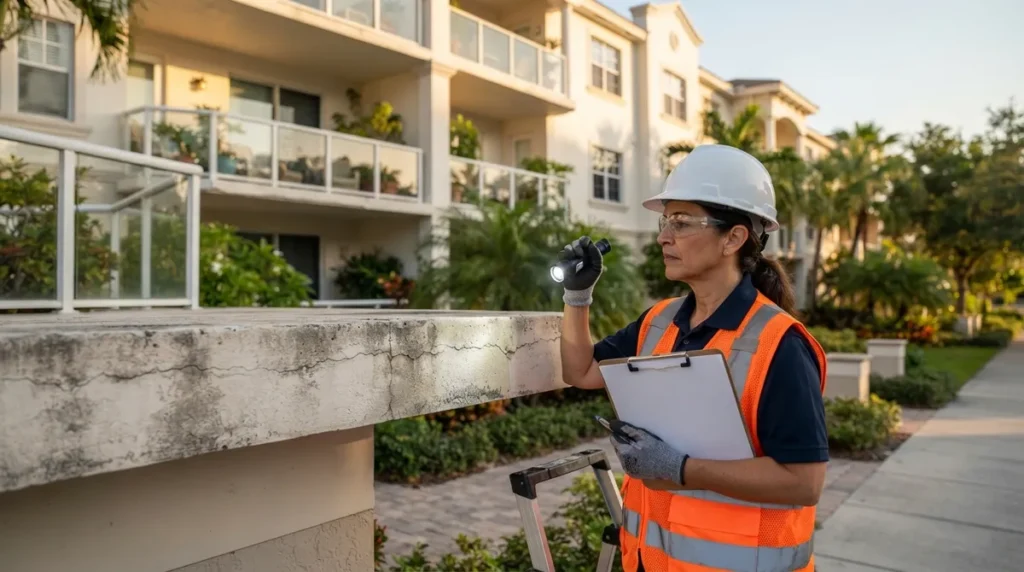
Key Takeaways
-
Florida generally requires a milestone inspection for residential condo and co-op buildings of three or more habitable stories, first at 30 years from the certificate of occupancy date, then every 10 years.
-
Local enforcement agencies may set the first inspection at 25 years instead of 30, so confirm your jurisdiction's trigger and get the answer in writing.
-
The certificate of occupancy date, not the sale date or association formation date, starts the building's age clock; the local building department can provide it.
-
After receiving the agency's certified notice, the association must notify owners within 14 days and complete phase one inspection within 180 days.
-
A Florida-licensed architect or engineer performs the phase one visual inspection; if substantial structural deterioration is found, a phase two inspection is required.
-
A milestone inspection is a safety review, not a permit; any repairs it recommends may need separate permits, and it does not replace a SIRS reserve study.
If you live in, manage, or invest in a Florida condo building, you have probably heard the words "milestone inspection" tossed around at board meetings. Maybe a neighbor mentioned it. Maybe a letter arrived and made everyone nervous. Take a breath. The rules are more straightforward than the rumors make them sound.
So, when is a milestone inspection required for a condo? In short, Florida generally requires one for residential condominium and cooperative buildings that are three or more habitable stories tall when they reach 30 years of age, with repeat inspections every 10 years. Some local jurisdictions can pull that first inspection earlier, to 25 years. In 2026, the original transition deadlines have passed, so most older buildings are already on the clock or past their first inspection.
This guide walks you through seven simple checks to figure out where your building stands, who is responsible, and what comes next. We will keep it friendly and practical, because a milestone inspection is a structural-safety review, not a punishment. Let's dig in.
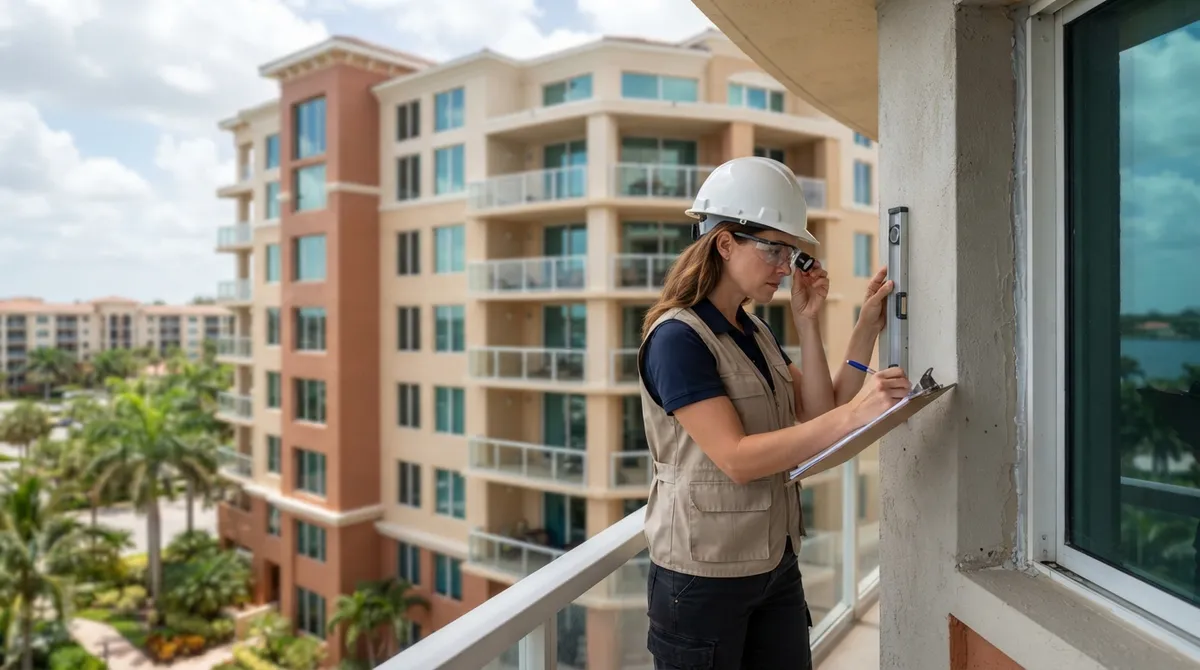
Check 1: Is Your Building Tall Enough?
The first question is the easiest one. Under Florida Statute 553.899, a residential condominium or cooperative building generally needs a milestone inspection if it is at least three habitable stories tall, as determined under the Florida Building Code.
That "habitable stories" detail matters. A parking podium, open-air ground level, or rooftop equipment space may not count the way you expect. If you are unsure how your building is classified, the original plans and the local building department's records are the best places to look.
Here is a quick way to sort it out:
- Three or more habitable stories: The building is likely subject to milestone inspection requirements.
- Fewer than three habitable stories: The building generally falls outside the statewide requirement.
- Mixed-ownership buildings: The requirement can still apply, and owners of portions outside the condominium or cooperative are responsible for their own areas.
If you are an investor or realtor evaluating a purchase, this single check can save you from nasty surprises later. A building that is tall enough and old enough should have inspection history on file, and asking for it is completely reasonable.
Check 2: How Old Is the Building, Really?
Age is the main trigger. The standard first-inspection milestone is the year the building reaches 30 years of age, measured from the date its certificate of occupancy was issued. After that, inspections are required every 10 years.
Notice what is not the starting point. It is not the year the property was sold, the year the association formed, or the year of the last big renovation. It is the certificate of occupancy date. If you cannot find it, the local building department can usually pull it for you.
| Building Detail | What to Confirm | Why It Matters |
|---|---|---|
| Certificate of occupancy date | Official issue date from the building department | Sets the building's age clock |
| Habitable story count | Per the Florida Building Code | Determines whether the rule applies |
| Ownership structure | Condo, co-op, or mixed ownership | Decides who is responsible for which areas |
| Local enforcement agency | City or county building official | Controls any earlier local trigger |
Need help tracking down those records? Our team handles this kind of research all the time through our 40-year recertification and milestone inspection services, so you do not have to dig through archives yourself.
Check 3: Does Your Local Agency Use 25 Years Instead of 30?
Here is where people often get tangled up. The statewide standard is 30 years, but a local enforcement agency may set the first inspection at 25 years when local circumstances warrant it. Environmental conditions, including proximity to salt water, are the kind of factors that can justify that earlier timeline.
Important clarification: the current statute does not impose a uniform statewide 25-year rule for coastal buildings. Older discussions sometimes claimed it did, and that is no longer the accurate reading. What exists is local discretion. Your building might be on a 25-year schedule if your city or county adopted it, and on a 30-year schedule if they did not.
The smart move is simple:
- Identify the exact local enforcement agency that governs your building. Near city lines, this is not always obvious.
- Ask that agency whether it has adopted a 25-year first-inspection trigger.
- Get the answer in writing so the association has it on file.
- Calendar the deadline and work backward to schedule the inspector.
Because jurisdictions near boundaries can be confusing, it helps to understand which Florida jurisdiction reviews your project before you assume anything.
Check 4: Did You Miss a Transition Deadline?
The statute includes transition deadlines for buildings that were already old when the rules tightened. As we sit here in late 2026, both of these dates are behind us:
- December 31, 2024: Buildings that had already reached 30 years of age before July 1, 2022.
- December 31, 2025: Buildings that reached 30 years of age from July 1, 2022, through December 31, 2024.
For buildings that reach 30 years later, or a locally adopted 25 years, the applicable trigger and the current statutory schedule apply. In other words, if your building aged into the requirement recently, you may be inside your first window right now.
If you suspect your association is behind, do not panic and do not hide. Falling behind is fixable, and the sooner you act the better. We cover the consequences in detail in our guide on what happens if a Florida condo misses its milestone deadline.
Check 5: Have You Received a Notice From the Local Agency?
Many associations wait for a letter, and that is partly how the process is designed to work. The local enforcement agency identifies buildings subject to inspection and sends written notice by certified mail.
Once that notice lands, the clock starts ticking quickly. Here are the key timelines:
| Step | Timeframe | Who Acts |
|---|---|---|
| Association notifies unit owners | Within 14 days of receiving the agency notice | Condo association |
| Phase one inspection completed | Within 180 days after the owner or owners receive the notice | Licensed architect or engineer |
| Report delivered | After inspection, as a sealed report plus a separate summary | Inspector to association, other owners, and building official |
A tip from the permitting trenches: do not treat the certified letter like junk mail. Designate someone on the board to receive it, log the date, and start your 14-day owner-notification countdown immediately. A shared mailbox or a property manager who forgets to forward it can quietly burn weeks.
Check 6: Who Does the Inspection and What Happens in Phase One?
A milestone inspection is performed by a Florida-licensed architect or engineer. This is not a job for a general handyman or a home-inspection generalist. If you are weighing who qualifies, our walkthrough on how to find who can perform a milestone inspection in FL is a helpful companion.
Phase one is a visual examination. The architect or engineer looks at habitable and nonhabitable areas, including major structural components, and makes a qualitative assessment of the building's structural condition. Think of it as a careful, professional walkthrough rather than a destructive teardown.
Afterward, the inspector submits a sealed report and a separate summary of material findings and recommendations to the association, any applicable other owners, and the local building official.
Then comes the fork in the road:
- No substantial structural deterioration found: The building generally moves on until its next 10-year cycle.
- Substantial structural deterioration found: A phase-two inspection is required, which may involve more detailed testing or analysis.
You can learn how the two stages differ in our breakdown of phase 1 vs. phase 2 milestone inspection in Florida. Budget planning is easier when you know what to expect, and our article on how much a milestone inspection costs in Florida can help the board prepare.
Check 7: Who Is Responsible, and What Comes After?
Responsibility is where many boards get a little nervous, so let's be clear. The association arranges the inspection and is responsible for compliance. Owners of portions of a building that sit outside the condominium or cooperative ownership are also responsible for their own portions.
Here is the part that matters most for the permitting world: a milestone inspection is a structural-safety inspection, not a building permit. It tells you the condition of the building. It does not authorize any work.
If the inspector recommends repairs, those repairs may need their own permits and approvals under local procedures. That might include structural repairs, concrete restoration, waterproofing, or related mechanical and electrical work. This is where having the right permitting partner turns a stressful moment into a manageable project.
It also helps to keep two different requirements straight. A milestone inspection does not replace a structural integrity reserve study, often called a SIRS. They are separate obligations with separate purposes, even though both deal with building safety and long-term maintenance planning. Your association's attorney and property manager can help you track both.
Many boards ask us how repairs flow from the report to the permit counter. A typical path looks like this:
- Review the sealed report and summary of recommendations with the board and engineer.
- Prioritize items by severity and safety impact.
- Prepare the plans, details, and any sealed drawings the building department requires.
- File the permit applications and track them through plan review.
- Answer reviewer comments, submit revisions, and schedule inspections through closeout.
That is exactly the kind of work we do. At 1 Contractor Solutions, we act as Florida's outsourced permitting department, handling permit filing, tracking, reviewer comments, and revisions. Our drafting and engineering are in house, and our own engineer signs and seals the work, so a reviewer's question does not turn into a week of phone tag. Learn more about our permit facilitation and filing and our structural engineering support.
Quick Reference: When Is a Milestone Inspection Required?
Let's pull everything together into one snapshot you can screenshot or hand to your board.
| Question | Short Answer |
|---|---|
| Which buildings? | Residential condominium and cooperative buildings of three or more habitable stories |
| When is the first inspection? | Year the building reaches 30 years from its certificate of occupancy date, or 25 if the local agency requires it |
| How often after that? | Every 10 years |
| Who does it? | A Florida-licensed architect or engineer |
| Deadline after notice? | Phase one within 180 days of the owner receiving the agency notice |
| Owner notification? | Association notifies unit owners within 14 days |
| What if deterioration is found? | Phase-two inspection is required |
Practical Tips for Different Readers
Not everyone reading this is a board member, so here are a few quick notes tailored to the people we work with most.
General contractors and design professionals: Condo repair work after a milestone report can be permit-heavy. Having sealed drawings, product approvals, and clean submittal packages ready cuts review time dramatically. Our resources for general contractors explain how we support these jobs.
Realtors, investors, and buyers: Before you buy a unit in an older building, ask whether a milestone inspection has been completed, what the report said, and whether any phase-two work or special assessments are on the horizon. These answers can affect financing, insurance, and resale value. Our realtor and closing support helps keep deals moving when records are murky.
Florida homeowners and unit owners: You are not on your own, and you are not expected to become a structural expert. Read the notices from your association, ask questions at meetings, and keep copies of the summary report. If repairs affect your unit, you may need to coordinate access and your own permits for interior work.
Solar companies and trades: If rooftop or structural conditions are flagged in a report, installation plans may be affected. Coordinate early so your structural documentation matches the building's current condition.
If you want to see how neighbors are experiencing this, see what our 1 Contractor Solutions customers say on Google and get a feel for how we work.
Where to Verify Rules and Stay Current
Because local agencies can adopt their own timelines, always verify your building's specific requirements before relying on any general guide, including this one. The Florida Legislature publishes the statute text online at Florida Statute 553.899, and the state's Division of Condominiums, Timeshares, and Mobile Homes posts condominium FAQs through Florida DBPR. Those are the primary sources, and they are worth bookmarking.
For building-specific questions, your local building department is the final word on whether an earlier trigger applies. Our guide to the building department lookup tool can point you toward the right office, which is half the battle in Florida's patchwork of jurisdictions.
You can also keep up with practical permitting tips by choosing to follow us on LinkedIn, where we share Florida permitting updates as they happen.
Ready to Take the Next Step?
A milestone inspection should feel like a routine health checkup for your building, not a crisis. Confirm the certificate of occupancy date, count the habitable stories, check whether your local agency uses 25 or 30 years, and watch for that certified letter. Then move quickly once the clock starts, because the 14-day and 180-day windows go by fast.
If your association needs help sorting out timelines, coordinating the inspection, or handling the permits for the repairs that follow, we would love to help. Our team answers around the clock and responds within 30 minutes, day or night. Get a free quote and let us turn your milestone paperwork into approved permits and moving projects.
FAQs
Which Florida condo buildings are required to have a milestone inspection?
Generally, residential condominium and cooperative buildings that are three or more habitable stories tall, as determined under the Florida Building Code. The requirement can also reach mixed-ownership buildings, so it's worth confirming your story count and ownership structure with the local building department.
Does Florida require a milestone inspection at 25 or 30 years?
The standard first inspection is at 30 years, measured from the certificate of occupancy date, with repeat inspections every 10 years. A local enforcement agency may require the first one at 25 years when local circumstances warrant it, such as proximity to salt water, so check with your jurisdiction.
What is the deadline after a condo association receives a milestone inspection notice?
The association must notify unit owners within 14 days of receiving the agency's written notice, and the phase-one inspection must be completed within 180 days after the owner or owners receive that notice. Those windows go by fast, so it's smart to line up an architect or engineer right away.
What happens if a phase-one inspection finds substantial structural deterioration?
A phase-two inspection is required, which may involve more detailed testing or analysis by the licensed architect or engineer. Any repairs that follow may need separate permits and approvals under local procedures, so plan for plans, sealed drawings, and permit filing as part of the fix.
Does a milestone inspection replace a structural integrity reserve study (SIRS)?
No, they're separate requirements with different purposes. A milestone inspection evaluates the building's structural condition, while a SIRS focuses on long-term reserve planning for key components. Your association's attorney or property manager can help you keep both on schedule.
We do this work every day across all 67 Florida counties. Call (866) 314-6931 and we will tell you what your situation actually requires — including when you do not need us.
Related services
Permit Facilitation & Filing
You have a crew scheduled, a client asking for dates, and a permit sitting somewhere in a queue you cannot see. We file it, w…
See the servicePlan Review Coordination
A permit in plan review is not one queue. On a commercial project it can be six queues, each with its own reviewer, its own c…
See the serviceReady to get your permit moving?
One call tells you which jurisdiction controls your project, what it will take, and what it will cost. Most of the time we can scope it on the phone.