
Blog
Who Should a Solar Company Hire for Unpermitted Installs?
Unpermitted solar install in Florida? Learn which licensed pros a solar company should hire and how to legalize the work with the local building department.
Key Takeaways
-
Unpermitted solar fixes take a small team: a licensed contractor to lead corrective work, a licensed electrician for wiring and interconnection, an engineer or drafter, and a permitting partner.
-
Start by confirming which authority having jurisdiction (AHJ) controls the address, since rules vary by county and city and no one can guarantee approval in advance.
-
The licensed solar contractor of record answers to the building department and signs the permit application; a permit expediter cannot replace that role.
-
Verify any contractor's active Florida license and classification, confirm local registration, check insurance and references, and get a written scope before signing.
-
Be wary of providers who guarantee approval, skip required inspections, or promise one flat timeline, since fees and processing times are set locally.
-
Gather as-built drawings, structural verification, electrical one-line diagrams, and engineer letters before filing to support a complete retroactive permit package.
Here's a moment every solar company dreads. A homeowner calls, a lender flags a file, or a building inspector knocks, and suddenly you learn that one of your past installs never got a permit. Maybe a crew skipped a step. Maybe a subcontractor cut a corner. Maybe the job was inherited from another company. Whatever happened, take a breath, because this is fixable, and you are far from alone.
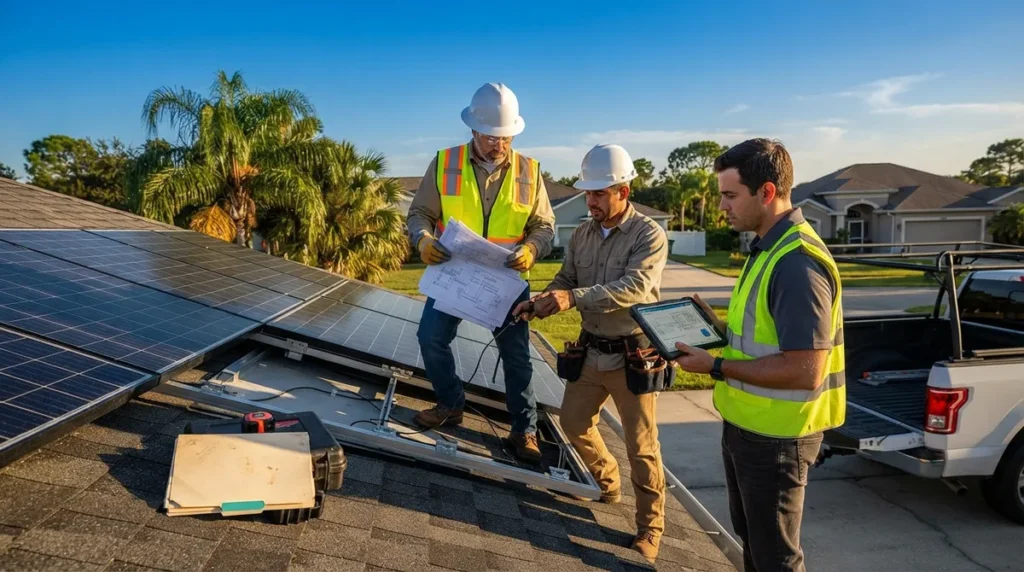
The big question is who should a solar company hire for unpermitted installs in Florida? The honest answer is that it takes a small team, not one hero. You need a properly licensed contractor to lead the corrective work, licensed trade professionals where the scope calls for them, and often a permitting-services partner to run the paperwork and the building department process.
In this guide, we'll walk through each role, what it costs you to skip one, and how to avoid the hiring mistakes that turn a small problem into a big one. Because the building department controls the outcome, we'll also show you how to find out what your local authority will actually accept before you promise anything to a customer.

Start With the Authority Having Jurisdiction
Before you hire anyone, find out who actually controls the property. In Florida, that is the building department, also called the authority having jurisdiction, or AHJ. It decides whether it will accept a permit application for work that is already finished, which documents it wants, and what inspections or corrective work come next.
This matters because the rules vary by county and by city. A pathway that works in one jurisdiction may not exist in the next one over. Properties near city lines can be tricky, so confirm which jurisdiction really reviews the address. Our building department lookup tool is a handy place to begin, and the open permit search helps you check the permit history.
Here is the friendly truth: nobody can promise you an approval before the AHJ weighs in. Any firm that guarantees one is selling hope, not a process.
The Core Hire: A Properly Licensed Contractor
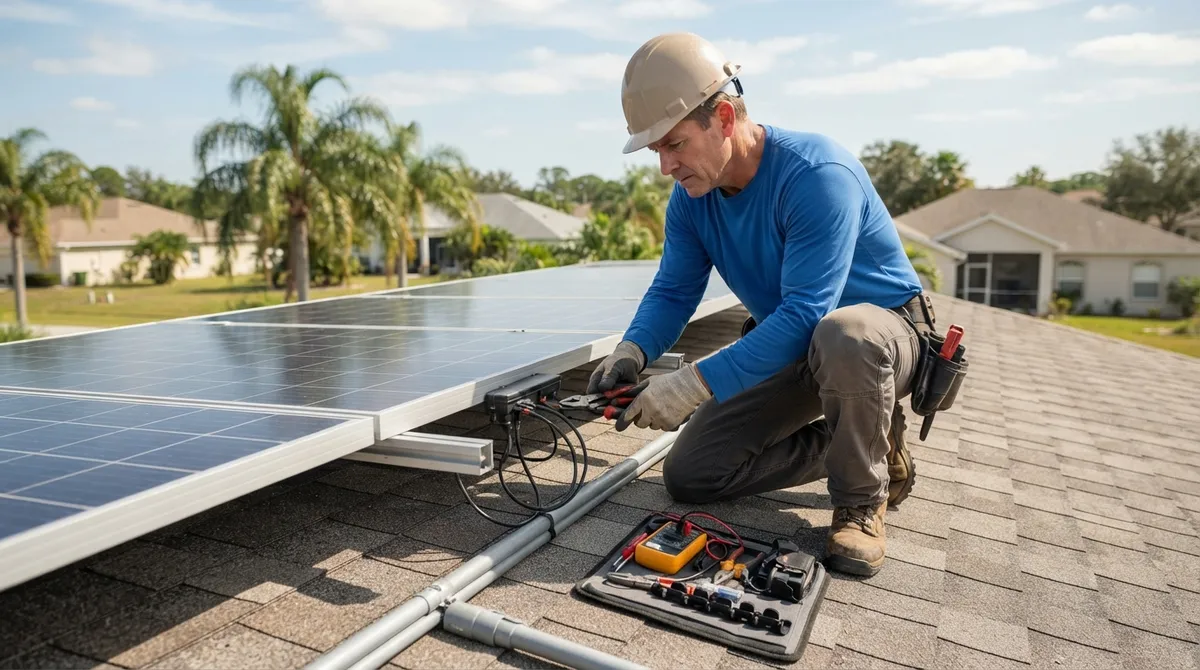
The first and most important hire is a Florida-licensed or properly registered contractor with the right scope for the work. Under Florida Statutes Chapter 489, contractors generally need the appropriate certification or registration, and permit officials are directed to verify those credentials before issuing permits.
A Florida solar contractor's statutory scope covers installing, altering, repairing, maintaining, relocating, or replacing solar panels and related equipment. That makes a licensed solar contractor the natural lead for corrective construction and for signing the permit application.
If your own company holds the right license, you can lead the fix yourself. If it does not, or if the original installer is gone, you will need a licensed partner to step in. Either way, the contractor of record is the person who answers to the building department.
Why a Permit Expediter Cannot Replace Them
This is a common mix-up. A permitting-services firm can gather documents, submit applications, and track comments. But it does not replace a properly licensed contractor or the AHJ's approval. Always ask whether a provider is acting only as a permit expediter or whether it is also a licensed contractor responsible for construction.
When You Also Need a Licensed Electrician
Solar is electrical work at its heart, so electrical scope deserves its own careful review. Florida law regulates electrical contracting, and contractors generally must subcontract regulated trade work unless they hold the relevant license, with limited statutory exceptions.
You may also hear about an owner-permit exemption for certain residential solar projects. The cited statute describes it as limited and says it still requires a licensed electrical contractor for wiring and interconnection. Please do not assume that exemption covers a commercial project or every residential install.
If the unpermitted job involved panel upgrades, new circuits, or interconnection work, plan on bringing in a licensed electrical professional. They can open up covered wiring, test connections, and correct anything that does not meet code.
Who Does What: A Quick Comparison
Think of the fix as a relay race. Each runner has a leg, and the baton has to pass cleanly. Here is how the roles typically divide.
| Professional | What They Handle | What They Cannot Do |
|---|---|---|
| Licensed solar contractor | Leads corrective work, signs permit application, answers to the AHJ | Perform regulated trade work outside their license scope |
| Licensed electrical contractor | Wiring corrections, interconnection, testing | Replace the lead contractor for the solar scope |
| Permitting-services firm | Assembles and files the package, tracks comments, schedules inspections | Pull permits as the contractor or guarantee approval |
| Engineer or drafter | Prepares plans, structural and electrical documentation, as-builts, engineer letters | Do the physical corrective construction |
The Permitting Partner Who Ties It All Together
Retroactive permitting is paperwork-heavy, and it is where many solar companies lose weeks. A permitting partner earns their keep here. They figure out which AHJ controls the job, learn what that office accepts, and assemble a package that matches its checklist.
At 1 Contractor Solutions, we act as Florida's outsourced permitting department. We are not a construction contractor. We handle permit facilitation and filing, tracking, reviewer comments, and revisions, and we carry the file through to closeout. Our drafting and engineering are in house, with our own engineer sealing the work, so a reviewer comment gets fixed instead of bounced to an outside consultant. Solar teams can learn more on our solar contractors page, and you can read our after-the-fact and expired permit service overview for the full picture.
If your team is in the Gulf Coast area, we regularly work in Hillsborough County, Pinellas County, and Manatee County, along with every other Florida county.
Do You Need an Engineer or Drafter?
Very often, yes. Solar installs touch the roof structure and the electrical system, and a building department reviewing finished work wants to see proof that both are sound. That is where engineering and drafting come in.
Common documents include:
- As-built drawings that show what was actually installed
- Structural verification of the roof and mounting attachments
- Electrical one-line diagrams and equipment specifications
- Engineer letters confirming the installation meets code
You can read more about as-built drawings and engineer letters to see how each one supports a retroactive permit. For deeper context, our guide on whether solar companies can legalize unpermitted installs is a great companion read.
A Typical Fix, Step by Step
Every jurisdiction is a little different, but most remediation follows a familiar path. Here is a general sequence you can adapt.
- Identify the jurisdiction. Confirm which AHJ controls the address and review any existing permit history.
- Gather your records. Pull system plans, equipment specs, structural and electrical details, and installation records.
- Ask the AHJ about its retroactive path. Find out whether it accepts applications for completed work and what it requires.
- Submit the application. File the permit package with the required drawings and documentation.
- Complete requested corrections. This may include exposing concealed work, testing, or fixing deficiencies.
- Pass inspections. Schedule and pass the required inspections before seeking final approval.
Remember, the AHJ sets the real requirements. This list is a roadmap, not a promise. For another angle, see our walkthrough on fixing a retroactive permit in Florida.
How to Vet Anyone You Hire
A great hire is a verified hire. Before you sign anything, run through a quick checklist. It takes an afternoon and can save you months.
- Verify the active Florida license and classification through the state licensing authority.
- Confirm any local registration requirements for the jurisdiction.
- Check insurance coverage and ask for references.
- Request a written scope that separates permit administration, engineering, construction, electrical corrections, inspection coordination, and fees.
- Be wary of anyone who guarantees a permit or approval.
Our contractor registration checklist and our article on Florida contractor license requirements can help you confirm who is qualified to do what.
Red Flags When Choosing a Partner
Some warning signs show up again and again. Keep an eye out for them as you compare providers.
| Red Flag | Why It Matters |
|---|---|
| Guarantees approval | Only the AHJ can approve a permit |
| No license verification | Permit officials check credentials before issuing permits |
| Vague written scope | Leads to surprise fees and missing deliverables |
| Offers to skip inspections | Required inspections are part of legalizing the work |
| Claims one flat timeline | Fees and processing times are set locally and vary |
A trustworthy partner will talk about the process honestly, including the possibility that corrections or testing may be requested. That kind of candor is a good sign.
What About Cost and Timing?
We wish we could hand you one tidy number, but the honest answer is that it varies. Reliable sources do not offer a statewide average cost or a standard timeline for retroactive solar permits. Fees, documentation, inspection requirements, and processing times are set locally and depend on the project.
What does help is preparation. Complete, accurate packages tend to move more smoothly than rushed ones. If you are curious about general pricing patterns, our guide on after-the-fact permit costs in Florida explains what drives the numbers, and our piece on Florida solar permit timelines sets realistic expectations.
What If an Inspection Fails?
It happens, and it is not the end of the world. A failed inspection usually means the building department wants a specific item corrected. You fix it, document it, and request reinspection. If a jurisdiction will not permit the existing work at all, the remedy may involve more significant corrective work, and your contractor and permitting partner can help you evaluate the options.
The key is to respond quickly and keep the customer in the loop. Homeowners are usually far more forgiving when they hear a clear plan than when they hear nothing.
Putting Your Dream Team Together
So, who should a solar company hire for unpermitted installs in Florida? In short, a licensed contractor to lead, a licensed electrician where needed, an engineer or drafter for sealed documentation, and a permitting partner to manage the AHJ process. Not every job needs every role, but knowing the lineup helps you ask the right questions.
If you want a hand sorting out your next step, we would love to help. We are Florida's outsourced permitting department, we respond within 30 minutes day or night, and you can get a free quote whenever you are ready. You can also see what our customers say, with a quick look at our 1 Contractor Solutions reviews on Google. To keep up with Florida permitting news, follow us on LinkedIn or follow us on Facebook.
Unpermitted work feels stressful, but with the right people in your corner, it becomes a solvable project. Take the first step, call the building department, and build your team from there.
FAQs
Who can legalize an unpermitted solar installation in Florida?
A properly licensed Florida contractor with the right scope typically leads the corrective work and permit application, with licensed electrical help where needed. A permitting-services firm can manage the paperwork and inspections, but the building department makes the final call.
Can a Florida solar company apply for a permit after panels are already installed?
Often it can, but it depends on the local building department. Each authority decides whether it accepts applications for completed work and what documents, testing, or corrections it wants, so check with the AHJ before you promise a customer anything.
Can a permit expediter get approval without a licensed contractor?
No. A permit expediter can assemble and submit your package, track comments, and schedule inspections, but it does not replace a properly licensed contractor or the AHJ's approval. Always confirm what role your provider is actually playing.
How do I check whether a Florida solar contractor is licensed?
Verify the contractor's active license and classification through the state licensing authority, then confirm any local registration requirements. It also helps to check insurance and references and to get a written scope before work begins.
What happens if a solar installation fails inspection or cannot be permitted?
A failed inspection usually means specific items need correcting before reinspection. If a jurisdiction will not permit the existing work, more significant corrective work may be needed, and your contractor and permitting partner can help you weigh the options.
We do this work every day across all 67 Florida counties. Call (866) 314-6931 and we will tell you what your situation actually requires — including when you do not need us.
Related services
Permit Facilitation & Filing
You have a crew scheduled, a client asking for dates, and a permit sitting somewhere in a queue you cannot see. We file it, w…
See the servicePlan Review Coordination
A permit in plan review is not one queue. On a commercial project it can be six queues, each with its own reviewer, its own c…
See the serviceReady to get your permit moving?
One call tells you which jurisdiction controls your project, what it will take, and what it will cost. Most of the time we can scope it on the phone.