
Blog
What Permits Do I Need to Open a Restaurant in Florida?
Wondering what permits you need to open a restaurant in Florida? Here is a friendly 2026 guide to licenses, plan review, and local approvals.
Key Takeaways
-
You need a DBPR public food service license from Florida's Division of Hotels and Restaurants, and you cannot serve food to the public until DBPR authorizes operation after a satisfactory inspection.
-
Buying an existing restaurant does not transfer the seller's license; you must obtain your own license before operating.
-
DBPR plan review is generally required for new construction, converted spaces, remodels, and restaurants reopening after being closed for more than 18 months, so confirm current rules before building.
-
State food licenses do not replace local approvals: zoning, building, electrical, plumbing, mechanical, fire, and business tax receipt or certificate of use must be secured from your city or county.
-
Confirm zoning allows a restaurant use at the exact address before signing a lease, since limits on seating, hours, parking, and bars can affect your concept.
-
Alcohol sales require a separate license from DBPR's Division of Alcoholic Beverages and Tobacco, and sales tax registration with the Florida Department of Revenue is also needed; start these early.
So you have a lease in mind, a menu you are proud of, and maybe a few regulars already lined up. Then the paperwork shows up, and suddenly the dream feels like a stack of forms. Take a breath. Opening a restaurant in Florida is very doable once you know which agencies want what, and in what order.
The big question most first-time owners ask is simple: what permits do I need to open a restaurant in Florida? The honest answer is that there is no single permit. You will usually deal with the state's food-service licensing agency, your city or county for zoning and construction, and sometimes health, alcohol, and tax offices on top of that.
In this friendly 2026 walkthrough, we will break it all down. You will see the core state license, the local approvals that trip up new owners, the extras for alcohol and septic systems, and a realistic order of operations. Think of it as a roadmap you can tape to the wall of your future kitchen.

The Short Answer: Your Restaurant Permit Checklist
Here is the quick version before we dig in. Which items apply to you depends on your location, your space, and how you plan to operate.
- State food service license from the Florida Department of Business and Professional Regulation (DBPR), Division of Hotels and Restaurants.
- DBPR plan review for new, converted, remodeled, or long-closed spaces.
- Local zoning and land-use approval for your exact address.
- Building, electrical, plumbing, and mechanical permits for any construction or remodel.
- Fire and life-safety approvals from the local fire authority.
- Local business tax receipt and, in many places, a certificate of use or occupancy.
- Alcohol license if you plan to sell beer, wine, or liquor.
- Florida Department of Revenue registration for taxable sales.
- Well or septic approvals if you are not on public water and sewer.
That list looks long, but most restaurants only touch a handful of these in a smooth, well-planned opening. The trick is sequencing them correctly.
The Core Requirement: A DBPR Public Food Service License
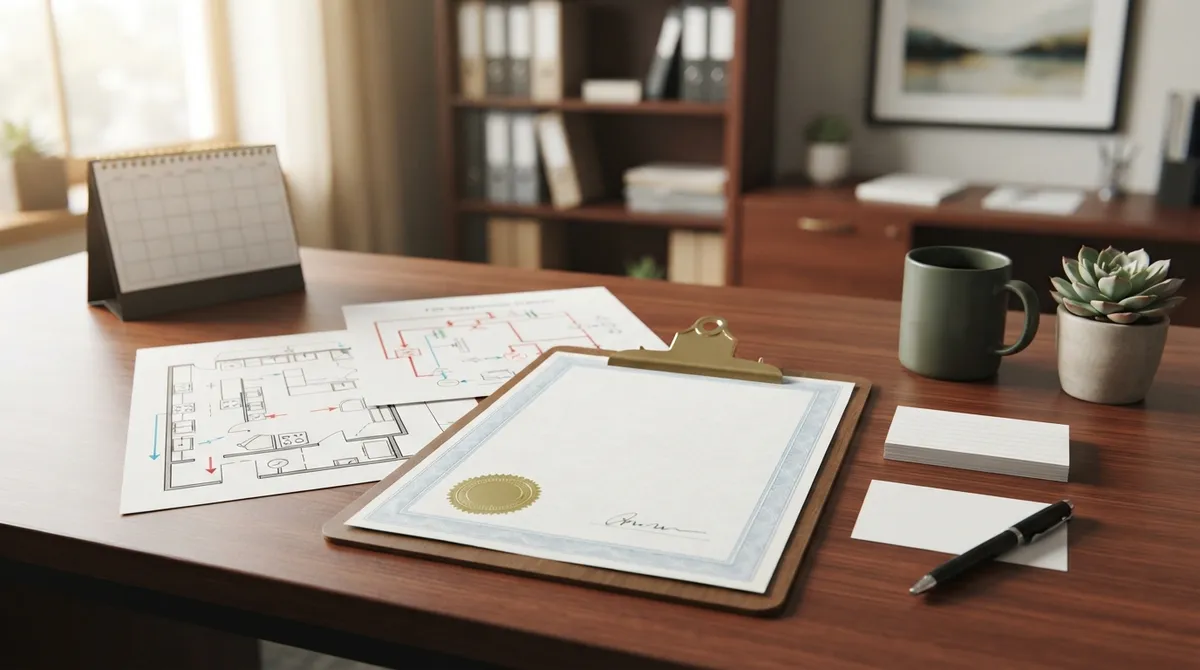
If you serve food to the public in Florida, you generally need a public food service establishment license from DBPR's Division of Hotels and Restaurants. This is the license most people mean when they ask what permits do I need to open a restaurant in Florida. It is the anchor of everything else.
A few details worth knowing:
- The license is issued to a specific operator at a specific location.
- If you buy an existing restaurant, you still need your own license before you operate. Do not assume the seller's license carries over to you.
- You cannot serve food until DBPR has authorized operation following a satisfactory inspection.
That last point matters more than almost anything. Soft openings and friends-and-family nights sound harmless, but serving food before authorization can create real headaches. Wait for the green light.
Do You Need DBPR Plan Review?
Plan review is DBPR's way of checking your layout and equipment before you build. It is generally required in these situations:
- A newly constructed restaurant.
- A space converted from another use, such as retail to restaurant.
- A remodel of an existing food service space.
- A restaurant reopening after being closed for more than 18 months.
That 18-month figure reflects DBPR's current online guidance. Some older forms and search results show a different period, so verify the current rule directly with DBPR for your specific project.
What goes into a plan review submission
Plan-review submissions typically include a scaled floor plan with every piece of equipment labeled, plus a sample menu. DBPR recommends getting plan approval before you start construction or remodeling, which saves you from tearing out a hand sink that is in the wrong spot.
Applicants may be able to submit the plan-review and license applications together. DBPR's instructions list a $150 plan-review fee and a one-time $50 application processing fee for the combined application, but fees change, so confirm current amounts and your license fee with DBPR before you apply.
A clean, accurate floor plan is where many owners stumble. If your drawings are fuzzy or equipment is unlabeled, expect questions and delays. This is exactly the kind of work that architectural drafting support handles well, because reviewers want to see specific details presented the way they expect them.
The Local Side: Zoning, Building, and Fire
Here is the part that surprises many first-time restaurateurs. The state food license does not replace local approvals. DBPR's opening inspection checklist may ask for proof of building, electrical, plumbing, and fire approvals, and those come from your local authorities.
Zoning and land-use approval
Before you sign a lease, confirm that a restaurant is actually allowed at that address. Zoning can limit things like seating counts, outdoor dining, hours, parking, and whether you can have a bar or live music. A space that looks perfect can still be the wrong use on paper.
If the previous tenant was a dentist or a boutique, you may be looking at a change of use. Our guide on the requirements for a change of use permit shows what local reviewers commonly want to see.
Building, electrical, plumbing, and mechanical permits
Any build-out or remodel typically needs construction permits. Restaurants are demanding spaces: grease traps, hood systems, commercial refrigeration, walk-in coolers, extra restrooms, and heavy electrical loads. Reviewers will scrutinize the structural, electrical, plumbing, and mechanical plans accordingly.
Many jurisdictions require sealed drawings for commercial work. If you are wondering who can provide them, see who seals structural drawings for Florida permits. For the systems side of a kitchen, MEP engineering is often what keeps a project moving through review.
Fire and life-safety approvals
Expect the local fire authority to weigh in on your hood suppression system, extinguishers, exit paths, occupancy load, and alarm requirements. These approvals are separate from DBPR, and the opening inspection may ask you to prove you have them.
Local business tax receipt and certificate of use
Most Florida cities and counties require a local business tax receipt to operate, and many also issue a certificate of use or occupancy tied to your space. Names and procedures vary widely. If you are new to this, this explainer on certificates of use clears up the confusion, and our overview of how to get a certificate of occupancy in Florida covers the closeout side.
Who Issues What: A Quick Reference Table
| Approval | Typical Issuing Authority | When It Applies |
|---|---|---|
| Public food service license | DBPR, Division of Hotels and Restaurants | Any restaurant serving the public |
| DBPR plan review | DBPR | New, converted, remodeled, or long-closed spaces |
| Zoning and land use | City or county planning/zoning | Every address, especially change of use |
| Building, electrical, plumbing, mechanical | Local building department | Construction, remodel, or equipment work |
| Fire and life safety | Local fire authority | Most commercial kitchens and assembly spaces |
| Business tax receipt / certificate of use | City or county | Before operating, varies by jurisdiction |
| Alcohol license | DBPR, Division of Alcoholic Beverages and Tobacco | Selling beer, wine, or liquor |
| Sales tax registration | Florida Department of Revenue | Taxable sales |
| Well or septic approval | Florida DEP or Department of Health (county) | No public water or sewer connection |
Extras That Depend on Your Concept
Selling alcohol
If you want a full bar, a craft beer list, or even a wine pairing menu, you need a separate alcoholic-beverage license through DBPR's Division of Alcoholic Beverages and Tobacco. It is a different application with its own requirements, so start early. The type of license, seating, and location rules can shape your whole business plan.
Registering for sales tax
Businesses with taxable sales generally must register with the Florida Department of Revenue before conducting those transactions. It is an online process, and it is easy to forget in the excitement of opening. Put it on the list now.
Private wells and septic systems
Not every Florida restaurant sits on city water and sewer. If yours uses a private well or septic system, you may need approvals from the Florida Department of Environmental Protection or the Florida Department of Health, as applicable. DBPR advises contacting the county health department early about well-water and septic approvals, because these can take time and sometimes limit your seating capacity.
The Opening Inspection: Your Final Boss Level
Before you open, you submit your license application and fees, then pass DBPR's opening or licensing inspection. A satisfactory inspection can result in a temporary license, and DBPR's instructions note the permanent license may take up to 30 days to arrive. Follow DBPR's current authorization instructions for exactly when you may begin serving.
When plan review and licensing are filed separately, DBPR's instructions recommend submitting the license application at least 30 days before your planned opening. Build that buffer into your calendar, and then add a little more.
To be inspection-ready, make sure that:
- Equipment matches your approved plans.
- Hand sinks, three-compartment sinks, and restrooms are fully operational.
- Your building, electrical, plumbing, and fire sign-offs are in hand.
- Food-safety basics like thermometers, sanitizer, and labeled storage are in place.
A Realistic Order of Operations
Sequencing is where owners save or lose the most time. Here is a sensible path to follow.
- Check zoning first. Confirm the address allows a restaurant use before you sign anything.
- Ask about DBPR plan review. Confirm with the Division whether your project needs it.
- Develop your plans. Create a scaled floor plan, an equipment schedule, and construction drawings for the local building department.
- Submit DBPR plan review. Get approval before construction whenever possible.
- Pull local permits. File building, electrical, plumbing, mechanical, and fire submittals, and respond to reviewer comments promptly.
- Build out the space. Schedule inspections as work is completed, not all at the end.
- Apply for your license. File the DBPR license application and fees, along with any alcohol and tax registrations.
- Pass the opening inspection. Then open once DBPR authorizes operation.
Common Mistakes That Delay Restaurant Openings
- Signing the lease before checking zoning. A bad use classification can sink a project before it starts.
- Starting construction before plan approval. Reworking built walls and plumbing is expensive.
- Assuming one permit covers everything. State, county, and city approvals are separate.
- Skipping inspections during construction. Covered work that was never inspected creates trouble later.
- Forgetting the extras. Alcohol, sales tax, and septic approvals all have their own timelines.
That second-to-last one deserves special attention. If work was already done without proper sign-off, our walkthrough on handling covered work that missed inspection explains your options. And if you are taking over a space that has already been altered, the lessons in these Florida restaurant remodel mistakes can save you real money.
Local Rules Vary: Check Your Exact Address
Florida has 67 counties and hundreds of municipalities, and each one runs its own processes, portals, and timelines. A project that moves quickly in one city can crawl in the next county over. Even the address matters, since a property near a city line may be controlled by a different jurisdiction than you expect.
If you are curious how requirements differ from place to place, these local guides show the pattern: restaurant permits in Venice, restaurant permits in Tampa, and restaurant permits in Cape Coral. The same state rules apply everywhere, but the local layer is where the differences show up.
Where a Permitting Partner Fits In
Many restaurant owners are brilliant cooks and operators who never planned to become permit experts. That is completely normal. A good permitting partner handles the plan drafting, engineering, filing, tracking, and reviewer comments so you can focus on hiring, menus, and vendors.
At 1 Contractor Solutions, our in-house drafting and engineering team prepares sealed plans, and we coordinate permit filing and plan review across all 67 Florida counties. Explore our small business permitting services or our permit facilitation and filing to see how the process works. If you have already hit a wall, our urgent permit rescue team steps in on denials and delays.
If you like seeing real feedback, read 1 Contractor Solutions reviews on Google. You can also follow us on LinkedIn and follow us on Facebook for Florida permitting updates. Our website and marketing are supported by Brain Buzz Marketing.
Verify Before You Commit
One more friendly reminder: rules, forms, and fees change. DBPR's online guidance is the best source for current licensing and plan-review requirements, and your city or county building and zoning offices are the best source for local approvals. Confirm both before you sign a lease or start construction. A short phone call now can prevent months of rework later.
Ready to Open Your Doors?
Opening a restaurant takes courage, and the permit maze should not steal your energy. Start with zoning, confirm whether you need plan review, line up your local approvals, and give yourself plenty of time before the opening inspection. When you know what permits do I need to open a restaurant in Florida, the process stops feeling mysterious and starts feeling manageable.
If you would like a team in your corner, we would love to help. Whether you need drawings, filing, or help untangling a stalled review, get a free quote and let us take the permit headaches off your plate so you can get back to the fun part: feeding people.
FAQs
What license does a restaurant need in Florida?
Most restaurants serving the public need a public food service establishment license from the Florida DBPR, Division of Hotels and Restaurants. If you buy an existing restaurant, you still need your own license before you operate, so plan for that early.
Does a restaurant in Florida need plan review before remodeling?
Often, yes. DBPR plan review generally applies to new construction, converted spaces, remodels, and restaurants reopening after being closed for more than 18 months. Since requirements can depend on your project and current guidance, confirm with DBPR before you start construction.
Do I need a separate permit to serve alcohol in Florida?
Yes, you do. Selling alcohol requires a separate alcoholic-beverage license through DBPR's Division of Alcoholic Beverages and Tobacco, in addition to your food service license. Start that application early so it does not hold up your opening.
What inspections must a Florida restaurant pass before opening?
You must pass DBPR's opening inspection, and you may need to show proof of local building, electrical, plumbing, and fire approvals. Do not serve food until DBPR authorizes operation, which a satisfactory inspection can lead to via a temporary license.
How do I find the local requirements for my restaurant address?
Contact the city or county planning, building, and fire departments for that exact address, since rules vary across Florida. Ask about zoning, construction permits, fire approvals, and business tax or certificate of use requirements before you sign a lease.
We do this work every day across all 67 Florida counties. Call (866) 314-6931 and we will tell you what your situation actually requires — including when you do not need us.
Related services
Permit Facilitation & Filing
You have a crew scheduled, a client asking for dates, and a permit sitting somewhere in a queue you cannot see. We file it, w…
See the servicePlan Review Coordination
A permit in plan review is not one queue. On a commercial project it can be six queues, each with its own reviewer, its own c…
See the serviceReady to get your permit moving?
One call tells you which jurisdiction controls your project, what it will take, and what it will cost. Most of the time we can scope it on the phone.