
Blog
9 Mistakes to Avoid With a Florida Restaurant Remodel
Unpermitted restaurant remodel in Florida? Avoid 9 costly mistakes and learn the right steps to legalize the work and reopen with confidence.
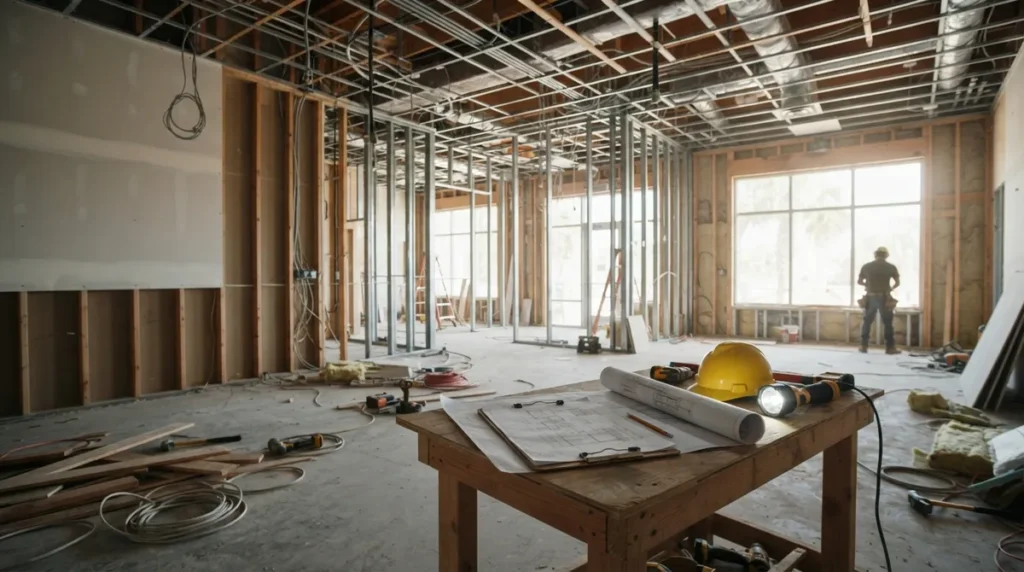
Key Takeaways
-
Stop all unpermitted work immediately and contact your local building department to disclose the situation; continuing work adds risk and makes eventual review significantly harder.
-
Obtain sealed plans from a Florida-licensed architect or engineer before submitting permits; a permitting consultant without in-house design capacity will face delays when reviewers flag structural or MEP issues.
-
Submit for both local building permits AND separate DBPR plan review in parallel, as food-service establishments require Division of Hotels and Restaurants approval independent of local permits.
-
Avoid covering walls, ceilings, or chases before inspection; inspectors often need to see exposed structural, electrical, plumbing, and gas work for verification, especially for life-safety systems.
-
Confirm the correct jurisdiction before filing anything, as Florida has 67 counties and hundreds of municipalities; filing with the wrong building department causes weeks of delays.
-
Include fire marshal approval in your compliance plan, as kitchen equipment, hood systems, and exit path alterations frequently require separate fire and life-safety sign-off before final inspection.
So your restaurant got a little ahead of itself. Maybe the contractor said "don't worry about the permit, we'll handle it later," or maybe you just wanted to get the dining room open before the busy season hit. Either way, here you are now, staring at walls that were opened up, electrical that was moved, and a kitchen line that looks amazing but was never inspected. Take a breath. This happens more often than you'd think, and it is absolutely fixable. The trick is finding the best help for a restaurant unpermitted remodel in Florida, and avoiding the missteps that turn a manageable situation into a much bigger headache.
We talk to restaurant owners across the state every week who are in exactly this spot, from a strip mall spot in Tampa to a beachside cafe near Pensacola. In fact, local renovation stories keep popping up in the news, like the recent coverage of Pensacola Beach renovations making local headlines, which is a good reminder that remodel activity is happening everywhere right now. Below are the nine mistakes we see most often, and what to do instead so you can get back to serving customers with a clear conscience and a clean permit file.
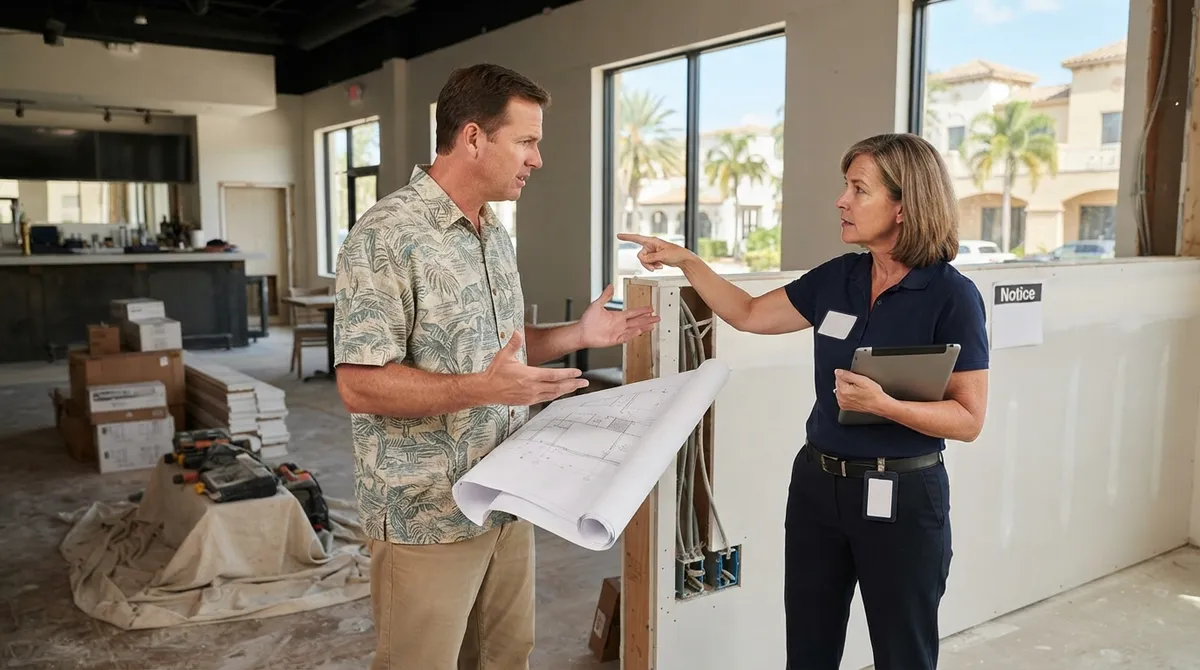
Mistake 1: Assuming You Can Get a Retroactive Permit Without Any Review
A lot of owners think an after-the-fact permit is just paperwork and a fee. It's not. Florida Statutes § 553.79 requires a permit before construction, alteration, or modification work happens, and a restaurant remodel does not qualify for the narrow single-family-home exemption some homeowners rely on.
There is no statewide shortcut or standard fee schedule for after-the-fact permits. Each local building department decides what documentation, inspections, and corrections are required, which means the process in Miami-Dade may look nothing like the process in Sarasota or Duval County.
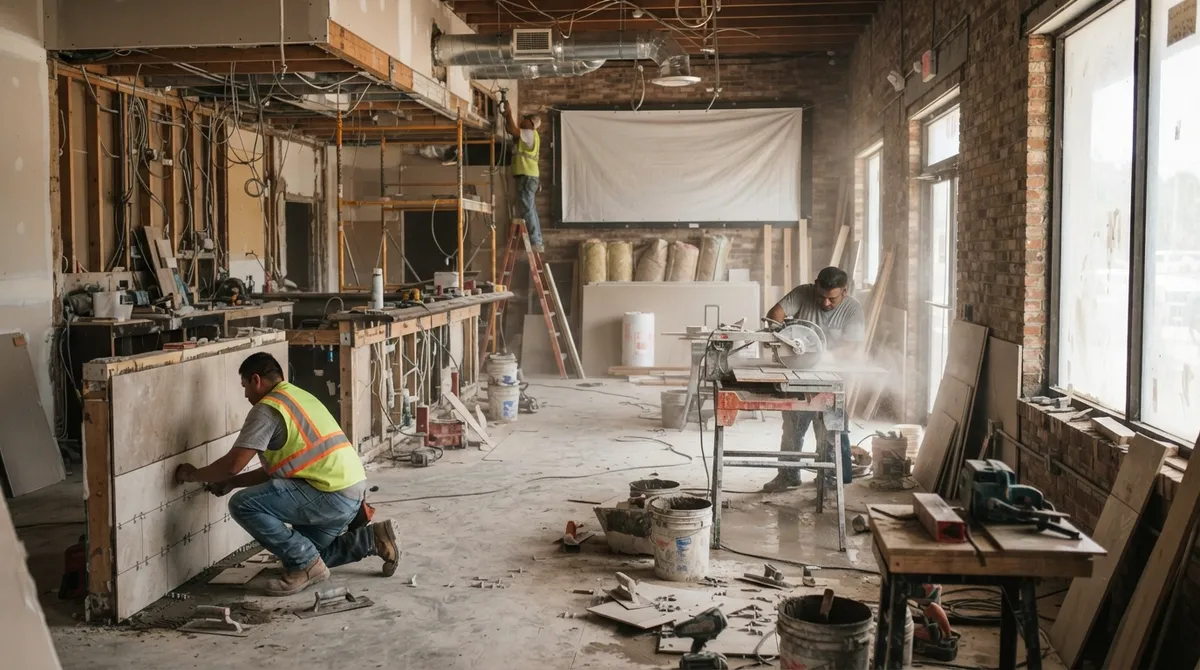
Mistake 2: Continuing Work While You Figure Things Out
This is the single most common error we see. An owner discovers the remodel was never permitted, panics a little, and then keeps building because the grand opening is already scheduled. Every additional day of unpermitted work adds risk and makes the eventual review harder.
The right move is to stop ongoing work immediately and contact the local building department or code enforcement office. Ask directly how they want you to disclose the situation and apply for the required permits before you cover up or alter anything further.
Mistake 3: Covering Up Walls, Ceilings, or Chases Before Inspection
It is tempting to finish drywall or drop the ceiling tiles once equipment is in and everything looks clean. But if structural framing, electrical runs, plumbing, mechanical ductwork, or gas lines were installed without a permit, inspectors will likely need to see them exposed.
Here's what that usually means in practice:
- Sections of drywall or ceiling may need to be opened for visual verification
- Photos alone rarely satisfy an inspector if the work was never inspected in progress
- Some jurisdictions require destructive testing if documentation is incomplete
- Concealed gas and electrical work gets the closest scrutiny because of life-safety risk
Mistake 4: Forgetting That DBPR Plan Review Is Separate From Your Local Permit
Local building permits are only half the picture for a licensed food-service establishment. Florida's Division of Hotels and Restaurants requires plan review whenever a licensed restaurant is remodeled, newly built, converted from another use, or reopened after being closed 18 months or more.
DBPR's plan review guidance page asks for a scaled floor plan with labeled equipment and a sample menu, and online applicants can generally expect a response within about 30 days. That timeline applies to DBPR's review specifically, not to your local building permit, so plan for both processes running in parallel rather than assuming one covers the other.
DBPR Plan Review Triggers at a Glance
| Trigger | Applies to Your Restaurant If |
|---|---|
| New Construction | You're building a brand-new food-service space |
| Conversion | The space was previously a retail store, office, or other non-food use |
| Remodeling | You've changed layout, equipment, or major systems |
| Reopening After Closure | The license lapsed and the space was closed 18+ months |
Mistake 5: Hiring Someone Who Can't Produce Sealed Drawings
Once a building department requires plans to verify unpermitted work, those plans typically need to be prepared and sealed by a Florida-licensed architect or engineer. A permitting consultant who promises approval but has no in-house design team is going to hit a wall fast.
This is one area where working with a firm that keeps drafting and engineering in-house, like 1 Contractor Solutions, actually saves time. When a reviewer flags an issue with the structural or MEP plans, the fix happens internally instead of bouncing between three different vendors who all blame each other for the delay.
Mistake 6: Not Confirming Which Jurisdiction Actually Has Authority
Florida has 67 counties and hundreds of municipalities, and restaurant locations near city borders or in unincorporated areas are notoriously confusing. Owners sometimes file with the wrong office entirely and lose weeks before anyone catches the mistake.
Before you submit anything, confirm exactly which building department and fire authority has jurisdiction over your address. A quick way to double-check is using a building department lookup tool so you're not guessing based on your mailing address alone.
Mistake 7: Ignoring Fire and Life-Safety Approvals
Building permits and DBPR plan review are not the only approvals a remodeled restaurant needs. Fire marshal sign-off is frequently required, especially when kitchen equipment, hood systems, or exit paths were altered during the unpermitted work.
Skipping this step is a common reason owners think they're done, only to get stopped again during a final inspection. Coordinating fire review alongside building and DBPR review from the start prevents that late surprise.
Mistake 8: Trying to DIY the Whole Process Solo
We get it. Hiring outside help feels like an extra expense when money already went into the remodel itself. But most owners underestimate how many moving pieces are involved: local permit application, plan review coordination, DBPR submission, engineer letters, inspections, and possibly code compliance corrections.
Here's a simple breakdown of what usually needs to happen, in order:
- Stop all ongoing unpermitted work immediately
- Document existing conditions with photos and, if possible, partial demolition for inspection access
- Confirm the correct jurisdiction and contact the local building department
- Engage a licensed architect or engineer to prepare or verify compliant plans
- Submit for local permit review and DBPR plan review in parallel
- Complete any required openings, corrections, or retrofits identified by inspectors
- Pass final inspections and confirm the certificate of occupancy or certificate of use reflects the new layout
A permitting consultant can manage this coordination, but remember: a consultant cannot replace the licensed design professionals or guarantee an outcome. What they can do is keep every piece moving instead of stalling in someone's inbox.
Mistake 9: Waiting Too Long to Ask for Help
The longer an unpermitted remodel sits unresolved, the more likely it surfaces at the worst possible moment, during a sale, a lease renewal, an insurance renewal, or a routine health inspection. Realtors and buyers researching a commercial property should always check for open permits found at closing before finalizing a deal, because an unresolved remodel can delay or derail a transaction entirely.
If you're a general contractor managing the fix, a solar company that touched the roof or electrical during the same project, or simply a small business owner trying to reopen, getting professional guidance early is almost always cheaper than waiting.
How 1 Contractor Solutions Helps With Unpermitted Restaurant Remodels
We are Florida's outsourced permitting department, and after-the-fact and expired permit cases are some of the files we handle most often, including the ones other firms decline. Our team figures out which jurisdiction controls your address, what documentation the reviewer will actually require, and then we go do the work ourselves.
Because our drafting and engineering happen in-house, and our own engineer signs and seals the drawings, we're not waiting on an outside consultant to return a call when a reviewer flags something. We're also a licensed private provider, which means we can perform your plan review directly instead of sitting in a county queue.
Whether your restaurant is in Tampa, Miami, St. Petersburg, or anywhere else across our 67-county service area, we've likely filed in that municipality before. Our services include after-the-fact and expired permit filing, code compliance and violation resolution, certificate of occupancy support, and DBPR licensee process coordination.
You can see how past clients describe working with us by checking our Google reviews for 1 Contractor Solutions, or by connecting with our team on LinkedIn and Facebook for updates on Florida permitting rules as they evolve.
Bringing Your Restaurant Back Into Compliance
An unpermitted remodel feels overwhelming right up until the moment you have a clear plan and a team that actually knows the process. Florida's permitting rules aren't designed to punish honest mistakes, they're designed to make sure the building is safe for the staff and guests inside it. Once you stop the clock on additional unpermitted work and start documenting what's there, the path forward gets a lot simpler.
If you're ready to stop guessing and get a straight answer about what your restaurant needs, our team answers around the clock and typically responds within 30 minutes. Reach out today to get a free quote and let's get your permits, plans, and inspections moving in the right direction.
FAQs
How do I legalize an unpermitted restaurant remodel in Florida?
Start by stopping any ongoing work and reaching out to your local building department to disclose what happened. From there, you'll typically need sealed plans documenting the existing conditions, a permit application, inspections (sometimes requiring exposed walls or ceilings), and DBPR plan review if it's a licensed food-service establishment. It sounds like a lot, but taking it one step at a time makes it very manageable.
Can I get an after-the-fact building permit for restaurant work in Florida?
In many cases, yes, but there's no guaranteed statewide process or fee, and it's entirely up to your local building department's discretion. They'll decide what documentation and inspections are needed before anything gets approved retroactively, so don't assume it's automatic.
Does DBPR require plan review for a restaurant remodel in Florida?
Yes. DBPR's Division of Hotels and Restaurants requires plan review whenever a licensed restaurant is remodeled, newly built, converted from another use, or reopened after 18+ months closed. This is separate from your local building permit, so both need attention.
Will inspectors require walls or ceilings to be opened to inspect unpermitted work?
Quite possibly, especially if structural, electrical, plumbing, or gas work was concealed before it was ever inspected. It's not fun to hear, but it's a lot better than finding out something unsafe was hiding behind the drywall down the road.
How can I find a Florida permitting consultant, architect, or engineer for an unpermitted restaurant renovation?
Look for a team that keeps drafting and engineering in-house so plan corrections don't get stuck waiting on outside vendors. A firm familiar with your specific county's requirements, like 1 Contractor Solutions, can save you weeks of back-and-forth compared to piecing together separate consultants yourself.
We do this work every day across all 67 Florida counties. Call (866) 314-6931 and we will tell you what your situation actually requires — including when you do not need us.
Related services
Permit Facilitation & Filing
You have a crew scheduled, a client asking for dates, and a permit sitting somewhere in a queue you cannot see. We file it, w…
See the servicePlan Review Coordination
A permit in plan review is not one queue. On a commercial project it can be six queues, each with its own reviewer, its own c…
See the serviceReady to get your permit moving?
One call tells you which jurisdiction controls your project, what it will take, and what it will cost. Most of the time we can scope it on the phone.