
Blog
Sliding Glass Door Replacement Permits in Florida (2026)
Replacing a sliding glass door in Florida usually needs a permit, even for same-size swaps. Learn the rules, documents, and inspection steps for 2026.
Key Takeaways
-
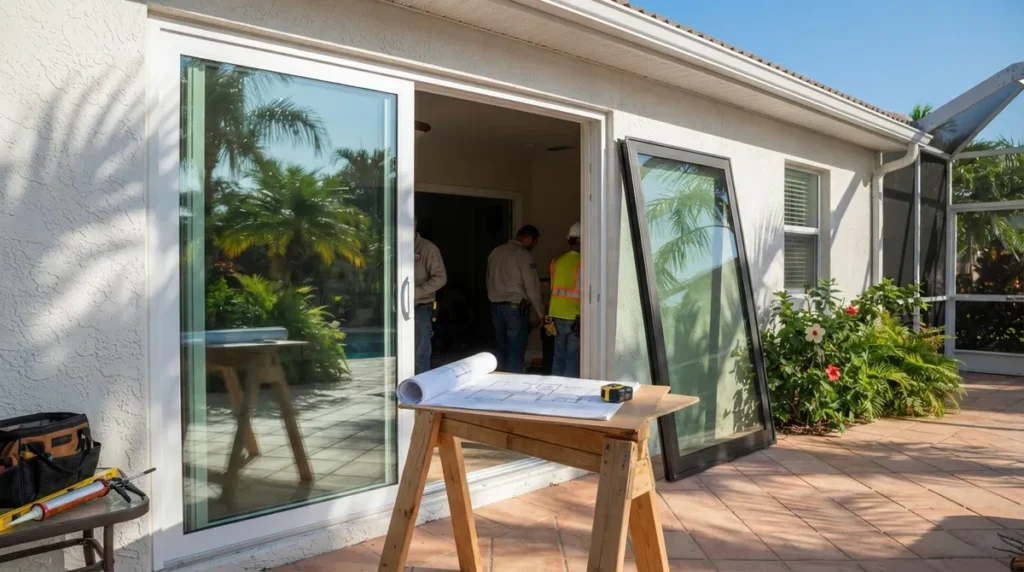
In most Florida jurisdictions, replacing a sliding glass door requires a building permit, even for a same-size swap in the existing opening.
-
A limited Florida code provision may waive the need for engineer-sealed drawings on qualifying same-opening replacements, but it does not waive the permit itself.
-
Before ordering, confirm the door's product approval and wind-zone rating, since coastal and wind-borne-debris areas may require impact-rated glass or approved protection.
-
Typical permit packages include the application, product approval documents, manufacturer installation instructions, and a site plan or wall elevation showing the door location and size.
-
Changing the opening's size, location, or framing usually triggers plans, additional review, and possibly sealed engineering rather than a simple permit.
-
Always schedule the required inspections and close out the permit, since an open permit can cause problems during a home sale or insurance review.
You've picked out a gorgeous new sliding glass door, the old track is sticking, and your installer says they can swap it out in a day. Then a neighbor mentions a permit, and suddenly you're wondering: do I need a permit to replace a sliding glass door in Florida, or is that just paperwork for bigger jobs?
Here's the friendly, honest answer. In most Florida jurisdictions, yes, you do. A sliding glass door is an exterior glazed opening, and Florida takes exterior openings seriously because they are part of your home's hurricane defense. Even a same-size, like-for-like swap usually needs a building permit.
The good news is that this is one of the more manageable permits out there. In this guide, we'll walk through when a permit is required, what a limited code provision does and does not change, what documents your building department will want, and how to avoid the mistakes that cause delays. Whether you're a homeowner, a general contractor, or an agent helping a client, you'll leave knowing exactly what to do next.
The Short Answer: Yes, Usually
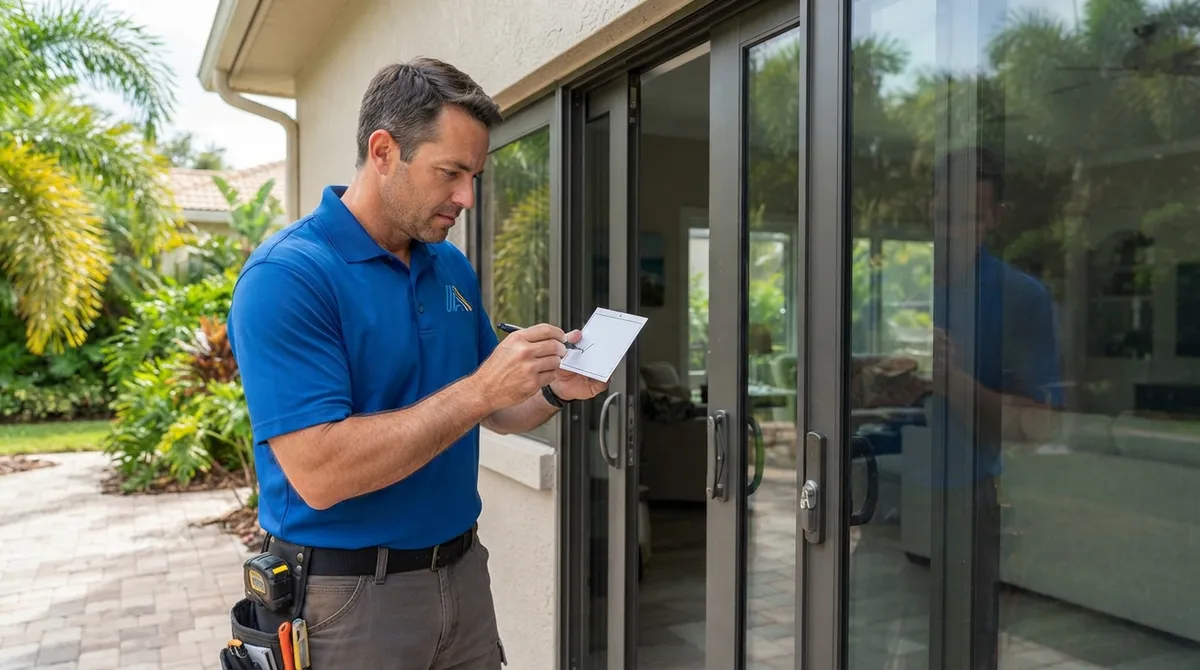
In most Florida cities and counties, replacing an exterior sliding glass door requires a building permit. That holds true even when the new door is the same size and goes into the existing opening. Local rules vary, so the building department that has jurisdiction over your property has the final word.
Why so strict? A sliding glass door is a big piece of glass in your building envelope. If it fails in a storm, wind and pressure can enter the home and put the roof and walls at risk. The permit process is how a local building department confirms that:
- The product is approved for your location and wind conditions.
- The door is installed per the manufacturer's instructions.
- The finished work gets inspected and documented.
Think of the permit as a safety receipt for the biggest hole in your wall.
What Counts as a Sliding Glass Door in the Eyes of a Building Department
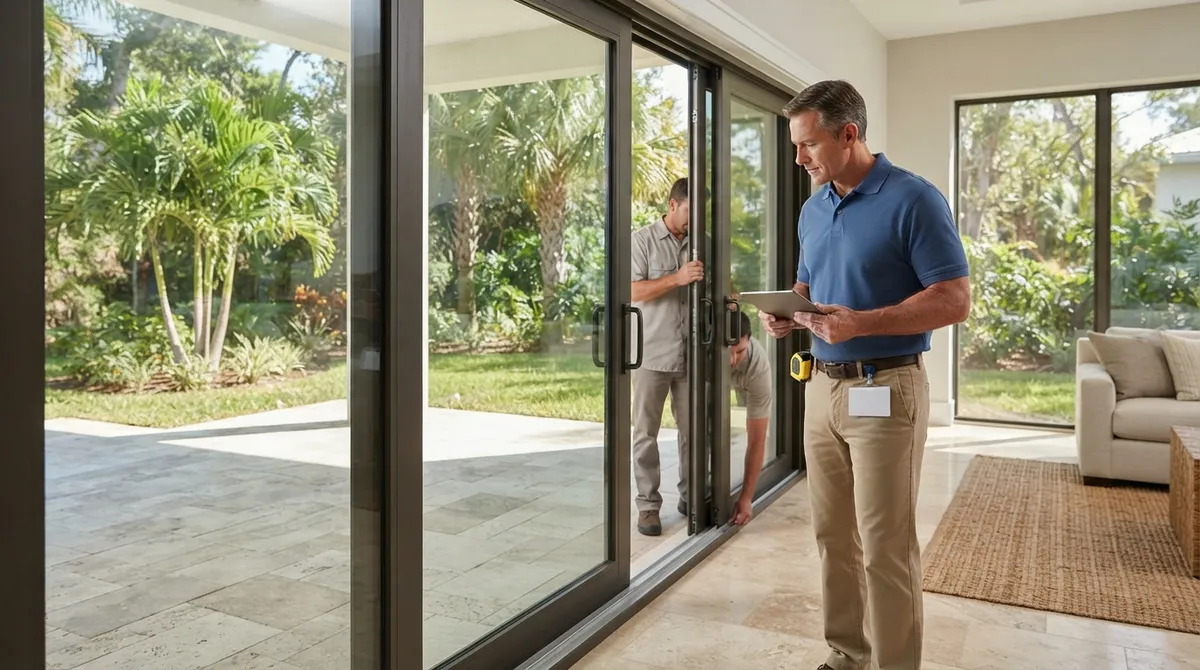
A sliding glass door is treated as a glazed exterior door assembly. That puts it in the same family as windows and other glass doors for permitting purposes. Miami-Dade County, for example, lists replacement glass doors alongside window and glass-door permits. Brevard County also requires permits for exterior door replacement on one- and two-family homes.
That classification matters because glazed openings trigger product approval and wind-pressure requirements. If you're also swapping windows, you may find our guide on documents needed for a window replacement permit helpful, since the paperwork overlaps quite a bit.
Same-Size Replacement vs. Changing the Opening
Not all door projects are equal. How much your project changes the wall makes a big difference in what the building department will want to see.
| Project Type | Permit Likely Needed? | What to Expect |
|---|---|---|
| Same-size door, same opening | Yes, in most jurisdictions | Application, product approval, installation instructions, possibly an elevation |
| Larger or smaller door size | Yes | Plans and additional review are more likely |
| Widening the opening or moving the door | Yes | Framing changes, header sizing, and often engineering |
| Adding a door where there was a wall or window | Yes | Structural review, plans, and possibly sealed drawings |
A permit is generally required when the work changes the opening, the framing, structural components, or the door size. Those changes often call for plans or additional review, so ask your local building department what documents it needs before you start.
The Sealed Drawings Exemption: What It Is (and Isn't)
Here's where a lot of confusion comes from. Florida's 2023 8th Edition Building Code includes a provision that can waive the requirement for sealed design-professional drawings for qualifying replacement windows, doors, or garage doors in existing one- or two-family dwellings and townhouses.
The stated conditions generally include:
- The new unit is the same size and goes in the same opening.
- The product complies with current residential-code design pressures and the appropriate wind zone.
- The manufacturer's installation instructions are submitted with the permit application.
Please read this part carefully: this is a drawing exemption, not a general permit exemption. It can mean you skip engineer-sealed plans for a qualifying same-opening replacement, but you still pull the permit, still submit product information, and still get inspected. For a deeper look at when seals are required, see who seals structural drawings for Florida permits.
Wind Zones, Product Approvals, and Impact Ratings
Florida's wind requirements are the heart of why this permit exists. Replacement products must meet applicable Florida Building Code requirements, including design-pressure and wind-zone requirements. The door must also be approved for your project's location and installed exactly as the manufacturer specifies.
Coastal areas and wind-borne-debris regions can add more requirements. Depending on where you live, that can mean impact-rated glass or a door paired with approved protection. Requirements differ by county and by the specific wind conditions at your address, so confirm before you order.
Product approvals are also why you should never order a door first and ask questions later. A beautiful door that lacks the right approval for your wind zone can fail plan review or inspection. It's a bit like buying shoes before knowing your size. For a primer on reading approval numbers, check out how to read a Florida product approval number; the same logic applies to doors and windows.
What Your Permit Application Usually Includes
Local checklists differ, but sliding glass door permit packages commonly include these items:
- A permit application completed by the owner, contractor, or authorized agent.
- Product approval documentation showing the door is approved for your location and wind conditions.
- Manufacturer installation instructions for the specific door model.
- A site plan or wall elevation showing the door location and size.
- Contractor information, including license details, if a contractor is doing the work.
Miami-Dade County specifically asks for product approval information and an elevation that identifies the opening for glass-door replacements. Other counties may ask for slightly different items, so a quick call or a look at your building department's checklist saves headaches.
Step-by-Step: How to Get Your Permit Without the Stress
Here's a simple path that works for most homeowners and contractors.
- Confirm your jurisdiction. City limits and county lines can be tricky. Make sure you know which office actually controls your address. Our building department lookup tool can help.
- Check the local checklist. Ask what the department requires for exterior door replacement.
- Choose an approved product. Verify the door meets your wind zone and has valid product approval documentation.
- Gather your documents. Application, approval paperwork, installation instructions, and an elevation or site plan.
- Submit and track the application. Respond quickly to any reviewer comments.
- Install per the approved plans. Follow the manufacturer's instructions exactly.
- Schedule inspections and close the permit. Don't let the permit sit open after the work is done.
Inspections and Closing Out Your Permit
A permit may require one or more inspections, and your job isn't truly finished until the permit is closed. An inspector may verify the installed product, anchoring, and flashing against the approved documents.
Closing the permit is the step people forget. An open permit can create headaches later, especially during a sale. If you're curious about how that plays out, read about open permit mistakes before closing and who pays for open permits when buying a Florida home.
Who Can Pull the Permit?
This is one of the most common questions we hear. Homeowners can often apply for permits on their own property, and licensed contractors can pull permits for work within their license scope. The details depend on your county and city, including owner-builder rules and local registration requirements.
Hiring a licensed contractor who knows your local permitting process can make everything smoother. They'll know the product approvals, installation requirements, and inspection sequence. If you're weighing your options, see our breakdown of DIY vs. pro help on Florida code compliance.
What If the Door Was Already Replaced Without a Permit?
It happens more than you'd think. Maybe a previous owner swapped the door, or a handyman said a permit wasn't needed. The good news is that Florida has paths to fix this, and it's rarely as scary as it sounds.
An unpermitted replacement can surface during a sale, an inspection, or an insurance review. Often the solution is an after-the-fact permit, which documents the existing installation and closes the loop. We cover the full process in After-the-Fact Permit Requirements in Florida: 2026 Guide and explain related steps in 14 Facts: Can I Get an After-the-Fact Permit for Windows? Since glass doors and windows follow similar rules, that article is a useful companion.
If you're a buyer or agent who just discovered this at a home inspection, take a breath. Four steps if a prior owner skipped permits in Florida lays out a calm, practical way forward.
Common Mistakes That Slow Down Door Permits
A few small slip-ups cause most of the delays. Watch out for these:
- Ordering before confirming approval. The door must be approved for your wind zone and location.
- Skipping the manufacturer's installation instructions. Many departments require them with the application.
- Assuming same-size means no permit. The drawing exemption doesn't remove the permit itself.
- Forgetting the elevation. Some jurisdictions want to see the opening identified clearly.
- Leaving the permit open. Always complete inspections and close it out.
- Not checking jurisdiction. The wrong office means the wrong checklist.
If your application gets rejected, don't panic. Our guide on why building permits get rejected in Florida walks through common fixes.
Quick Reference: Documents and Who Typically Handles Them
| Item | Why It Matters | Who Usually Provides It |
|---|---|---|
| Permit application | Starts the official review | Owner or licensed contractor |
| Product approval documentation | Proves the door suits your wind zone | Door manufacturer or supplier |
| Manufacturer installation instructions | Required for the sealed-drawing waiver and for inspection | Door manufacturer |
| Site plan or wall elevation | Shows door location and size | Contractor, drafter, or owner |
| Engineer-sealed plans (if opening changes) | Covers structural changes | Design professional |
When Opening Changes Call for Plans and Engineering
If you're widening an opening, converting a window into a sliding door, or moving a door entirely, you've moved beyond a simple swap. Framing changes can affect headers, load paths, and wind resistance, so plans and sometimes sealed engineering come into play.
This is where having drafting and engineering support really pays off. Our team prepares permit-ready sets and works with structural engineering so changes to your opening are documented correctly the first time. You can also explore our impact window and door permit services for products that need approved protection.
At 1 Contractor Solutions, we act as Florida's outsourced permitting department, handling filing, tracking, reviewer comments, and closeout across all 67 counties, with drafting and sealed engineering done in house.
A Note for Contractors, Agents, and Trade Pros
If you manage multiple projects, door and window permits can pile up fast. General contractors and design trade professionals often tell us the pain isn't the permit itself. It's chasing product approvals, tracking reviews, and scheduling inspections across different jurisdictions.
Real estate professionals have a different challenge: an unpermitted door can stall a closing. If that's your situation, see how to fix a Florida closing held up by unpermitted work.
We built our services for exactly these moments, with same-day response and a team that knows how to move paperwork from application to approval.
Wrapping Up: Permit First, Peace of Mind After
So, back to the big question: do I need a permit to replace a sliding glass door in Florida? In most jurisdictions, yes. Even a same-size replacement in the existing opening typically needs a permit, even though a limited code provision may let you skip sealed drawings when specific conditions are met. The permit protects your home, your insurance, and your future sale.
If you'd like help figuring out your local requirements, assembling the right documents, or fixing a door that was installed without a permit, we're here for it. Get a free quote and let us take the permitting off your plate. You can also see what our customers say on Google by choosing to visit us on Google — 1 Contractor Solutions, or follow us on LinkedIn and follow us on Facebook for more Florida permitting tips. Our website and marketing are supported by Brain Buzz Marketing.
FAQs
Do I need a permit to replace a sliding glass door in Florida if it is the same size?
In most Florida jurisdictions, yes. A same-size replacement in the existing opening still typically requires a building permit, though a limited code provision may let qualifying projects skip sealed drawings. Always confirm with your local building department before ordering.
Does a replacement sliding glass door need to be impact-rated?
It depends on where you live. The door must meet Florida Building Code design-pressure and wind-zone requirements for your location, and coastal or wind-borne-debris areas may require impact-rated glass or approved protection. Check your county's rules before you buy.
What documents are usually needed for a sliding glass door permit?
Commonly you'll need a permit application, product approval documentation, the manufacturer's installation instructions, and a site plan or wall elevation showing the door location and size. Miami-Dade County specifically asks for product approval numbers and an elevation identifying the opening.
Can a homeowner apply for a sliding glass door permit in Florida?
Often, yes. Many Florida jurisdictions let homeowners apply for permits on their own property, while licensed contractors can pull permits within their license scope. Rules vary by city and county, so confirm what your local office allows.
What inspections are required after replacing a sliding glass door?
Your permit may require one or more inspections to verify the installed product, anchoring, and flashing match the approved documents. After inspections pass, make sure the permit is closed out so it doesn't remain open on your property record.
We do this work every day across all 67 Florida counties. Call (866) 314-6931 and we will tell you what your situation actually requires — including when you do not need us.
Related services
Permit Facilitation & Filing
You have a crew scheduled, a client asking for dates, and a permit sitting somewhere in a queue you cannot see. We file it, w…
See the servicePlan Review Coordination
A permit in plan review is not one queue. On a commercial project it can be six queues, each with its own reviewer, its own c…
See the serviceReady to get your permit moving?
One call tells you which jurisdiction controls your project, what it will take, and what it will cost. Most of the time we can scope it on the phone.