
Blog
Pergola Permit Fort Myers: What to Know Before You Build
Planning a pergola permit in Fort Myers? Learn jurisdiction checks, plans, wind engineering, zoning, and how to avoid costly delays.
Key Takeaways
-
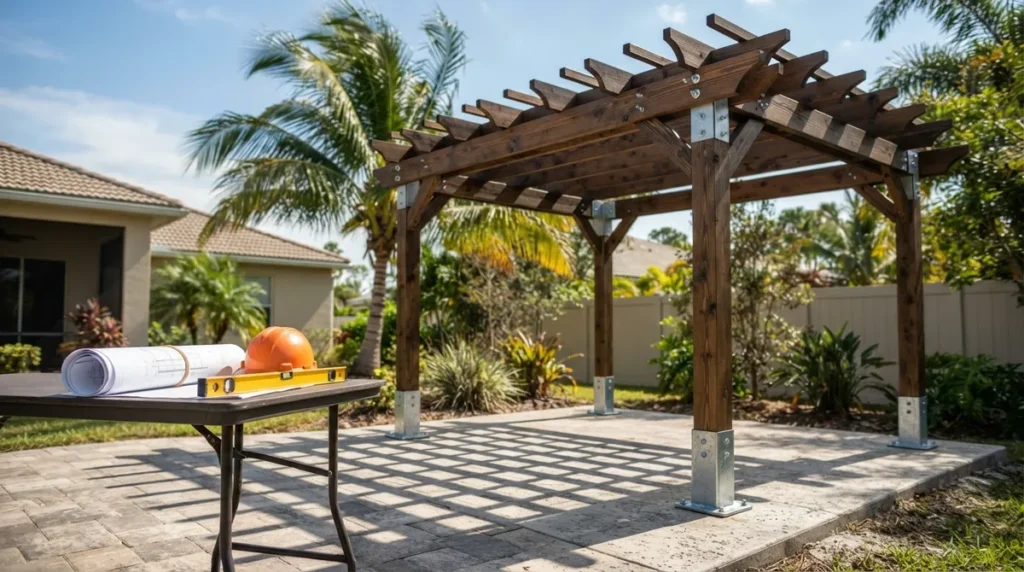
Treat a Fort Myers pergola as a permitted structure: the City says permits are required to construct structures, and an open-sided design does not automatically exempt it.
-
Confirm the controlling jurisdiction first, since a Fort Myers mailing address may fall under unincorporated Lee County, Fort Myers Beach, or another city with its own forms and fees.
-
Plan for Southwest Florida wind loads: reviewers focus on how posts are anchored and members connected to resist uplift and lateral forces, so generic kit details may not be accepted.
-
Include a clear plan package with overall dimensions, materials and member sizes, location relative to property lines, foundation details, connections, and a site plan showing setbacks.
-
Check zoning, setbacks, easements, lot coverage, flood zone rules, and HOA covenants before finalizing layout, since HOA approval is separate from the city permit.
-
Avoid building first and asking later; if a pergola is already built, after-the-fact permitting can bring it into compliance, though the process varies by jurisdiction.
You can picture it already: a sunny Saturday, a cold drink, and a beautiful pergola casting stripes of shade across your patio. Then someone asks the question that stops the daydream cold. Do you need a permit for that?
If you are planning a pergola permit in Fort Myers, here is the short, friendly answer. Treat it as a permitted structure unless the correct local building authority tells you otherwise. The City of Fort Myers says permits are required to construct structures, and its public permit records include pergola projects with real dimensions and engineering plans. An open-sided design does not automatically make a pergola exempt.
The good news is that the process is very manageable once you know the order of operations. This guide walks you through confirming your jurisdiction, gathering the right documents, thinking about Southwest Florida wind loads, and avoiding the mistakes that slow people down. It is written for homeowners, contractors, realtors, and designers alike, so grab a coffee and let's get you building the right way.
Why a Pergola Is Treated as a Structure in Fort Myers
Many people assume a pergola is basically fancy patio furniture. It has no walls, no roof deck, and often no solid cover at all. Building departments tend to see it differently.
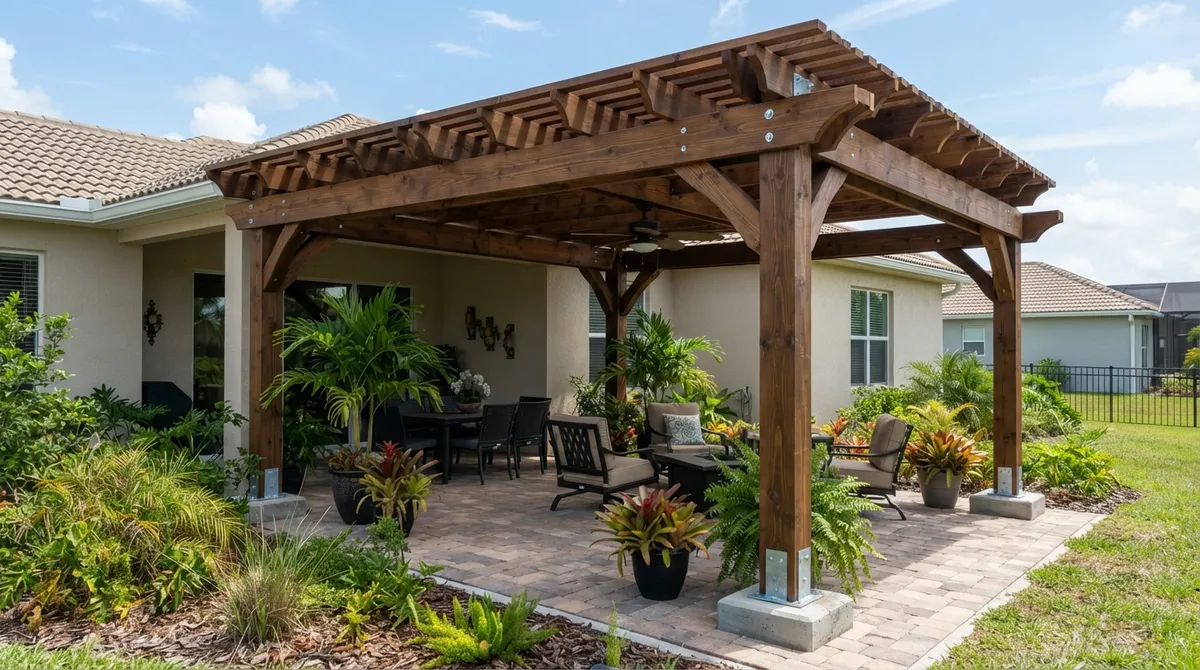
A pergola is a permanent, anchored frame. It carries its own weight, catches wind, and connects to a foundation or to your house. The City of Fort Myers states that building permits are required to construct, alter, repair, move, or demolish a building or structure. Its published examples are explicitly not all-inclusive, so a pergola does not need to appear on a list to be covered.
You can see this in the City's own records. Recent permit-final reports from 2026 list pergola projects that went through review, including:
- A 12 ft 8 in by 9 ft 11 in wood pergola
- A 16 ft by 20 ft pergola built to engineering plans
- An open shading pergola measuring 16 ft by 44 ft 3 in
These are examples, not size limits or approval standards. They simply show that pergolas of many sizes move through the permitting system with project descriptions, dimensions, and sometimes engineering attached.
Step One: Confirm Which Jurisdiction Controls Your Property
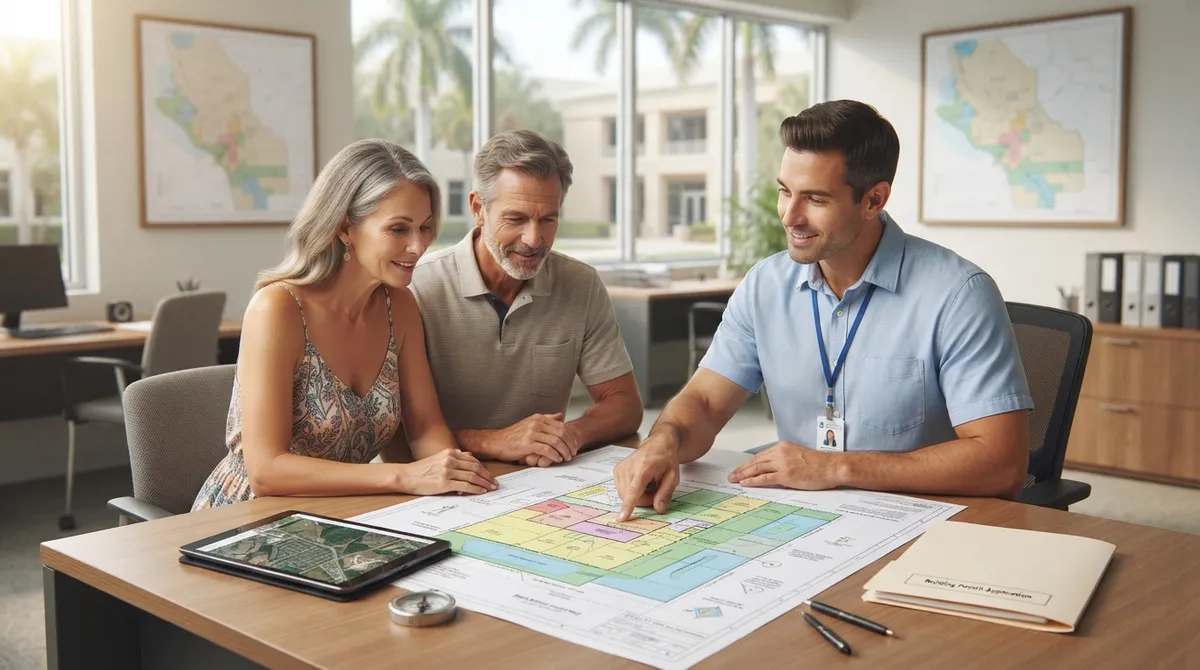
This is the step that trips up more Fort Myers area owners than any other. A "Fort Myers" mailing address does not guarantee the City of Fort Myers issues your permit.
Depending on where your lot actually sits, your pergola may fall under one of several authorities:
| Location | Who Handles Permitting |
|---|---|
| Inside City of Fort Myers limits | City of Fort Myers Community Development |
| Unincorporated Lee County (many Fort Myers addresses) | Lee County permitting |
| Fort Myers Beach | Town of Fort Myers Beach Building Services |
| Cape Coral, Estero, Bonita Springs, Sanibel | Each city's own building department |
Each authority has its own forms, fee schedule, and inspection process. The City of Fort Myers and Fort Myers Beach are separate jurisdictions, and Lee County handles properties in its unincorporated area.
Not sure which one is yours? Check your property record and parcel information, or ask a permitting professional. Our team at 1 Contractor Solutions works across all 67 Florida counties and has filed in more than 400 municipalities, so confirming the true controlling jurisdiction is something we do every day. You can also browse our Fort Myers permitting page for local context.
Step Two: Understand What the Reviewer Wants to See
The City of Fort Myers offers a Building–Structural application and supporting documents through its Permits & Applications page. Exact submittal requirements depend on your design and site, so always confirm current requirements with the authority having jurisdiction before you file.
That said, a pergola package generally needs to tell a clear story. Plan reviewers want to understand what you are building, where it sits, and how it stays standing.
Typical Pergola Plan Information
- Overall dimensions: length, width, and height
- Materials: wood, aluminum, steel, or composite, including member sizes
- Location: where the pergola sits on the lot relative to property lines and your home
- Foundation: footings, slab anchorage, or paver connections
- Connections: how posts, beams, and rafters fasten together
- Attachment details: if attached to the house, how it ties to the structure
A site plan or survey marking the pergola location is commonly part of the picture. If you need one, our site plan drafting service can prepare it. Our guide on site plan mistakes that stall Florida permits is also worth a quick read before you submit.
Wind, Anchorage, and Engineering in Southwest Florida
Here is where a Fort Myers pergola differs from one in, say, Ohio. Southwest Florida is hurricane country, and an open lattice of beams and rafters can act like a sail when strong wind hits.
Reviewers care about how the structure resists uplift and lateral loads. That means the way posts are anchored and how members are connected matters just as much as how the pergola looks.
Whether signed-and-sealed engineering is required depends on the project and the building official's review. Do not assume a generic or manufacturer detail will be accepted. A kit pergola from a big-box store may come with a nice installation guide, but that guide may not address Florida wind design for your specific site.
If engineering is needed, an in-house team makes life easier. Our structural engineering department produces sealed drawings for permit submittal, and our article on who seals structural drawings for Florida permits explains how that works. For lighter projects, an engineer letter may be the right fit when the reviewer accepts that format.
Zoning and Site Constraints Are a Separate Conversation
A building permit does not necessarily settle zoning or site-work approvals. Placement rules can limit where your pergola goes, even if the structure itself is perfectly designed.
Things worth checking before you finalize your layout:
- Setbacks: minimum distances from property lines
- Easements: utility or drainage easements where building is restricted
- Lot coverage: limits on how much of the lot can be covered by structures
- Flood zone rules: special requirements in mapped flood areas
- Environmental constraints: waterfront or protected-area considerations
- HOA rules: private covenants that may be stricter than the city
Your HOA is a separate approval from the city. Getting one does not replace the other, so plan on both if they apply. Homeowners on canals or coastal lots should read our overview of coastal construction permit help in Florida as well.
The Pergola Permit Process, Step by Step
Here is the typical flow from idea to finished pergola. Your jurisdiction may adjust a few details, but the overall rhythm stays familiar.
- Confirm the jurisdiction. Determine whether your property is in the City, unincorporated Lee County, or another municipality.
- Check zoning and HOA rules. Verify setbacks, easements, and any association approvals before you design.
- Gather your design. Collect dimensions, materials, manufacturer specs, and your intended location.
- Prepare the plans. Draft a site plan and construction details, adding engineering if required.
- Submit the application. File the Building–Structural application and supporting documents with the correct authority.
- Respond to reviewer comments. Answer any questions or requested revisions promptly.
- Pay fees and receive the permit. Fees depend on the jurisdiction and project valuation.
- Build and schedule inspections. Request the inspections your permit requires as work progresses.
- Finalize. Pass final inspection and close the permit.
Step six is where many projects lose time. A reviewer asks a reasonable question, and the response sits in an inbox for two weeks. Our revisions and resubmittals service exists to keep that loop tight.
Costs and Timelines: What We Can and Cannot Say
Everyone wants a number, and we wish we could hand you one. The honest answer is that the available public information does not provide a verified, pergola-specific current fee or a universal review timeline.
What we can tell you is how fees and timing generally work:
| Factor | How It Affects Cost or Time |
|---|---|
| Project valuation | Many jurisdictions base permit fees on the value of the work |
| Jurisdiction | City, county, and town fee schedules differ |
| Engineering needs | Sealed drawings add preparation time and cost |
| Plan completeness | Missing details trigger comments and resubmittals |
| Attached vs. freestanding | Attachment to the house can add review scope |
For a current fee, check the applicable jurisdiction's adopted fee schedule. For a realistic timeline, ask the building department or work with someone who files there regularly. Our guide to how long a building permit takes in Florida covers the variables in more detail.
Common Pergola Permit Mistakes (and Easy Fixes)
After years of Florida permitting, certain patterns show up again and again. Avoiding them can save you weeks.
- Assuming open-sided means exempt. Verify with the authority instead of guessing.
- Filing with the wrong jurisdiction. A Fort Myers address can land in county territory.
- Relying on a generic kit detail. Manufacturer drawings may not meet local wind requirements.
- Skipping the site plan. Reviewers need to see placement and setbacks.
- Ignoring HOA approval. Private rules run on a separate track.
- Building first, asking later. This is the costliest mistake of all.
What If the Pergola Is Already Built?
It happens more often than you would think. Maybe a prior owner added one, a contractor skipped the permit, or you built it years ago before learning the rules. Take a breath. There is usually a path forward.
Florida jurisdictions often allow work to be brought into compliance through after-the-fact permitting, which typically involves documenting what exists, verifying structural adequacy, and getting the work inspected. The details vary by jurisdiction, so our guide on getting an after-the-fact permit for a pergola in Florida walks through the process. For the broader picture, see 7 steps to legalize unpermitted work in Florida.
This matters for sellers and buyers too. Unpermitted structures can surface during inspections or closings, and our article on selling a Florida house with unpermitted additions explains your options. If you are buying, running an open permit search early can prevent surprises.
Who Benefits From Professional Pergola Permitting Help?
You can absolutely navigate a pergola permit on your own, and plenty of owners do. But a few situations make professional support especially worthwhile.
- General contractors juggling multiple jobs who need permits filed and tracked without losing crew days. See our services for general contractors.
- Homeowners who want drawings prepared and reviewer comments handled for them. Visit our homeowner page.
- Realtors and investors who need permit research and legalization support before closing. Check our realtor resources.
- Designers and trades who need dependable outsourced drafting without building an in-house team. Our drafting-only service draws the permit set and stops there, so your seal and your client stay yours.
At 1 Contractor Solutions, we act as Florida's outsourced permitting department. We prepare or review plans, file the application, track it, work every reviewer comment, and carry it through approval and closeout. Our drafting and engineering are in house, so when a reviewer flags something, we fix it directly. Want a sense of how we work? See what our customers say when you visit us on Google — 1 Contractor Solutions.
A Quick Pre-Submittal Checklist
Before you file, run through this list. Every item you check off is one less reviewer comment later.
- Confirmed the controlling jurisdiction for your exact parcel
- Checked zoning, setbacks, easements, and lot coverage
- Verified HOA or association approval if applicable
- Collected dimensions, materials, and member sizes
- Prepared a clear site plan showing pergola location
- Documented foundation and connection details
- Determined whether sealed engineering is needed
- Downloaded the current application and fee information from the authority
Ready to Build With Confidence?
A pergola should add shade, style, and years of enjoyment to your Fort Myers home, not a pile of paperwork headaches. Treat the project as a permitted structure, confirm your jurisdiction first, document your design clearly, and plan for Southwest Florida wind from the very beginning.
If you would rather hand the paperwork to people who do this every day, we are happy to help. Whether you need drawings, engineering, or full filing and tracking, we respond within 30 minutes, day or night, and se habla español. Ready to move forward? Get a free quote for your Fort Myers pergola permit, or explore our permit facilitation and filing service. You can also follow us on LinkedIn or follow us on Facebook for more Florida permitting tips, and learn about our marketing partner, Brain Buzz Marketing.
Your shady Saturday is closer than you think.
FAQs
Do I need a permit to build a pergola in Fort Myers, Florida?
In most cases, yes. The City of Fort Myers says permits are required to construct structures, and its permit records include approved pergola projects. Always confirm with the building authority that actually covers your property before you start.
How do I find out whether my property is in the City of Fort Myers or unincorporated Lee County?
A Fort Myers mailing address does not settle it, since many addresses fall in unincorporated Lee County or another municipality. Check your parcel record or ask a permitting professional to confirm the jurisdiction, because each one has its own forms, fees, and inspections.
Does a Fort Myers pergola need engineering drawings?
It depends on the design and the building official's review. Because of Southwest Florida wind loads, many pergolas benefit from project-specific structural details, so don't assume a generic or manufacturer detail will be accepted.
How much does a pergola permit cost in Fort Myers?
There is no single verified pergola-specific fee to quote. Costs depend on the jurisdiction's current fee schedule and your project's valuation, so check the applicable fee schedule or ask us for help estimating.
Can a Florida permitting service apply for a pergola permit on my behalf?
Yes, that is a big part of what a permitting service does. At 1 Contractor Solutions we prepare plans, file the application, track it, handle reviewer comments, and carry it through closeout, so you can focus on the fun part.
We do this work every day across all 67 Florida counties. Call (866) 314-6931 and we will tell you what your situation actually requires — including when you do not need us.
Related services
Permit Facilitation & Filing
You have a crew scheduled, a client asking for dates, and a permit sitting somewhere in a queue you cannot see. We file it, w…
See the servicePlan Review Coordination
A permit in plan review is not one queue. On a commercial project it can be six queues, each with its own reviewer, its own c…
See the serviceReady to get your permit moving?
One call tells you which jurisdiction controls your project, what it will take, and what it will cost. Most of the time we can scope it on the phone.