
Blog
Pool Cage Without a Permit in Florida: Your 2026 Fix Guide
Built a pool cage without a permit in Florida? Learn the risks, after-the-fact permit steps, and how to legalize your enclosure in 2026.
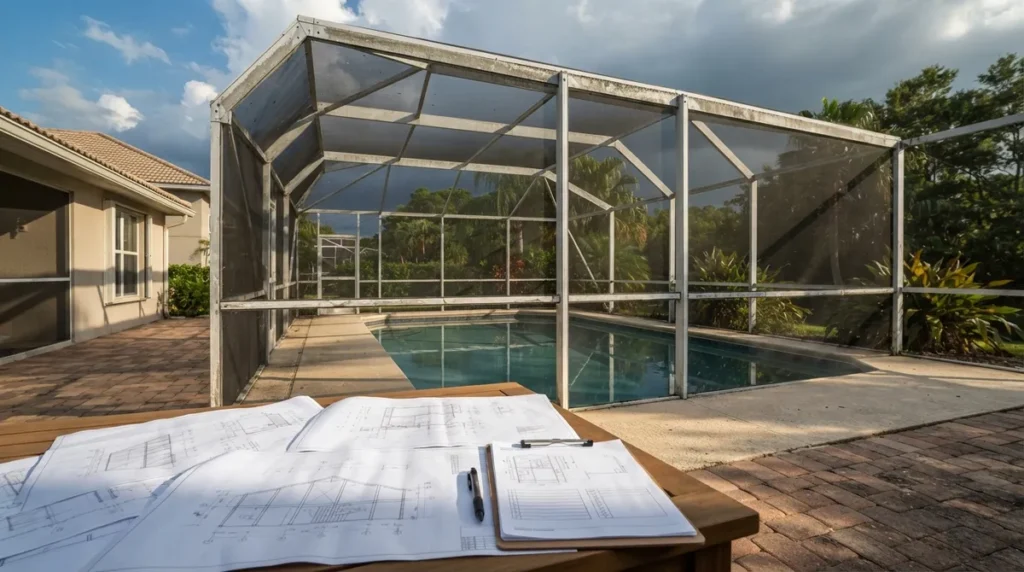
Key Takeaways
-
An after-the-fact permit is the common solution for unpermitted pool cages in Florida and typically requires a permit application, site plan, structural plans or engineering, plan review, and inspections.
-
Pool cages are treated as structural work in Florida due to wind-load requirements and pool safety barrier rules, so they cannot rely on the 2026 permit exemption for work under $7,500.
-
Unpermitted enclosures often surface unexpectedly during real estate transactions, appraisals, code enforcement inspections, or insurance claims, making early action critical.
-
Local jurisdictions vary in whether existing unpermitted cages can be approved as-built, approved with modifications, or must be altered to meet setbacks, flood-hazard rules, and pool barrier requirements.
-
Documenting an existing enclosure with measured drawings, site plans, and structural information is essential before filing an after-the-fact permit application.
-
Ignoring code enforcement notices, tearing out concealed work before inspection, or using contractors who cannot provide sealed documentation are common mistakes that complicate the legalization process.
Let's be honest: you probably didn't set out to break the rules. Maybe you bought a lovely Florida home and later learned the screen enclosure over the pool never had a permit. Maybe a previous owner skipped the paperwork. Or maybe a contractor said, "Don't worry, nobody checks these." Whatever the story, a pool cage without a permit in Florida is more common than you'd think, and the good news is that it's usually fixable.
A pool cage is not just a screen on a frame. It's a structure that has to handle Florida wind loads, and in many cases it also acts as your pool safety barrier. That is why local building departments treat it as permitted work. When one shows up in a records search, an appraisal, or a closing, it can slow things down fast.
In this guide, we'll walk through why these enclosures need permits, what can go wrong, how after-the-fact permitting works, and what to expect along the way. Take a breath. You have options, and we'll go through them together.
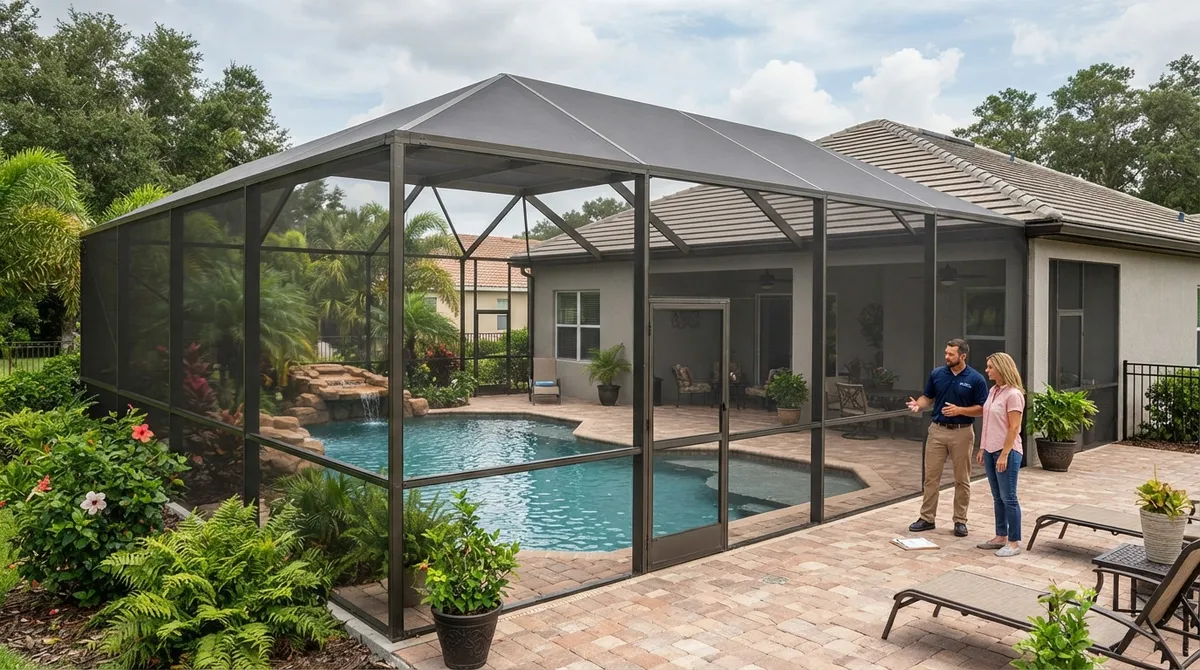
Why a Pool Cage Needs a Permit in Florida
In general, a new pool cage or screen enclosure is treated as a structural building project. The Florida Building Code sets the statewide baseline, but your local city or county building department administers the permit and decides exactly what it needs from you.
Why so strict? Three big reasons:
- Wind and structural safety. Florida's code includes structural and wind-load requirements for screen enclosures. A poorly anchored frame can become debris in a storm.
- Pool barrier rules. If the cage serves as your pool barrier, it must meet the requirements in Florida Statute 515.29.
- Zoning and property rules. Setbacks, easements, lot coverage, and flood-hazard rules all affect where an enclosure can legally sit.
Not every job is treated the same. Here is a quick look at how work typically breaks down. Always confirm with your local department before starting.
| Type of Work | Permit Usually Required? | Notes |
|---|---|---|
| Building a new pool cage | Yes | Structural plans and site plan are typically required |
| Expanding or adding framing | Yes | Changes the structure and wind-load design |
| Replacing frame members or structural repairs | Usually yes | Depends on the extent of the repair |
| Replacing screen mesh in an unchanged frame | Often treated differently | Confirm the local rule before work begins |
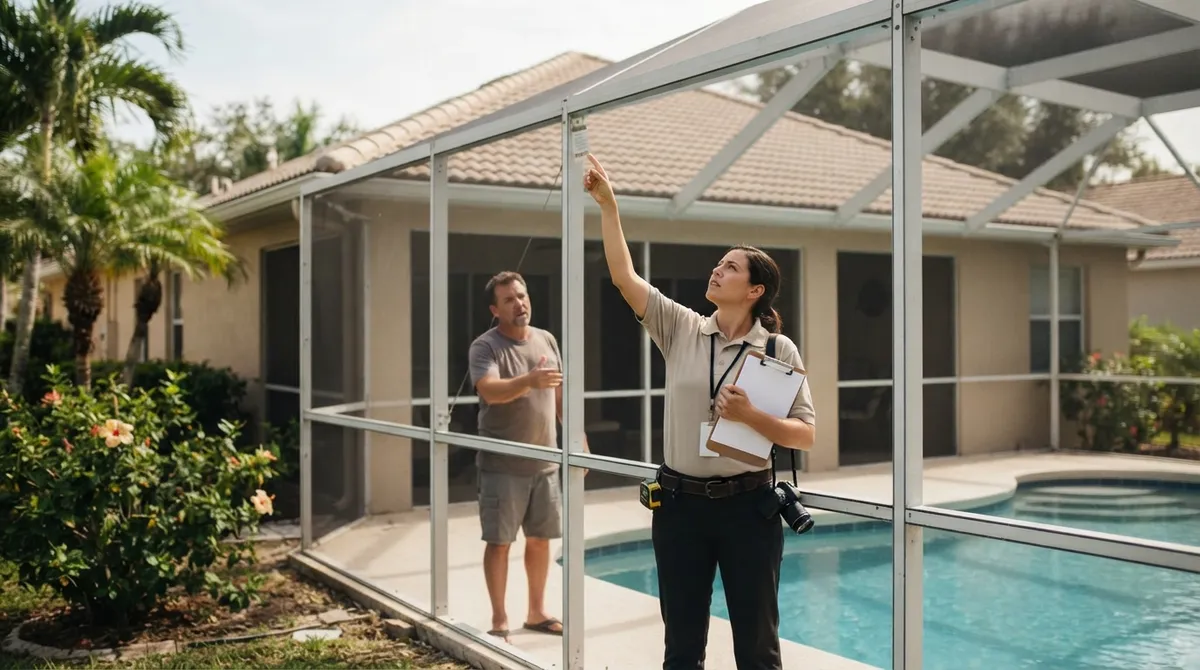
What Happens If Your Pool Cage Was Built Without a Permit?
Here's the part nobody loves, but it's better to know. An unpermitted enclosure doesn't usually cause trouble on day one. The trouble tends to show up later, at the worst possible moment.
- Code enforcement notices. A neighbor complaint, a drive-by, or an unrelated inspection can trigger a violation. If that happens, our code compliance violations team can help you respond the right way.
- Real estate hiccups. Buyers, lenders, and appraisers sometimes flag unpermitted structures. A closing can stall while everyone scrambles.
- Insurance questions. After a storm, an unpermitted structure can complicate a claim.
- Safety concerns. If nobody has verified the anchoring, framing, and barrier details, there is no guarantee the structure is sound.
If you're a buyer, seller, or agent, you may also want to read our guide on whether a home sale can close with unpermitted work in Florida.
Can You Get an After-the-Fact Permit for a Pool Cage?
In many cases, yes. An after-the-fact permit is the common path for bringing an existing enclosure into compliance. The exact process and outcome vary by jurisdiction, so treat anything you read online, including this article, as a starting point rather than a guarantee.
Here is what the local authority may require:
- A permit application for the existing enclosure
- A site plan or survey showing where the cage sits on the lot
- Structural plans or engineering, often signed and sealed
- Plan review and applicable fees
- Inspections, sometimes requiring concealed work to be exposed so the inspector can verify it
Fees and penalties differ from place to place. For a deeper look at budgeting, see our breakdown of after-the-fact permit costs in Florida.
Step-by-Step: How to Legalize an Existing Pool Cage
If you're ready to get this sorted, here's a simple roadmap. Think of it as the "calm, organized" version of what could otherwise feel overwhelming.
- Identify the right permit office. Properties inside a city usually go through the municipal building department, while unincorporated areas go through the county. If you're unsure, our building department lookup tool can point you in the right direction.
- Check for open permits or notices. Use the open permit search to see what is already on record for the address.
- Gather what you have. Collect any old photos, contractor invoices, surveys, or product information for the frame and screening.
- Document the structure. This usually means measured drawings of the enclosure, dimensions, a site plan, and structural information. Our as-built drawings service is built for exactly this.
- Get engineering where required. Many jurisdictions want sealed structural plans or an engineer letter confirming the enclosure meets wind-load requirements.
- File, track, and respond. Submit the application, follow the review, and answer comments quickly. Delays often happen because comments sit unanswered.
- Pass inspections and close out the permit. Once approved and inspected, the permit is closed and your enclosure is on the record.
Documents Commonly Requested
Checklists vary by city and county, but here is what typically comes up. Always verify the current checklist with your local authority before you submit.
| Document | Why It's Needed |
|---|---|
| Permit application | Opens the official review file |
| Site plan or survey | Shows setbacks, easements, and enclosure location |
| Structural drawings | Verify framing, anchoring, and wind-load design |
| Wind-design information | Confirms the structure meets code for your wind zone |
| Signed and sealed plans or letter | Required in many jurisdictions for structural work |
| Notice of Commencement | Some local checklists require one above a project-value threshold (for example, $5,000 in one cited checklist) |
If you're curious how that last item works, our guide to the Notice of Commencement in Florida explains the basics.
Will It Be Approved As Built? Setbacks, Safety, and Wind Code
A permit is not a magic eraser. Getting approval doesn't automatically resolve zoning or property constraints. An existing enclosure may still need to satisfy:
- Setbacks and easements. If the cage sits too close to a property line or over an easement, the local authority may require changes or a variance.
- Lot coverage and flood-hazard rules. These can limit what is allowed, especially in flood zones.
- Wind-load and structural requirements. If the framing or anchoring doesn't meet code, repairs or reinforcement may be required.
- Pool barrier requirements. If the cage is your safety barrier, Florida Statute 515.29 calls for a barrier at least four feet high, limits on openings and climbable features, and gates that open outward and are self-closing and self-latching.
There is no automatic "grandfathering" you can count on for unpermitted work. Each jurisdiction decides whether an existing enclosure can be approved as built, approved with modifications, or required to be altered. That is exactly why a quick feasibility check up front saves so much stress later.
A Note on the 2026 Permit Exemption
You may have seen headlines about a Florida permit exemption for certain single-family-home work valued below $7,500, effective July 1, 2026. Before you get excited, note that the same discussion states that structural work and work in flood-hazard areas are excluded. A pool cage is structural work, so you should not assume this exemption covers it. Verify the current statute and your local implementation before relying on anything, or reach out and we'll help you sort it out.
Who Needs This Most? Tips by Reader Type
Different people land on this problem from different directions. Here's how it tends to play out:
- Homeowners and residential property owners: Start with a records check, then document the enclosure. Our homeowner services are designed to guide you through it without the jargon.
- Real estate professionals: An unpermitted cage can surface mid-transaction. Early research keeps closings on track, and our realtor closing support was built for that pressure.
- General contractors and pool pros: If a client's existing enclosure has no permit, you'll want sealed documentation before you build on or around it. See our pages for general contractors and pool and spa contractors.
- Designers and trades: If you only need permit-ready drawings, drafting-only support lets you keep your own engineer and your client relationship.
How 1 Contractor Solutions Can Help
At 1 Contractor Solutions, we act as Florida's outsourced permitting department. We're not a construction contractor. We're the team you call when the permit is the thing standing in your way. We work across all 67 Florida counties, and our drafting and engineering are in house, with our own engineer sealing the work. So when a reviewer has a question about your enclosure, we can fix it directly instead of waiting on an outside consultant.
For a pool cage, we can research which jurisdiction controls your address, prepare the drawings and site plan, coordinate structural engineering, file the application, and track it through plan review coordination and inspections. If you're already facing a notice or a stalled sale, our urgent permit rescue service is built for exactly that moment. We answer around the clock and respond within 30 minutes, and se habla español. If you'd like to see what other customers think, visit us on Google — 1 Contractor Solutions.
Mistakes to Avoid
A few common missteps can turn a manageable situation into a headache:
- Ignoring a notice. Deadlines matter. Responding early gives you more options.
- Tearing out concealed work before asking. Inspectors may need to see it, so check with the department first.
- Assuming screen replacement and frame repair are the same. They are often treated differently, and rules vary.
- Guessing the jurisdiction. City lines are tricky. Confirm who actually reviews your address.
- Using a contractor who can't produce sealed documentation. If plans need an engineer's seal, an unsealed packet will bounce back.
For more on common stumbling blocks, our article on why your Florida pool cage needs a permit now is a helpful companion read, and how to legalize unpermitted work in Florida covers the broader process.
Stay in the Loop
Permitting rules change, and we like to keep our community informed. You can follow us on LinkedIn or follow us on Facebook for updates and practical Florida permitting tips. For official background on the statewide code, the Florida Building Commission is a solid reference.
Ready to Get Your Pool Cage Legal?
An unpermitted pool cage is stressful, but it's rarely the end of the road. With the right documentation, engineering, and a patient approach to your local building department, many enclosures can be brought into compliance. The key is to act before a notice, a sale, or a storm forces your hand.
If you want a clear plan and a team that handles the details, get a free quote and tell us your address and what you know about the enclosure. We'll tell you which jurisdiction controls it, what it will take, and then we'll go do it. Permits approved. Projects moving.
FAQs
Do I need a permit for a pool cage in Florida?
In general, yes. A new pool cage or screen enclosure is typically treated as a structural building project, and your local city or county building department issues the permit. Requirements can vary, so it's smart to confirm with the department that covers your address before any work begins.
What happens if my pool cage was built without a permit in Florida?
You may face a code enforcement notice, complications at a sale or closing, or insurance questions after a storm. The usual fix is an after-the-fact permit, which may involve plans, engineering, fees, and inspections. The earlier you address it, the more options you tend to have.
Can an unpermitted pool cage be grandfathered in or approved as built?
You shouldn't count on grandfathering for unpermitted work. Some enclosures can be approved as built, others need modifications, and the decision rests with your local authority. Setbacks, easements, wind-load requirements, and pool barrier rules all play a part.
Does replacing pool cage screen mesh require a permit in Florida?
Replacing screen mesh in an unchanged existing frame is commonly treated differently than structural work, but local rules vary. Replacing frame members or expanding the enclosure usually does require a permit, so check with your building department first.
How much does an after-the-fact pool cage permit cost in Florida?
There's no single price, since fees, penalties, drawings, and engineering needs differ by jurisdiction and by the condition of the structure. Costs typically include the permit fee, plans or an engineer letter, and inspections. A quick review of your address and enclosure can give you a much clearer estimate.
We do this work every day across all 67 Florida counties. Call (866) 314-6931 and we will tell you what your situation actually requires — including when you do not need us.
Related services
Permit Facilitation & Filing
You have a crew scheduled, a client asking for dates, and a permit sitting somewhere in a queue you cannot see. We file it, w…
See the servicePlan Review Coordination
A permit in plan review is not one queue. On a commercial project it can be six queues, each with its own reviewer, its own c…
See the serviceReady to get your permit moving?
One call tells you which jurisdiction controls your project, what it will take, and what it will cost. Most of the time we can scope it on the phone.