
Blog
How to Qualify an After-the-Fact Job in Florida
Learn how to qualify an after-the-fact job in Florida: find your jurisdiction, gather documents, and get unpermitted work legalized step by step.
Key Takeaways
-
An after-the-fact (ATF) permit legalizes work done without a required permit; it is not contractor license qualifying, which falls under Florida Statutes §489.105.
-
Florida has no statewide ATF application or fee schedule, so confirm the correct city or county building department and request its current checklist before preparing anything.
-
Filing late does not guarantee approval; expect plan review, corrections to meet current code, inspections, and a formal closeout.
-
Accurate documentation is key: photos, measurements, as-built drawings, site plans, and product approvals often determine whether the review goes smoothly or stalls for weeks.
-
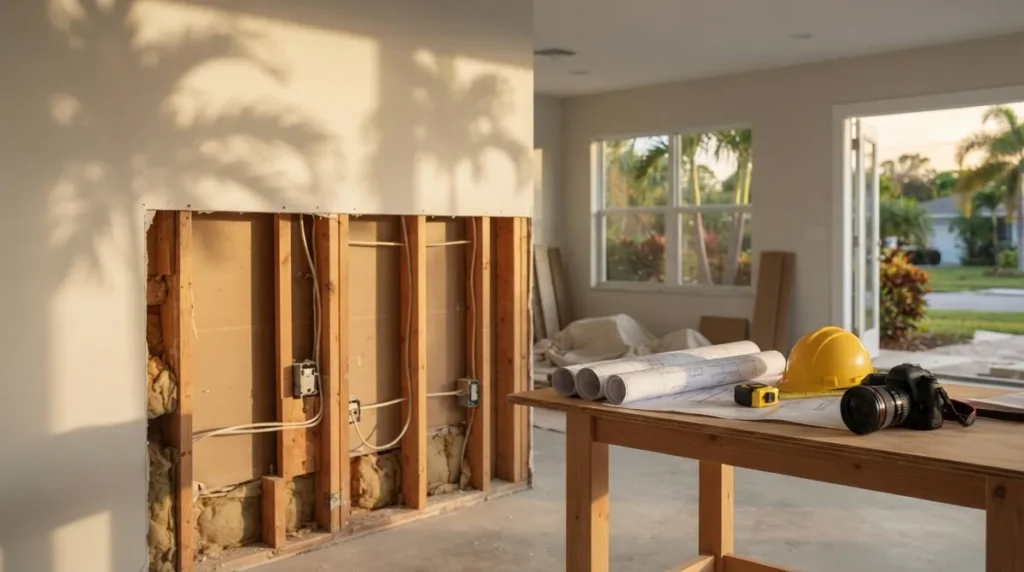
Concealed work may require exposing components, testing, or engineer certification, so ask the jurisdiction early whether photos or limited openings will suffice.
-
Waiting too long, filing with the wrong jurisdiction, and ignoring electrical, plumbing, or mechanical trades are common mistakes that delay ATF approval.
Picture this: you're closing on a house, finishing a renovation, or wrapping up a job for a client, and someone mentions the work was never permitted. Your stomach drops. Take a breath, because you are far from alone, and there is a clear path forward.
When people search for how to qualify an after the fact job in Florida, they usually mean one thing: getting an after-the-fact (ATF) permit for work that started or finished before the required permit was issued. It is not about qualifying a contractor's license. It is about documenting the work, getting it reviewed, and bringing it into compliance with your local building department.
The good news? Many unpermitted projects can be legalized. The not-so-good news? Retroactive filing is not automatic approval. This guide walks you through each step in plain English, whether you're a general contractor, solar company, realtor, or homeowner. Let's turn that knot in your stomach into a checklist.
What "Qualify After the Fact" Really Means in Florida
In Florida permitting, "qualifying" a job after the fact means your project is accepted into the building department's retroactive review process. Florida Statutes §553.79 generally requires a permit from the local enforcing agency before covered construction, alteration, repair, or demolition begins. When that step gets skipped, the ATF route is how you make it right.
Here is the part that surprises people. Applying late does not automatically legalize anything. The agency may require plan review, inspections, corrections to meet applicable code, and a formal closeout. Approval is never guaranteed, but with good documentation, it is very achievable.
ATF Permits vs. Contractor Qualifying Agents
These two ideas sound alike but are totally different. Florida Statutes §489.105 defines primary and secondary qualifying agents, which is a contractor-licensing concept tied to supervising contracting activities. An ATF permit is about a property's unpermitted work. Mixing them up is a common mistake, so here is a quick comparison.
| Topic | After-the-Fact Permit | Contractor Qualifying Agent |
|---|---|---|
| What it addresses | Work done without a required permit | Who supervises and controls contracting activity |
| Governing concept | Local permitting rules under §553.79 | Licensing definitions in §489.105 |
| Handled by | City or county building department | Licensing and qualifying requirements |
| Outcome | Permit, inspections, closeout | License qualification for a business |
Who Needs to Qualify a Job After the Fact?
More people than you would think. Common situations include:
- Homeowners who discover a prior owner's addition, enclosure, or remodel was never permitted.
- General contractors who inherit a half-finished job or whose subcontractor skipped the permit.
- Solar companies that installed a system before the permit was finalized.
- Real estate professionals facing a permit hold at closing or an inspection that flagged unpermitted work.
- Design and trade professionals who need dependable drafting and engineering to support a retroactive submittal.
If you are a buyer or agent, you may also want to see what to do when an open permit is found at closing. And if you are a homeowner, our team supports Florida homeowners and owner-builders every day.
How to Qualify an After-the-Fact Job: Step by Step
There is no single statewide ATF application, checklist, or fee schedule in Florida. Procedures are local. Still, the process follows a familiar rhythm. Here is a practical roadmap.
- Confirm the exact jurisdiction. The city or county building department that controls your property is the one you deal with. Near city lines, this is not always obvious. A quick tool like the building department lookup can save you from filing in the wrong place.
- Request the current ATF checklist and fee schedule. Ask the department for its written instructions before you prepare anything. Requirements change, and your submittal should match what they want today.
- Search for existing permits. Check whether any open, expired, or closed permits already touch the property. An open permit search helps you avoid duplicating effort or missing a permit that only needs closing.
- Document the work as it exists. Take clear photos, measure the structure, and gather any receipts, product information, or prior records.
- Prepare the drawings. Depending on the project, this means as-builts, site plans, and sometimes sealed structural or MEP documents.
- Submit the application and pay fees. Include the scope of work, contractor details if applicable, and all required drawings.
- Work through reviewer comments. Expect corrections. Respond promptly and completely.
- Schedule inspections and close out. Once inspections pass, the permit is finalized, and the work is officially on the record.
What Documents Do You Typically Need?
Every jurisdiction is a little different, but most ATF submittals draw from the same pool of documents. Think of this as your starter kit.
- Completed permit application and scope of work
- Property survey or site plan showing the work
- As-built drawings of the existing construction
- Photographs of completed and visible work
- Contractor information and license details, when a contractor performed the work
- Sealed plans, calculations, or professional certifications when the jurisdiction or project requires them
- Product approvals for items like windows, doors, or roofing materials
Good drawings are often the difference between a smooth review and weeks of back and forth. If you need them, our as-built drawing services and site plan services are built for exactly this situation.
When You Need Sealed Drawings or an Engineer Letter
Many ATF projects involve structure, wind loads, electrical, or mechanical systems that an inspector cannot verify just by looking. In those cases, the building department may ask for a licensed professional to evaluate the work and certify it.
| Project Type | Common Documentation | Why It Matters |
|---|---|---|
| Room addition or enclosure | As-builts, structural verification | Confirms framing, foundation, and connections |
| Roof replacement | Product approvals, engineer letter if needed | Verifies wind-load compliance |
| Solar installation | Structural and electrical documentation | Confirms attachment and system safety |
| Pool cage or screen enclosure | Sealed engineering | Addresses wind resistance |
| Interior remodel | MEP plans, inspections | Confirms plumbing and electrical safety |
When engineering is involved, it helps to keep drafting and sealing under one roof. Learn more about structural engineering, MEP engineering, and engineer letters, or read about who writes engineer letters for Florida permits.
What About Work That's Already Covered Up?
Here is where things can get a little tricky. If walls are closed, insulation is in, or finishes are installed, an inspector cannot see what is behind them. The building department may ask you to expose certain components, provide testing, or submit other evidence or certification so they can evaluate compliance.
Does that mean you will always need to tear open walls? Not necessarily. Sometimes photos, engineer certification, or limited openings will do the job. The only way to know is to ask your jurisdiction early. If you want a preview of what to expect, check out what happens during a Florida ATF site inspection.
Can Non-Compliant Work Still Be Approved?
This is the question everyone quietly worries about. If the work does not meet current code, the agency may require corrections before it can be approved. That might mean upgrading connections, adding fasteners, replacing a component, or modifying part of the structure.
Most issues are fixable with the right engineering and a clear plan. In rare cases, removal may be required, but that is far from the typical outcome. For a closer look, see whether you will really have to demolish unpermitted work.
How Much Does an After-the-Fact Permit Cost?
There is no statewide ATF fee. Costs are set locally, and the fee schedule from your jurisdiction is the only number you can fully trust. Still, it helps to know what tends to drive the total.
| Cost Factor | What Influences It |
|---|---|
| Permit fees | Local fee schedule, project valuation, any penalty or multiplier the jurisdiction applies |
| Drawings | Complexity of as-builts, site plans, and MEP or structural sheets |
| Engineering | Need for sealed calculations, letters, or field verification |
| Corrections | Work that must be brought up to current code |
| Reinspection and closeout | Number of inspections and any resubmittals |
For a deeper breakdown, read our guide on after-the-fact permit costs in Florida. Always confirm current numbers directly with the authority having jurisdiction.
Common Mistakes That Slow Everything Down
A few missteps show up again and again. Avoid these, and you will already be ahead of the game.
- Filing with the wrong jurisdiction. City lines can be deceiving.
- Skipping the checklist. Submitting without the department's current requirements invites rejection.
- Guessing at drawings. Inaccurate as-builts trigger comments and delays.
- Ignoring multiple trades. Electrical, plumbing, and mechanical work may need separate permits or reviews.
- Waiting too long. Open violations and closing deadlines rarely get easier with time.
Our article on 13 unpermitted work mistakes Florida owners should avoid goes even deeper on this.
Related Situations: Expired Permits and Code Violations
Sometimes the issue is not that no permit exists, but that the permit expired before final inspection. That is a related but different problem. Our after-the-fact and expired permits service handles both, and you can compare options in Expired Permit vs. After-the-Fact: Which Fix Do You Need?
If a notice has already arrived, you may be dealing with a code compliance violation. Responding quickly and with a plan puts you in a much stronger position.
Why Local Knowledge Matters Across Florida
Because there is no uniform statewide process, what works in one county may not work in another. A packet that sails through in one jurisdiction might need extra sheets in the next. Whether your property is in Hillsborough County, Sarasota County, Miami-Dade County, or somewhere in between, the key is to follow that jurisdiction's playbook, not a generic one.
At 1 Contractor Solutions, we act as Florida's outsourced permitting department across all 67 counties. Our drafting and engineering are in house, and our own engineer signs and seals the work, so when a reviewer flags something, we fix it without waiting on an outside consultant. You can follow us on LinkedIn or follow us on Facebook for more Florida permitting tips, and you can visit us on Google — 1 Contractor Solutions to see what customers say.
Ready to Get Your Job Qualified?
Qualifying an after-the-fact job in Florida comes down to a few simple ideas: find the right jurisdiction, gather the right documents, bring in engineering where it is needed, and respond to reviewers quickly. It can feel overwhelming at first, but it is a well-worn path, and thousands of Florida projects have walked it successfully.
If you would rather hand the heavy lifting to a team that does this every day, we are ready. We handle filing, tracking, reviewer comments, revisions, and closeout, with same-day response and in-house sealed drawings. When you are ready to move forward, get a free quote and let's get your project back on solid ground.
FAQs
What does "qualify after the fact" mean for a Florida building permit?
It usually means getting an after-the-fact (ATF) permit for work that started or finished before the required permit was issued. Your local building department reviews the work, may require corrections and inspections, and then closes out the permit. It is different from qualifying a contractor's license.
Which Florida building department handles an after-the-fact permit for my property?
The city or county building department with jurisdiction over your property handles it, and Florida has no single statewide ATF application or fee schedule. Because jurisdictions can be tricky near city lines, verify the correct one first, then request its current ATF checklist.
Will I need to open walls or expose completed work for an inspection?
Sometimes, but not always. If work is concealed, the building department may ask you to expose components or provide testing, photos, or engineer certification so inspectors can evaluate compliance. Ask your jurisdiction early so you know what to expect.
Can unpermitted work be approved if it does not meet current code?
Often yes, once it has been corrected. The agency may require upgrades so the work meets applicable code before it approves and closes out the permit. Approval is never guaranteed, but sealed engineering and clear documentation make a big difference.
Is qualifying a contractor the same as getting an after-the-fact permit?
No. Qualifying agents under Florida Statutes §489.105 relate to contractor licensing and the supervision of contracting activities. An ATF permit deals with a specific property's unpermitted work and is handled by the local building department.
We do this work every day across all 67 Florida counties. Call (866) 314-6931 and we will tell you what your situation actually requires — including when you do not need us.
Related services
Permit Facilitation & Filing
You have a crew scheduled, a client asking for dates, and a permit sitting somewhere in a queue you cannot see. We file it, w…
See the servicePlan Review Coordination
A permit in plan review is not one queue. On a commercial project it can be six queues, each with its own reviewer, its own c…
See the serviceReady to get your permit moving?
One call tells you which jurisdiction controls your project, what it will take, and what it will cost. Most of the time we can scope it on the phone.