
Blog
How to Fix a Roofer After-the-Fact Permit in Florida
Roofer skipped the permit? Here's exactly how Florida's after-the-fact roofing permit process works, county by county, step by step.
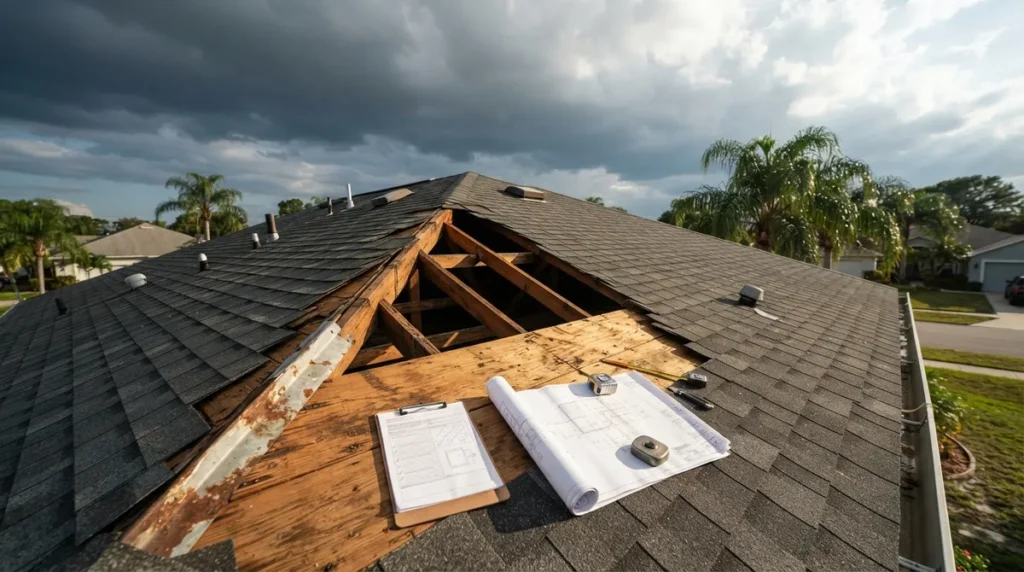
Key Takeaways
-
Florida requires a building permit before roof replacement or re-roofing work begins due to hurricane exposure; skipping the permit leaves your roof structurally unverified and risks fines up to $500 per violation.
-
After-the-fact permits are not automatic approvals—inspectors can require documentation, corrections, or even removal of finished roofing to verify decking, flashing, and fastening patterns underneath.
-
Each Florida county sets different fees, documentation requirements, and inspection protocols for after-the-fact permits; St. Lucie County doubles fees while others require third-party engineering analysis for concealed work.
-
Stop unpermitted work immediately and contact your local building department directly to ask for their specific after-the-fact permit application and fee schedule before continuing.
-
Unresolved unpermitted roofing causes insurance claim denials, real estate closing delays, code enforcement citations, and forced roof removal inspections—making it cheaper to address proactively.
-
Gather sealed engineer letters, contractor licenses, product approvals, and as-built drawings before submitting your after-the-fact application, and keep all final inspection paperwork for insurance and future property sales.
So your roofer already put the shingles on, and now someone (maybe an insurance adjuster, maybe a buyer's inspector, maybe your own gut feeling) is asking, "Wait, where's the permit?" Take a breath. You are not the first Florida homeowner to find yourself here, and you definitely won't be the last. Roofing without a permit happens more often than folks like to admit, sometimes because a contractor rushed the job, sometimes because everyone assumed a repair was too small to matter. Either way, there's a path forward, and it's called an after-the-fact permit.
This guide walks through exactly what a roofer after-the-fact permit in Florida involves, who needs to be part of the conversation, and how to avoid turning a simple oversight into a costly headache. Whether you're a homeowner in Bradenton, a general contractor juggling five roofing crews across Hillsborough County, or a realtor trying to close a deal with an open permit hanging over it, we'll get you oriented. Grab a coffee, and let's work through this together, one friendly step at a time.
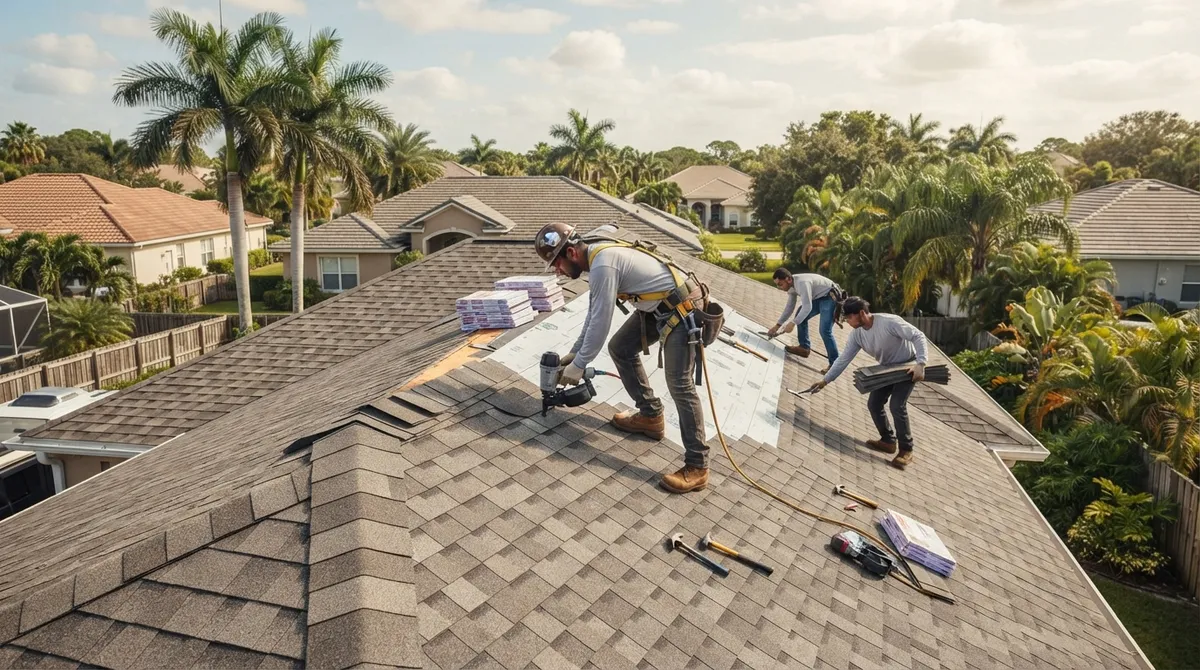
Why Florida Roofs Almost Always Need a Permit
Here's the simple truth: in Florida, replacing or re-roofing a home generally requires a building permit before the first shingle comes off. The Florida Building Code requires the property owner or an authorized agent (usually the licensed contractor) to apply for and receive a permit before regulated roofing work begins. Some very limited repairs might be exempt, but you shouldn't assume that without checking with your local building department first.
Florida's hurricane exposure is exactly why this rule exists. Roofs are your home's first line of defense against 150-mph winds and driving rain, and building officials want documented proof that the work meets current wind-uplift and fastening standards. Skipping the permit doesn't just risk a fine. It can leave your roof structurally unverified, which matters a lot when a storm rolls through.
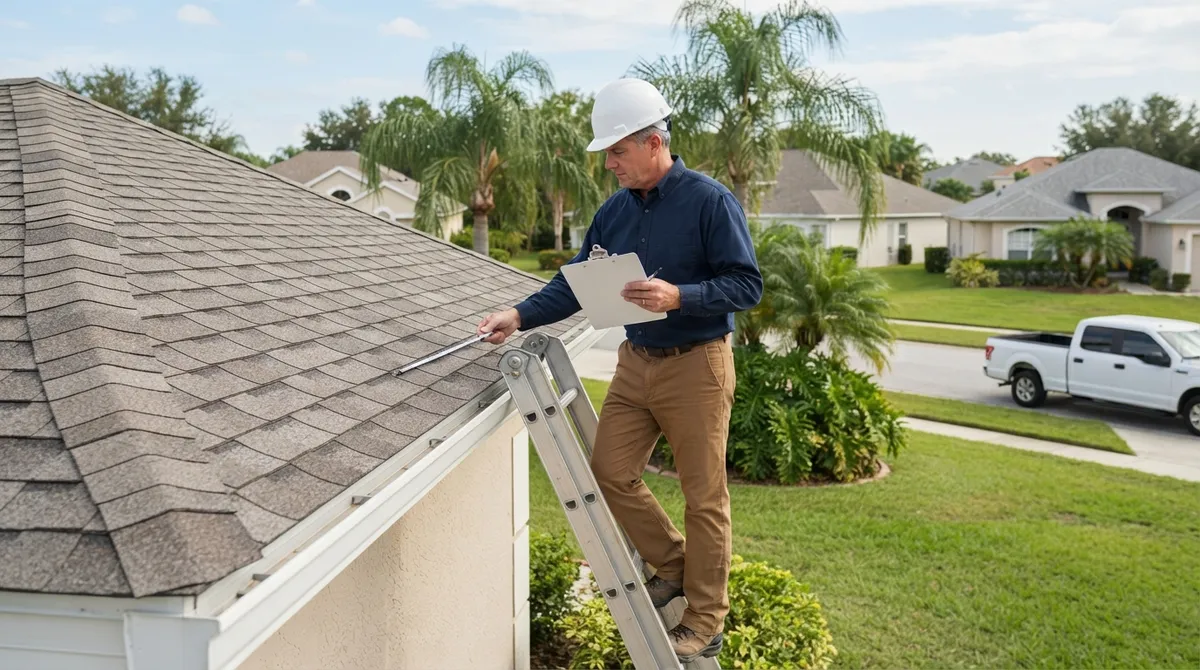
What Exactly Is an After-the-Fact Roofing Permit?
An after-the-fact permit is the process a local building department uses to review roofing (or any construction) work that already started, or already finished, without the required permit in hand. It is not a rubber stamp. The building official can require documentation, inspections, corrections, or even the removal of finished roofing material to expose concealed decking, flashing, or fastening patterns underneath.
In other words, getting an after-the-fact permit doesn't automatically make everything okay. It opens a review process, and that process can go smoothly or it can get complicated fast, depending on what inspectors find once they start looking. This is one of the biggest misunderstandings homeowners and even some contractors have: pulling the permit is step one, not the finish line.
Stop Work First, Then Make the Call
If work is still in progress and you just realized there's no permit, the very first move is to stop the roofing work. Hillsborough County's own homeowner guidance is blunt about this: continuing unpermitted work can lead to a citation of up to $500 per violation, and it only adds cost and risk the longer it drags on. Once work has stopped, contact the building department with jurisdiction over the property and ask specifically about their after-the-fact permit procedure.
Every County Handles This a Little Differently
This is where things get tricky for anyone trying to follow one universal Florida rule. There isn't one. Each of Florida's counties and municipalities sets its own fees, documentation requirements, and inspection protocols for after-the-fact permits. What flies in one jurisdiction might trigger extra scrutiny two counties over.
| Jurisdiction | Notable After-the-Fact Requirement |
|---|---|
| St. Lucie County | Permit fee is doubled; concealed work may require third-party engineering analysis |
| Indian River County | Licensed design-professional inspection and certification required for concealed structural work; notarized contractor letters for specific trades |
| Hillsborough County | Advises stopping work immediately; citations up to $500 per violation for continuing without a permit |
| Collier County | Publishes specific roof permit bulletins outlining required documentation for re-roof work |
Notice how different these approaches are? That's exactly why guessing at the process, or assuming your neighbor's experience applies to you, can backfire. If your property sits inside city limits, the city's building department (not necessarily the county) is likely the one with jurisdiction, which trips up a lot of people. Our building department lookup tool can help you confirm exactly who to call before you spend time on the wrong office.
Step-by-Step: How to Get an After-the-Fact Roofing Permit
While details vary by county, the general sequence tends to look like this:
- Confirm the jurisdiction. Determine whether the county or a specific city building department oversees the property.
- Stop any ongoing work. Don't add more unpermitted layers to the problem while you sort this out.
- Contact the building department directly. Ask for their specific after-the-fact permit application and fee schedule.
- Verify contractor licensing. The roofer performing (or who performed) the work must be properly licensed in Florida; unlicensed work complicates the whole process.
- Gather documentation. This might include contractor certifications, as-built drawings, product approvals, or photos of the completed work.
- Submit the application and pay the fee. Remember, after-the-fact fees are frequently higher than standard permit fees, sometimes double, as seen in St. Lucie County.
- Schedule required inspections. Be prepared that inspectors may ask to expose portions of the roof to verify decking, underlayment, or fastening.
- Address any corrections. If something doesn't meet code, you'll need to fix it before moving forward.
- Obtain final approval. Confirm the permit is actually closed or "finaled," not just issued.
- Keep your records. Save the permit and inspection paperwork for insurance, resale, or future renovation purposes.
That last step matters more than people realize. A closed permit with passed inspections becomes part of your property's paper trail, which insurance companies and future buyers absolutely check.
Documents You'll Likely Need to Gather
Depending on your jurisdiction and whether the roofing work is fully visible or partially concealed, expect to assemble some combination of the following:
- Completed after-the-fact permit application specific to your county or city
- Proof of the roofing contractor's active Florida license
- Product approval or Notice of Acceptance documentation for the materials used
- As-built drawings or photos documenting the completed roof system
- A signed and sealed evaluation from a Florida-licensed engineer, if concealed structural elements need verification
- Notarized contractor letters, in jurisdictions that require them for specific trades
- Payment for the after-the-fact permit fee, which is often higher than a standard permit fee
If any of this documentation is missing because the original roofer is no longer reachable, that's a common and frustrating scenario. It's exactly the kind of situation where bringing in a permitting specialist and an in-house engineer to produce sealed as-built drawings or an engineer letter can move things forward instead of stalling out indefinitely.
Can Homeowners Use an Owner-Builder Permit for Roofing?
Florida does allow an owner-builder exemption in limited situations, but it is narrower than many people assume. If you, as the homeowner, don't personally perform all the roofing work yourself, you're required to supervise it directly and use licensed trade subcontractors, including a properly licensed roofing contractor. You cannot simply hire an unlicensed crew and call yourself the owner-builder to skip licensing requirements. Our owner-builder permits resource breaks this down further if you're weighing your options.
What Happens If You Just... Don't Get the Permit
Skipping the after-the-fact process entirely tends to cause bigger problems down the road, not fewer. Here's what tends to surface:
- Code enforcement citations, which can add up to hundreds of dollars per violation depending on the jurisdiction
- Insurance claim denials, since carriers often require proof of a permitted, inspected roof after storm damage
- Real estate closing delays, when title searches or municipal lien searches uncover the unpermitted work
- Forced removal of roofing material to expose the unpermitted work for inspection, at your expense
- Difficulty selling the property until the permit issue is resolved
Realtors especially run into this at the worst possible time, mid-closing, when a buyer's lender or title company flags an open or missing roof permit. If you're in that spot, our realtor and closing support team has seen this scenario plenty of times and can help move things along quickly.
How 1 Contractor Solutions Helps Roofers and Homeowners Navigate This
This is genuinely one of the most common calls we get. Someone's roof is already on, the permit was never pulled, and now there's a deadline (a closing, an insurance renewal, a code enforcement notice) forcing the issue. We work across all 67 Florida counties, and we know the quirks of individual building departments, from Pinellas County to Manatee County and beyond.
Because our drafting and engineering happen in-house, with our own engineer signing and sealing the documents, we don't have to wait on an outside consultant when a reviewer flags a concealed structural question. Our after-the-fact and expired permits team takes on files that other firms sometimes decline, and we're also a licensed private provider, meaning we can often perform plan review ourselves instead of waiting in a county queue. If you're a roofing contractor who deals with this regularly, our dedicated Roof Permit Partnership Program through the Roof Permit Partnership page is built specifically for you.
A Quick Local Example: Hillsborough County
Take a scenario common around Tampa. A homeowner in Tampa hires a roofer who promises to "handle the paperwork," then never does. The roof gets finished, and six months later, an insurance inspection flags the missing permit. Hillsborough's guidance is clear that homeowners should stop any further modifications and reach out to the county about the after-the-fact process rather than assume everything will sort itself out. That's precisely the kind of situation where having someone track the permit application, coordinate inspections, and manage reviewer comments saves weeks of back-and-forth confusion.
A Few Words for General Contractors and Solar Companies Too
If you're a general contractor overseeing multiple roofing subcontractors, or a solar company mounting panels on a roof that turns out to have unpermitted history, this issue can snowball quickly across a project timeline. Solar installations in particular depend on a compliant roof structure underneath, so an unresolved roofing permit can delay your entire interconnection schedule. Coordinating structural engineering review alongside the after-the-fact roofing permit application, rather than treating them as separate problems, tends to save everyone time and frustration.
For design professionals and drafting teams who'd rather outsource this administrative lift entirely, our plan review coordination service exists exactly for that purpose. You focus on the design and construction; we handle the filing, tracking, and reviewer communication.
Wrapping This Up
Finding out your roof doesn't have a permit isn't fun, but it's fixable, and you're definitely not alone in dealing with it. The key is not to panic, not to keep adding more unpermitted work, and to get the right documentation moving through the correct building department as quickly as possible. Florida's after-the-fact permit process exists precisely so situations like yours have a legitimate path to resolution.
If you'd like a team that already knows the quirks of your specific county, tracks every reviewer comment, and keeps sealed engineering in-house so nothing stalls out waiting on outside consultants, we'd genuinely love to help. You can get a free quote from our team today, and we'll tell you exactly what your situation needs. Curious what other homeowners and contractors say about working with us? Feel free to visit us on Google — 1 Contractor Solutions and see for yourself. You can also follow us on LinkedIn or follow us on Facebook for more permitting tips and Florida-specific updates. We're here, 24/7, ready to help get your permit approved and your project moving again.
FAQs
Do I need a permit to replace a roof in Florida?
Yes, generally you do! The Florida Building Code requires a permit before most roof replacement or re-roofing work begins. Some very minor repairs might be exempt, so it's always worth a quick call to your local building department to confirm before assuming you're in the clear.
How do I get an after-the-fact roofing permit in Florida?
Start by stopping any ongoing work, then contact the building department that has jurisdiction over your property to ask about their specific after-the-fact process. You'll typically submit an application, pay a fee (often higher than a standard permit fee), and schedule inspections that may require exposing parts of the roof.
How much does an after-the-fact roofing permit cost in Florida?
It varies quite a bit by county, but expect to pay more than you would for a standard permit. St. Lucie County, for example, doubles its after-the-fact permit fee, and other counties may add engineering review costs on top of that.
Can I use an owner-builder permit for roofing work in Florida?
You can, but the exemption is limited. If you're not doing every bit of the roofing work yourself, you still need to directly supervise the job and hire a licensed roofing contractor for the actual installation. It's not a shortcut around licensing requirements.
What happens if I never get a permit for unpermitted roof work?
Unresolved unpermitted roofing tends to catch up with you eventually, usually through a code enforcement citation, an insurance claim denial, or a real estate closing delay. It's much easier (and often cheaper) to address it proactively through the after-the-fact process than to wait for someone else to discover it.
We do this work every day across all 67 Florida counties. Call (866) 314-6931 and we will tell you what your situation actually requires — including when you do not need us.
Related services
Permit Facilitation & Filing
You have a crew scheduled, a client asking for dates, and a permit sitting somewhere in a queue you cannot see. We file it, w…
See the servicePlan Review Coordination
A permit in plan review is not one queue. On a commercial project it can be six queues, each with its own reviewer, its own c…
See the serviceReady to get your permit moving?
One call tells you which jurisdiction controls your project, what it will take, and what it will cost. Most of the time we can scope it on the phone.