
Blog
What Happens If Your Florida Roof Was Done Without a Permit?
Roof installed without a permit in Florida? Learn the risks, how after-the-fact permits work, and the practical steps to legalize it.
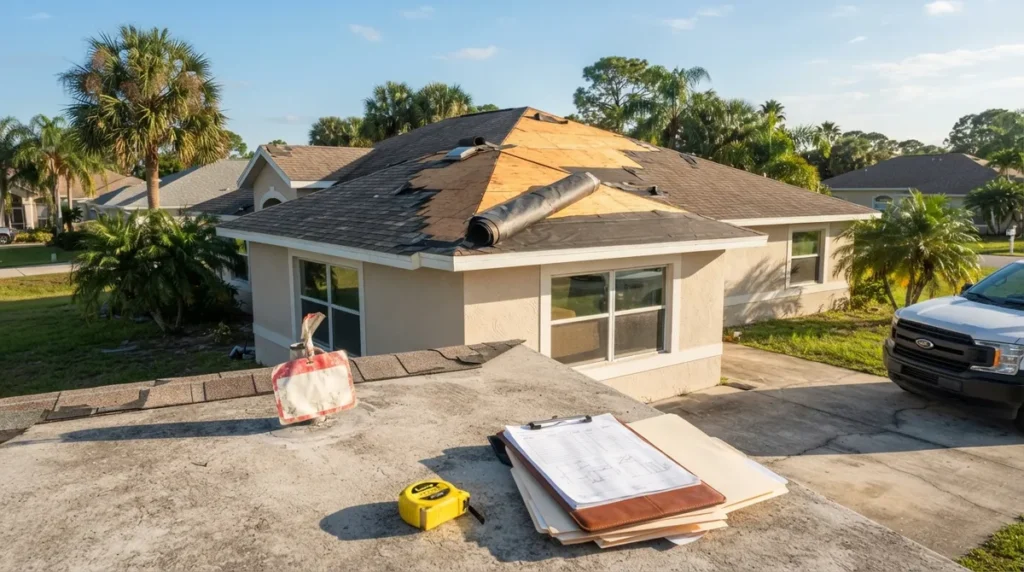
Key Takeaways
-
Florida Statute §553.79 generally requires a permit before a full roof replacement begins, and permitting is handled locally by the county or city building department, so confirm which authority controls your property first.
-
Don't assume an exemption applies: the new 2026 exemption for owner-occupied single-family work under $7,500 has scope and local implementation rules that must be verified, and most full reroofs won't qualify.
-
Start by searching the permit records for your address to see whether a permit was pulled, left open, or expired, then gather contracts, invoices, product approvals, dated photos, and contractor license details.
-
An after-the-fact permit is not automatic legalization; the building official may require documentation, inspection of concealed components, selective removal, or engineer letters, and corrections if work is noncompliant.
-
Good records often reduce how much roofing must be removed for inspection, so organized documentation is the most practical way to limit cost and disruption.
-
Resolve unpermitted roofs before a sale, refinance, or insurance renewal, since buyers' inspectors, lenders, title companies, and insurers commonly flag unpermitted work and can delay closings.
So you just found out your roof was installed without a permit. Maybe a previous owner skipped the paperwork. Maybe a contractor told you, "Don't worry, we don't need one for this." Or maybe your buyer's inspector just flagged it days before closing. Take a breath. You're far from the first Florida property owner to land here, and there is almost always a path forward.
A roof done without a permit in Florida is a more common problem than most people realize. It can affect your insurance, your resale, and your peace of mind. The good news is that building departments deal with unpermitted work every day, and the process for fixing it is more learnable than it looks.
In this guide, we'll walk through what Florida law says, what could happen next, how after-the-fact permitting generally works, and what you can do first. Whether you're a homeowner, a general contractor, a realtor, or a roofer cleaning up a past job, you'll find practical steps here. Let's get you unstuck.
Does a Roof Replacement Really Need a Permit in Florida?
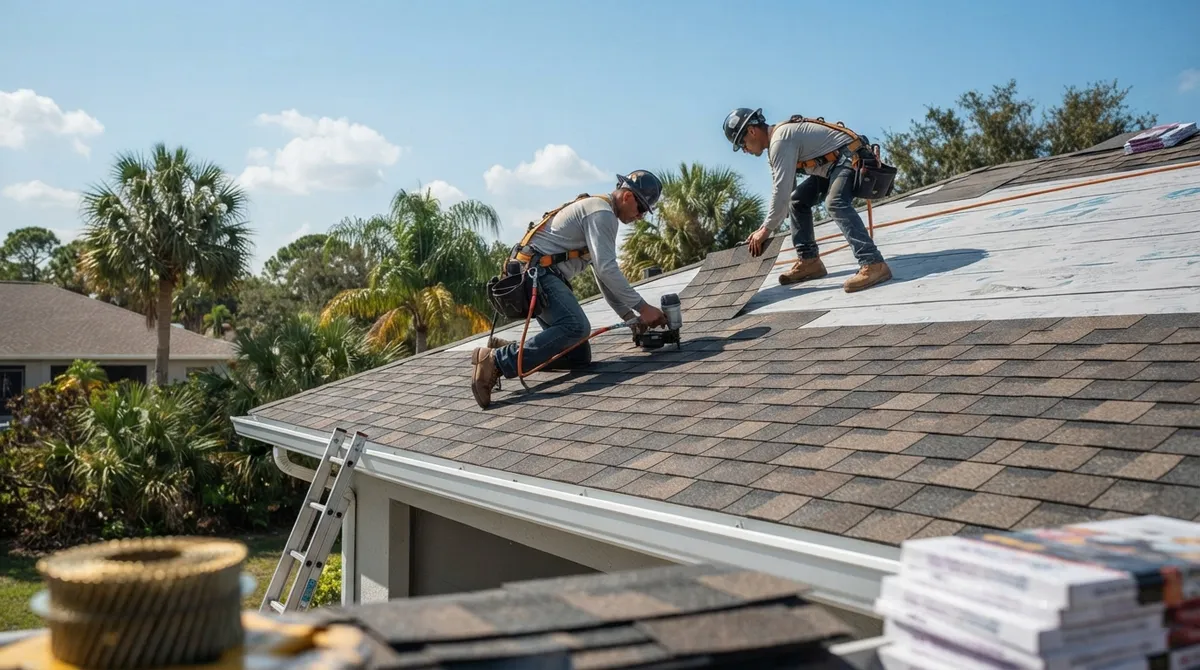
In most cases, yes. Florida Statute §553.79 generally requires a permit from the local enforcing agency before covered building work begins. That includes construction, alteration, modification, and repair work, and a full reroof ordinarily falls squarely inside that rule.
Here's the catch: permitting is handled locally. Your county or city building department (the "authority having jurisdiction") decides the application documents, the fees, the inspection sequence, and what to do about work that's already finished. There's no single statewide process.
You may have heard about a new exemption in the 2026 Florida Statutes covering certain work valued under $7,500 on an owner's single-family dwelling. That's worth knowing about, but please don't treat it as a free pass. Its scope, effective date, exclusions, and local implementation all need to be verified with the current statute and your building department. Most reroofs, especially full replacements, will not conveniently fit under a small-job threshold.
Quick Reference: Permit Requirements by Roofing Scenario
| Roofing Scenario | Permit Typically Required? | Notes |
|---|---|---|
| Full roof replacement | Yes | Governed by §553.79 and local rules |
| Partial reroof or section replacement | Usually, confirm locally | Depends on size and jurisdiction |
| Minor shingle repair | Varies | Ask your building department first |
| Work valued under $7,500 on owner's single-family home | Verify current law | New exemption; scope must be confirmed |
| Re-covering or overlay | Typically yes | Local code and wind-zone rules apply |
When in doubt, call the building department or check with a permitting professional before assuming anything is exempt.
What Can Happen When a Roof Is Done Without a Permit in Florida?
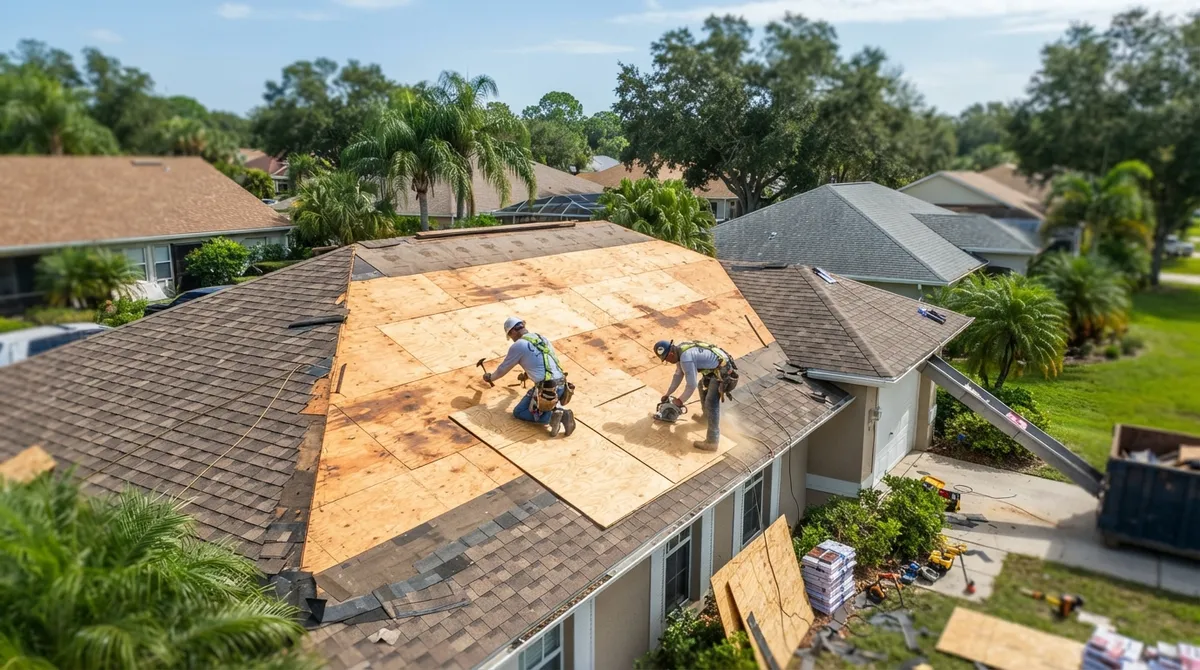
Let's be honest about the possibilities, without panic. Florida law authorizes local building officials to enforce the Florida Building Code, and work without a required permit can trigger several outcomes. Exact consequences depend on your jurisdiction and your situation.
- Enforcement action: The building department or code enforcement may issue a notice or stop-work order.
- Additional fees or penalties: Many jurisdictions charge higher fees for after-the-fact permits under their local rules. Amounts vary, and there's no statewide fee schedule.
- Required corrective work: If something doesn't meet code, it may need to be fixed.
- Insurance headaches: An unpermitted roof can complicate claims or renewals, depending on your carrier.
- Sale and closing delays: Title companies, lenders, and buyers' inspectors often flag unpermitted work.
If you've already received a notice, our guide on penalties for building without a permit in Florida goes deeper, and you can see how insurers think about this in expired permits and insurance claims in Florida.
Can You Get an After-the-Fact Permit for a Roof in Florida?
In many jurisdictions, yes, but with an important caveat. A permit obtained after the work is done does not automatically legalize the roof. The building official's job is to verify the roof meets the Florida Building Code, and that may take some effort on your part.
Depending on where you live, you may need to:
- Submit an application and supporting records
- Provide documentation proving materials and installation methods
- Allow inspection of concealed components
- Correct any noncompliant work
This is exactly the kind of situation our after-the-fact and expired permits service is built for. For a deeper dive into how this works statewide, see how to get an after-the-fact permit in Florida and unpermitted roof Florida: what owners need to know.
Will the Inspector Make You Tear Off the Roofing?
This is the question that keeps people up at night, so let's tackle it head on. Not necessarily, but it's possible.
Roof inspections commonly happen in stages, such as roof-deck preparation or dry-in, followed by a final inspection. Required inspections vary by jurisdiction and project. When a roof is already covered, the inspector can't see the deck, the fastening, or the underlayment. So the building official may ask for documentation, or in some cases selective removal, to inspect what's hidden.
Think of it like a surprise inspection of a finished kitchen cabinet: if the inspector can't see inside, they'll want proof of what's in there. Strong records often reduce how much needs to be opened up.
Helpful documentation can include:
- The original contract and invoices
- Dated photos taken during installation
- Product approvals or manufacturer specifications for the materials used
- The roofing contractor's license and contact information
- Any engineer letters or field verification reports
Sometimes a sealed engineer letter helps bridge the gap when a roof is already finished. Learn more about engineer letters for permits and how demolition isn't always the outcome.
Your First Steps: A Practical Game Plan
Don't try to fix everything at once. Work through these steps in order and you'll make real progress fast.
- Identify the permitting authority. Near city lines, the property may fall under the county or a municipality. Our building department lookup tool can help you figure out who actually controls your address.
- Search the permit records. Check whether a permit was ever pulled, expired, or left open. The open permit search tool is a good starting point.
- Gather your paperwork. Contracts, invoices, product approvals, photos, and contractor details all matter.
- Ask about the unpermitted-work process. Call the building department and ask how they handle after-the-fact roof permits.
- Get professional help if the path is unclear. A permitting service can organize the application and coordinate with the authority.
Please don't skip step one. Filing with the wrong department is a surprisingly common (and frustrating) time-waster.
Why the Florida Building Code Still Matters
It's tempting to think, "The roof has been fine for two years, so it must be up to code." Unfortunately, that's not how it works. Florida Building Code requirements can apply to the roof assembly, materials, attachment, and installation. The applicable code edition and any local amendments depend on the permit date and location.
In wind-prone areas like the coast and South Florida, fastening patterns, underlayment, and product approvals are especially important. Miami-Dade and Broward, for example, have their own product approval pathways, which our article on Miami-Dade NOA vs. Florida product approval explains.
How Costs and Timelines Differ by Jurisdiction
Many people want a number up front. Honestly, no statewide uniform after-the-fact permit fee or penalty amount exists. What you'll pay and how long it takes depends on your local jurisdiction, the roof's size, and what the review turns up.
| Factor | How It Affects Cost or Timeline |
|---|---|
| Jurisdiction | Fee schedules and penalty rules are set locally |
| Roof size and complexity | Larger or complex roofs usually mean more review and inspection time |
| Quality of records | Good documentation can reduce invasive inspection |
| Concealed work needing verification | May require engineer letters or selective removal |
| Corrections needed | Noncompliant work must be fixed before final approval |
| Open vs. expired permits | Prior records can change the path forward |
For a realistic picture of what these projects can look like, see after-the-fact permit Florida cost and how to estimate after-the-fact roof permit costs.
Who Needs to Pay Attention to This?
Unpermitted roofs touch a lot of people, and the priorities look a little different for each:
- Homeowners: You want to protect your insurance, your equity, and your sleep. Start with records and a call to the building department.
- Realtors and buyers: A flagged roof can derail a closing. Our realtor and closing support helps keep deals moving, and we've written about open permits found at closing.
- General contractors and roofers: If a past job or a subcontractor skipped the permit, cleaning it up protects your license and reputation. See our page for roofing contractors and the Roof Permit Partnership Program.
- Solar companies: A solar install on an unpermitted roof can stall your own permit. Verify roof status before you design the array.
How a Florida Permitting Service Can Help
Here's where an experienced team earns its keep. 1 Contractor Solutions acts as Florida's outsourced permitting department, with in-house drafting and engineering and our own engineer sealing the work. When a reviewer flags something, we fix it directly rather than waiting on an outside consultant.
For a roof done without a permit in Florida, we typically help by:
- Determining which jurisdiction actually controls the property
- Researching permit history and open or expired records
- Preparing the after-the-fact application and supporting documents
- Producing as-builts or sealed engineer letters when needed
- Coordinating with the building department and working reviewer comments
- Tracking the permit through inspections and closeout
To be transparent, no service can guarantee approval or waive code requirements. What a good team can do is organize the file, speak the building department's language, and cut down on guesswork. If it's urgent, such as a closing date or a stop-work order, our urgent permit rescue team is built for that. We also serve counties statewide, including Hillsborough, Miami-Dade, and Sarasota. Prefer to read more? Our guide to fixing an unpermitted roof in Florida is a good next stop.
You can also see what customers say by reading reviews: Visit us on Google — 1 Contractor Solutions, and stay in the loop when you follow us on LinkedIn or follow us on Facebook.
Preventing This Problem Next Time
An ounce of prevention really is worth a pound of cure here. A few habits keep you out of trouble:
- Always ask for the permit number before work starts
- Verify the contractor's license through the state before signing
- Never accept "the homeowner will pull the permit" without understanding the implications. Our article on homeowners who said they'd pull the permit explains why this causes trouble
- Keep your final inspection approval with your home records
- Save product approvals, photos, and invoices in one folder
Ready to Resolve Your Unpermitted Roof?
A roof done without a permit in Florida is stressful, but it's usually a solvable problem. The key is to act early, gather your records, confirm the right jurisdiction, and avoid assuming any exemption applies without checking. The longer an unpermitted roof sits, the more likely it is to surface at the worst possible moment, like a sale, a refinance, or an insurance claim.
If you'd like experienced help sorting this out, our team responds within 30 minutes, day or night, and se habla español. Reach out to get a free quote and we'll tell you what your roof will likely need, then go do the work of getting it permitted and closed out.
FAQs
Does a roof replacement require a permit in Florida?
In most cases, yes. Florida Statute §553.79 generally requires a permit from the local enforcing agency before roof replacement or repair begins, and a full reroof ordinarily needs one. For smaller repairs, it's best to confirm with your local building department before you start.
What should I do if my roof was installed without a permit in Florida?
Start by identifying your permitting authority and searching its permit records. Then gather your contract, invoices, product approvals, photos, and contractor details, and ask the building department about its after-the-fact process. A Florida permitting service can help organize the application and coordinate with the authority.
Will the building department make me remove roofing to inspect unpermitted work?
Not always, but it can happen. If the roof is already covered, the inspector may accept documentation or may require selective removal to see concealed components. Good records, photos, and sometimes an engineer letter can reduce how much needs to be opened up.
Can an unpermitted roof cause problems when selling or insuring a Florida home?
Yes, it can. Buyers' inspectors, lenders, title companies, and insurers often flag unpermitted work, which can slow a closing or complicate coverage. Resolving it before listing or renewing usually makes the process smoother.
Can a permit obtained after the work is done make the roof legal?
Not automatically. An after-the-fact permit is a process, not a rubber stamp, and the building official determines what's needed to verify code compliance. That may include records, inspections of concealed work, or corrections, and results can't be guaranteed.
We do this work every day across all 67 Florida counties. Call (866) 314-6931 and we will tell you what your situation actually requires — including when you do not need us.
Related services
Permit Facilitation & Filing
You have a crew scheduled, a client asking for dates, and a permit sitting somewhere in a queue you cannot see. We file it, w…
See the servicePlan Review Coordination
A permit in plan review is not one queue. On a commercial project it can be six queues, each with its own reviewer, its own c…
See the serviceReady to get your permit moving?
One call tells you which jurisdiction controls your project, what it will take, and what it will cost. Most of the time we can scope it on the phone.