
Blog
How to Get a Home Addition Permit in Naples, FL (2026)
Planning a home addition in Naples? Learn how to choose the right office, prep plans, handle flood and septic rules, and get your permit approved.
Key Takeaways
-
Confirm your jurisdiction first: City of Naples Building Department and unincorporated Collier County Growth Management use different forms and steps, and a Naples mailing address doesn't guarantee city jurisdiction.
-
A true room addition needs a full building permit before construction begins; verify whether the July 1, 2026 state-law exemptions apply rather than assuming your project is permit-free.
-
Collier County may require a certified survey or site plan when new impervious area exceeds 400 square feet, which includes patios and driveway expansions as well as the addition itself.
-
Flood rules are critical in Naples: find your FEMA base flood elevation early, since a large renovation relative to home value can trigger substantial-improvement rules requiring the whole house to meet current standards.
-
For septic properties in Collier County, show at least a five-foot separation between the new structure and the septic system, and check whether added bedrooms or bathrooms trigger a septic review.
-
Inside City of Naples limits, major additions require a temporary construction-fence permit that must be issued and inspected before the building permit is issued.
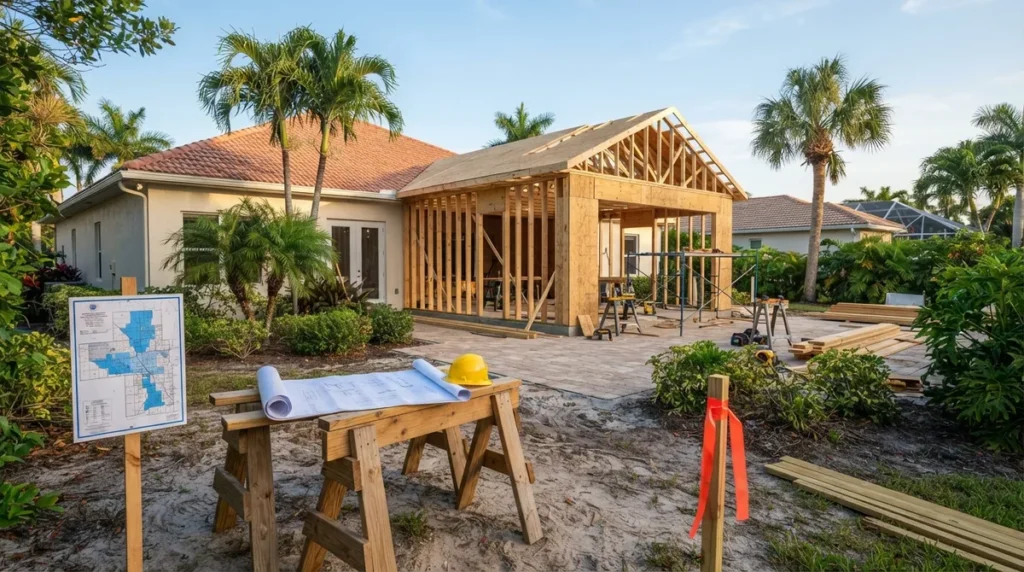
Dreaming of a bigger kitchen, a new primary suite, or a bonus room for the grandkids? Adding on to your Naples home is exciting, and the paperwork doesn't have to ruin the fun. The very first thing to know is this: a home addition permit in Naples almost always comes before the first shovel hits the dirt, and where you apply depends on where your property sits.
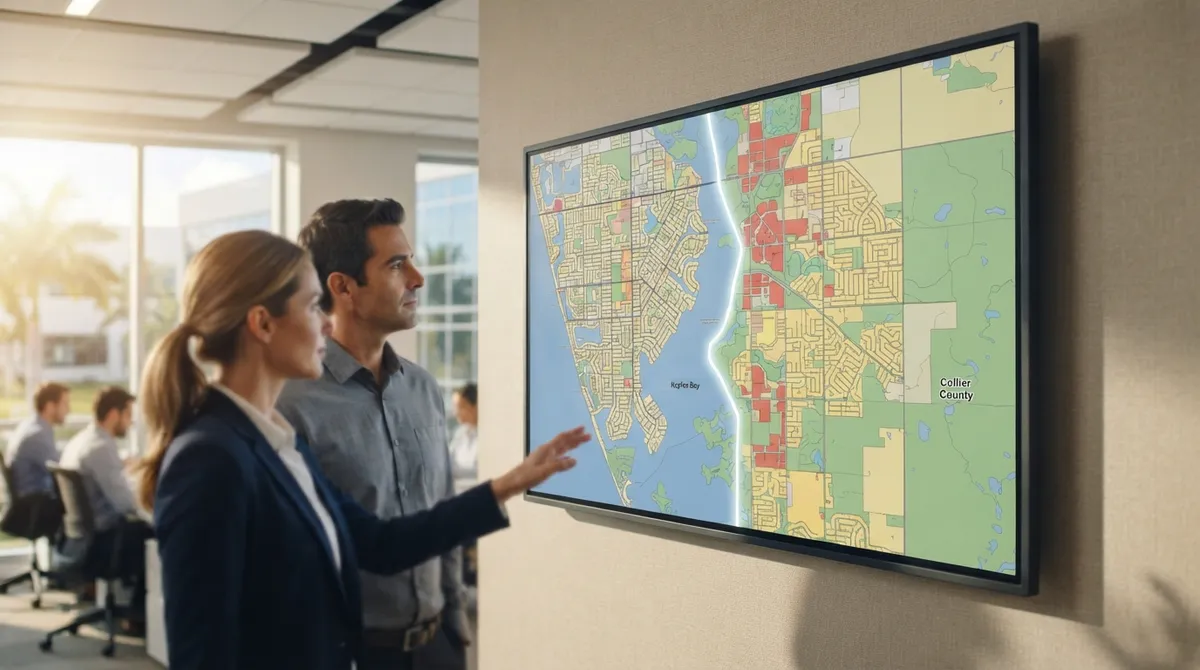
Here's the part that trips people up. Naples is really two permitting worlds. Homes inside the City of Naples go through the city's Building Department. Homes in unincorporated Collier County go through county Growth Management. The forms, the review steps, and even some of the extra requirements differ. Picking the wrong office can cost you weeks.
In this friendly, step-by-step guide, we'll walk through how to figure out your jurisdiction, what plans you'll need, how flood zones, septic systems, and site rules can change things, and how to avoid common delays. Whether you're a homeowner, a general contractor, a designer, or a realtor helping a client, you'll leave with a clear roadmap. Always confirm current forms and fees with your jurisdiction before submitting, because requirements do change.
Step 1: Confirm Whether You're in the City of Naples or Collier County
This single question decides everything that follows. A Naples mailing address does not guarantee City of Naples jurisdiction. Plenty of homes with a Naples address sit in unincorporated Collier County, and the reverse can happen near boundary lines.
Here is how the two paths compare at a glance:
| Factor | City of Naples | Unincorporated Collier County |
|---|---|---|
| Permitting authority | City Building Department | Collier County Growth Management |
| Application category | Addition/Alteration permit via city e-permitting | 1-2 Family Home, identified as an addition |
| Submittal format | Completed documents as PDFs | Construction plans plus proposed site-planning document |
| Special note | Temporary construction-fence permit for major additions | Certified survey/site plan may be needed above 400 sq ft of new impervious area |
| Code edition | 8th Edition Florida Building Code (applications on or after Dec. 31, 2023) | Current Florida Building Code and county floodplain provisions |
If you're not sure which side of the line you're on, check your property appraiser parcel record or ask the permitting offices directly. Our building department lookup tool can also help you point your application at the right office from the start. Getting this right on day one is the cheapest time-saver in the whole process.
Step 2: Decide Whether Your Project Really Needs a Permit
For a true room addition, the answer is yes. Adding square footage, new walls, a new roofline, or conditioned space is permit territory. Don't gamble on skipping it. We've seen what happens later, and it's rarely pretty. If you're curious about the downside, read what happens if you build an addition without a permit in Florida.
One 2026 update worth knowing: the City of Naples notes a state-law change effective July 1, 2026 that creates two new permit exemptions for single-family properties. The details aren't spelled out in the city's summary, so verify whether any exemption applies before assuming your project is permit-free. For a genuine addition, you should plan on a full building permit.
- Almost always permitted: new rooms, expanded footprints, second-story additions, garage conversions, enclosed lanais
- Often permitted: structural changes, new roof tie-ins, added electrical or plumbing, new air-conditioned space
- Verify first: small or minor work that might fall under the July 1, 2026 exemptions
When in doubt, ask. A five-minute call to the building department beats a stop-work order every time.
Step 3: Gather the Plans and Documents You'll Need
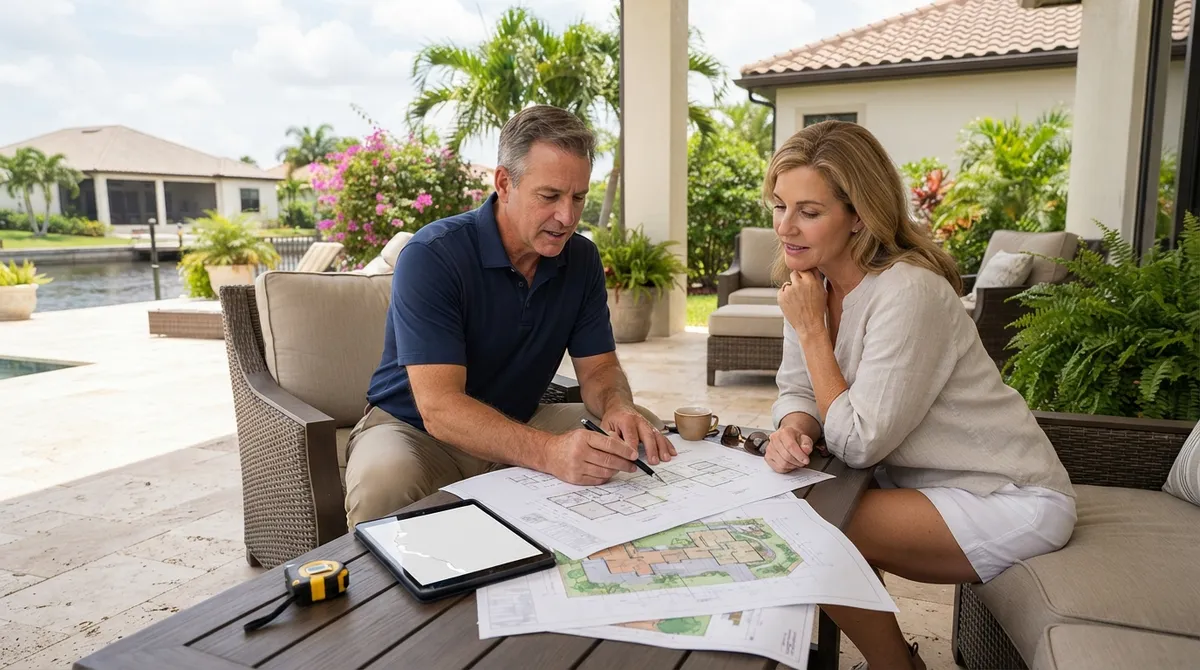
A strong submittal is the difference between a smooth review and a stack of correction comments. For a one- or two-family home addition in Collier County, the county lists construction plans and a proposed site-planning document among the submittal requirements, and additional items depend on your project and site.
Here is what a typical addition package includes:
- Architectural plans: floor plan, elevations, sections, and details for the new space
- Structural details: foundation and framing information that shows how the addition connects to the existing home
- Window and door schedules: sizes, types, and locations
- Wind-load information and product-approval references: essential in Florida for windows, doors, roofing, and more
- Energy and load calculations: required when the scope includes air-conditioned space
- Site plan or survey: showing the proposed work location and setbacks
- Contractor and owner information: license details or owner-builder paperwork
Plan quality matters more than most people expect. If you want a primer on what officials actually approve, check out how to get permit-ready plans Florida officials approve, and learn who seals structural drawings for Florida permits so you hire the right professional the first time.
Step 4: Handle the Site Plan, Survey, and Flood Zone Details
This is where additions in Southwest Florida get interesting. Collier County's site-planning requirements call for specific information, and missing even one item can trigger a rejection.
What the Site Plan Should Show
Collier County asks for details such as the proposed work location, road-crown elevation, flood zone, FEMA base flood elevation, and proposed finished-floor elevation. These numbers help reviewers confirm your addition will sit safely above flood levels.
When a Certified Survey Is Needed
A certified survey or site plan may be required when your new impervious area exceeds 400 square feet. Impervious area includes the addition itself plus things like new patios or driveway expansions. Because that threshold is easy to cross, many Naples homeowners end up needing a survey. Confirm applicability with the county for your specific project.
| Site Item | Why It Matters | Who Usually Provides It |
|---|---|---|
| Flood zone and FEMA BFE | Sets minimum elevation requirements | Designer, surveyor, or permitting team |
| Road-crown elevation | Used for drainage and grade review | Surveyor or designer |
| Proposed finished-floor elevation | Shows compliance with flood rules | Designer or engineer |
| Certified survey (if over 400 sq ft impervious) | Documents new impervious area | Licensed surveyor |
Step 5: Check Flood-Zone and Substantial-Improvement Rules
Naples is coastal, and flood rules are a big deal. Collier County states that projects considered substantial improvements must meet the current Florida Building Code and county floodplain-management provisions. In plain English, if your addition and renovation costs are large relative to your home's value, the whole house may need to be brought up to current flood standards.
Here's how to stay ahead of it:
- Find your flood zone and base flood elevation early, before you finalize the design.
- Ask the jurisdiction whether your project could count as a substantial improvement.
- Confirm whether FEMA-related documentation is required for your project.
- Budget for the possibility that elevation or flood-resistant materials affect cost.
Pros often catch these issues during the design phase, long before they become expensive surprises. That's one reason homeowners and builders lean on a permitting team early rather than late.
Step 6: Account for Septic Systems and Utility Approvals
If your Collier County property has a septic system, your plans need to show the proposed structure's distance from it. The county cites a minimum five-foot separation under Florida Administrative Code 62-6.005(2). Septic-related approvals may also be needed, especially if the addition adds bedrooms or bathrooms.
A quick checklist for septic properties:
- Locate the tank and drain field on your site plan.
- Measure the distance from the new foundation to the system.
- Ask whether added bedrooms or fixtures trigger a septic review.
- Coordinate any utility or health-department approvals before submitting.
Skipping this step is a classic reason additions stall after submittal, so get it on paper early.
Step 7: Prepare for City-Specific Requirements in Naples
If you're inside City of Naples limits, a few extra steps apply. For new or major addition projects, a temporary construction-fence permit must be issued and inspected before the building permit can be issued. Many homeowners don't learn about this until they're deep into the process, so plan for it.
The City also provides an online application guide for addition and alteration permits and asks applicants to submit completed documents as PDFs. Clean, properly labeled files make reviewers' jobs easier and your approval faster.
- Create your account in the city's e-permitting system.
- Apply for the temporary construction-fence permit if your project is a major addition.
- Pass the fence inspection.
- Upload your complete plan set and forms as PDFs.
- Pay fees and track review status online.
Remember, applications submitted on or after December 31, 2023 must comply with the 8th Edition Florida Building Code, so make sure your designer is working from the right edition.
Step 8: Submit, Track, and Respond to Review Comments
Once you submit, the real patience game begins. Reviewers may issue comments asking for clarifications, revised details, or additional documents. This is normal. A first-round comment doesn't mean you've failed; it means the system is working.
To keep things moving:
- Respond to every comment in writing, and reference the plan sheet that changed.
- Resubmit promptly so your file doesn't go stale.
- Keep a single point of contact for the jurisdiction.
- Track status weekly instead of waiting for surprises.
If your application does get rejected, don't panic. Our guide on who can rescue a denied building permit in Florida explains your options, and resubmittal strategies can save a lot of time.
Who Should Handle Your Naples Addition Permit?
You have a few paths, and the right one depends on your comfort level and your project's complexity.
| Option | Best For | Watch Out For |
|---|---|---|
| DIY / owner-builder | Simple scopes and confident homeowners | Time, learning curve, and review comments |
| Licensed contractor | Projects where the builder pulls the permit | Contractor registration in the right jurisdiction |
| Permitting and engineering firm | Complex additions, flood zones, tight timelines | Choose a team with in-house sealed drawings |
Contractors working in the area should also confirm registration. See how to register your contractor license in Naples, FL for the steps. And if you're an owner considering the do-it-yourself route, DIY vs. pro help is a helpful read.
This is where 1 Contractor Solutions comes in. We handle permit filing, tracking, and plan review coordination across all 67 Florida counties, and our in-house team prepares plans and sealed structural and MEP drawings so you aren't chasing outside consultants. Same-day response is our standard, which matters when your crew is waiting on a permit.
Common Mistakes That Slow Down Naples Addition Permits
After seeing plenty of files, certain patterns repeat. Avoid these and you'll be ahead of most applicants:
- Applying to the wrong office. City versus county confusion is the number one time-waster.
- Skipping the survey. Crossing 400 square feet of new impervious area may require one.
- Ignoring flood data. Missing FEMA base flood elevation details triggers corrections.
- Forgetting the septic setback. The five-foot separation must be shown.
- Incomplete product approvals. Windows, doors, and roofing need proper references.
- Missing the construction fence. City major additions need that permit first.
Already built without permits? You're not out of options. Explore how to legalize an after-the-fact addition in Florida or read how to sell a Florida house with unpermitted additions. Realtors and buyers should also review open permit mistakes before closing in Naples.
A Realistic Timeline and Final Inspections
Every project moves at its own pace, but the general flow looks like this: design and plans, submittal, review and corrections, permit issuance, construction with inspections, and finally closeout. Inspections typically follow the construction sequence, such as foundation, framing, electrical, plumbing, mechanical, and final.
Once everything passes, you'll want a clean closeout so your new space is officially recognized. If you hit snags near the finish line, how to handle covered work that missed inspection can help, and our overview of certificate of occupancy services explains the final sign-off. For a broader look at planning, see 10 things to know before adding a room in Florida.
Want a gut check on the neighborhood? Visit us on Google — 1 Contractor Solutions to see what other Florida customers say, and stay connected with industry updates when you follow us on LinkedIn or follow us on Facebook. Our marketing partner, Brain Buzz Marketing, helps us keep these guides fresh and accurate.
Ready to Start Your Naples Addition?
A home addition permit in Naples doesn't need to be a headache. Start by confirming your jurisdiction, gather complete plans and site information, account for flood and septic rules, and respond quickly to review comments. Do those things well and you'll move from idea to ground-breaking with far fewer surprises.
If you'd rather hand off the paperwork and keep your focus on the fun part, we're here to help. Our team handles the filing, tracking, and engineering so your project keeps moving. Ready to get started? Get a free quote and let's turn your addition into a permitted, approved reality.
FAQs
Do I need a permit to add a room or expand my home in Naples, Florida?
Yes, a true room addition or home expansion generally needs a building permit. A state-law change effective July 1, 2026 adds two new single-family permit exemptions, but the details vary, so verify with your jurisdiction before assuming your project qualifies.
Is my property permitted by the City of Naples or Collier County?
It depends on where the parcel sits, not just your mailing address. Homes inside city limits use the City of Naples Building Department, while unincorporated properties go through Collier County Growth Management, so confirm your jurisdiction before you apply.
Does a Naples home addition need a survey or site plan?
A site plan is part of the submittal, and Collier County may require a certified survey or site plan when new impervious area exceeds 400 square feet. The plan should show details like flood zone, FEMA base flood elevation, and proposed finished-floor elevation.
Do I need septic approval for a home addition in Naples?
If your Collier County property has a septic system, your plans should show the structure's distance from it, and the county cites a minimum five-foot separation. Additional septic-related approvals may be needed, especially if you're adding bedrooms or bathrooms.
Does the City of Naples require a temporary construction fence for an addition?
For new or major addition projects inside the City of Naples, a temporary construction-fence permit must be issued and inspected before the building permit can be issued. Build that step into your schedule so it doesn't delay your start.
We do this work every day across all 67 Florida counties. Call (866) 314-6931 and we will tell you what your situation actually requires — including when you do not need us.
Related services
Permit Facilitation & Filing
You have a crew scheduled, a client asking for dates, and a permit sitting somewhere in a queue you cannot see. We file it, w…
See the servicePlan Review Coordination
A permit in plan review is not one queue. On a commercial project it can be six queues, each with its own reviewer, its own c…
See the serviceReady to get your permit moving?
One call tells you which jurisdiction controls your project, what it will take, and what it will cost. Most of the time we can scope it on the phone.