
Blog
How to Do Permit Due Diligence in Port Charlotte, FL
Learn how to do permit due diligence in Port Charlotte: check permit history, zoning, flood zones, and fees before you buy or build.
Key Takeaways
-
Before buying in Port Charlotte, search Charlotte County's Citizen Access Portal by parcel ID or address for permit history, violations, and zoning records; no registration is needed to search.
-
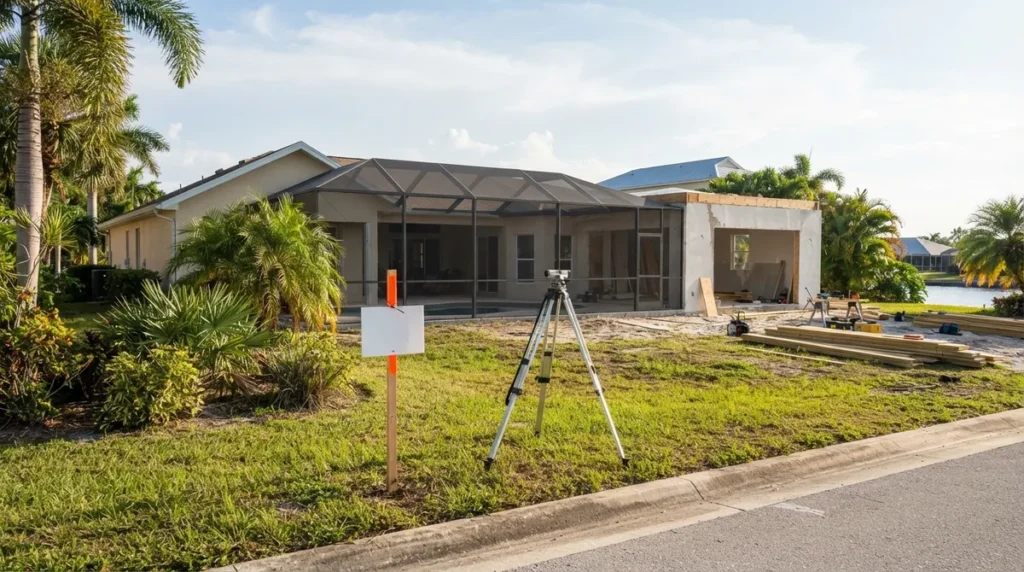
Compare permit records against visible improvements like pools, lanais, or additions; an enclosure or addition with no closed permit is a major red flag.
-
Zoning, setbacks, easements, and site-plan rules are separate from permit history, so verify permitted uses with Charlotte County before paying for plans or closing.
-
Flood zone, base flood elevation, and elevation certificates can change design and insurance; confirm them with the county's Forerunner tools and make sure surveys use the NAVD88 datum.
-
Impact fees are tied to the parcel and non-refundable, so verify the current amount and status rather than assuming a prior owner's permit settled them.
-
Confirm every open, expired, or inconsistent record directly with Charlotte County in writing, and document dates and names, before committing to a purchase or construction plan.
Buying a home or vacant lot in Port Charlotte is exciting. Sunshine, canals, and wide-open lots make it easy to picture your future there. But before you fall in love with a property, it pays to get a little nosy about its paperwork. That is what permit due diligence in Port Charlotte is all about.
In plain terms, it means checking a parcel's permit history, zoning and site-plan limits, flood exposure, and the approvals your planned work will need. You do this before you buy, design, or build. A little homework now can save you from surprise fees, stalled closings, and expensive fixes later.
This guide is written for homeowners, buyers, agents, investors, and contractors alike. We will walk through a clear, step-by-step process using Charlotte County's online tools, and we will point out where online research stops and official confirmation begins. Think of it as a friendly checklist you can follow with a cup of coffee in hand.
What Permit Due Diligence Really Means in Port Charlotte
Permit due diligence is a parcel-specific review. It is not a single search or one phone call. It combines several checks that together tell you whether a property is clean, whether your plans will work, and what the process will cost.
Here is what a solid review usually covers:
- Existing permit history and whether past work was properly closed out
- Zoning, land-use rules, setbacks, easements, and access
- Flood zone, base flood elevation, and elevation certificates
- Permits, reviews, and sealed documents your planned project requires
- Impact fees and other parcel-specific costs
One important first step: confirm the parcel's jurisdiction. Port Charlotte is an unincorporated community, so Charlotte County services generally apply. Always verify this for your specific address rather than assuming.
Step 1: Confirm the Property and Its Jurisdiction
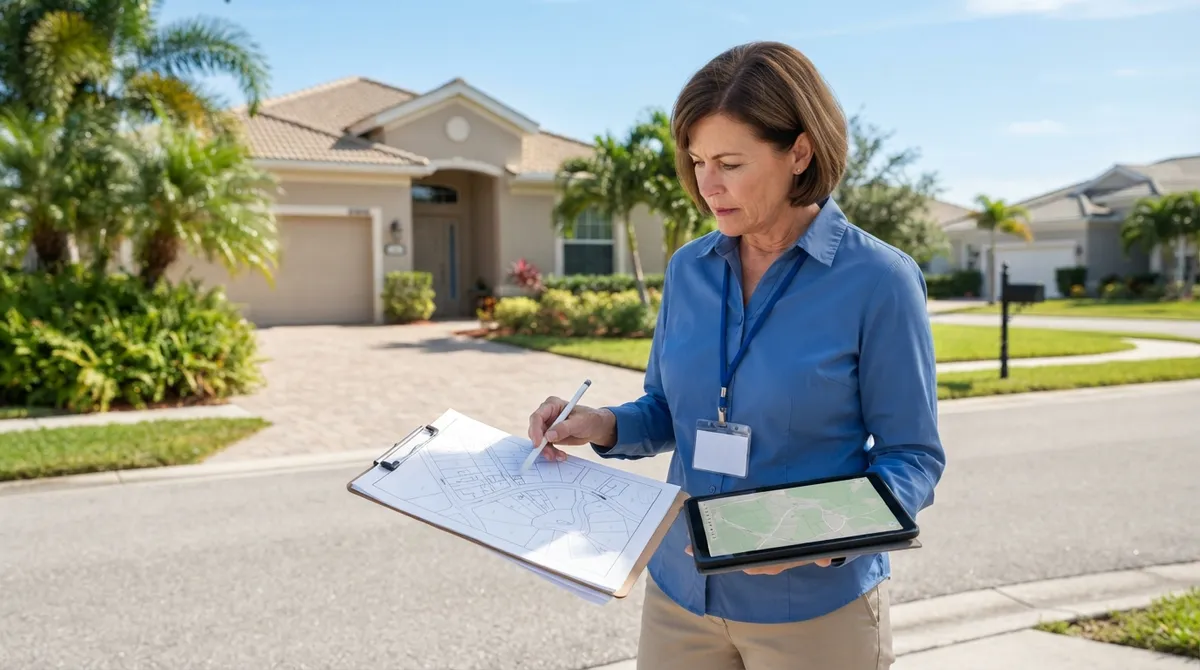
Start by collecting the basics. You will want the street address, the parcel ID, and the legal description if you have it. Searching by parcel number or address is more reliable than searching by owner name.
- Pull the parcel ID from the listing, the county property appraiser, or the purchase contract.
- Confirm that the parcel sits under Charlotte County jurisdiction.
- Note the lot's current use, such as single-family home, vacant lot, or commercial.
- Write down any improvements you can see, like a pool, lanai, shed, or addition.
That last item matters more than you might think. Later, you will compare what you see on the ground with what the permit records say.
Step 2: Research Permit History Online
Charlotte County's Citizen Access Portal lets the public research permit records, contractor licenses, zoning records, site-plan reviews, and code violations. The county notes that registration is not required just to research records, so you can start right away.
Search by address or parcel, then look closely at each record. Make sure the permit matches the correct property and the correct scope of work.
What to Look For in the Records
- Permit status, such as issued, finaled, expired, or open
- Inspection history and whether a final inspection was passed
- Contractor and license details tied to each permit
- Any code violation entries or stop-work activity
- Gaps, such as visible improvements with no matching permit
Here is a useful reality check. A record search is a starting point, not proof. A permit appearing in the system does not by itself prove that all work was permitted, passed final inspection, or meets current requirements. If something looks open, incomplete, or inconsistent, ask the county to clarify.
Step 3: Compare the Records to What You See
This is where the detective work gets fun. Walk the property, or have your inspector do it, and compare the physical improvements to the permit list. A few common mismatches show up again and again in Florida.
| What You See | What the Records Should Show | Red Flag |
|---|---|---|
| Screened lanai or enclosure | Permit with passed final inspection | No permit on file |
| Swimming pool | Pool permit, barrier and electrical sign-offs | Open or expired pool permit |
| Room addition or garage conversion | Building permit and certificate of completion | Added square footage with no record |
| New roof or impact windows | Roof or window permit with final | Replacement with no closed permit |
| Generator or solar array | Electrical and structural permits | Equipment present, no permit trail |
If you spot a mismatch, do not panic. Unpermitted work is fixable in many cases. Our guide on 4 steps if a prior owner skipped permits in Florida explains what to do next, and what an as-built drawing is and when you need one covers a common part of the fix.
Step 4: Check Zoning and Site-Plan Constraints
Zoning and site-plan review are separate checks from permit history. A property can have a spotless permit record and still not allow what you want to build.
Charlotte County Planning and Zoning manages land-use and zoning regulations. It also reviews site plans and development proposals. Before you rely on a proposed use or layout, verify these items with the county:
- Permitted uses for the parcel's zoning district
- Setbacks from property lines, water, and easements
- Easements, access, and any recorded restrictions
- Parcel-specific conditions tied to past approvals
- Site-plan requirements for larger or commercial projects
This matters a lot for investors and builders. Planning an accessory dwelling, a duplex conversion, or a commercial use? Confirm it is allowed before you pay for plans. It is far cheaper to hear "no" early than after you have closed.
Step 5: Review Flood Zone and Elevation Requirements
Flood review is especially important in coastal Charlotte County. Many Port Charlotte parcels sit in or near flood-prone areas, and that affects design, insurance, and permitting.
The county's flood information tools, including its Forerunner platform, provide parcel flood-zone and base-flood-elevation information. They may also list available elevation certificates. The county identifies NAVD88 as the vertical datum used for its flood maps and elevation measurements, so make sure any survey or certificate uses the same reference.
Flood Items That Can Affect Your Project
| Condition | What May Be Required |
|---|---|
| Special Flood Hazard Area | Elevation certificate, such as an under-construction certificate for additions |
| Adopted regulatory floodway | No-impact certification for certain work |
| Lowest floor below required elevation | Design changes, elevation work, or added review |
| Substantial improvement or damage | Additional floodplain compliance review |
Also check current FEMA-related mapping and the county's floodplain requirements. Maps and rules can change, so confirm the latest version for your parcel. If you are planning construction in a flood zone, our article on 7 flood zone permitting steps to know in 2026 is a helpful companion read.
Step 6: Identify the Permits Your Project Will Need
Now flip the question around. Instead of looking backward at history, look forward at your plans. Charlotte County states that regulated construction, alteration, repair, demolition, occupancy changes, and many electrical, gas, mechanical, plumbing, or impact-resistant-covering installations require a permit. The county cites Florida Building Code Section 105.1 for these requirements.
The county publishes project-specific document lists, review steps, and fees. Always confirm the current list for your exact project type, since requirements change.
Common Port Charlotte Project Types
- Roofs and re-roofs
- Pools, pool cages, and screen enclosures
- Room additions and garage conversions
- Window and door replacements, including impact products
- Generators, solar, and electrical upgrades
- Demolition and new construction
For related local reading, see what a building permit service in Port Charlotte does and how to get an owner builder permit in Port Charlotte.
Step 7: Know What Documents You May Need
Many applications require more than a simple form. Depending on the work, you may need signed and sealed plans, a site plan and survey, product specifications, and other project-specific documents.
For example, the county's residential-addition guidance lists an under-construction elevation certificate for properties in a Special Flood Hazard Area. It also lists a no-impact certification for certain work in an adopted regulatory floodway.
| Document | When It Is Commonly Needed |
|---|---|
| Signed and sealed plans | Additions, structural changes, and many commercial projects |
| Site plan and survey | New construction, additions, and accessory structures |
| Elevation certificate | Work in a Special Flood Hazard Area |
| No-impact certification | Certain floodway development |
| Product specifications | Roofing, windows, doors, and shutters |
Not sure who is allowed to seal your drawings? Read who seals structural drawings for Florida permits and structural plans for a Florida residential permit in 2026.
Step 8: Budget for Fees and Impact Fees
Fees are the part that surprises people most, so let's talk about them openly. Charlotte County publishes fee schedules by project type. For example, the county's residential-addition page lists a $200 building flat fee at application, plus percentage-based charges and review fees. Treat that as an example only, since fees vary by project and should be checked against the current county schedule.
Impact fees deserve special attention. Per the county, they are tied to the parcel, non-refundable, and assessed when a building permit is reviewed. They must be paid before final inspections, though payment may be spread over time.
- Verify the parcel's fee status instead of assuming it is settled
- Do not assume a prior owner's old permit resolves current fees
- Ask the county for current amounts before finalizing your budget
If you are buying with open permits in the mix, you will also want to read who pays for open permits when buying a Florida home and 6 open permit mistakes to avoid before closing in Port Charlotte.
Step 9: Verify Everything Directly With the County
Online research gets you most of the way, but it should never be the final word. Before you commit to a purchase or a construction plan, confirm unresolved items directly with Charlotte County.
- List every open permit, expired permit, or inconsistent record you found.
- Ask the county what is needed to close or resolve each item.
- Confirm zoning and permitted use in writing where possible.
- Verify flood zone, base flood elevation, and certificate requirements.
- Request the current fee schedule and impact-fee status for the parcel.
Document every answer. Dates, names, and emails can be very helpful if questions come up during the closing or the permit review.
When to Bring in a Professional
You can handle the first pass yourself. But some situations call for backup, and that is perfectly normal. Consider professional help when you find an expired or open permit, visible work with no permit, a flood-zone parcel, or a tight closing timeline.
That is where 1 Contractor Solutions comes in. We act as Florida's outsourced permitting department, handling permit filing, tracking, plan review coordination, and in-house sealed drafting and engineering. Our team can help you sort out records, prepare as-builts, and move a stalled permit forward. If you are dealing with a problem record, our urgent permit rescue service is built for exactly that.
A few related reads that may help: how to get a certificate of occupancy in Port Charlotte, 11 steps for code violation help in Port Charlotte, and 7 steps to legalize unpermitted work in Florida.
Quick Due Diligence Checklist
Here is a short version you can screenshot and keep handy:
- Confirm parcel ID and Charlotte County jurisdiction
- Search the Citizen Access Portal for permits, violations, and zoning records
- Compare permit records with visible improvements
- Check zoning, setbacks, easements, and access
- Review flood zone, base flood elevation, and elevation certificates
- Identify required permits and documents for your project
- Estimate fees, including parcel-tied impact fees
- Confirm every open item directly with the county
Wrapping Up Your Port Charlotte Permit Due Diligence
Doing your permit due diligence in Port Charlotte may feel like extra homework, but it is some of the best-spent time in any property deal. You learn what you are really buying, what your plans will cost, and what could trip you up before it does.
Remember the big ideas: research records online, compare them to what is actually built, check zoning and flood rules separately, and always confirm unresolved items with the county. Online tools are a wonderful starting point, not the finish line.
Ready for a second set of expert eyes? Get a free quote and let our team review your parcel and handle the heavy lifting. You can also visit us on Google — 1 Contractor Solutions, follow us on LinkedIn, and follow us on Facebook for more Florida permitting tips. Our website and marketing are supported by Brain Buzz Marketing.
FAQs
How do I look up building permit history for a property in Port Charlotte?
Use Charlotte County's Citizen Access Portal, which lets you research permit records, contractor licenses, zoning records, and code violations. Registration is not required just to search, and searching by parcel or address gives the most reliable results. Just remember a record is a starting point, so confirm anything unclear with the county.
How can I find a Port Charlotte property's flood zone and base flood elevation?
Charlotte County's Forerunner platform shows parcel flood-zone and base-flood-elevation information, plus available elevation certificates. The county's maps use the NAVD88 datum, so check that any survey matches. It is also smart to review current FEMA-related mapping and county floodplain rules for your parcel.
Do I need an elevation certificate or a no-impact certification for my project?
It depends on the parcel and the work. Construction in a Special Flood Hazard Area may require an elevation certificate, and certain development in an adopted regulatory floodway may require a no-impact certification. Confirm the exact requirement with Charlotte County for your project type.
Are Charlotte County impact fees tied to the property?
Yes, according to the county, impact fees are tied to the parcel, are non-refundable, and are assessed during building-permit review. They must be paid before final inspections, though payment may be spread over time. Verify the current amounts and status for your parcel rather than assuming an old permit settles them.
What should I check before buying a home or vacant lot in Port Charlotte?
Review permit history, compare records to the actual improvements, and check zoning, setbacks, and easements. Then look at flood zone and elevation requirements, estimate fees, and confirm open items with the county. If anything looks off, a permitting professional can help you sort it out before closing.
We do this work every day across all 67 Florida counties. Call (866) 314-6931 and we will tell you what your situation actually requires — including when you do not need us.
Related services
Permit Facilitation & Filing
You have a crew scheduled, a client asking for dates, and a permit sitting somewhere in a queue you cannot see. We file it, w…
See the servicePlan Review Coordination
A permit in plan review is not one queue. On a commercial project it can be six queues, each with its own reviewer, its own c…
See the serviceReady to get your permit moving?
One call tells you which jurisdiction controls your project, what it will take, and what it will cost. Most of the time we can scope it on the phone.