
Blog
Which Steps Get a Fence Permit in Port Charlotte, FL?
Learn how to get a fence permit in Port Charlotte, FL: documents, height limits, waterfront rules, fees, and mistakes to avoid before you build.
Key Takeaways
-
Charlotte County requires a residential fence permit for most residential fences (not pool barriers), and starting work before issuance can trigger penalties up to four times the permit fee.
-
Confirm which office controls your parcel before applying; a Port Charlotte mailing address does not alone determine jurisdiction, and misdirected applications waste time.
-
Standard residential fences are generally capped at 6 feet (chain-link or wood, measured from natural grade), but zoning district rules vary, so verify your parcel's limits first.
-
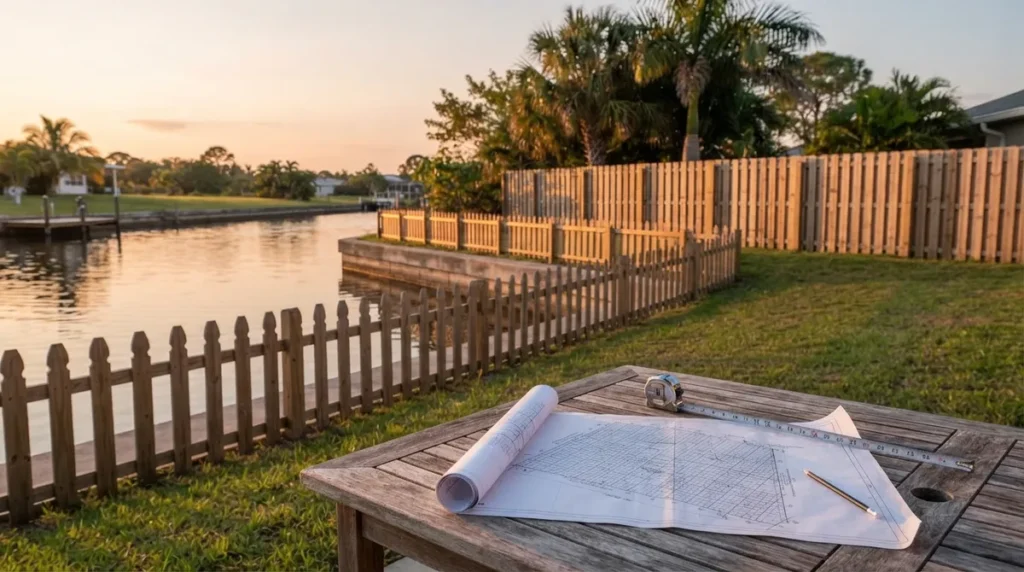
Waterfront parcels face a 4-foot limit within 10 feet of the water line, seawall, or property line, so tall privacy fences along canals are usually not allowed.
-
Your application typically needs a scaled site plan or survey, an accessory affidavit, and an easement release if the fence crosses a recorded easement, which is common in Port Charlotte.
-
Permits may become void if work does not start or receive an approved inspection within 180 days of issuance, and the zoning review fee is listed at $30 plus other applicable fees.
So you're dreaming of a backyard fence. Maybe it's for the dog, the kids, a little privacy from the neighbors, or just a cleaner look for your property line. Whatever the reason, a new fence is one of the most satisfying upgrades a Florida homeowner can make. But before the first post goes in the ground, there's a friendly little hurdle called a permit.
Getting a fence permit in Port Charlotte, FL is usually very doable. It is not like pulling a permit for a full home addition. Still, the details matter: height limits, where the fence sits on your lot, easements, waterfront rules, and which office actually controls your address. Miss one of those details and a simple weekend project can turn into a stalled job or a penalty.
This guide walks you through the whole process in plain English. We'll cover who issues the permit, what documents you need, how tall your fence can be, and the mistakes that trip people up. Whether you're a homeowner, a general contractor, a fence installer, or a real estate professional helping a client, you'll leave knowing exactly what to do next. Let's dig in.
Do You Need a Fence Permit in Port Charlotte, FL?
In most cases, yes. Charlotte County lists a dedicated residential fence permit for fences in residential areas that are not being used as swimming pool barriers. The county's current residential permit page and application package spell out the checklist, so it's always smart to confirm the latest version before you apply.
Here's the quick version of what a permit does for you:
- Confirms the fence meets zoning rules for height and placement in your district.
- Protects you from penalties. The county application warns that starting work before the permit is issued may result in a penalty of up to four times the permit fee.
- Keeps your closing clean. An unpermitted fence can surface during a sale, an appraisal, or a title review.
- Avoids neighbor disputes by making sure the fence stays on your side of the line.
Pool barriers follow separate requirements and permit procedures, and commercial or multifamily fences use a different permit category. We'll touch on both below.

Which Office Issues Fence Permits for a Port Charlotte Address?
Here's a detail that surprises a lot of people: a Port Charlotte mailing address does not, by itself, tell you which local authority regulates your property. Fence permits in Port Charlotte are generally handled by Charlotte County Community Development, but you should confirm your parcel's jurisdiction before you plan anything.
Why does this matter? Because a property near a city line can sit under a different jurisdiction than the neighbors across the street. Applying to the wrong office wastes time, and nobody wants to lose a week to a misdirected application.
If you're not sure, a quick parcel lookup or a call to the county can settle it. You can also use our building department lookup tool to see which department controls an address. And if you're buying or selling, our guide on how to do permit due diligence in Port Charlotte, FL shows how to check a property's permit history before you commit.
What Documents Do You Need for a Charlotte County Residential Fence Permit?
The county's residential application is refreshingly short compared to other permit types. Based on the current application materials, here's what the package generally calls for:
- A completed permit application.
- A site plan drawn to scale, or a survey, showing exactly where the fence will be located.
- An accessory affidavit.
- A recorded easement release, when applicable (for example, if the fence crosses a utility or drainage easement).
- A Notice of Commencement, when applicable.
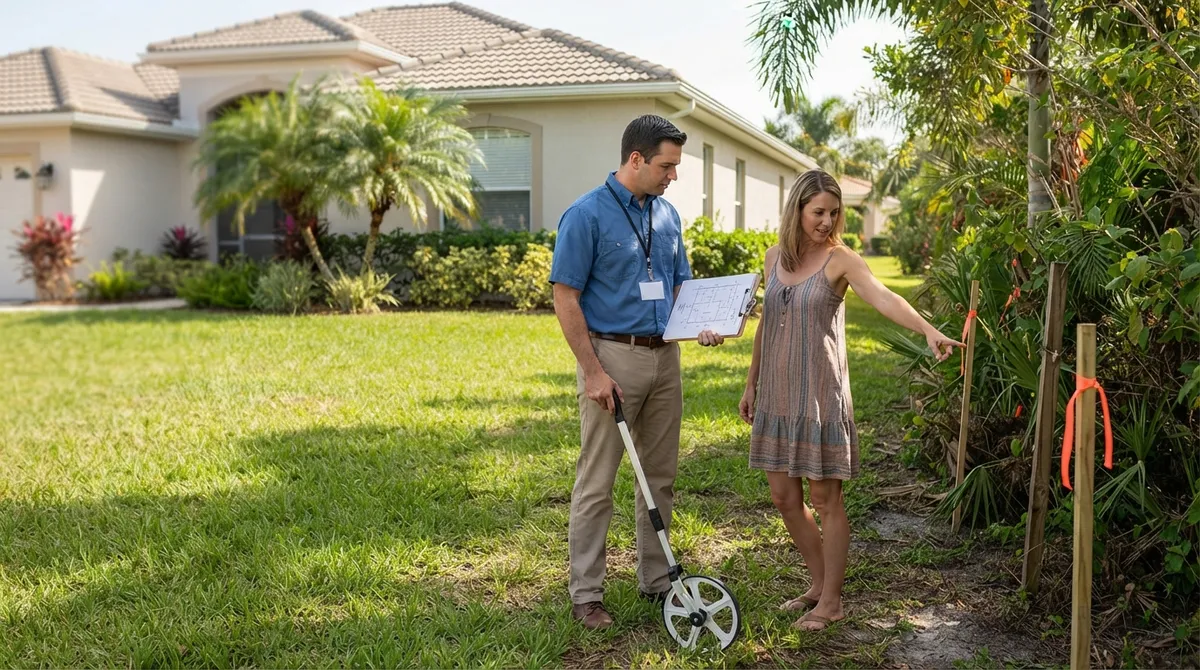
That site plan is where most homeowners get stuck. It needs to show your property lines, the fence run, gate locations, and distances to structures and boundaries. A hand-drawn sketch on a napkin will not cut it, but a clean survey with the fence marked on it usually will.
If drawing it yourself feels overwhelming, our team handles this regularly through site plan preparation and full permit facilitation and filing. And if you want to know more about the paperwork side, our post on how to get permit ready plans Florida officials approve is a helpful read.
How Tall Can a Fence Be in Port Charlotte, FL?
The county says zoning restrictions on fence height and location vary by zoning district. That means the right answer for your lot depends on how it's zoned. That said, the residential application materials describe some common limits worth knowing.
| Fence Type | Common Residential Limit | Notes |
|---|---|---|
| Chain-link | 6 feet maximum | Measured from natural grade |
| Wood | 6 feet maximum | Measured from natural grade |
| Masonry | Treated as a wall | Requires a building permit |
| Waterfront parcels | 4 feet if within 10 feet of the water line, seawall, or property line | Whichever is more restrictive |
Notice the phrase "measured from natural grade." If your yard has been built up with fill, the fence height is still measured from the natural ground level, not the raised surface. That catches people off guard.
Also keep in mind that these are common limits from the county's application materials, not a guarantee for every parcel. Corner lots, overlays, easements, and other site conditions can change the answer. Always verify parcel-specific rules with the county's Zoning office before you build.
What Are the Placement Rules for Residential Fences?
Height gets most of the attention, but placement causes just as many headaches. The county's application describes several common standards:
- Finished side out. The finished side of the fence should face the adjacent property or the public right-of-way.
- Posts on your side. Posts should be kept on the owner's side unless the fence is designed alike on both sides.
- No encroachment. The fence cannot cross onto a neighbor's property or into a public right-of-way.
- Easements matter. If the fence crosses a recorded easement, you'll likely need an easement release.
That last point is a big one in Port Charlotte, where many lots have utility and drainage easements along the rear or side lines. Building across one without the right paperwork can force you to tear the fence out later. A little homework now saves a lot of money down the road.
What Special Rules Apply to Waterfront and Corner Lots?
Port Charlotte is full of canal-front and waterfront homes, so this section matters more here than in many Florida towns.
The county's application states that fences or walls over four feet are not permitted within 10 feet of the mean high-water line, seawall, or property line, whichever is more restrictive. In practical terms, if your yard backs up to a canal, a tall privacy fence along the water side is likely off the table. A shorter, more open style is the usual workaround.
Corner lots add another layer. Visibility at intersections is a safety concern, so fences near corners may face extra review. Overlays and other site conditions can also trigger additional reviews. If your lot is on a corner, on the water, or inside a special district, plan for a little extra time and confirm the rules before you buy materials.
How Much Does a Fence Permit Cost in Charlotte County?
Good news: the permit itself is not usually a budget-buster. Charlotte County's residential fence page lists a $30 zoning review fee. However, total permit charges may include other applicable fees, so verify the current fee schedule before you apply.
Here's how the cost picture generally looks:
| Cost Item | What to Expect |
|---|---|
| Zoning review fee | $30 listed on the county's residential fence page |
| Other applicable fees | Vary; check the county's current fee schedule |
| Survey or site plan | Varies based on whether you already have a survey |
| Penalty for starting early | Up to four times the permit fee, per the county application |
Fees and forms can change, so treat these figures as a starting point and double-check the county's current permit page. The cheapest permit is the one you pull before the crew arrives.
What Happens After You Submit Your Application?
Once your package is in, the county runs it through the reviews that apply to your project. The county identifies zoning, natural-resources, and tree reviews as possible steps for residential fences, and inspections can depend on your project's location and scope.
Here's a simple roadmap of the typical flow:
- Confirm jurisdiction and zoning for your parcel.
- Gather your documents: application, site plan or survey, accessory affidavit, and any easement release or Notice of Commencement.
- Submit the application following the county's current instructions.
- Respond to any review comments from zoning or other reviewers.
- Receive your permit before any work begins.
- Build the fence and schedule any required inspection.
One more timing detail: the county's application package states that a permit may become void if construction does not start or receive an approved inspection within 180 days of issuance. An approved inspection extends it for another 180 days. So don't pull the permit and then let it sit for a year. If life gets busy, you may end up needing to deal with an expired permit, and our guide on what reopens an expired Florida permit fastest explains your options.
What About Pool Fences and Commercial Fences?
These two situations follow different rules, so it's worth separating them from the standard residential fence.
Pool Barriers
If your fence doubles as a pool barrier, it does not fall under the standard residential fence permit. Pool barriers have separate requirements and permit procedures. Because pool safety rules are strict, this is one area where getting professional help is especially wise.
Commercial and Multifamily Fences
Commercial and multifamily fences use their own permit category. Charlotte County's commercial page calls for a site plan and says engineered drawings are required for fences over six feet. A separate fence permit may also be needed alongside a new-building permit. For taller or more complex fences, you'll want sealed drawings, and our post on who seals structural drawings for Florida permits explains how that works.
What Happens If You Build a Fence Without a Permit?
It happens more often than you'd think. A neighbor mentions it, a contractor says "you don't need one," and suddenly there's a fence standing with no paperwork behind it.
The consequences can include:
- Penalties of up to four times the permit fee for starting work before issuance.
- A code violation notice if someone reports it.
- Trouble during a home sale, refinance, or inspection.
- The possibility of having to modify or remove a fence that violates height or setback rules.
The good news is that it's usually fixable. Florida has a path for legalizing work that was built without approval. Our guides on after-the-fact fence permit mistakes to avoid and the 7 steps to legalize unpermitted work in Florida walk you through it. If you're also dealing with a notice from the county, take a look at 11 steps for code violation help in Port Charlotte.
Should You Hire Someone to Handle Your Fence Permit?
You absolutely can pull a residential fence permit yourself, and plenty of homeowners do. The process isn't complicated, but it does take attention to detail. The most common slowdowns are a weak site plan, missing easement documents, and guessing at zoning rules.
A permitting service earns its keep when:
- Your lot is waterfront, a corner lot, or sits in an overlay district.
- You're not sure where your property lines or easements are.
- You're a contractor juggling several jobs and don't have time to chase approvals.
- You're a real estate professional trying to clear an issue before closing.
This is exactly what 1 Contractor Solutions does every day. We act as Florida's outsourced permitting department, preparing the site plan, filing the application, tracking it, and working through any reviewer comments. Our drafting and engineering are in house, so if something needs a fix, we handle it directly. We serve all 67 Florida counties and respond fast, usually within 30 minutes. You can learn more about what a local service offers in our article on what a building permit service in Port Charlotte does, or read what our customers say when you visit us on Google — 1 Contractor Solutions.
Quick Tips for a Smooth Fence Permit
Here are a few friendly habits that keep your project on track:
- Check zoning first. Know your district's height and placement limits before you design.
- Get a current survey. It makes the site plan far easier and more accurate.
- Look for easements. If your fence crosses one, start the release process early.
- Don't schedule the crew until the permit is in hand. Starting early invites penalties.
- Keep your approved plans on site for the inspection.
- Verify fees and forms on the county's current page, since they can change.
If you want to see how we think about local permitting work more broadly, you can also follow us on LinkedIn or follow us on Facebook for updates.
Ready to Get Your Fence Permit Without the Headache?
A fence permit in Port Charlotte doesn't have to be stressful. Confirm your parcel's jurisdiction, check your zoning limits, put together a clean site plan, pull the permit before work begins, and keep an eye on that 180-day clock. Do those things and you'll be enjoying your new fence in no time.
And if you'd rather hand the paperwork to someone who does this all day long, we're happy to help. From site plans to filing to follow-up, our team keeps your project moving. When you're ready, get a free quote and let's get that fence permitted the right way.
FAQs
Do I need a permit to install a fence in Port Charlotte, Florida?
In most cases, yes. Charlotte County lists a residential fence permit for fences in residential areas that aren't used as pool barriers. It's always a good idea to confirm your parcel's rules with the county before you build, so you can skip any surprise penalties.
How tall can a fence be in Port Charlotte, FL?
The county's residential application materials describe a common limit of six feet for chain-link and wood fences, measured from natural grade. Waterfront parcels have tighter limits, including a four-foot cap within 10 feet of the water line, seawall, or property line. Your exact limit depends on your zoning district, so check with the Zoning office.
How much does a fence permit cost in Charlotte County?
The county's residential fence page lists a $30 zoning review fee, though total charges may include other applicable fees. Fee schedules can change, so confirm the current numbers before you apply. Starting work early can bring a penalty of up to four times the permit fee.
Do I need a separate permit for a pool fence or baby barrier?
Yes, pool barriers follow separate requirements and permit procedures from the standard residential fence permit. Because pool safety rules are strict, it's smart to review the county's pool barrier requirements or get professional help. A quick check up front keeps your project safe and compliant.
Can a permitting service submit a fence permit application on my behalf?
Absolutely. A permitting service like 1 Contractor Solutions can prepare your site plan, file the application, track it, and handle reviewer comments for you. It's especially helpful for waterfront lots, corner lots, or busy contractors who don't have time to chase approvals.
We do this work every day across all 67 Florida counties. Call (866) 314-6931 and we will tell you what your situation actually requires — including when you do not need us.
Related services
Permit Facilitation & Filing
You have a crew scheduled, a client asking for dates, and a permit sitting somewhere in a queue you cannot see. We file it, w…
See the servicePlan Review Coordination
A permit in plan review is not one queue. On a commercial project it can be six queues, each with its own reviewer, its own c…
See the serviceReady to get your permit moving?
One call tells you which jurisdiction controls your project, what it will take, and what it will cost. Most of the time we can scope it on the phone.