
Blog
What Happens If You Build an Addition Without a Permit in Florida?
Built an addition without a permit in Florida? Learn the risks, how after-the-fact permits work, and how to legalize it step by step in 2026.
Key Takeaways
-
Florida Statutes §553.79 requires a permit from the local building department before constructing, altering, or demolishing a building, but penalties and fees are set locally, not statewide.
-
Unpermitted additions can often be legalized through an after-the-fact (as-built) permit, but only if they meet building code, zoning, setbacks, and floodplain requirements.
-
Unpermitted work usually surfaces during a home sale inspection or appraisal, so addressing it before listing can prevent delayed closings.
-
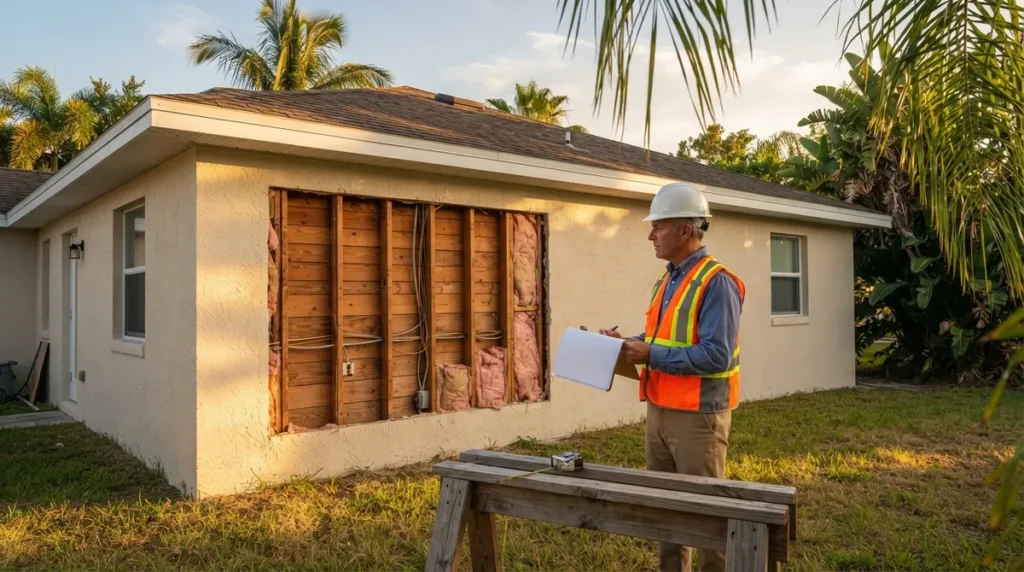
Inspectors may require opening finished walls to verify concealed framing, foundations, or trade work; engineer evaluations and construction photos can sometimes reduce the openings needed.
-
Start by confirming whether your property falls under a city or county jurisdiction, then search that building department's permit records by address to see what was permitted.
-
Prepare as-built drawings, a site plan or survey, structural documentation, and trade details early to avoid back-and-forth with reviewers during the application.
So you built an addition, or you just bought a home and discovered the previous owner did. First, take a breath. You are far from the only Florida property owner who has landed in this spot, and there is a real path forward. An addition without a permit in Florida can feel like a ticking clock, but in most cases it can be documented, inspected, and brought into the permitted record.
Maybe the screened room became a sunroom years ago. Maybe the garage turned into a bedroom before you ever owned the house. Maybe a contractor said, "Don't worry, I'll pull the permit," and never did. However it happened, the result is the same: finished square footage that the county or city has no record of.
In this friendly guide, we will walk through what Florida law says, what can happen when work goes unpermitted, how after-the-fact permitting really works, and how to get moving. We will also point out where the process differs by city and county, because in Florida, local rules matter a great deal. Let's get you from worried to ready.
What Does Florida Law Say About Building Without a Permit?
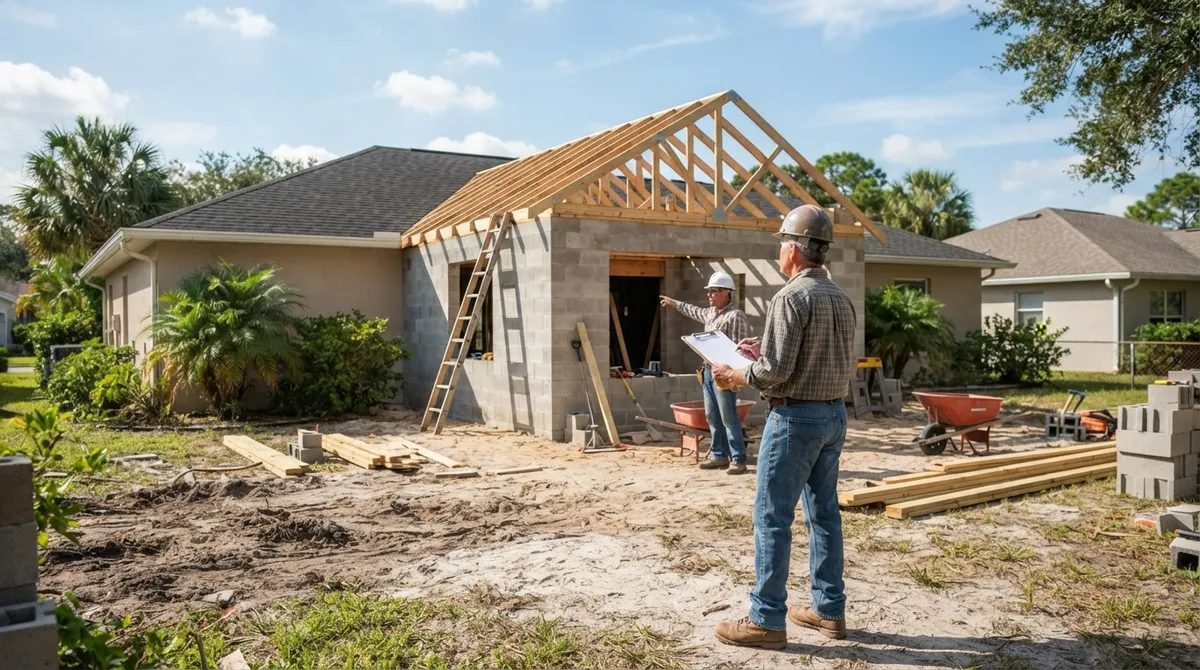
The foundation here is Florida Statutes §553.79. In general, it makes it unlawful to construct, erect, alter, modify, repair, or demolish a building without first obtaining a permit from the appropriate enforcing agency, unless an exception applies. In practice, that agency is your local building department, either a city or a county depending on where the property sits.
One thing worth knowing: the statute sets the statewide requirement, but it does not hand you one neat statewide penalty number. Fees, enforcement steps, and procedures are decided locally. That is why your neighbor's story from another county may not match what happens to you.
Which Additions Usually Require a Permit?
Most additions involve structural, electrical, plumbing, or mechanical work. That is why they almost always need permits. Common examples include:
- New rooms built onto the home's footprint
- Second-story additions
- Enclosed patios, lanais, and sunrooms
- Many garage conversions into living space
- Covered porches and roofed extensions
- New bathrooms or kitchens added within the addition
Always confirm with the authority having jurisdiction, since the details of what is exempt vary. When in doubt, ask before you build.
What Are the Risks of Keeping an Unpermitted Addition?
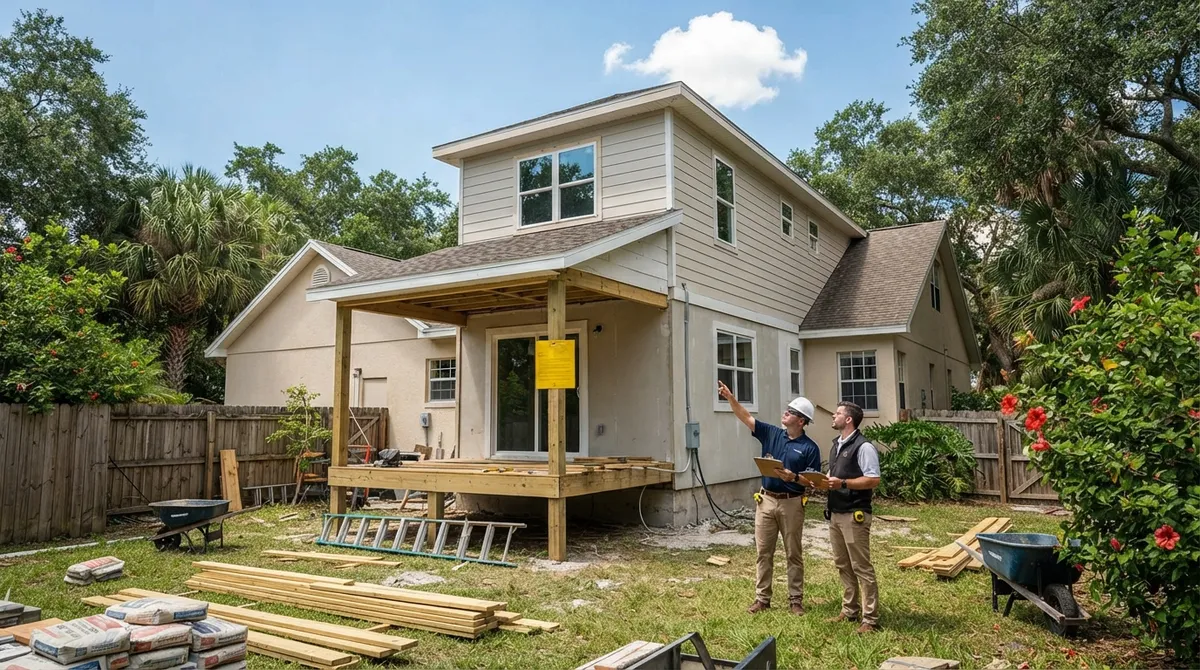
Let's be honest about the downsides, because understanding them helps you act at the right time. None of this is meant to scare you. It is meant to help you plan.
| Risk Area | What Can Happen |
|---|---|
| Code enforcement | A notice of violation, fines, or a stop work order, depending on the jurisdiction |
| Additional fees | Extra charges for work started before a permit was issued; amounts vary by jurisdiction |
| Corrective work | Repairs or upgrades if the addition does not meet code |
| Removal | Possible demolition if the work cannot be made compliant |
| Home sale | Buyer concerns, appraisal issues, or delayed closings |
| Insurance and financing | Complications with claims, refinancing, or loans |
The sale scenario deserves special attention. Unpermitted work often surfaces during a buyer's inspection or an appraisal, because the living area does not match the permitted record. If that is your situation, our guide on how to fix a closing delayed by unpermitted work is a helpful next read.
Can You Legalize an Addition After the Fact?
Often, yes. Many Florida jurisdictions allow an owner to apply for an after-the-fact permit, sometimes called a retroactive or as-built permit, to document and legalize existing work. The key phrase is "often," not "always." Approval is never automatic.
The addition must satisfy the applicable building code, zoning, setbacks, floodplain rules, and other local requirements. If it does, you can usually permit it. If it does not, the building department may require alterations, and in a worst-case scenario, removal.
For a deeper look at how this works statewide, see unpermitted work in Florida and how to legalize it, or our overview of after-the-fact and expired permit services.
Why Some Additions Can Be Legalized and Others Cannot
Think of the building department as asking three questions. Is it safe? Does it meet code? Does it comply with where it sits on the lot? An addition that is structurally sound, correctly wired and plumbed, and within setbacks is usually a strong candidate. One that crosses a setback line, sits in a flood zone without proper elevation, or lacks a proper foundation faces a tougher road.
How Do You Get an After-the-Fact Permit for an Addition in Florida?
The exact steps differ by city and county, but the general roadmap looks like this:
- Identify the right jurisdiction. Determine whether your property is in a municipality or in unincorporated county territory. Near city lines this is not always obvious. Our building department lookup tool can help.
- Check existing permit records. Search for the original home permits and any prior work. Our open permit search tool is a good starting point.
- Ask the building department how it handles unpermitted work. Some offices have a dedicated process, others route you through code compliance first.
- Document what was built. Prepare as-built drawings that show the addition as it exists today.
- Gather supporting documents. Expect a site plan or survey, structural information, and trade documentation.
- File the application. Submit the package, pay applicable fees, and respond to reviewer comments.
- Complete inspections and closeout. Pass the required inspections so the permit can be finalized.
For the full application walkthrough, see how to get an after-the-fact permit in Florida.
What Documents Will the Building Department Ask For?
Requirements vary, but applications commonly include the items below. Having them organized early is one of the best ways to avoid back-and-forth with reviewers.
| Document | Why It Matters |
|---|---|
| Description of existing work | Tells reviewers exactly what was built and when, if known |
| As-built plans | Shows the addition as it actually exists |
| Site plan or survey | Verifies setbacks, lot coverage, and placement |
| Structural documentation | Confirms the foundation, framing, and connections are adequate |
| Electrical, plumbing, and mechanical details | Shows the trade work meets code |
| Engineer or architect evaluation | Often needed when structural questions arise |
A Florida-licensed architect or engineer may be required to prepare or review plans, depending on the project and local rules. This is where our as-built drawings and structural engineering services come in handy, since a well-prepared package tends to move through review more smoothly.
Will Inspectors Make You Open Up Walls?
This is the question homeowners dread, and it is a fair one. The honest answer: it is possible. Inspectors may require access to concealed construction so they can verify what they cannot see. That can include foundations, framing, connections, and electrical, plumbing, or mechanical work hidden behind finished surfaces.
In some cases, selective openings, photographs, or an engineer's field verification can satisfy the inspector. In others, finished walls, ceilings, or floors need to be opened. It depends on the jurisdiction and the inspector's judgment. The good news is that planning ahead, and working with a team that knows what a given office expects, can keep openings to a minimum.
Tips to Reduce Surprises During Inspection
- Gather any photos taken during construction, if they exist
- Locate receipts, invoices, or contractor records for materials and labor
- Have an engineer evaluate the addition before the inspector arrives
- Ask the building department which areas they are most likely to want exposed
- Make sure the space is accessible on inspection day
How Much Does Building Without a Permit Cost in Florida?
Here is where we have to be careful and honest. There is no single statewide penalty or after-the-fact fee. Florida Building Code provisions and local fee schedules can add charges for work begun before a permit was issued, but the amount and enforcement process are set by each jurisdiction.
Your total cost typically depends on several moving parts:
- Standard permit fees based on project value or square footage
- Any additional fees for starting work without a permit
- The cost of as-built drawings and engineering
- Corrective work if something does not meet code
- Opening and repairing finished surfaces for inspection
For a closer look at budgeting, check out what it costs to legalize a Florida addition and our breakdown of after-the-fact permit costs in Florida.
What If the Addition Cannot Be Brought Into Compliance?
Most owners never reach this point, but it helps to know the possibilities. If the addition cannot meet code or zoning as built, the building department may require corrective work. That might mean reinforcing the structure, upgrading wiring, or adjusting the footprint.
If the problem is something that cannot be fixed, like a serious setback violation, removal may be required. Even then, there are sometimes options, such as variances or alternative designs, depending on the local rules. We cover this scenario in depth in will you really have to demolish unpermitted work.
Local Rules Matter: Why Your City or County Changes Everything
Florida has 67 counties and hundreds of municipalities, and each has its own approach. One office may have a streamlined after-the-fact process, while another may send you through code enforcement first. Wind regions, flood zones, and coastal rules add more variables.
If your property is in a major market, you may want to look at your local office's specifics. We work extensively in areas like Hillsborough County, Miami-Dade County, Broward County, and Sarasota County, and we have filed in more than 400 municipalities statewide. Not sure which office controls your address? Our guide on which Florida jurisdiction reviews my project can help.
Who Should Take Action on an Unpermitted Addition?
The right next step depends on your role:
- Homeowners: Start by confirming what is and is not permitted, then gather documents and decide on a team.
- Buyers and real estate professionals: Flag the issue early, since permit holds can delay closings. Our realtor and closing support exists for exactly this.
- General contractors: If a client's prior work needs legalizing, an experienced permitting partner can keep your schedule on track.
- Designers and trades: Outsourced drafting and engineering can fill gaps without adding in-house overhead.
How Can 1 Contractor Solutions Help With an Unpermitted Addition?
This is what we do all day. 1 Contractor Solutions acts as Florida's outsourced permitting department. We help you identify the right jurisdiction, prepare or review as-built plans, coordinate with the building department, file the application, track it, work every reviewer comment, and carry it through approval and closeout.
Because our drafting and engineering are in house, and our own engineer signs and seals the work, we can answer reviewer questions without waiting on an outside consultant. We are also a licensed private provider, so in many cases we can perform plan review ourselves rather than leaving you in the county queue. If you want to see how others feel about working with us, read what customers say on Google: Visit us on Google — 1 Contractor Solutions.
If time is tight, such as a closing deadline or a code notice, take a look at our urgent permit rescue service. We answer 24/7 and respond within 30 minutes day or night, and se habla español.
Stay Informed and Connected
Permitting rules shift, and staying current helps. Consider reviewing the official language of Florida Statutes §553.79 for the statewide framework. You can also follow us on LinkedIn and follow us on Facebook for practical Florida permitting tips throughout 2026.
Your Next Step: Turn the Worry Into a Plan
An addition without a permit in Florida is stressful, but it is rarely the end of the story. With the right documentation, a clear understanding of your local rules, and a team that knows how to guide the process, many unpermitted additions can be brought into the permitted record. The sooner you act, the more options you tend to have, especially if a sale, refinance, or code notice is on the horizon.
Ready to find out where you stand? Reach out for a no-pressure conversation and get a free quote from a team that handles these files every day. Permits approved. Projects moving.
FAQs
Do I need a permit for a room addition in Florida?
In most cases, yes. Under Florida Statutes §553.79, building, altering, or modifying a structure generally requires a permit from your local building department. New rooms, enclosed patios, second stories, and many garage conversions typically involve structural and trade work, so it is always smart to confirm with your city or county before you build.
Can I sell a Florida house with an unpermitted addition?
It is possible, but it can get complicated. Unpermitted work may surface during a buyer's inspection or appraisal and can delay closings or affect financing. Many sellers choose to pursue an after-the-fact permit first so the addition is documented and the sale goes more smoothly.
How much is the penalty for building without a permit in Florida?
There is no single statewide penalty amount. Fees and enforcement are set by each city and county, and some add extra charges for work started before a permit was issued. The best move is to ask your local building department how it handles unpermitted work, or let a permitting team help you find out.
Will inspectors make me open walls for an after-the-fact permit?
Sometimes, yes. Inspectors may need to see concealed foundations, framing, and electrical, plumbing, or mechanical work, and finished surfaces may need to be opened if there is no other way to verify it. Engineer evaluations and photos can sometimes reduce how much needs to be opened, depending on the jurisdiction.
How do I find out whether an addition has a permit in my Florida county or city?
Start by confirming whether your property falls under a city or the county, then search that building department's permit records by address. If the records are unclear, a permitting professional can research the file and tell you exactly what was and was not permitted.
We do this work every day across all 67 Florida counties. Call (866) 314-6931 and we will tell you what your situation actually requires — including when you do not need us.
Related services
Permit Facilitation & Filing
You have a crew scheduled, a client asking for dates, and a permit sitting somewhere in a queue you cannot see. We file it, w…
See the servicePlan Review Coordination
A permit in plan review is not one queue. On a commercial project it can be six queues, each with its own reviewer, its own c…
See the serviceReady to get your permit moving?
One call tells you which jurisdiction controls your project, what it will take, and what it will cost. Most of the time we can scope it on the phone.