
Blog
Contractor Abandoned an Unpermitted Job in Florida? Next Steps
Contractor walked off an unpermitted Florida job? Learn your legal options under §489.126, how to legalize the work, and who can help finish it.
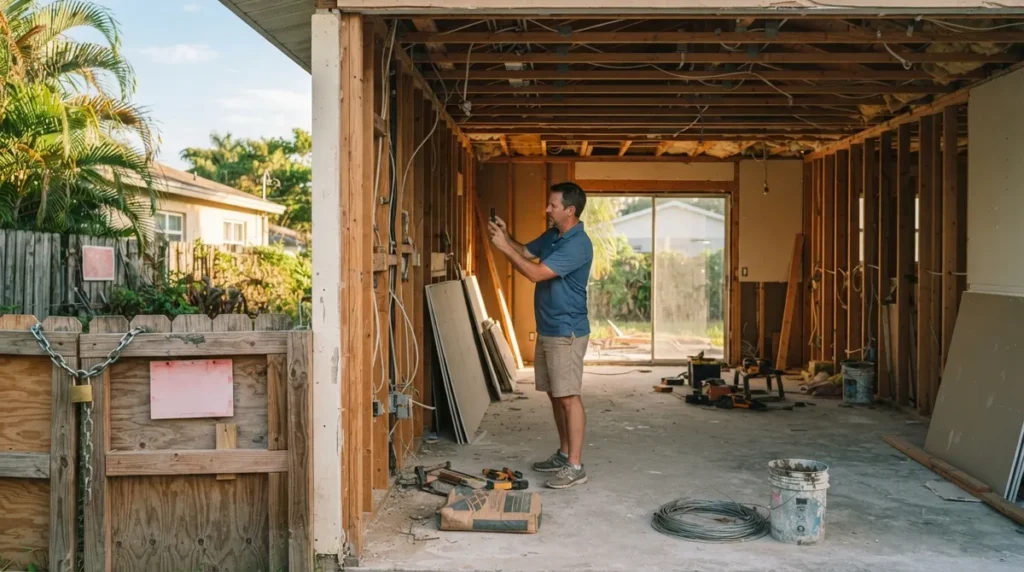
Key Takeaways
-
Two separate problems exist: the broken contract and money lost (a dispute with the contractor), and the unpermitted construction (a compliance issue with the building department). Fixing one does not fix the other.
-
The building department generally looks to the property owner, not the contractor, when work was done without approval, so owners often must legalize the work themselves.
-
Under Florida Statute §489.126, a contractor receiving over 10% upfront generally must apply for permits within 30 days and start work within 90 days after permits issue, unless an exception applies.
-
Before doing anything else, secure the site, stop further work, and photograph or video all completed work, since covering up work before the department weighs in can make fixes harder and costlier.
-
Verify the actual permit status directly with the local building department, because a contractor's promise or a pending application does not mean a permit was issued.
-
Most Florida jurisdictions allow an after-the-fact permit for work already started, which typically requires as-built drawings, possible engineering verification, and inspections that may require concealed work to be opened.
Few things feel worse than watching a crew disappear halfway through your project. Now add the sinking realization that nobody ever pulled a permit. If that's you, take a breath. You're not the first Florida owner to land here, and there is a clear path forward. This guide covers what happens when a contractor abandoned an unpermitted job in Florida, what the law says, and how to get the work legalized and finished.
The big thing to understand early: you're actually dealing with two separate problems. One is the broken contract and any money you've lost. The other is the construction itself, which now needs to be brought into compliance with your local building department. Each follows its own rules and timeline, and fixing one doesn't automatically fix the other.
Whether you're a homeowner, a general contractor stepping in to finish someone else's work, or a real estate professional who just discovered the mess during a deal, the steps below will help you move forward calmly and correctly.
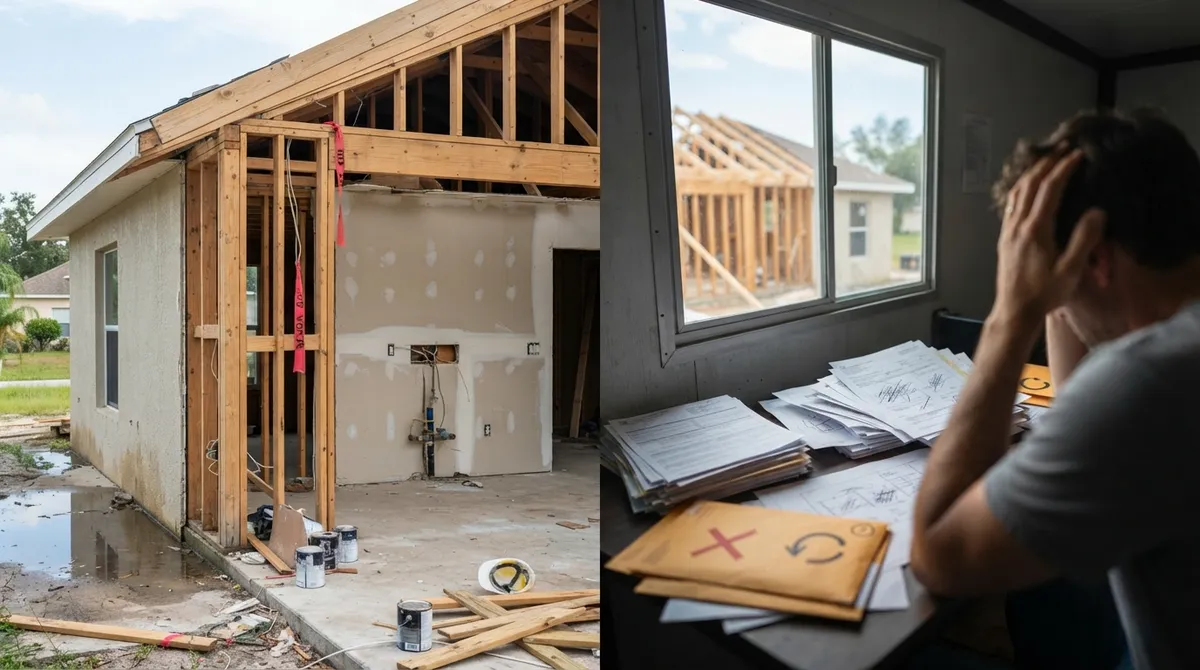
Why Abandoned Unpermitted Work Creates Two Separate Problems
When a contractor walks off a job that never had permits, owners often assume the contractor will take the heat. Unfortunately, it rarely works that way. The property is yours, and the building department generally looks to the property when work was done without approval.
| Problem | What It Involves | Who Handles It |
|---|---|---|
| Contract and payment dispute | Recovering money, demanding performance, pursuing claims | You, often with a Florida construction attorney |
| Permitting and code compliance | Legalizing existing work, inspections, plans, corrections | You, a replacement contractor, or a permitting professional |
Unpermitted work can trigger enforcement from the local authority having jurisdiction even if the contractor, not you, did the work. Depending on the city or county, that can mean required permits, inspections, corrections, or other remedies. Exact penalties vary by jurisdiction and by the type of work involved. For a deeper look at fines and consequences, see our guide on the penalty for building without a permit in Florida.
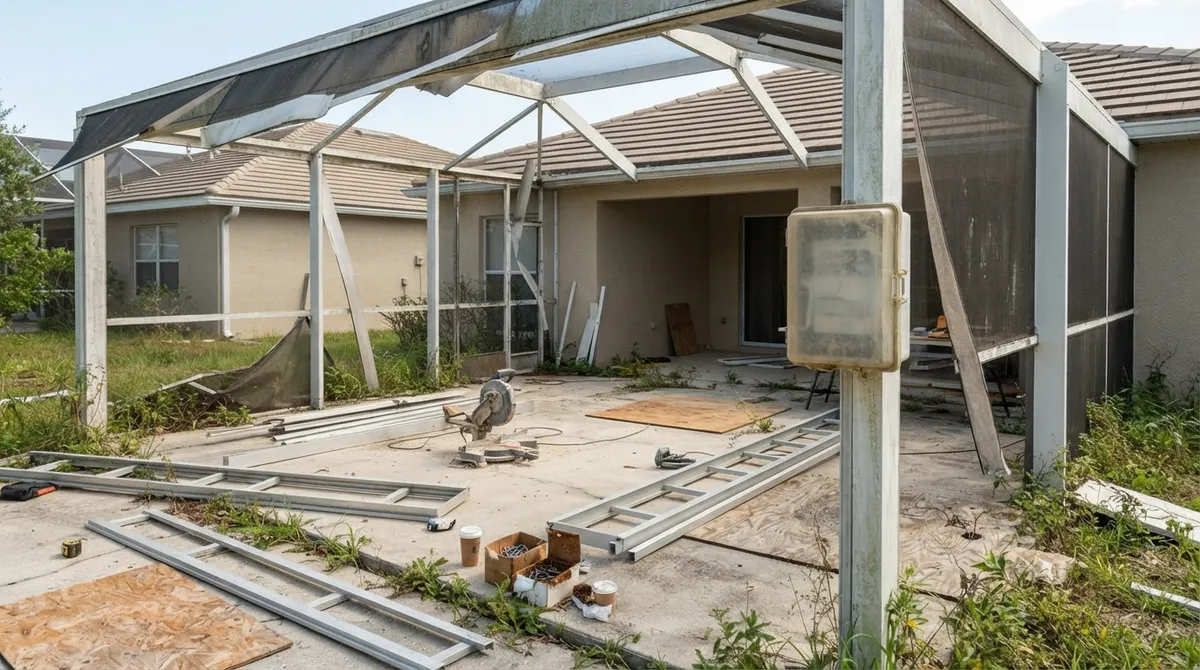
What Florida Law Says About Contractor Deadlines
Florida Statutes §489.126 sets important rules for certain residential contracts. It's worth knowing the basics, because they can strengthen your position.
- Permit deadline: When a contractor receives an initial payment exceeding 10% of the contract price, they generally must apply for the required permits within 30 days.
- Start deadline: Work generally must begin within 90 days after the necessary permits are issued.
- Exceptions: Just cause or a written extension can excuse these deadlines.
- Abandonment period: If a contractor has received more money than the value of work performed and then fails to perform for 90 days (or another period agreed to in your contract) without just cause or proper notice, the statute provides a path for the owner to demand performance or a refund.
Here's an important point. A contractor missing these deadlines does not make the permitting problem go away. It also doesn't mean you carry no responsibility for the property. Think of the statute as a tool for your contract dispute, not a shield against the building department.
The Written Demand Requirement
The statute requires specific written demands to be sent by certified mail, return receipt requested, to the contractor's address listed in the contract. Which demand applies depends on the issue: failure to apply for permits or start work, versus failure to perform and refund excess payment. Because details matter here, talk with a Florida construction attorney before sending anything. Also, don't treat the statute's theft language as an automatic finding of criminal liability. How it applies depends on the facts and the legal process.
Your First 7 Steps After a Contractor Walks Off
Quick action protects both your wallet and your property. Here's a practical order of operations.
- Stop and secure the site. Make sure the structure is safe, weather-protected, and not creating hazards for you or neighbors.
- Don't keep building. Resuming or covering up work before you know the permit status can make things harder and more expensive to fix.
- Document everything. Take dated photos and video of all completed work, materials, and conditions before anyone touches it.
- Gather your paper trail. Save the contract, payment records, receipts, texts, emails, and any permit or inspection records.
- Verify permit status. Don't assume a promise or an application equals an issued permit. Check directly with your building department.
- Review your contract dispute options. Consider a certified written demand under §489.126 if its conditions apply, and consult a construction attorney.
- Get a compliance plan. Ask the building department what's needed to legalize and complete the work.
How to Check Whether Any Permit Was Ever Pulled
Sometimes contractors told owners they'd "handle the permit," and then did nothing. Other times a permit was applied for but never issued, or was issued and later expired. You need the real answer before deciding anything else.
Start with your local building department's online portal or call them with your address. You can also use our building department lookup to find the right office, and our open permit search tool to check for existing records. Not sure which agency actually controls your address? City lines can be tricky, and our article on which Florida jurisdiction reviews my project can help.
| What You Find | What It Usually Means | Likely Next Step |
|---|---|---|
| No permit record | Work started without approval | Legalize through after-the-fact permitting |
| Application, never issued | Paperwork stalled or was incomplete | Resolve open review comments or reapply |
| Permit issued but expired | Work stopped past the allowed window | Reinstate, renew, or reapply |
| Permit under contractor's name | Contractor of record is still attached | Ask the department about contractor changes |
If your permit issued but expired, our guide on how to close an expired permit in Florida walks through your options.
Can You Get a Permit After Work Has Already Started?
In many Florida jurisdictions, yes. This is usually called an after-the-fact permit, and it's the most common route for legalizing work that was started or completed without approval. The process and fees differ by city and county, so confirm specifics with your local department.
Generally, the building department will want to understand exactly what was built and whether it meets current code. That often means:
- As-built drawings showing what exists on site
- Structural and, where applicable, electrical, plumbing, or mechanical documentation
- Engineer letters or sealed drawings verifying compliance
- Inspections of completed and partially completed work
- Possible exposure or correction of concealed or noncompliant work
That last point surprises people. If framing, wiring, or plumbing was covered up before inspection, the department may ask that it be opened so an inspector can verify it. It's not fun to hear, but it's far better than discovering a hidden defect later.
For a full walkthrough, read unpermitted work in Florida and how to legalize it, or learn more about our after-the-fact and expired permit services.
Who Is Responsible for the Unpermitted Work?
This is the question that keeps owners up at night. Honestly, responsibility can land in more than one place. The contractor may face licensing or legal consequences, and you may have claims against them. But the building department typically addresses the property, which means you'll likely be the one asked to fix it.
It also helps to know that Florida licensing rules separate who may pull permits and under what conditions. If you want to understand why unlicensed or uninvolved parties cause so many problems, see who can pull a permit in Florida.
Can a New Contractor Take Over the Job?
Yes, a licensed replacement contractor can usually step in, but they can't simply pick up where the last person left off. A responsible contractor will first assess the existing work, because they're putting their license on the line.
Expect the replacement contractor or a permitting professional to:
- Evaluate what was built and whether it complies with code
- Prepare or update plans, including as-builts if needed
- Apply for the proper permit or coordinate changes to an existing one
- Schedule and pass the required inspections
- Correct or expose any problem areas
If you're a general contractor taking on someone else's abandoned project, set clear scope boundaries in writing. Define what you're verifying, what you're correcting, and what you are not warranting from the prior contractor's work. Our team supports general contractors with plan drafting, sealed engineering, and permit tracking exactly for situations like this.
Should You Act as Your Own Contractor?
It's tempting, especially when you're frustrated and out of money. Florida does have an owner-builder exemption, but it's limited. Eligibility depends on statutory conditions, including direct onsite supervision of any work not performed by licensed contractors, plus restrictions on occupancy, use, and sale or lease of the property afterward.
It is not a general way to take over a contractor's permit or bypass licensing rules. If you're considering it, review our page on owner-builder permits first and confirm eligibility with your local department.
The Small-Job Exemption: Don't Count On It
Florida Statutes §553.79 notes a permit exemption for certain work valued under $7,500 on a single-family dwelling. Before you breathe a sigh of relief, know that exemptions are narrow. Trade permits, code requirements, or local rules may still apply, and the value of the work is judged on the whole scope. Always verify with your local authority rather than assuming your project qualifies.
What Happens If an Inspector Finds the Work?
Discovery can come from a neighbor complaint, a code officer driving by, an insurance claim, an appraisal, or a home sale. Once flagged, you might receive a notice of violation or a stop work order. The key is to respond quickly and professionally.
- Read the notice carefully and note every deadline
- Don't ignore it, since fines can grow over time
- Contact the department and show you're actively working toward compliance
- Get qualified help to prepare the documentation they'll want
Our code compliance violation services exist for exactly this moment, and you can read more in got a code enforcement notice in Florida? Do this now.
How Abandoned Unpermitted Work Affects Selling or Refinancing
If you're a real estate professional or a seller, unpermitted work can surface at the worst time: during inspection, appraisal, or title review. Open or missing permits can delay closings and complicate financing. It's much smoother to legalize the work first, or at least have a clear compliance plan in motion.
For more on this, see what to do when an open permit is found at closing and our realtor closing support services.
Where a Permitting Partner Fits In
Think of a permitting company as your outsourced permit department. Instead of juggling building department calls, drafting questions, and engineer coordination yourself, one team handles it. At 1 Contractor Solutions, we prepare as-built drawings, provide sealed engineering through our in-house team, file the application, track it, answer reviewer comments, and carry it through inspection and closeout. We work across all 67 Florida counties, including major markets like Hillsborough County, Miami-Dade County, and Orange County.
If your situation feels urgent, our urgent permit rescue service is built for denials, stop work orders, and stalled projects. You can also hear from past clients on our reviews page, or see what customers say when you visit us on Google — 1 Contractor Solutions.
Mistakes to Avoid After a Contractor Disappears
- Covering up or finishing work before the department weighs in
- Paying a replacement contractor in full upfront
- Assuming the original contractor's permit application means a permit exists
- Ignoring a violation notice and hoping it goes away
- Skipping documentation of the existing conditions
- Waiting too long, which can complicate claims and increase costs
Conclusion: You Can Get This Fixed
A contractor who abandons an unpermitted job leaves a mess, but it's a solvable one. Document everything, confirm permit status, handle your contract dispute through the proper channels, and get the existing work legalized so a qualified team can finish it right. You'll sleep better, and your property will be on solid legal footing.
Need a hand sorting out the next move? Our team responds fast and knows Florida's jurisdictions inside and out. Get a free quote today, and let's get your project back on track. You can also stay in touch when you follow us on LinkedIn or follow us on Facebook.
Note: This article is general information, not legal advice. For contract remedies, deadlines, or potential claims, consult a licensed Florida construction attorney.
FAQs
What should I do first if my Florida contractor abandoned an unpermitted project?
Secure the site, stop any further work, and document everything with dated photos and saved records. Then call your local building department to confirm whether any permit was ever applied for or issued. Once you know where you stand, you can plan how to legalize and finish the work.
Can I get a permit after construction has already started in Florida?
In many jurisdictions, yes. It's commonly called an after-the-fact permit, and it typically requires as-built drawings, possible engineering verification, and inspections. Requirements and fees vary by city and county, so check with your local department.
What does Florida Statute 489.126 require if a contractor takes a deposit and abandons residential work?
For covered residential work, a contractor who gets an initial payment over 10% of the contract price generally must apply for permits within 30 days and start work within 90 days after permits issue, unless an exception applies. If the contractor has been paid more than the work performed and stops for 90 days without just cause, the statute provides for a written demand sent by certified mail. Talk with a Florida construction attorney before sending one.
Can a new contractor take over an abandoned job?
Usually yes, but they'll need to assess the existing work first, since their license is on the line. They may need to prepare plans, apply for permits, coordinate inspections, and correct or expose any noncompliant or concealed work.
Can I act as my own contractor to finish an abandoned project in Florida?
Possibly, but Florida's owner-builder exemption is limited by statutory conditions, including onsite supervision and restrictions on occupancy, use, and sale or lease. It isn't a way to take over a contractor's permit or skip licensing rules, so verify eligibility with your local building department first.
We do this work every day across all 67 Florida counties. Call (866) 314-6931 and we will tell you what your situation actually requires — including when you do not need us.
Related services
Permit Facilitation & Filing
You have a crew scheduled, a client asking for dates, and a permit sitting somewhere in a queue you cannot see. We file it, w…
See the servicePlan Review Coordination
A permit in plan review is not one queue. On a commercial project it can be six queues, each with its own reviewer, its own c…
See the serviceReady to get your permit moving?
One call tells you which jurisdiction controls your project, what it will take, and what it will cost. Most of the time we can scope it on the phone.