
Blog
Florida Inspector Investigations for Unpermitted Work (2026)
Facing a Florida inspector investigation for unpermitted work? Learn what happens, what evidence you need, and how after-the-fact permits get resolved in 2026.
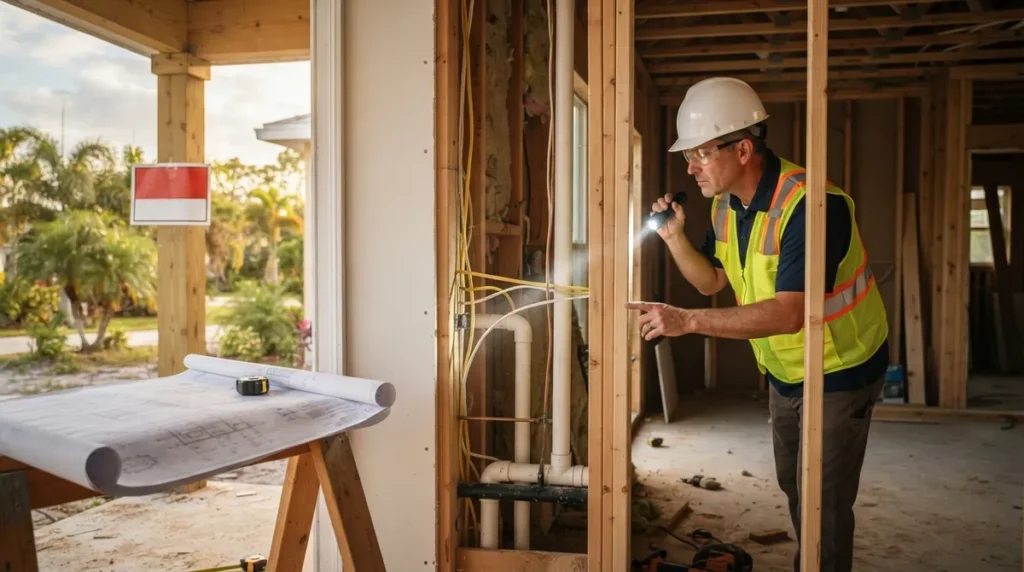
Key Takeaways
-
Under Florida Statutes §553.79, a permit is generally required before covered construction begins; after-the-fact investigations end in approval, required corrections, or removal of the work.
-
Check permit history early with the local building department, since unpermitted work can stall a real estate closing and passing time or a seller's assurance does not cure it.
-
Ignoring a notice of violation or stop work order leads to fines and escalating enforcement, so respond to every notice and track its deadlines promptly.
-
Do not cover or alter work further after an investigation begins; concealed work may need to be opened, tested, or exposed for verification, and photos alone may not be enough.
-
Engage Florida-licensed engineers or designers early, since a sealed engineer's letter or as-built drawings often determine whether structural or concealed work gets approved.
-
Fees and penalties are set by each city or county, so request the written fee schedule and surcharge rules for your specific jurisdiction rather than assuming a statewide amount.
Few things make a Florida property owner's stomach drop like a building inspector standing in the driveway asking, "Who pulled the permit for this?" If you've ever been on the receiving end of that question, take a breath. You're not the first person to hear it, and you won't be the last. The good news is that an inspector investigation after the fact in Florida is a process, not a verdict. It has steps, it has paths forward, and most situations can be resolved with the right documentation and a little patience.
Whether you're a general contractor who inherited a messy jobsite, a solar company dealing with an installer who skipped a step, a realtor facing a closing delay, or a homeowner who bought a house with a surprise addition, this guide walks you through what actually happens. We'll cover what triggers an investigation, what the inspector looks for, what evidence you'll need, and how to get back to a clean, closed permit in 2026.
We'll keep it friendly and practical. Think of this as a conversation with someone who has walked hundreds of these files through Florida building departments.
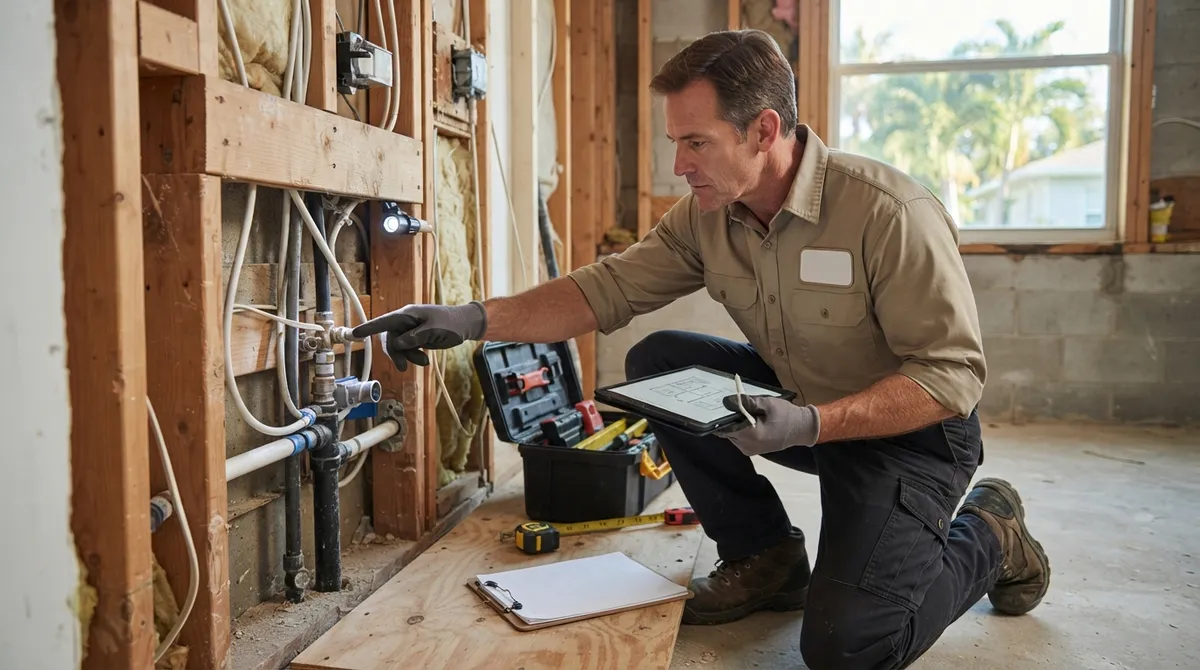
What an After-the-Fact Inspector Investigation Really Means
Under Florida Statutes §553.79, a permit is generally required before covered building construction, alteration, repair, or demolition begins. The local building department acts as the enforcing agency, administering permits and inspections. When work has already been done without that permit, the department may open an investigation to find out what was built, when, and whether it meets the Florida Building Code and local amendments.
An inspector investigation after the fact in Florida usually ends with one of three outcomes:
- The work is documented and approved through an after-the-fact permit once it passes review and inspection.
- The work needs corrections, such as added fasteners, revised wiring, or engineering upgrades, before it can be approved.
- The work must be removed if it cannot be brought into compliance.
An after-the-fact permit is a local process, so forms, fees, and enforcement practices differ by city and county. It does not automatically legalize the work, and approval is never guaranteed. That's why preparation matters so much.
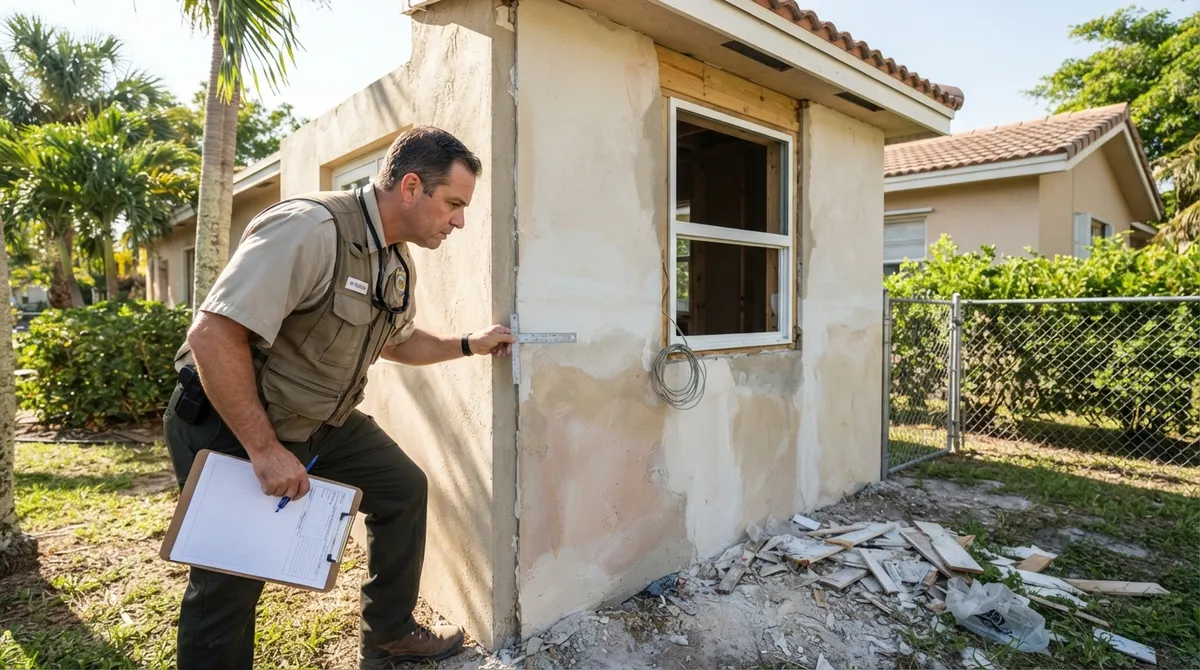
What Triggers an Investigation
Investigations rarely come out of nowhere. Here are the most common sparks we see across Florida:
- A neighbor complaint or code enforcement report
- An inspector on a different permit spotting unpermitted work on site
- A home sale, appraisal, or insurance inspection that reveals discrepancies
- A permit history search that doesn't match what's physically on the property
- Storm damage repairs that expanded beyond the permitted scope
- A contractor disputing or abandoning a job
If you're buying or selling, you can check permit history early with a free open permit search before surprises show up at the closing table.
What Happens When the Inspector Arrives
The first visit is usually fact-finding. The inspector is not there to punish you; they're trying to understand the scope of the work. Here's the typical flow:
- Site visit and observation. The inspector documents visible work, takes photos, and notes any safety concerns.
- Permit history check. The department confirms whether any permit was ever issued for the work.
- Notice or letter. You may receive a notice of violation, stop work order, or instructions to apply for an after-the-fact permit.
- Compliance path. The building official outlines what's needed: plans, engineering, testing, exposure of concealed work, or removal.
If you receive a notice, don't ignore it. Deadlines are real, and fines can accrue under local enforcement rules. Our guide on what to do after a Florida code enforcement notice breaks down the first moves to make.
The Concealed Work Problem
Here's where after-the-fact investigations get tricky. Florida Building Code inspection provisions generally require permitted work to remain exposed and accessible until the relevant inspection is approved. When that didn't happen, the work is already behind drywall, under a roof deck, or buried in a slab.
The building official decides what verification is needed. That can include:
- Opening walls, ceilings, or floors for inspection
- Removing roofing sections to verify nailing patterns or decking
- Testing electrical, plumbing, or structural components
- Requiring an engineer's field verification and a sealed letter
Photographs alone may not be sufficient. That surprises a lot of owners who assume a folder of progress pictures will do the trick. Sometimes they help, but the final call belongs to the jurisdiction. For a closer look at field visits, see our article on what happens during a Florida after-the-fact site inspection.
Common Types of Unpermitted Work Investigators Find
| Type of Work | What Inspectors Typically Verify | Likely Documentation Needed |
|---|---|---|
| Room additions and enclosures | Foundation, framing, tie-downs, egress, energy compliance | As-built plans, structural engineer letter, MEP drawings |
| Roofing | Decking, fasteners, underlayment, product approvals | Product approvals, photos, engineer letter if needed |
| Electrical and plumbing | Wire sizing, grounding, venting, shutoffs, GFCI/AFCI | Licensed contractor verification, MEP plans |
| Pools and screen enclosures | Barriers, bonding, anchoring, wind loads | Site plan, structural calcs, sealed drawings |
| Solar installations | Roof attachment, load path, electrical interconnection | Structural and electrical documentation, equipment specs |
| Windows and doors | Impact ratings, anchoring, product approval labels | Product approvals, installation details |
Each category has its own quirks, which is why our team keeps dedicated resources like as-built drawings and engineer letters ready for these situations.
Step-by-Step: How to Respond to an Investigation
Whether the inspector is already on your doorstep or you're getting ahead of one, this workflow keeps you organized:
- Identify the right jurisdiction. City lines can be confusing. Use a building department lookup to confirm who actually controls your parcel.
- Confirm a permit was required. Some minor work is exempt. Don't assume either way.
- Get the local after-the-fact requirements. Ask for the application, fee schedule, and any penalty rules in writing.
- Document existing conditions. Take dated photos, gather receipts, contracts, and any prior drawings.
- Engage Florida-licensed design professionals when required. Drawings and engineering must be prepared and sealed by appropriately licensed professionals.
- Submit plans and supporting records. A complete first submittal avoids rounds of comments.
- Coordinate inspection access. Be ready to expose, open, or test work as directed.
- Resolve corrections through final approval. Close the permit and obtain the final sign-off.
If you're not sure where to begin, our walkthrough on how to get an after-the-fact permit in Florida goes deeper on each step.
What About Fees and Penalties?
This is the question everyone asks first, and the honest answer is: it depends on where you are. Florida law authorizes local enforcing agencies to charge reasonable permit fees, and local rules may add charges or penalties for work started without a permit. There is no single statewide after-the-fact fee schedule.
| Cost Factor | Who Sets It | What to Do |
|---|---|---|
| Base permit fee | Local building department | Request the current fee schedule for your project type |
| Work-without-permit surcharge | City or county rules | Ask how it's calculated; don't assume a flat multiplier |
| Engineering and drafting | Private professionals | Get a scope-based quote before starting |
| Testing or exposure/repair | Scope dependent | Budget for opening and restoring concealed areas |
For a realistic look at budgets, check our guide on after-the-fact permit costs in Florida.
Why Engineering Often Makes or Breaks the Case
When the work is concealed, the inspector needs confidence that it's safe and code-compliant. A sealed engineer's letter, field verification, and as-built documentation often provide that confidence. Structural elements like trusses, tie-downs, lanai framing, and roof attachments commonly need this level of review, especially in high-wind areas of Florida.
Because 1 Contractor Solutions keeps drafting and engineering in house, with our own engineer signing and sealing the work, reviewer comments get answered quickly instead of bouncing between outside consultants. If your situation involves structural questions, our structural engineering team can evaluate what's built and document what the building department needs to see.
Special Situations: Closings, Rentals, and Inherited Work
Some investigations come with a ticking clock. Here's how they typically play out for different audiences.
Real Estate Closings
Open permits and unpermitted work can stall a sale. Passage of time, a prior inspection, or a seller's assurance does not cure unpermitted work. Buyers, sellers, and agents should confirm permit history directly with the local building department. Our realtor and closing support exists for exactly these deadlines.
Contractors and Solar Companies
If a subcontractor skipped a permit or a job was left open, you may be the one holding the bag. Documenting what was installed, verifying structural and electrical compliance, and coordinating inspections can restore your standing with the jurisdiction. Related guidance is available on our pages for general contractors and solar contractors.
Homeowners and Inherited Work
Bought a home with a mystery addition? Responsibility questions can get complicated, but the physical work still has to be addressed with the building department. Starting the conversation voluntarily is often smoother than waiting for a complaint. Our homeowner resources explain the process in plain language.
Mistakes That Make Investigations Harder
- Ignoring the notice. Silence usually leads to fines and escalating enforcement.
- Covering or altering work further. This can complicate verification and raise suspicion.
- Assuming a permit application equals approval. It doesn't. Approval and final inspection come later.
- Using unlicensed help. Drawings and engineering must come from properly licensed professionals.
- Skipping zoning, flood, or association checks. Separate approvals may still apply even after the building permit is resolved.
For a broader view of what not to do, read our article on unpermitted work mistakes Florida owners should avoid.
Can Unpermitted Work Actually Be Approved?
Yes, in many cases. If the work meets the applicable Florida Building Code and local amendments, and the evidence supports it, the building official can approve it through the after-the-fact process. If it fails review or inspection, you may need corrective construction, additional engineering or testing, revised plans, or removal of the noncompliant work before the permit can be closed.
That's why the first step is a clear-eyed assessment. Our page on after-the-fact and expired permits outlines how we evaluate files before committing to a path, and our guide on how to legalize unpermitted work in Florida offers additional context.
Working With a Permitting Team You Can Trust
You don't have to face a building department alone. At 1 Contractor Solutions, we act as Florida's outsourced permitting department. We identify the controlling jurisdiction, prepare or review plans, file the application, track it, work every reviewer comment, and carry it through approval and closeout across all 67 Florida counties. We respond within 30 minutes day or night, and se habla español.
Want to see how other clients feel about the experience? You can visit us on Google — 1 Contractor Solutions to read reviews, and stay in the loop by choosing to follow us on LinkedIn or follow us on Facebook.
Final Thoughts
An inspector investigation after the fact in Florida feels intimidating, but it's really a structured path from "unknown" to "documented and closed." Know your jurisdiction, document what exists, bring in the right licensed professionals, and respond promptly to every notice. Do that, and most files can be brought to a clean finish.
If you're facing an inspector's questions right now, or you'd like to get ahead of one before a sale or renovation, we'd love to help. Reach out today to get a free quote and let's turn that stressful situation into a closed permit. For urgent situations, our urgent permit rescue team is ready to jump in.
FAQs
What happens when a Florida building inspector finds work done without a permit?
The local building department typically documents the work, checks permit history, and may issue a notice or stop work order. From there, you'll usually be directed to apply for an after-the-fact permit, submit plans or engineering, and pass inspections. The exact steps and penalties depend on your city or county.
Can a Florida inspector make me open walls for unpermitted work?
Yes, the building official can require concealed work to be exposed, opened, or tested so it can be properly verified. Photos alone may not be enough. An engineer's field verification can sometimes reduce how much needs to be opened, but the jurisdiction makes the final call.
Can unpermitted work be approved if it meets the Florida Building Code?
Often, yes. If the work is documented, verified, and meets the applicable code and local amendments, it can be approved through the after-the-fact process. Approval isn't guaranteed, though, and noncompliant work may need to be corrected or removed.
How much does an after-the-fact permit or penalty cost in Florida?
There's no single statewide fee or penalty amount. Local building departments set their own fee schedules and any added charges for work started without a permit, so it's best to confirm the numbers with your specific jurisdiction. Engineering, drafting, and testing costs are separate.
Do I need an engineer to legalize unpermitted construction in Florida?
Not always, but it's common when structural, wind-load, or concealed elements are involved. The building official decides what's required, and a sealed engineer letter or as-built drawings often give reviewers the confidence they need to approve the work.
We do this work every day across all 67 Florida counties. Call (866) 314-6931 and we will tell you what your situation actually requires — including when you do not need us.
Related services
Permit Facilitation & Filing
You have a crew scheduled, a client asking for dates, and a permit sitting somewhere in a queue you cannot see. We file it, w…
See the servicePlan Review Coordination
A permit in plan review is not one queue. On a commercial project it can be six queues, each with its own reviewer, its own c…
See the serviceReady to get your permit moving?
One call tells you which jurisdiction controls your project, what it will take, and what it will cost. Most of the time we can scope it on the phone.