
Blog
Code Enforcement Lien Naples: How to Check, Pay & Clear One
Learn how to check, pay off, and release a code enforcement lien in Naples, FL, and why a permit alone won't clear it. Friendly step-by-step guide.

Key Takeaways
-
Determine first whether the property is in the City of Naples or unincorporated Collier County, since each runs its own code enforcement lien search and payoff process.
-
A permit or completed repairs do not automatically release a recorded lien; you still need written compliance confirmation, payment of the fine, and a recorded satisfaction or release.
-
Fines can keep accruing daily until the violation is corrected, so a payoff figure is only reliable through the date stated on it; request a current payoff before closing.
-
Neither the City nor the County lien search covers every lien or open permits, so add a title company or real estate attorney search and check open permits separately.
-
Under Florida Chapter 162, a recorded lien generally lasts no more than 20 years, and after three months a board may authorize foreclosure or a money judgment, so unresolved liens should not be ignored.
-
After paying, order an updated lien search to confirm the release was recorded, since title companies and lenders will want to see that recorded document.
Finding out there's a code enforcement lien on a Naples property can feel like a punch to the gut, especially when it surfaces right before a closing, a refinance, or a scheduled construction start. Take a breath. This is a common problem, it has a clear process, and it is almost always fixable once you know who to call and in what order.
Here's the part that trips most people up: a code enforcement lien Naples search can lead to two very different offices. The City of Naples and unincorporated Collier County each run their own code enforcement programs, their own lien searches, and their own payoff processes. Calling the wrong one wastes days you may not have.
In this guide, we'll walk through what these liens actually are, how Florida law shapes them, how to check for one, how to get a payoff, and how to fix the underlying violation. We'll also cover the biggest misconception we see: a permit does not automatically erase a lien. Let's get you moving.
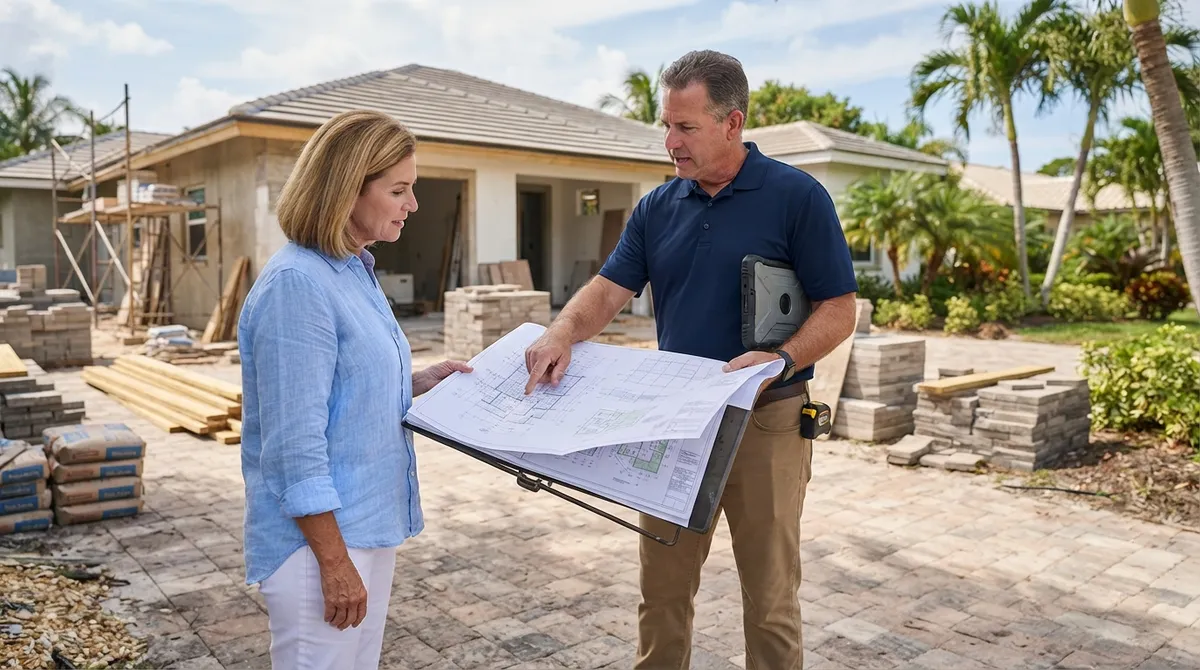
What Is a Code Enforcement Lien in Naples?
A code enforcement lien is a recorded legal claim against a property, created when a code violation fine (or fine plus repair costs) goes unpaid. Under Florida Statutes §162.09(3), a certified order imposing a fine can be recorded in the public records. Once recorded, it becomes a lien on the property where the violation occurred, and it can also reach other real or personal property owned by the violator.
In practice, these liens usually start with something that sounds small:
- Work done without a permit, such as a roof, addition, or screen enclosure
- An expired or never-closed permit
- Unsafe or unmaintained structures
- Zoning or use violations, like an unapproved garage conversion
- Failure to correct a violation by the deadline set by a magistrate or board
The violation itself is one thing. The lien is what happens when the fine is ignored, and it's the lien that shows up in title searches and gums up transactions.
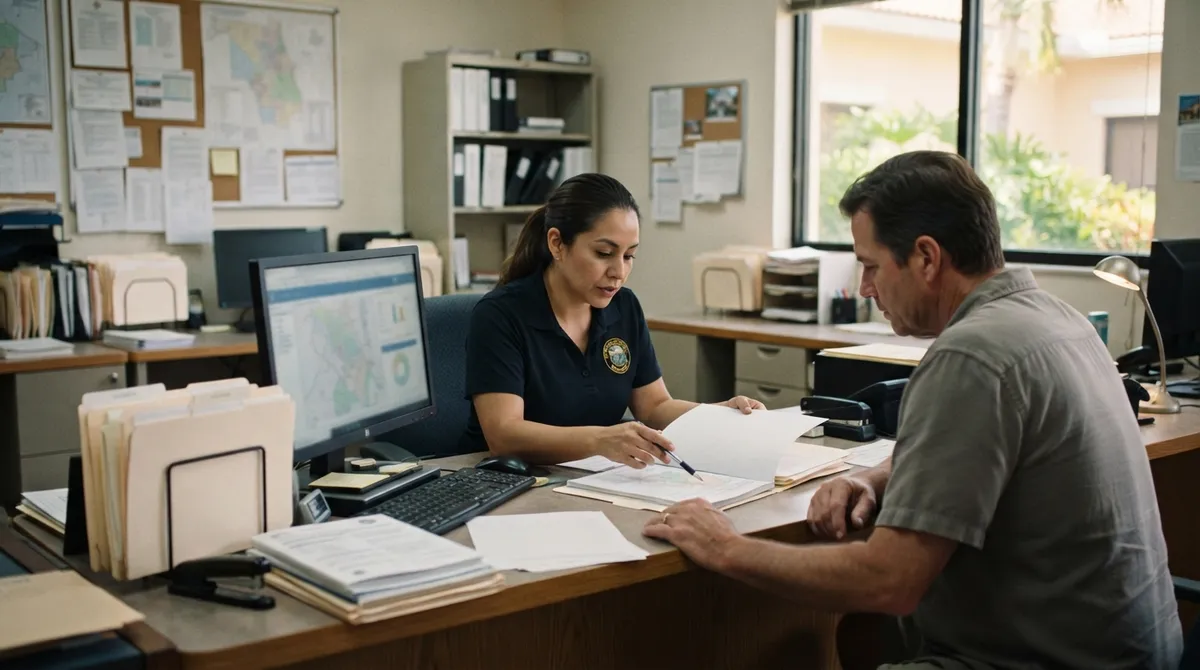
How Florida Chapter 162 Shapes the Process
Florida Statutes Chapter 162 is the backbone of local code enforcement. It lets a local enforcement board or special magistrate impose administrative fines after proper notice and a hearing. Fines can keep accruing until the violation is corrected, subject to the statute and local rules.
| Chapter 162 Item | General Rule |
|---|---|
| First-time violation fine | Up to $250 per day |
| Repeat violation fine | Up to $500 per day |
| Irreparable or irreversible violation | Up to $5,000 per violation (subject to statutory exceptions and local rules) |
| Lien duration | Generally no longer than 20 years after the certified order is recorded, unless a qualifying action is commenced |
| Foreclosure or money judgment | Board may authorize after three months from filing of an unpaid lien |
Always confirm current statutory language and the local ordinance that applies to a specific case. The numbers above are general caps, and your situation may involve exceptions.
City of Naples vs. Collier County: Which One Applies?
This is the first question to answer, and it's the one people skip. "Naples" can mean the City of Naples or an address in unincorporated Collier County that simply has a Naples mailing address. The jurisdiction controls where you search, who you pay, and who confirms compliance.
| Item | City of Naples | Collier County |
|---|---|---|
| Who handles lien requests | Orange Lien Data (formerly FRS Data LLC), directed by the City | Collier County Code Enforcement lien search and payoff service |
| Typical cost | $12.50 per request | $25 per property address |
| Processing time | Seven to ten business days (as stated by the City) | Confirm with the department at time of request |
| What it covers | City-issued liens | Code violations, code enforcement liens, and citations |
| What it does not cover | Liens issued by other entities | Open permits, utility bills, and matters outside the department |
Fees and timelines change, so verify them on the official City and County pages before you order. If you're not sure which jurisdiction your property sits in, that's worth settling first. Our Naples permitting page and our building department lookup tool can help you confirm who actually controls the address.
How to Check for a Code Enforcement Lien in Naples
Here's a simple, friendly step-by-step process for checking a property:
- Confirm the jurisdiction. Determine whether the property is inside the City of Naples or in unincorporated Collier County.
- Order the correct lien search. For city properties, submit a municipal lien and estoppel request through the City's designated provider. For county properties, use the Collier County Code Enforcement lien search service.
- Run a broader search. Neither search covers everything. The City itself recommends a broader search by a title company or real estate attorney because its service doesn't report liens issued by other entities.
- Check for open permits separately. The County's lien search does not cover open permits, so look those up on their own. Our open permit search tool is a good starting point.
- Review the results carefully. Look for case numbers, violation descriptions, fine amounts, recording dates, and any stated compliance requirements.
If you're a realtor or investor, build this into your due diligence checklist before you go under contract, not after. Surprises at the closing table are expensive.
How to Get a Payoff Amount
Lien amounts are not static. Because fines can accrue daily until the violation is corrected, the number you saw last month may not be the number due today. A payoff or estoppel figure is only reliable for the date it was issued.
When you request a payoff, ask for:
- The case number and violation description
- The total fine amount and any administrative or repair costs
- Whether the fine is still accruing and at what daily rate
- The date through which the payoff figure is good
- Instructions for payment and for obtaining a recorded release
Also ask whether the violation itself has been formally found in compliance. Paying the money and fixing the problem are two separate items, and both usually need to be documented.
Why a Permit Doesn't Automatically Clear a Lien
This is the single biggest misunderstanding in this space, so let's say it plainly: correcting a violation or getting a permit does not, by itself, release a recorded lien.
Think of it as two tracks running side by side:
- Compliance track: You fix the underlying problem, which often means permitting, inspections, and closeout through the building department.
- Lien track: You resolve the fine, get written confirmation of compliance from code enforcement, and obtain a recorded satisfaction or release.
A closed permit is great evidence of compliance. It helps. But you still need the local government to confirm compliance in writing and to record the release. Skip that final step and the lien can sit in the public records, quietly blocking your sale or refinance.
Fixing the Underlying Violation Through Permitting
Most code enforcement liens we see in Southwest Florida trace back to a permitting problem. The good news is that permitting problems are exactly what we do. Depending on the violation, the fix usually looks like one of these:
- Unpermitted work: You may need an after-the-fact permit, which typically requires as-built drawings and sometimes an engineer's evaluation. See our guide on 7 steps to legalize unpermitted work in Florida and our overview of after-the-fact permit requirements.
- Expired permits: The work may be done, but the permit lapsed without a final inspection. Read how to fix expired and after-the-fact permits in Florida.
- Structural questions: If work is already covered or built, an engineer may need to verify it. Our article on structural plans after the fact explains what to expect.
- Garage conversions and additions: These are common triggers in Collier County. See how to get a garage conversion permit in Naples.
Our team handles permit filing, tracking, plan review coordination, and in-house sealed drawings, so when a reviewer flags something, we fix it directly rather than waiting on an outside consultant. For urgent situations, our urgent permit rescue service is built for exactly this kind of pressure. You can also learn more about our code compliance violation services.
How a Lien Affects Selling or Refinancing
A recorded code enforcement lien can absolutely complicate a sale or refinance. Title companies routinely search for municipal liens, and lenders generally won't want an unresolved lien clouding the property. Buyers may demand that the lien be paid and released as a condition of closing.
Here's how to approach each audience's situation:
- Sellers and realtors: Run a lien and open permit search before listing. Clearing problems early gives you leverage and avoids last-minute price renegotiation. Our guide to fixing a Florida closing held up by unpermitted work walks through the playbook.
- Buyers and investors: Treat a lien as a negotiating point and a scope-of-work warning. Our investor's 2026 playbook covers how to price the risk.
- Homeowners: Don't ignore notices. Fines can keep growing while you wait, and the problem rarely gets cheaper with time.
- General contractors: If a client's lien surfaces mid-project, pause and confirm what the lien covers before you pull additional permits, so your work doesn't compound the issue.
Getting the Lien Released After You Pay
Paying the fine is not the finish line. Here's the sequence we recommend:
- Correct the violation and complete any required permitting, inspections, and final sign-off.
- Request written confirmation of compliance from the appropriate code enforcement office.
- Pay the fine according to the payoff instructions, keeping receipts and reference numbers.
- Request a recorded satisfaction or release from the local government.
- Confirm the release is recorded in the public records, then order an updated lien search to verify the property is clean.
Keep copies of everything. A recorded release is the document a title company or lender will actually want to see, so don't assume it happened automatically.
Can Fines Be Reduced or the Order Appealed?
Many local governments have a process for requesting a fine reduction once a property is brought into compliance, and some orders can be appealed within a limited window. The rules, deadlines, and standards vary by jurisdiction and depend on how the order was issued. We're not attorneys, and nothing here is legal advice. If significant money is at stake, it's wise to consult a Florida real estate or land use attorney about your options and deadlines.
What we can tell you from experience: a clear compliance record, organized documentation, and a plan to close permits quickly all put you in a stronger position to have a productive conversation with code enforcement.
Common Mistakes to Avoid
- Searching the wrong office. Always confirm City of Naples vs. Collier County first.
- Assuming one search covers everything. It doesn't. Add a title company or attorney search.
- Ignoring accruing fines. A payoff is only good through its stated date.
- Treating a permit as a release. Get the recorded satisfaction in writing.
- Waiting until closing week. Permitting and recording take time. Start early.
- Hiring unlicensed help. Work must be done by properly licensed or registered professionals. See how to register your contractor license in Naples if you're a contractor working in the area.
When to Bring in a Permitting Team
You can handle a straightforward lien search yourself. But when the lien traces back to unpermitted work, a denied permit, an expired permit, or a structural question, the compliance track gets technical fast. Sealed drawings, as-builts, engineer letters, reviewer comments, and resubmittals all have to line up, and delays on that track keep the lien alive.
That's where an outsourced permitting department earns its keep. 1 Contractor Solutions works across all 67 Florida counties, files in more than 400 municipalities, and keeps drafting and engineering in house, so we can move your project from violation to closeout without handing you off. Our same-day response means you're not left waiting while fines accrue. You can also visit us on Google — 1 Contractor Solutions to see what our customers say about working with us.
Final Thoughts
A code enforcement lien in Naples is stressful, but it's also a solvable, step-by-step problem. Confirm the jurisdiction, order the right searches, get a current payoff, fix the underlying violation through proper permitting, and don't stop until you hold a recorded release. If you'd like to stay connected for more Florida permitting tips, follow us on LinkedIn or follow us on Facebook. For marketing and web support for contractors, our friends at Brain Buzz Marketing are worth a look.
Ready to clear the violation behind your lien and get your project moving again? Get a free quote from our team today, and we'll tell you exactly which jurisdiction controls your property and what it will take to resolve it.
FAQs
How do I check for a code enforcement lien on a property in Naples, Florida?
First, confirm whether the property is in the City of Naples or unincorporated Collier County, since each has its own lien search. Then order the matching search and add a broader title company or attorney search, because neither government service reports every possible lien.
Will getting a permit automatically remove a code enforcement lien?
Nope, and this surprises a lot of people! A permit and closeout help prove the violation is corrected, but you still need written compliance confirmation, payment of any fine, and a recorded satisfaction or release from the local government.
Can a code enforcement lien stop me from selling or refinancing in Naples?
Yes, it can. Title companies and lenders routinely search for municipal liens, and an unreleased lien can delay or derail a closing until it's paid and a release is recorded.
How long does a Florida code enforcement lien last?
Under Chapter 162, a lien generally can't remain in effect for more than 20 years after the certified fine order is recorded, unless a qualifying enforcement action is commenced within that period. After three months, a board may also authorize foreclosure or a money judgment suit, so it's best not to let one sit.
What's the difference between a City of Naples lien search and a Collier County code enforcement search?
The City of Naples directs lien and estoppel requests to its designated provider and covers City-issued liens, while Collier County Code Enforcement runs its own search covering violations, liens, and citations. Neither covers matters outside its own jurisdiction, such as open permits or utility bills.
We do this work every day across all 67 Florida counties. Call (866) 314-6931 and we will tell you what your situation actually requires — including when you do not need us.
Related services
Permit Facilitation & Filing
You have a crew scheduled, a client asking for dates, and a permit sitting somewhere in a queue you cannot see. We file it, w…
See the servicePlan Review Coordination
A permit in plan review is not one queue. On a commercial project it can be six queues, each with its own reviewer, its own c…
See the serviceReady to get your permit moving?
One call tells you which jurisdiction controls your project, what it will take, and what it will cost. Most of the time we can scope it on the phone.