
Blog
ATF Permit vs. Removal in Sarasota County: Which Wins?
Weighing an after-the-fact permit against removal in Sarasota County? Compare costs, risks, and steps to choose the right path for your property.
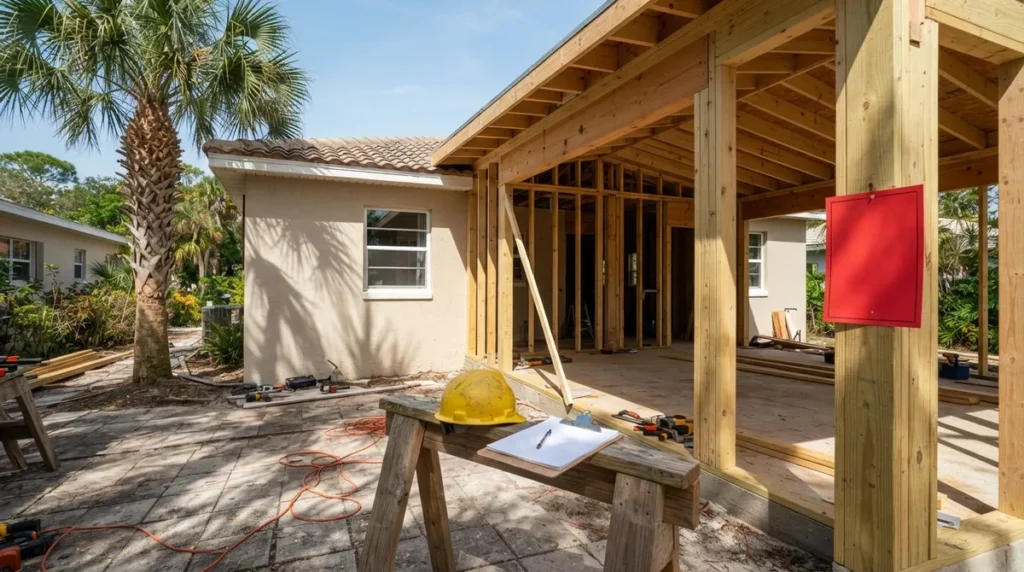
Key Takeaways
-
A permit issued after the fact does not automatically legalize unpermitted work; Sarasota County may require alteration or removal if the work violates code or cannot be verified.
-
After-the-fact permits in Sarasota County are charged the usual permit fee plus a penalty of three times that fee, so confirm current fees with the County.
-
Acting voluntarily and early can keep you on the gentler end of code enforcement, which can escalate from a Notice of Violation to a Special Magistrate hearing with fines or liens.
-
Residential owners may apply as owner-builders, but must complete the submittal in person and cannot rent or sell the property for one year after the permit is completed.
-
Confirm whether your property is in unincorporated Sarasota County or an incorporated city, since cities like Sarasota, Venice, and North Port may have their own permitting rules.
-
Work that is structurally sound and verifiable usually suits the ATF route, while work violating zoning or setbacks that cannot be cured may be better removed, often requiring a demolition permit.
Let's be honest: finding out that a deck, a lanai, a re-roof, or a garage conversion was built without a permit is a stomach-dropping moment. Maybe a home inspector flagged it. Maybe a prior owner skipped the paperwork. Maybe a notice showed up on your door. Whatever the story, you're probably asking the same question every Sarasota property owner asks: do I fix this on paper, or do I tear it out?
That's the real choice behind after the fact permitting Sarasota County property owners face. One path is applying for the permit you should have pulled originally and proving the work is safe and compliant. The other is removing the work entirely. Neither is automatically right, and neither is a guaranteed outcome. The good news? You have more options than panic suggests, and plenty of owners get through this every year.
In this friendly guide, we'll compare both paths side by side, walk through how the Sarasota County process generally works, break down the penalty math, and help you decide which route fits your situation. We'll also point out where 1 Contractor Solutions can take the paperwork off your plate so you can get back to enjoying your property.
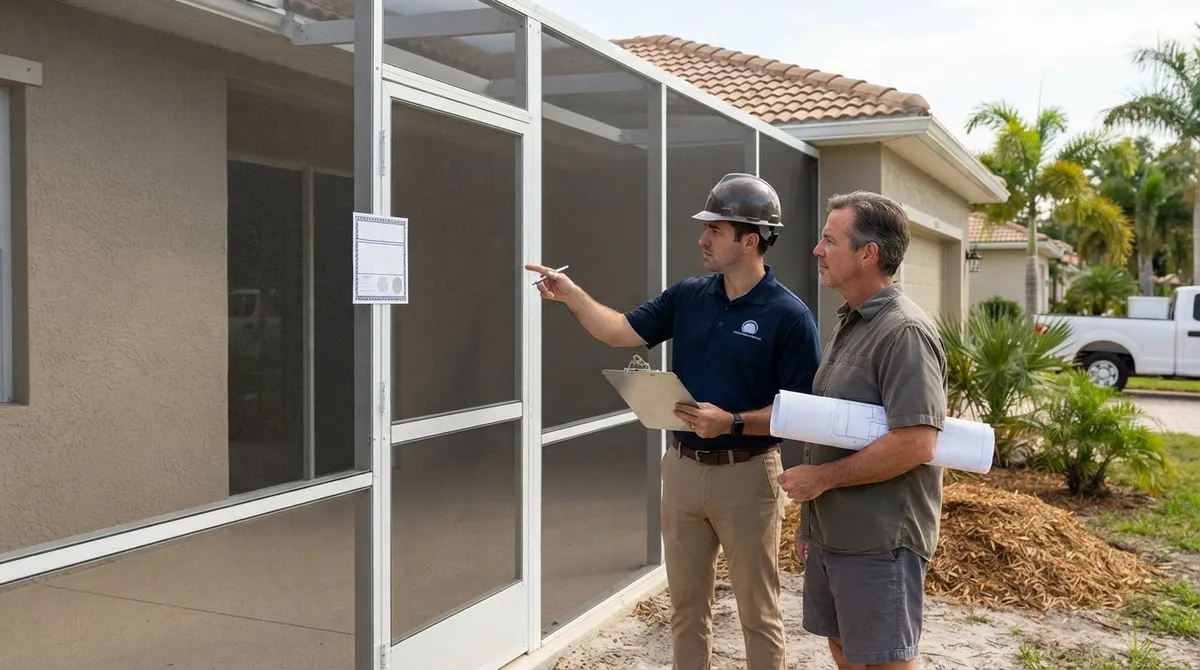
What After-the-Fact Permitting Actually Means
After-the-fact (ATF) permitting simply means applying for a building permit after regulated work has already started or been finished. Florida Statute §553.79 generally requires a permit before covered construction, alteration, repair, or demolition begins, so an ATF application is the route to ask the building department to review work that skipped that step.
Here's the important part, and we want to say it gently but clearly: a permit issued after the fact does not automatically legalize the work. Sarasota County materials warn that work violating the County Code or other regulations may not qualify, and noncompliant work may need to be altered or removed. The permit is a review, not a rubber stamp.
If you want a deeper primer on the basics, our guide on what after-the-fact permitting is in Florida covers the statewide picture. Our after-the-fact and expired permits service page also explains how we handle these files.
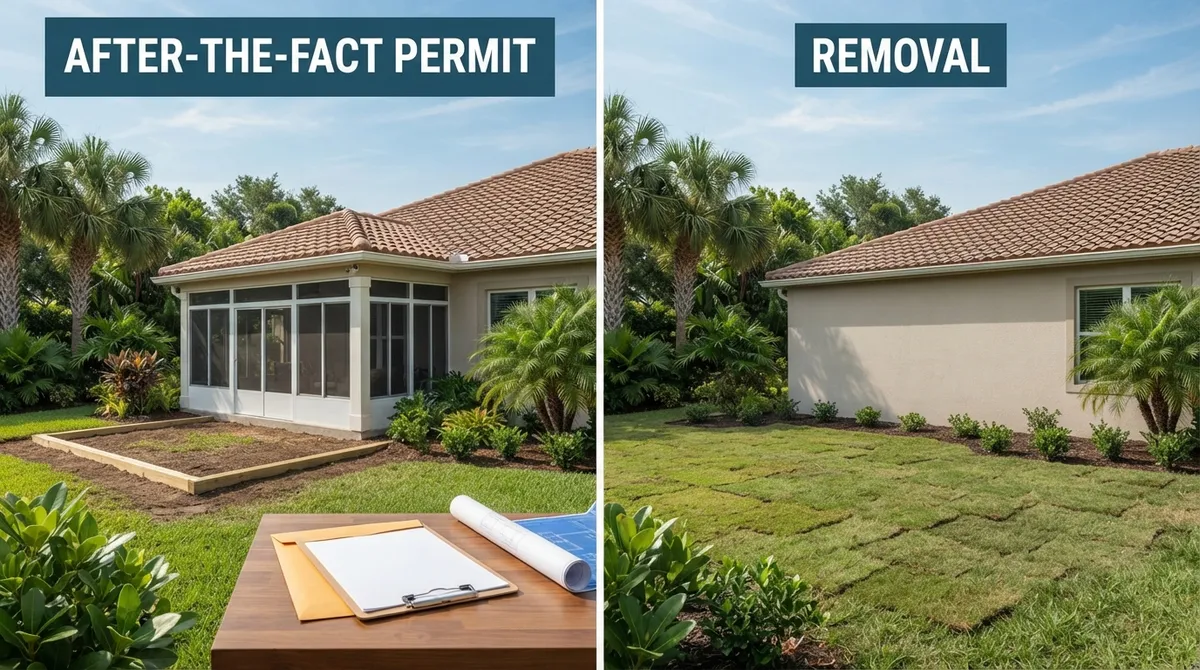
The Two Paths Compared: ATF Permit vs. Removal
Think of this as a fork in the road. Here's how the two options stack up in general terms. Your actual results depend on the work, the property, and what the County finds.
| Factor | Pursue an ATF Permit | Remove the Work |
|---|---|---|
| Goal | Get the existing work reviewed, approved, and inspected | Eliminate the unpermitted work entirely |
| Typical cost drivers | Permit fee plus penalty, plans, engineering, corrections | Demolition, hauling, restoration, possible demo permit |
| Risk | Work may fail review and need correction or removal | Loss of the investment already made in the work |
| Paper trail | Final inspection and closed permit on record | Clean slate, but demolition may need its own permit |
| Best for | Sound, code-compliant work that can be verified | Work that can't be made compliant or isn't worth keeping |
A quick gut check: if the work is structurally sound and was built reasonably well, the ATF route often makes sense. If it clearly violates zoning, setbacks, or structural basics, removal may be the honest answer. A little professional review up front saves a lot of guessing.
Understanding the Cost Side of the Sarasota County Process
Money is usually the first worry, so let's talk about it plainly. Sarasota County's published enforcement notice says an after-the-fact permit is charged the usual permit fee plus a penalty fee of three times the usual permit fee. Fees change, so always confirm the current schedule and how it applies to your specific project with the County.
Separately, code-enforcement penalties can apply if a case moves forward. The County's published notice cites potential fines of up to $250 per day for a first violation and $500 per day for a repeat violation, and up to $5,000 per violation when a violation is found irreparable or irreversible. These are potential penalties that depend on the facts and the law, not guaranteed amounts.
| Cost Item | What the County Notice Describes | Note |
|---|---|---|
| ATF permit fee | Usual permit fee plus a penalty of 3x the usual fee | Confirm current fees with the County |
| First-violation fine | Up to $250 per day | Potential enforcement penalty |
| Repeat-violation fine | Up to $500 per day | Potential enforcement penalty |
| Irreparable/irreversible violation | Up to $5,000 per violation | Applies only if so found |
Notice the pattern: acting voluntarily and early tends to keep you on the gentler end of the spectrum. The County's code-enforcement process emphasizes voluntary compliance, but it can move from a Notice of Violation to an Affidavit of Violation and a Special Magistrate hearing, with outcomes that may include corrective work, fines, and liens. For a closer look at numbers, see our breakdown of after-the-fact permit costs in Florida.
How the ATF Path Generally Works in Sarasota County
Here's the typical practical sequence. Exact requirements vary by project, so treat this as a roadmap rather than a rulebook.
- Confirm your jurisdiction. Sarasota County's Building Division serves unincorporated areas, while incorporated cities may run their own permitting and enforcement. Properties near city lines can be tricky, so verify first.
- Identify the parcel and scope of work. Document what was built, when, and by whom, if known.
- Contact Sarasota County Building and Code Enforcement. Ask what they require for your specific work and whether any violation case is open.
- Prepare plans and supporting documents. This often includes as-built drawings, site plans, and sometimes an engineer letter or structural verification.
- Submit the permit application. The County offers online permitting and permit searches.
- Resolve zoning or code issues. Setbacks, structural capacity, wind-load, and electrical or plumbing concerns may need corrections.
- Complete required inspections. Yes, even for finished work, which sometimes means opening up areas for verification.
That last step surprises people most. Work that's already covered by drywall, flooring, or roofing can be hard to verify, which is why documentation and engineering support matter so much. Our as-built drawings and engineer letters services are built for exactly this.
Who Can Apply: Homeowner, Owner-Builder, or Licensed Contractor?
Sarasota County says residential owners may apply as owner-builders subject to conditions. Those include completing the submittal process in person and restrictions on renting or offering the property for sale for one year after the permit is completed. Condominiums and multifamily structures require a licensed general contractor to apply, according to County owner guidance.
That one-year restriction deserves a pause, especially if you're a realtor, investor, or seller. If a sale is on the horizon, applying as an owner-builder may not fit your timeline. In that case, working through a licensed contractor can be the smarter move. Our owner-builder permits page and our guide on who can pull a permit in Florida explain the differences.
When Removal Starts to Look Like the Better Answer
We never want to oversell the ATF route, because it isn't always the winner. Removal can be the sensible path when:
- The work violates zoning, setback, or other code rules that can't be cured
- Structural elements can't be verified or brought up to current requirements
- The cost of corrections would exceed the value of keeping the work
- The County indicates the work doesn't qualify for an after-the-fact permit
If removal is on the table, remember that demolition permitting may also be required. So even "just tearing it out" can involve its own application. Our demolition permits service can help you do that cleanly. And if you're wondering how often owners really face this, our article on whether you'll really have to demolish unpermitted work offers some reassurance.
Who Benefits Most From Each Path?
Different readers land in different spots, so here's a friendly cheat sheet.
- Homeowners: If you inherited unpermitted work or found it during a refinance, the ATF route often protects your investment. Start with an honest assessment.
- Real estate professionals and investors: Timing is everything. Permit issues can stall a closing, so early research and a clear plan matter. See our realtor and closing support and our article on permit holds and Florida closings.
- General contractors: If a subcontractor or prior crew skipped a permit, ATF filing keeps your project and reputation on track. Learn more on our general contractors page.
- Solar companies: Installs done without a permit can often be documented with structural and electrical verification. See whether solar companies can legalize unpermitted installs.
- Architects, designers, and trades: If you already have your own engineer, our drafting-only service produces the permit set while you keep the seal and the client relationship.
What Documents Does an ATF Application Typically Need?
Requirements depend on the project, but a strong submittal often includes some combination of the following. Think of it as a starter checklist you can bring to your conversation with the County.
- A completed permit application for the work performed
- As-built drawings and a site plan showing what actually exists
- Structural or MEP documentation, sometimes sealed by an engineer
- Product approvals or specifications for items like windows, roofing, or tie-downs
- Photos and field verification of covered or hidden work
- Proof of ownership and parcel information
A tidy, complete packet reduces rejection cycles. If a reviewer flags something, you'll want fast, accurate revisions. Our team handles revisions and resubmittals and plan review coordination so comments don't sit while you wait on a consultant to call someone back.
Where 1 Contractor Solutions Fits In
We're not a construction contractor. We're Florida's outsourced permitting department. You give us an address and a problem, and we figure out which jurisdiction actually controls it, what it will take, and then we go do it. That means preparing or reviewing plans, filing the application, tracking it, working every reviewer comment, and carrying it through inspection and closeout.
Our drafting and engineering are in house, and our own engineer signs and seals the work, so corrections happen quickly. We serve all 67 Florida counties, respond within 30 minutes day or night, and se habla español. If you're in the area, take a look at our Sarasota County page, or see what neighbors say when you visit us on Google — 1 Contractor Solutions. Cities within the county, including Sarasota, Venice, and North Port, may each have their own rules, which is exactly why jurisdiction research is step one.
Common Mistakes to Skip
- Assuming a permit equals approval. Work still has to pass review and inspection.
- Applying in the wrong jurisdiction. County and city processes differ.
- Ignoring a Notice of Violation. Silence can escalate the case toward a Special Magistrate hearing.
- Guessing at plans. Sloppy as-builts invite rejections and delays.
- Skipping the one-year owner-builder rule. It can affect a planned sale or rental.
If a stop-work order or denial is already in play, our urgent permit rescue service is designed for those time-sensitive situations. You can also read about the penalty for building without a permit in Florida to understand the broader stakes. For official statutory language, the Florida Legislature publishes Florida Statute 553.79 online, and Sarasota County's own Building Division page is the best place to confirm current procedures.
So, Which Wins?
Here's our honest take. For work that's sound and fixable, an ATF permit usually wins, because it preserves your investment and leaves a clean, closed permit on record. For work that can't be made compliant, removal wins, even though it stings. The only way to know which camp you're in is to get the facts: what was built, how it was built, and what the County will accept.
You don't have to figure this out alone, and you don't need to feel embarrassed. This happens to smart, well-meaning owners constantly. Ready to find out where you stand? Reach out and get a free quote, and let's turn that stomach-drop into a plan. You can also stay connected by choosing to follow us on LinkedIn or follow us on Facebook for practical Florida permitting tips.
FAQs
How do I get an after-the-fact building permit in Sarasota County?
Start by confirming whether your property falls under Sarasota County or an incorporated city, then contact the relevant building department and identify the parcel and scope of work. You'll generally submit a permit application with plans or supporting documents, address any code or zoning issues, and complete the required inspections.
How much does an after-the-fact permit cost in Sarasota County?
Sarasota County's published enforcement notice says an after-the-fact permit is charged the usual permit fee plus a penalty fee of three times the usual fee. Fees can change and depend on your project, so confirm the current amount directly with the County.
Can Sarasota County make me remove unpermitted construction?
Yes, it's possible. A permit issued after the fact doesn't automatically legalize work, and County materials warn that work violating code may not qualify and may need to be altered or removed. Demolition may also require its own permit.
Can a homeowner apply for an after-the-fact permit in Sarasota County?
Residential owners may apply as owner-builders under County conditions, including completing the submittal in person and not renting or offering the property for sale for one year after permit completion. Condominiums and multifamily structures require a licensed general contractor to apply.
Does Sarasota County or the City of Sarasota issue the permit for my property?
It depends on where the property sits. Sarasota County's Building Division serves unincorporated areas, while incorporated municipalities may handle their own permitting and enforcement, so verify your jurisdiction before applying.
We do this work every day across all 67 Florida counties. Call (866) 314-6931 and we will tell you what your situation actually requires — including when you do not need us.
Related services
Permit Facilitation & Filing
You have a crew scheduled, a client asking for dates, and a permit sitting somewhere in a queue you cannot see. We file it, w…
See the servicePlan Review Coordination
A permit in plan review is not one queue. On a commercial project it can be six queues, each with its own reviewer, its own c…
See the serviceReady to get your permit moving?
One call tells you which jurisdiction controls your project, what it will take, and what it will cost. Most of the time we can scope it on the phone.