
Blog
How Do You Get After-the-Fact Driveway Permit Help in Florida?
Built a driveway without a permit in Florida? Learn who issues approvals, what reviewers check, typical fees, and how to get after-the-fact help.
Key Takeaways
-
Florida has no single statewide after-the-fact driveway permit; the city, county, or FDOT that maintains your road decides the process, so identify that agency first.
-
Approval for an existing driveway is never guaranteed; reviewers may accept it as built, require drainage or culvert corrections, or order removal, so ask what corrections are needed upfront.
-
Work in the public right-of-way may need its own permit even when a driveway or building permit is involved, so ask whether your apron or culvert falls in that strip.
-
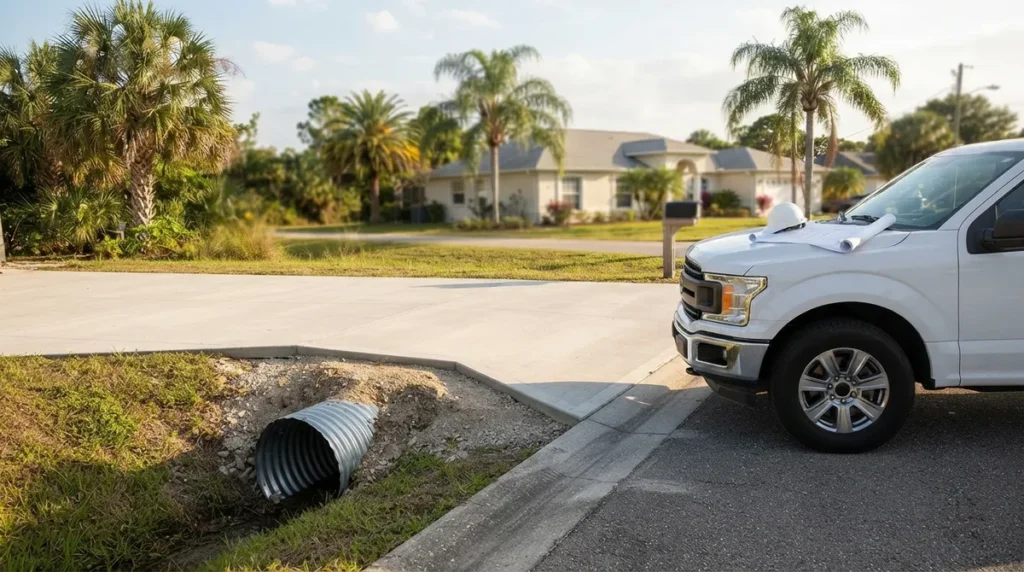
Drainage is a major review focus: culvert size, material, and elevation rules vary by jurisdiction, such as an 18-inch minimum in Seminole County and 15-inch in Deltona.
-
Unpermitted work can bring fees, penalties (some places charge up to 100% of the permit fee), required corrections, stop-work notices, and sale or insurance complications.
-
Gather old permits, surveys, and photos, then prepare a scaled site plan showing apron width, culvert details, drainage direction, and setbacks before submitting and paying fees.
Here's a story we hear all the time. You bought a home, and the driveway was already there. Or maybe you widened your own apron last spring, poured a fresh slab, and then a friendly letter from the county showed up in your mailbox. Suddenly you're looking for driveway after the fact permit help in Florida, and you're not sure where to even begin.
Take a breath. You're in good company, and this is very fixable. Florida has no single statewide "after-the-fact driveway permit." Instead, the city, county, or state agency that controls your road decides what happens next. That can feel confusing, but it also means there's a clear path once you know who to call.
In this guide, we'll walk through who actually issues driveway permits, what reviewers look at, what unpermitted work can cost you, and how a Florida permitting service can take the weight off your shoulders. Whether you're a homeowner, a contractor, or a real estate pro, you'll leave with a practical game plan.
What Does After-the-Fact Driveway Permit Help Actually Mean?
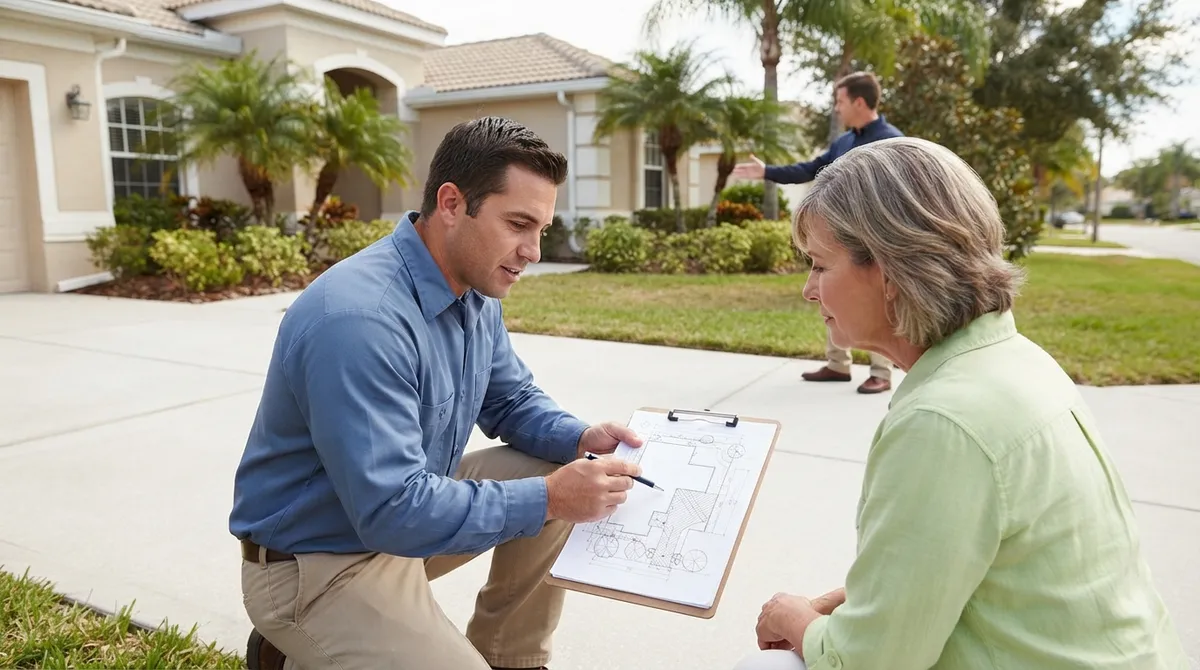
An "after-the-fact" permit simply means you're seeking approval for a driveway, apron, or culvert that was built or altered before the required permit was issued. It is not a magic eraser, and it is not a guarantee. It's a process where the local authority reviews what exists and decides whether it can stay as built, needs corrections, or must be redone.
Help in this area typically covers:
- Figuring out which agency owns the road your driveway connects to
- Pulling the correct application and any prior permit records
- Preparing a scaled site plan or other submittals
- Coordinating inspections and responding to correction notices
- Tracking the permit until it is closed out
If you've never dealt with this before, our guide to how to get an after-the-fact permit in Florida gives helpful background on the broader process.
Who Issues a Driveway Permit in Florida?
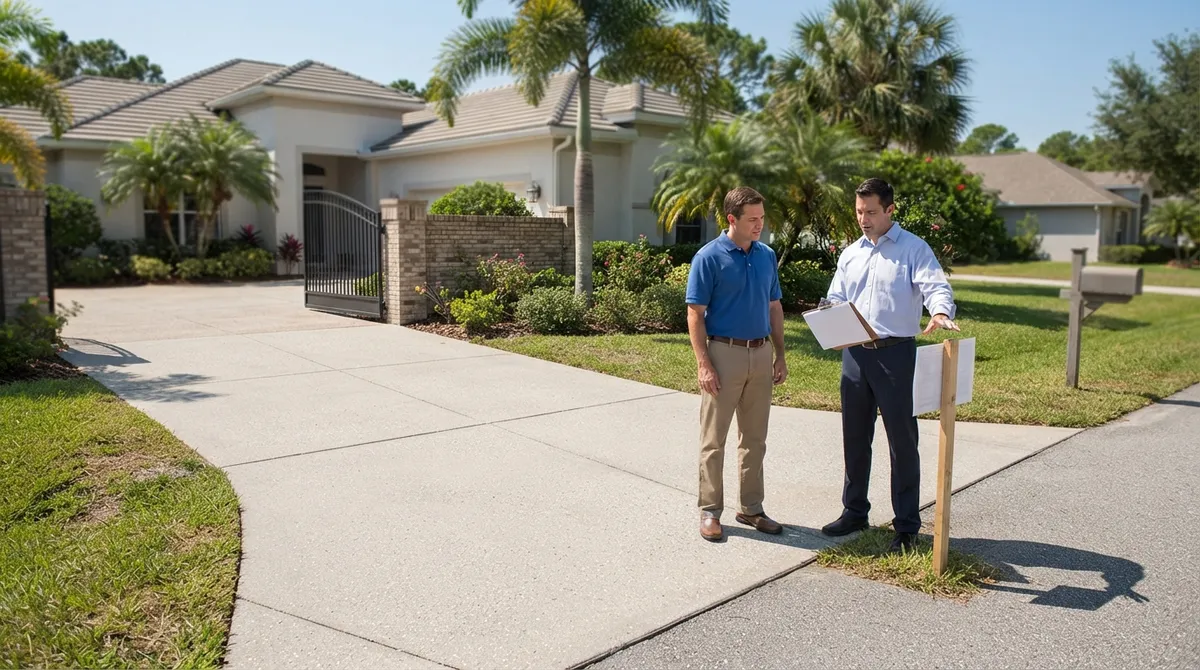
This is the question that trips up most people, so let's make it simple. The answer depends on who maintains the road your driveway touches and where the work sits, on private property, in the public right-of-way, or both.
| Road Type | Typically Reviewed By | What to Expect |
|---|---|---|
| County-maintained road | County road and bridge or right-of-way office | Driveway or connection permit, often with drainage review |
| City street | City public works or building department | Right-of-way or driveway permit, sometimes plus a building permit |
| State road | Florida Department of Transportation (FDOT) | State access or driveway connection requirements |
| Private road or HOA road | Association, plus local building rules | Approval may be separate from public permits |
Local examples show how much this varies. Okeechobee County requires approval before a driveway is installed, and Franklin County requires a connection permit before installing or modifying a driveway to a county-maintained road. Charlotte County lists driveway installation, reinstallation, resurfacing, and culvert installation among work that requires a right-of-way permit.
Not sure which office controls your address? Our free building department lookup tool is a great place to start, and our article on which Florida jurisdiction reviews your project explains why city-line addresses can be tricky.
Can You Really Get a Permit for a Driveway That's Already Built?
Often, yes, but approval is never guaranteed. The local authority decides whether your existing driveway can be accepted, needs fixes, or has to be removed or modified. Think of it less like paperwork forgiveness and more like a review of the real-world conditions.
Reviewers may ask for:
- A completed application for the correct permit type
- A site inspection of what's already in place
- Drawings or a site plan showing the driveway, apron, and culvert
- Corrections to drainage or construction details
- Inspections before the permit is closed
The best move is to ask the permitting authority exactly what documentation and corrective work it requires before assuming the driveway can stay as built. For a broader look at the legalization process, see our piece on legalizing unpermitted work in Florida.
Do You Need a Separate Right-of-Way Permit?
Possibly, and this surprises many homeowners. Work in a public right-of-way may require its own right-of-way permit even when a driveway permit or building permit is also involved. The right-of-way is usually the strip between your property line and the edge of the road, and it often holds drainage swales, utilities, and sidewalks.
If your driveway apron or culvert sits in that strip, expect the road authority to care about it. That's why two different offices might touch the same driveway, and why a quick phone call or a professional's help can save you from filing the wrong application.
Why Drainage and Culverts Get So Much Attention
If there's one thing reviewers love to look at, it's water. In Florida, roadside swales carry stormwater away from homes and streets, and a driveway that blocks that flow can cause flooding for you and your neighbors. So agencies commonly set rules for culvert size, material, elevation, and installation.
Here's how local standards can differ:
| Jurisdiction | Published Culvert or Fee Detail | Note |
|---|---|---|
| Seminole County | 18-inch minimum culvert; $45 application fee; about 3 business days typical processing | For its residential driveway permit process |
| Deltona | 15-inch minimum culvert in its right-of-way permit form | Stated in that form's context |
| Charlotte County | Right-of-way review fees from $90 (final inspection) to $310 (line-and-grade, pipe, and final); $55 per additional driveway | Check the current fee schedule |
These are local examples, not statewide standards. Always confirm current numbers with the agency that controls your road, since fees and requirements change.
What Happens If You Built a Driveway Without a Permit?
Consequences vary by location, but common outcomes include:
- Fees or penalties. Okeechobee County says right-of-way work without a permit can bring a code violation plus the applicable permit fee. Deltona's form says work begun without a valid permit may be suspended and a penalty equal to the permit fee charged. Bay County's cited land-development rules describe a 100% penalty on top of the usual fee.
- Required corrections. You may need to adjust drainage, replace a culvert, or modify the apron.
- Stop-work or violation notices. Active work may be paused until the permit issue is resolved.
- Closing and insurance headaches. Unresolved issues can show up during a sale or a claim.
If you've already received a notice, don't panic. Our guide on how to respond to a Florida unpermitted work notice walks through smart first moves, and our overview of the penalty for building without a permit in Florida sets honest expectations.
A Simple Step-by-Step Path to Getting Your Driveway Legalized
Here's a friendly roadmap you can follow from start to finish:
- Identify the road owner. Find out whether the city, county, FDOT, or an association controls the road your driveway meets.
- Contact the permitting office. Ask what they require for a driveway that already exists. Take notes and get names.
- Gather your records. Look for old permits, surveys, closing documents, and photos of the driveway and culvert.
- Prepare a scaled site plan. Show dimensions, apron width, culvert details, drainage direction, and setbacks.
- Submit and pay fees. File the correct application and any penalty or review fees.
- Schedule inspections. Be ready for a site visit and any follow-up inspections.
- Fix what's flagged. Complete any required corrections and request final approval.
Want to know what paperwork to pull together before you start? Our article on how to gather the documents for an after-the-fact permit in FL is a handy checklist.
What Can a Florida Permitting Service Do for You?
You can absolutely work through this on your own, but many people prefer a guide who already knows the terrain. A good permitting service can:
- Pinpoint the correct authority and application so nothing gets filed in the wrong place
- Pull records and prepare a clean, scaled site plan
- Handle submission, tracking, and plan review coordination
- Respond to correction notices and resubmit quickly
- Coordinate inspections through closeout
At 1 Contractor Solutions, we act as Florida's outsourced permitting department. Our drafting and engineering are in house, and our own engineer seals the work, so when a reviewer flags something we can fix it right away instead of waiting on an outside consultant. We cover all 67 Florida counties, and we're proud of our after-the-fact and expired permit services, our site plan preparation, and our permit facilitation and filing.
One honest note: no service can guarantee approval or waive required corrections. What we can do is make the process clearer, faster, and a lot less stressful. If you want a sense of how others have felt working with us, you can read 1 Contractor Solutions reviews on Google.
Tips for Each Type of Reader
Homeowners
Start by asking the permitting office what they need for an existing driveway. Keep copies of everything, and confirm any hired helper is authorized to act on your behalf. Our homeowner resources are a good next stop.
General Contractors and Design Trades
If a crew poured a driveway apron without the right permit, address it early. A clean site plan and prompt responses to reviewers protect your reputation and your schedule. See how we support general contractors.
Realtors and Investors
An unpermitted driveway can surface during due diligence or at closing. Getting ahead of it can keep deals moving. Learn how our realtor and closing support works, and read about whether a home sale can close with unpermitted work in Florida.
Solar Companies
Site access and equipment staging sometimes involve driveway changes. Confirm early whether any right-of-way work is needed so your permitting timeline stays on track.
Common Mistakes to Avoid
- Assuming one rule fits all of Florida. Requirements are local, so always verify with your specific agency.
- Skipping the right-of-way question. A driveway permit alone may not cover work in the public right-of-way.
- Ignoring drainage. Culvert size and elevation are among the most commonly reviewed details.
- Quoting old fees. Fee schedules and penalties change, so check current figures before budgeting.
- Waiting on a notice. Acting early usually keeps options open and costs lower.
Ready to Get Your Driveway Squared Away?
Finding driveway after the fact permit help in Florida doesn't have to feel like wandering a maze. Identify who owns the road, ask what the agency requires, prepare a solid site plan, and be ready to correct drainage or construction details if needed. That's really the heart of it.
If you'd rather have a seasoned team in your corner, we'd love to help. Reach out and get a free quote from 1 Contractor Solutions, and we'll tell you which jurisdiction controls your driveway, what it will take, and then go do it. You can also follow us on LinkedIn or follow us on Facebook for more Florida permitting tips. Permits approved. Projects moving.
FAQs
How do I get an after-the-fact driveway permit in Florida?
Start by identifying who maintains the road your driveway connects to, then contact that city, county, or state office to ask what they require. You'll typically submit an application, a scaled site plan, and any fees, then pass inspections and complete any corrections. A permitting service can handle the paperwork and tracking for you.
Will the county make me remove or modify an unpermitted driveway?
It depends on the jurisdiction and what the reviewer finds. Some driveways can stay as built, while others need drainage, culvert, or apron corrections before the permit closes. Ask the agency what corrective work it requires before assuming anything.
How much does an after-the-fact driveway permit cost in Florida?
Costs vary widely by location. Seminole County lists a $45 application fee, Charlotte County lists right-of-way review fees from $90 to $310, and some places add a penalty equal to or up to 100% of the permit fee. Always confirm current fees with your local agency.
Do I need a separate right-of-way permit for a driveway apron or culvert?
Often you do, because work in the public right-of-way can require its own permit even when a driveway or building permit is also involved. Charlotte County, for example, lists driveway installation and culvert work among right-of-way permit activities. Your local road authority can confirm what applies.
We do this work every day across all 67 Florida counties. Call (866) 314-6931 and we will tell you what your situation actually requires — including when you do not need us.
Related services
Permit Facilitation & Filing
You have a crew scheduled, a client asking for dates, and a permit sitting somewhere in a queue you cannot see. We file it, w…
See the servicePlan Review Coordination
A permit in plan review is not one queue. On a commercial project it can be six queues, each with its own reviewer, its own c…
See the serviceReady to get your permit moving?
One call tells you which jurisdiction controls your project, what it will take, and what it will cost. Most of the time we can scope it on the phone.