
Blog
7 After the Fact Deck Florida Mistakes to Avoid in 2026
Unpermitted deck in Florida? Learn 7 costly mistakes to avoid with after-the-fact deck permits, from exemptions to inspections and fees in 2026.
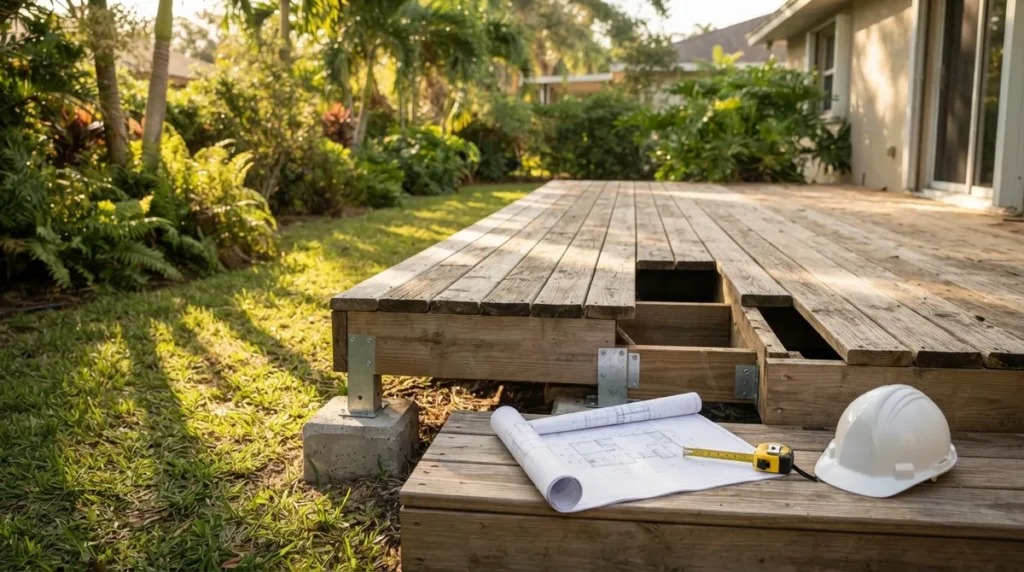
Key Takeaways
-
Florida's narrow deck permit exemption requires all conditions to be met: uncovered, 30 inches or less above grade, detached from the building, and not serving a required exit. Confirm with your local building department.
-
Confirm the correct city or county jurisdiction before filing, since municipal boundaries often differ from mailing addresses and filing with the wrong office wastes weeks.
-
Submit accurate as-built drawings showing footing sizes, ledger attachment, guard rail and stair dimensions, setbacks, and materials, since sloppy documentation commonly triggers rejection letters.
-
Expect inspections of concealed work such as footings and connections, which may require opening decking or skirting, so keep photos and contractor receipts from the original build.
-
There is no statewide ATF deck fee; request a written fee estimate from your local building department and budget for drawings, engineering, penalties, and correction work.
-
Address open permits and violations quickly, since closings and lenders often require resolution before funds move, and delays can bring escalating fines.
So you built a deck, or you bought a home with one, and now someone has used the dreaded phrase: "Was that permitted?" Take a breath. You are far from alone, and this is more fixable than it feels. Every year, Florida homeowners, investors, and contractors run into unpermitted decks, usually during a sale, an insurance review, or a neighbor's complaint.
The good news is that an after the fact deck Florida permit is a real pathway. The not-so-great news is that it is not automatic. Approval is never guaranteed, and the way you handle the process can make it smooth or painful. Because procedures and fees vary by city and county, small missteps tend to snowball into delays and extra cost.
In this guide, we walk through seven common mistakes people make with after-the-fact deck permits in Florida, plus how to sidestep each one. Whether you are a homeowner, a realtor protecting a closing, or a general contractor cleaning up a past job, you will leave with a clear game plan for 2026.
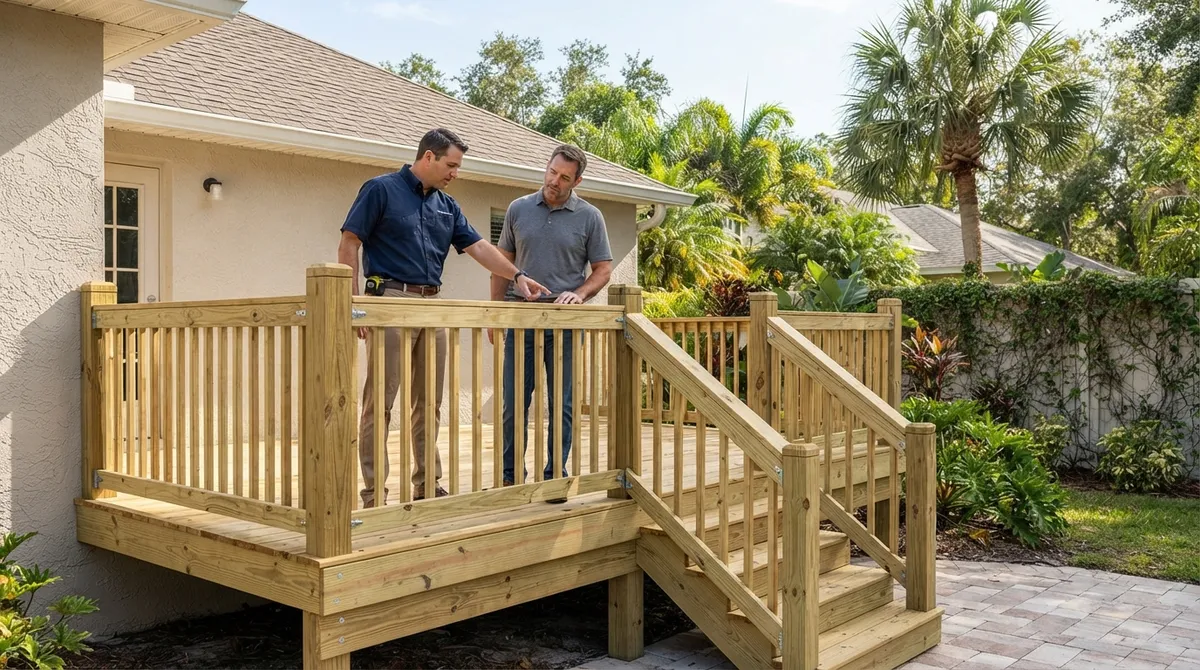
What Is an After-the-Fact Deck Permit in Florida?
An after-the-fact (ATF) deck permit is a local building permit application filed after deck construction has started or finished without the required permit. It does not automatically legalize the deck. Instead, it asks the local building department to review what exists, inspect it, and decide whether it meets code.
Florida Statutes §553.79 generally requires a permit from the local enforcing agency before covered construction begins. Because enforcement is handled locally, your path depends on whether the property sits in a municipality or in unincorporated county territory.
Here is how the process typically flows:
- Identify the correct jurisdiction. City or county, not always obvious near boundary lines.
- Document the deck as built. Measurements, height, attachment, footings, and guard rails.
- Prepare and submit plans. Site plan, as-built drawings, and engineering when required.
- Pay fees and any penalties. These are set locally.
- Pass inspections. Correct any deficiencies the inspector finds.
- Close the permit. Final approval puts the deck on the record.
If you want a deeper walkthrough of the overall process, our guide on how to get an after-the-fact permit in Florida covers the broader steps for any structure type.
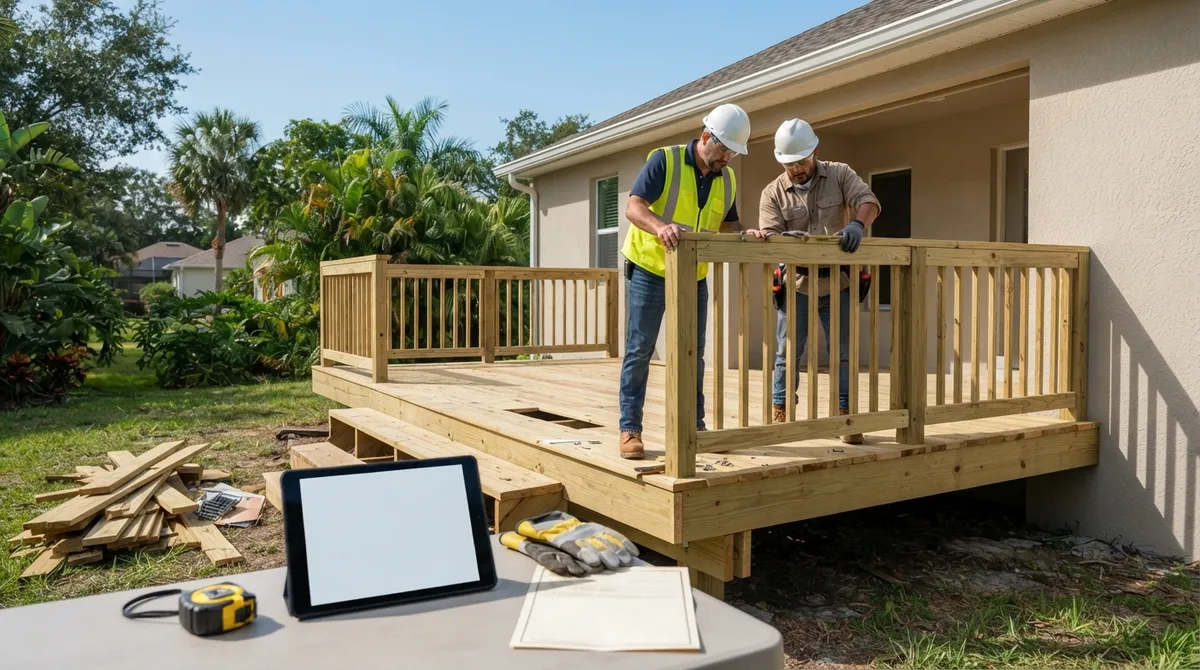
Mistake #1: Assuming Your Deck Is Exempt From Permitting
This is the single most common trap. Plenty of people believe a deck does not need a permit, and sometimes they are right. But "sometimes" is doing a lot of heavy lifting in that sentence.
A narrow Florida Building Code exemption may apply to a deck that is uncovered, no more than 30 inches above grade, detached from the building, and not serving a required exit. Miss any one of those conditions and the exemption may not apply. Local rules can add further wrinkles, so the interpretation of the authority having jurisdiction is what counts.
| Deck Condition | Potential Exemption Factor | What to Do |
|---|---|---|
| Uncovered and 30 inches or less above grade | May qualify if other conditions are met | Confirm with the local building department |
| Attached to the house | Exemption generally does not apply | Plan for permit and structural review |
| Serves a required exit (such as a door) | Exemption does not apply | Plan for permit and inspections |
| Covered or roofed | Exemption likely does not apply | Expect full permitting |
| Over 30 inches above grade | Exemption does not apply | Expect full permitting |
How to avoid it: Never rely on a neighbor's story or an old contractor's say-so. Call the building department, describe the deck in detail, and get the answer in writing when possible. You can also use our building department lookup tool to find who actually controls your address.
Mistake #2: Filing With the Wrong Jurisdiction
Florida has 67 counties and hundreds of municipalities, and the line between city and county jurisdiction is not always where you think it is. A mailing address that says "Tampa" may sit in unincorporated Hillsborough County, and vice versa.
Filing with the wrong office wastes weeks. Worse, you may pay fees in one place only to learn the application belongs somewhere else entirely.
Procedures differ more than most people expect. For example, Volusia County's residential ATF guidance calls for plans that accurately depict existing conditions, and notes that professional-grade plans may need review and a Florida architect's or engineer's seal. Charlotte County's deck guidance lists its own requirements, including engineered drawings or drawings compliant with an approved prescriptive method, plus a site plan.
Here is a quick snapshot of how requirements can differ:
| Jurisdiction Example | Notable Deck Requirement |
|---|---|
| Charlotte County | Engineered or prescriptive-method drawings plus site plan; Notice of Commencement for contracts over $5,000 |
| Volusia County | Plans depicting existing conditions; possible architect or engineer seal |
| Flagler County | Its own deck permit packet and online submittal process |
How to avoid it: Confirm your jurisdiction first. If you are in the Charlotte area, see our Charlotte County page, or browse the full Florida coverage area to find your county.
Mistake #3: Submitting Sloppy or Incomplete Drawings
An after-the-fact review is built on documentation. Reviewers cannot approve what they cannot see, and a hand-sketched rectangle with a few numbers often triggers a rejection letter.
Local submittal packages commonly include a permit application, a site plan or survey, and drawings showing the deck as built. Depending on height, configuration, attachment, loads, and local rules, structural plans or engineering may also be required.
Common documentation gaps include:
- Missing or unclear footing sizes and depths
- No detail on how the deck attaches to the house (ledger connection)
- Guard rail and stair dimensions left out
- A site plan that does not show setbacks to property lines
- No indication of the lumber, fasteners, or connectors used
This is where professional as-built drawings pay for themselves. Clean, accurate drawings reduce reviewer comments and keep the process moving. If you need a drawn set without a separate engineer, site plans and drafting are available too.
Mistake #4: Skipping the Engineer When One Is Needed
Not every deck needs sealed engineering, but many do. If your deck is elevated, large, attached with a ledger, or carries unusual loads such as a hot tub or heavy planters, the building department may ask for a sealed structural evaluation.
Trying to dodge this step usually backfires. The reviewer issues a comment, you scramble to find an engineer, and the clock keeps ticking.
A Florida-licensed engineer can evaluate the as-built conditions, confirm whether the deck is structurally adequate, and recommend any corrections. Our in-house team provides structural engineering and can issue an engineer letter when the jurisdiction accepts one in place of full redesign.
For more on this decision, read whether a sealed drawing is required for after-the-fact permits.
Mistake #5: Being Surprised by Inspections and Concealed Work
Here is a reality check that catches many deck owners off guard: inspections may still be required even though the deck is already finished. Inspectors need to verify what is actually holding the deck up.
If footings, structural connections, or other critical components are hidden, the building department may require access or selective removal so they can be verified. Deficiencies may need correction before final approval. That might mean exposing a footing, pulling a few boards, or adding connectors.
Think of it like a pre-listing home inspection with higher stakes. The goal is not to punish you. It is to confirm the deck is safe.
To prepare:
- Take clear photos of any construction details you still have.
- Locate receipts or contractor records for lumber, hardware, and footings.
- Be ready to open up decking or skirting where the inspector asks.
- Budget a little extra for minor corrections.
Want to know what to expect on inspection day? Our article on what happens during a Florida ATF site inspection breaks it down, and our inspections page explains how we support the process.
Mistake #6: Guessing at Costs Instead of Getting a Written Estimate
Many people search for a single dollar figure, but there is no statewide ATF deck permit fee. Local building departments set the rules. Some impose the ordinary permit fee plus a penalty, surcharge, or reinspection charge. Others calculate differently.
That means a friend's quote from another county tells you almost nothing about your own cost. Your total typically depends on several moving parts:
| Cost Component | What Drives It |
|---|---|
| Permit fee | Local fee schedule, often tied to project value or size |
| Penalty or surcharge | Set by the jurisdiction for work done without a permit |
| Drawings and documentation | Deck complexity and what the reviewer requires |
| Engineering | Height, attachment, loads, and local requirements |
| Corrections | Any deficiencies found during inspection |
| Reinspection charges | Number of failed or repeat inspections |
How to avoid it: Ask the building department for a current written fee estimate for your specific property. Then add drawings, engineering, and a small correction cushion. For a closer look at pricing patterns, see after-the-fact permit Florida cost and how much after-the-fact permit fees run in Florida.
Mistake #7: Ignoring the Deadline Pressure From Closings and Violations
Time is the hidden cost. A deck issue discovered mid-sale can stall a closing, and a code violation notice can start a clock you did not know was ticking.
Realtors and buyers often learn about unpermitted work only after an inspection or appraisal. Lenders and title companies may then want the permit resolved before funds move. If a notice of violation arrives, delay can mean escalating fines and more complicated resolution.
Here is a simple priority guide:
- Check for open permits and violations. Our open permit search helps you start.
- Respond to any notice quickly. Silence rarely helps. See our guidance on code compliance violations.
- Talk to your agent or attorney. Disclosure rules and lender requirements matter.
- Move on the permit early. Drawings and engineering take time to prepare.
If a sale is on the line, our realtor and closing support and urgent permit rescue services exist for exactly this situation.
Can You Apply as an Owner-Builder?
Often, yes, though it depends on the jurisdiction and your situation. Owner-builders can pursue permits for their own property in many Florida jurisdictions, but they take on responsibility for the work and must follow local rules, including signing required affidavits. Some departments are stricter about owner-builder applications for after-the-fact work.
If you are weighing this route, review our owner-builder permits information and confirm requirements with your local office before filing.
How 1 Contractor Solutions Can Help
Think of us as your outsourced permitting department. At 1 Contractor Solutions, we handle the whole after-the-fact deck journey: confirming the right jurisdiction, preparing as-built drawings, providing in-house sealed engineering when required, filing the application, tracking it, answering reviewer comments, and carrying it through final inspection.
Because our drafting and engineering are in house, a reviewer's comment does not send you chasing an outside consultant. We fix it and keep things moving. We serve general contractors, realtors, solar companies, and homeowners across all 67 Florida counties, with same-day response.
Curious how others have felt about working with us? Take a look at our 1 Contractor Solutions reviews on Google, and you can also follow us on LinkedIn or follow us on Facebook for updates on Florida permitting.
Quick Checklist Before You File
Before you submit anything for your after the fact deck Florida permit, run through this list:
- Confirm whether the deck truly needs a permit under current code.
- Verify the correct city or county jurisdiction.
- Gather photos, receipts, and any prior contractor paperwork.
- Prepare accurate as-built drawings and a site plan.
- Decide whether sealed engineering is likely required.
- Request a written fee estimate from the building department.
- Plan for inspections and possible exposure of concealed work.
- Check for any open permits or violations tied to the property.
Final Thoughts: Fix It the Smart Way
An unpermitted deck is a problem, but it is a solvable one. The people who get through it fastest are the ones who confirm the rules, document the deck accurately, bring in engineering when needed, and budget realistically for fees and corrections.
Skip the seven mistakes above, and you will save time, money, and a fair amount of stress. Remember that approval is never guaranteed, so having experienced support in your corner makes a real difference.
Ready to get your deck legalized without the guesswork? Get a free quote from our team today, and let us handle the permitting while you get back to enjoying your outdoor space.
FAQs
Do I need a permit for a deck in Florida?
In most cases, yes. Florida Statutes §553.79 generally requires a permit before covered construction begins, though a narrow exemption may apply to an uncovered deck no more than 30 inches above grade, detached from the building, and not serving a required exit. Since local rules and interpretations vary, it is always smart to confirm with your building department first.
Can I get an after-the-fact permit for an unpermitted deck in Florida?
Yes, that is usually possible, but it is not automatic. You will typically document the deck as built, submit plans and any needed engineering, pay local fees or penalties, and pass inspections. Any deficiencies may need to be corrected before the deck can receive final approval.
How much does an after-the-fact deck permit cost in Florida?
There is no single statewide price, because each local building department sets its own fees and penalties. Many jurisdictions charge the regular permit fee plus a penalty or surcharge, and you may also pay for drawings, engineering, and corrections. Your best move is to request a current written fee estimate for your specific property.
Will the building inspector make me uncover parts of my deck?
Possibly. If footings, structural connections, or other key components are hidden, the building department may require access or selective removal so they can verify the work. Having photos and records from the original build can sometimes make this part easier.
What happens if my unpermitted deck does not meet Florida Building Code?
You will generally need to correct the deficiencies before final approval, which might mean adding connectors, improving footings, or modifying railings and stairs. In some cases, an engineer's evaluation helps determine the most practical fix. If the deck cannot be brought into compliance, the jurisdiction may require changes or removal.
We do this work every day across all 67 Florida counties. Call (866) 314-6931 and we will tell you what your situation actually requires — including when you do not need us.
Related services
Permit Facilitation & Filing
You have a crew scheduled, a client asking for dates, and a permit sitting somewhere in a queue you cannot see. We file it, w…
See the servicePlan Review Coordination
A permit in plan review is not one queue. On a commercial project it can be six queues, each with its own reviewer, its own c…
See the serviceReady to get your permit moving?
One call tells you which jurisdiction controls your project, what it will take, and what it will cost. Most of the time we can scope it on the phone.