
Blog
14 CO Mistakes Florida Owners Make With ATF Work
Learn how to legally get a certificate of occupancy after unpermitted work in Florida by avoiding these 14 common after-the-fact permit mistakes.

Key Takeaways
-
Yes, you can get a CO for unpermitted work in Florida, but only after legalizing it through an after-the-fact permit and passing inspections confirming code compliance.
-
After-the-fact permit fees vary significantly by jurisdiction and are often double standard permit costs; Monroe County charges $250 or 10% of construction value, whichever is greater.
-
Some Florida jurisdictions like Pembroke Pines require a licensed contractor for after-the-fact permits and won't accept owner-builder applications, so verify local rules before submitting.
-
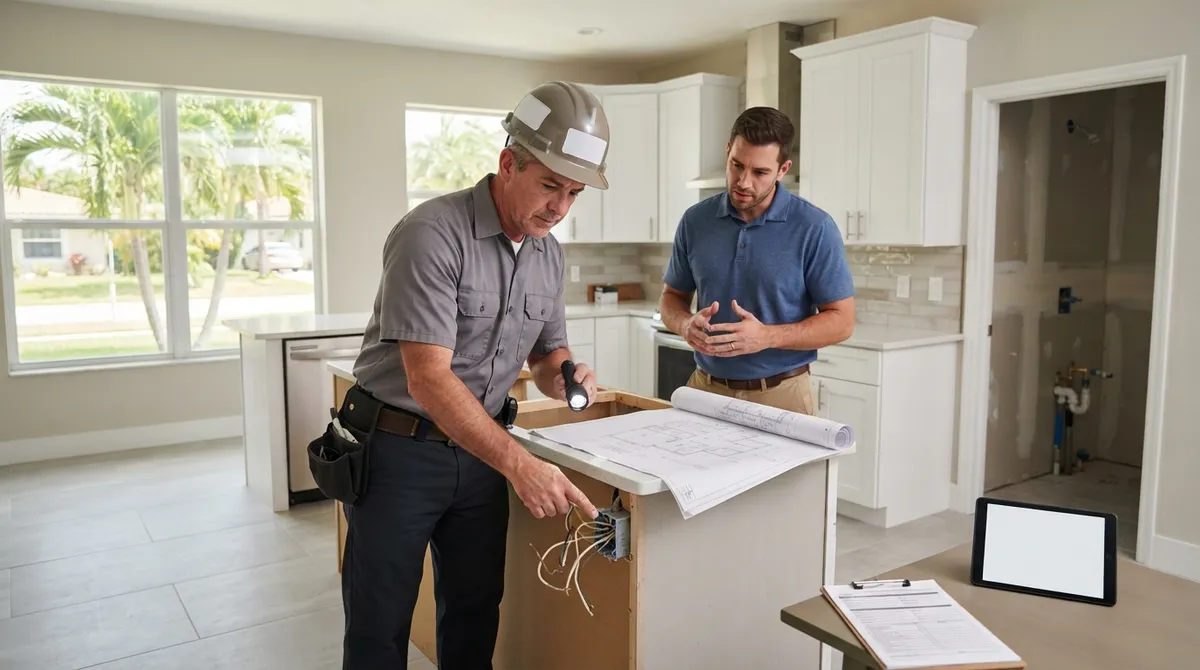
Concealed work like framing or electrical may require sealed engineering drawings and inspector exposure (cutting drywall, pulling flooring) at your expense for verification.
-
After-the-fact permits take longer than standard permits due to extra scrutiny, and procedures vary dramatically across Florida's 67 counties, making local expertise critical to avoid costly delays.
-
Common mistakes include confusing Certificate of Occupancy with Certificate of Use, waiting until closing to address unpermitted work, and submitting incomplete applications that get rejected and delayed.
So you did the work first and now you're wondering, "can I get a CO with after the fact work in Florida?" You're not alone, and honestly, you're in good company. We talk to homeowners, real estate agents, and general contractors every single week who are navigating this exact situation. Maybe a previous owner enclosed a lanai without pulling a permit. Maybe a contractor promised to "handle the paperwork" and disappeared. Whatever the story, the good news is that Florida does have a path forward, and it's not as scary as it sounds once you understand the steps.
The short answer is yes, you can often get a certificate of occupancy after unpermitted work, but only after that work has been legalized through what's called an after-the-fact permit. A CO is not a free pass for skipping the permit process. Under the Florida Building Code, a building official can only issue a certificate of occupancy once they've confirmed the structure actually meets code. So before we celebrate, let's walk through the mistakes that trip people up and how to avoid every single one of them.
Understanding What a CO Actually Requires
Before diving into the mistakes, it helps to understand the rulebook everyone is playing by. Florida Building Code Section 110.1 says a building cannot be occupied, or have its use changed, until the building official issues that certificate. Section 110.2 goes further, stating the CO only gets issued after an inspection confirms there are no code violations or other legal issues outstanding.
That means the certificate of occupancy is really the finish line, not the starting point. The after-the-fact permit is what gets you there. Think of it like this: the permit is the ticket, the inspections are the ride, and the CO is the stamp on your hand when you leave.
Mistake 1: Assuming a CO Erases the Unpermitted History
Plenty of people think getting a CO after the fact simply "resets" everything, like the unpermitted work never happened. That's not quite true. The after-the-fact permit process brings the work into compliance, but any open code-enforcement cases tied to the property may still need separate resolution. Disclosing those cases upfront, rather than hoping they slip through unnoticed, saves everyone a lot of grief.
Mistake 2: Ignoring That Every County Plays by Different Rules
Florida doesn't have one universal after-the-fact permit form or fee schedule. Procedures, required documents, and penalties vary widely from one city or county to the next. If you're trying to legalize work in Hillsborough County, the process may look completely different than in Pinellas County or Broward County. Always check with the specific jurisdiction, or better yet, have someone who already knows the local quirks check for you.
| Jurisdiction Example | Notable ATF Requirement | Source |
|---|---|---|
| Pembroke Pines | Requires licensed contractor, double permit fees | City building department |
| Monroe County | Fee of $250 or 10% of construction value, whichever is greater | County clerk records |
| Miami-Dade | Certificate of use handled separately from CO/completion | County zoning department |
Mistake 3: Trying to File as an Owner-Builder When It's Not Allowed
Some jurisdictions, like Pembroke Pines, will not accept an owner-builder application for after-the-fact permits. They specifically require a licensed contractor to sign on. If you assume you can always self-file, you might waste weeks only to be told to start over with a licensed professional attached. It's worth reviewing owner builder permit rules for your specific city before you submit anything.
Mistake 4: Underestimating the Fees
Here's one that catches people off guard almost every time: after-the-fact permits often cost more than a standard permit, sometimes double. Monroe County, for example, cites a fee structure of $250 or 10% of the completed construction value, whichever is greater. Pembroke Pines applies double fees as a penalty for skipping the process the first time. Budget for this ahead of time so it doesn't derail your renovation plans.

Documentation Mistakes That Slow Everything Down
Once you've accepted that fees and rules vary, the next hurdle is paperwork. And honestly, this is where most delays happen.
Mistake 5: Not Having Sealed Drawings When Required
Concealed work, like framing, plumbing, or electrical hidden behind drywall, often can't be verified visually. When that happens, inspectors may require sealed engineering drawings certifying what's actually behind the walls. Skipping this step, or hiring someone without proper licensure to produce those drawings, is a common and costly mistake. Working with a team that offers in-house engineering and sealed drawings can shave weeks off this part of the process.
Mistake 6: Forgetting That Some Work May Need to Be Exposed
If an inspector can't confirm what's behind a wall or under a floor, they may require you to open it up. That means cutting drywall, pulling up flooring, or otherwise exposing the work for inspection. Guess who pays for that opening and the restoration afterward? The property owner, in almost every case. Planning for this possibility ahead of time, rather than being blindsided mid-inspection, keeps your budget and your sanity intact.
Mistake 7: Submitting Incomplete Applications
An after-the-fact permit application typically needs to be clearly labeled as such, include all required plans, and disclose any existing violation numbers. Leaving out a single required document can bounce your application back to square one. This is exactly the kind of detail that a permit facilitation and filing service is built to catch before it becomes a problem.
Timeline and Process Mistakes
Getting the paperwork right is half the battle. Managing the timeline is the other half.
Mistake 8: Assuming the Process Is Quick
After-the-fact permits almost always take longer than standard permits because there's extra scrutiny involved. Reviewers want to be extra careful given the work already exists. Set realistic expectations with your buyer, tenant, or family about how long this might take.
Mistake 9: Not Tracking the Permit Through Every Stage
It's easy to submit an application and then lose track of where it stands in the review queue. Permits can sit waiting on a reviewer comment for weeks if nobody follows up. That's why permit tracking matters so much, and it's a core part of what 1 Contractor Solutions does for clients across the state, whether the property sits in Miami-Dade County or Manatee County.
Mistake 10: Confusing a CO With a Certificate of Use
These are not the same thing, and mixing them up causes real headaches. A certificate of occupancy confirms the structure is safe to occupy. A certificate of use often relates to zoning compliance and business operations, and it's frequently handled by a different department entirely. Miami-Dade County specifically separates these processes, so don't assume one automatically covers the other.
Ownership and Sale-Related Mistakes
If you're buying, selling, or refinancing a property with unpermitted work, there's a whole other layer of considerations.
Mistake 11: Waiting Until Closing to Deal With It
Real estate professionals see this constantly: unpermitted work discovered during a title search or appraisal, threatening to derail a closing date. Waiting until the last minute to address it puts everyone in a stressful spot. If you're a realtor or investor, getting ahead of this with proactive realtor and closing support can save a deal that's otherwise about to fall apart.
Mistake 12: Assuming a Temporary CO Is Guaranteed
Some property owners hope for a temporary certificate of occupancy to bridge the gap while minor work finishes up. It's true these exist, and they can be issued when life-safety requirements and major inspections are done. But they're granted at the building official's discretion, not as a right. Don't count on one as a backup plan.
Mistake 13: Not Verifying Your Contractor's Registration
If a licensed contractor is required for your after-the-fact permit, make sure they're properly registered with the local municipality, not just licensed at the state level. This trips up more people than you'd expect. Checking your contractor registration checklist before submitting anything can prevent an unwelcome rejection.
Mistake 14: Going It Alone Without Local Expertise
This is the big one. Trying to navigate 67 different sets of county rules, along with hundreds of individual municipal variations, is a lot to take on solo. A misstep in paperwork, a missed inspection requirement, or the wrong contractor designation can add months to your timeline. Partnering with a team that already knows the local terrain, whether your property is in Lee County, Orange County, or anywhere in between, tends to save both time and money.
A Quick Comparison: Standard Permit vs. After-the-Fact Permit
| Factor | Standard Permit | After-the-Fact Permit |
|---|---|---|
| Timing | Before work begins | After work is completed |
| Fees | Standard fee schedule | Often doubled or penalty-based |
| Inspections | Progressive, as work happens | Retroactive, may require exposing finished work |
| Contractor requirement | Varies by jurisdiction | Some jurisdictions mandate licensed contractor only |
| Documentation | Standard plan set | May require sealed engineering, certifications |
Steps to Get From Unpermitted Work to a Certificate of Occupancy
- Identify every piece of unpermitted work on the property, not just the obvious ones.
- Confirm which local building department has jurisdiction, since city and county lines can be tricky.
- Prepare or gather the required plans and, if needed, sealed engineering documents.
- Submit the after-the-fact permit application, clearly disclosing any existing violations.
- Pay the applicable fees and penalties, which are often higher than standard permits.
- Coordinate any required inspections, including exposing concealed work if requested.
- Correct any deficiencies flagged by the inspector or plan reviewer.
- Request the certificate of occupancy or certificate of completion once everything passes.
Common Documents You'll Likely Need
- Completed after-the-fact permit application, properly labeled as such
- Site plan or as-built drawings showing the existing conditions
- Sealed structural or MEP engineering documents, when concealed work is involved
- Proof of licensed contractor involvement, where required
- Any prior code enforcement case numbers or violation notices
- Payment for applicable fees, including any after-the-fact penalty
If you're staring at that list feeling a little overwhelmed, take a breath. This is exactly the kind of project our team handles day in and day out, whether we're producing as-built drawings for a home in Bradenton or coordinating plan review coordination for a commercial property in Tampa. We also handle after the fact and expired permits specifically, so you don't have to figure out the fine print alone.
Why Local Expertise Actually Matters Here
We've said it a few times already, but it deserves its own section because it's genuinely the number one factor separating a smooth after-the-fact process from a frustrating one. Florida's permitting landscape is administered locally, which means the same type of unpermitted work might sail through review in one county and hit a wall in another. According to guidance summarized by the Florida Building Code, the building official has real discretion in how they interpret compliance, and local policy fills in a lot of gaps the state code leaves open.
This is part of why we built out our building department lookup and open permit search tools, so property owners and real estate professionals can get a head start on understanding what they're working with before diving into an application. If you want a deeper dive into the broader legalization process, our guide on how to legalize unpermitted work in Florida covers additional angles worth reading.
What Happens If the Work Can't Be Legalized
Not every situation has a happy, straightforward ending, and it's better to know that now than be surprised later. If the existing construction violates the Florida Building Code, zoning ordinances, floodplain regulations, or other applicable rules in a way that simply can't be corrected, the local authority may require modifications or even removal. This is rare, but it does happen, particularly with additions built too close to property lines or structures in flood-prone areas that don't meet elevation requirements.
The best defense against this outcome is early, honest evaluation. Before assuming a fix is simple, have a professional review the property's history and current condition. Our code compliance and violations team frequently steps in at exactly this stage, helping owners understand realistic options before money gets spent on plans that won't ultimately pass.
Bringing It All Together
Getting a certificate of occupancy with after-the-fact work in Florida is absolutely achievable for most situations, as long as you avoid the fourteen mistakes above and approach the process with patience and the right documentation. The key is treating the after-the-fact permit as the real work, and the CO as the reward that follows once everything checks out.
If you'd rather not navigate 67 counties' worth of quirks and requirements solo, we're genuinely happy to help. Our team has spent over 15 years handling exactly this kind of permitting puzzle across Florida, from St. Petersburg to Miami and everywhere in between. You can visit us on Google — 1 Contractor Solutions to see how we've helped other property owners in similar situations, or connect with us and follow us on LinkedIn for ongoing permitting tips. We're also active on Facebook if you want to follow us on Facebook for updates from the field.
Ready to move forward with confidence instead of confusion? Reach out today and get a free quote, and let's turn that unpermitted headache into a certificate of occupancy you can actually be proud of.
FAQs
Can I get a certificate of occupancy for a house with unpermitted work in Florida?
Yes, in most cases you can, but the unpermitted work needs to be legalized first through an after-the-fact permit. Once the local building department confirms the work meets code through inspections, they can issue the CO. It just takes patience and the right paperwork to get there.
What is an after-the-fact permit in Florida?
It's a permit applied for after construction has already been completed, rather than before. The local building department reviews the existing work, may require sealed engineering documents, and conducts inspections to confirm everything meets current code.
How much does an after-the-fact permit cost in Florida?
It varies quite a bit by jurisdiction, and it's usually more than a standard permit fee. Some areas double the fee as a penalty, while others charge a percentage of construction value, like Monroe County's $250 or 10% rule, whichever amount is greater.
Will Florida inspectors make me open walls for unpermitted work?
It's possible, especially if concealed framing, electrical, or plumbing can't be verified visually. If that happens, you'll typically be responsible for the cost of opening the area and restoring it afterward, so it's smart to budget for this possibility ahead of time.
Can a homeowner apply for an after-the-fact permit in Florida?
Sometimes, yes, but not always. Some jurisdictions, like Pembroke Pines, require a licensed contractor for after-the-fact permits and won't accept an owner-builder application. It really depends on your specific city or county, so checking local rules first saves a lot of frustration.
We do this work every day across all 67 Florida counties. Call (866) 314-6931 and we will tell you what your situation actually requires — including when you do not need us.
Related services
Permit Facilitation & Filing
You have a crew scheduled, a client asking for dates, and a permit sitting somewhere in a queue you cannot see. We file it, w…
See the servicePlan Review Coordination
A permit in plan review is not one queue. On a commercial project it can be six queues, each with its own reviewer, its own c…
See the serviceReady to get your permit moving?
One call tells you which jurisdiction controls your project, what it will take, and what it will cost. Most of the time we can scope it on the phone.