
Blog
8 After the Fact Conversion Florida Mistakes to Avoid
Avoid 8 common mistakes when seeking an after the fact conversion in Florida and learn how to bring unpermitted work into compliance in 2026.
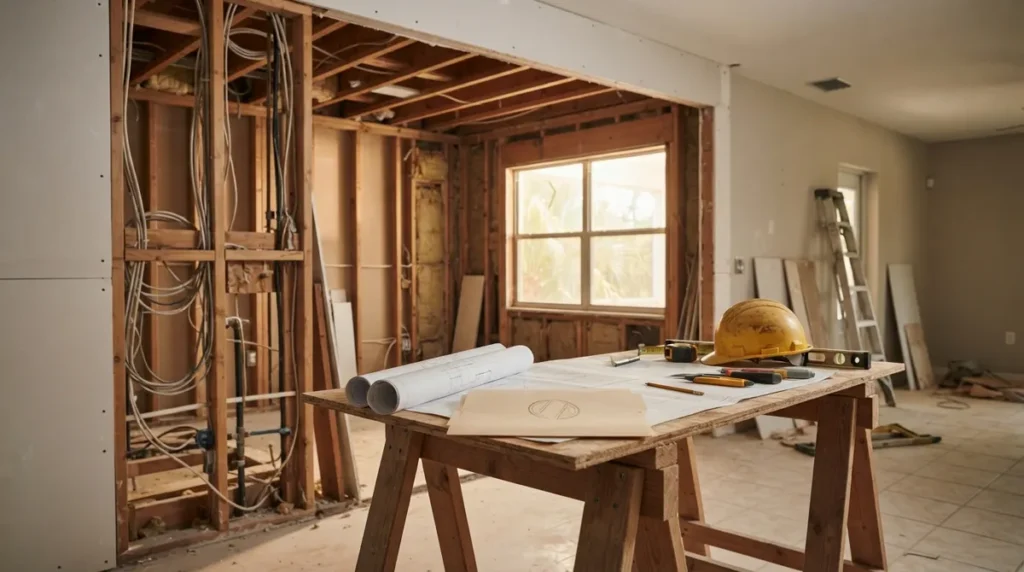
Key Takeaways
-
Stop all work immediately once you realize a permit was never pulled; continuing can increase citations (Hillsborough County cites up to $500 per violation) and hides more work from inspectors.
-
Confirm which authority controls your address, city or county, before filing, since jurisdictions can differ even within the same county and filing with the wrong office wastes weeks.
-
Submit as-built drawings showing what actually exists, not just the idealized new design, because reviewers often send back plans that ignore existing conditions.
-
Line up sealed engineering or licensed verification early for structural, electrical, or plumbing work, since reviewers who cannot confirm adequacy by eye will likely require it.
-
Expect inspections that may require opening finished walls or ceilings; having documentation ready and accessible areas makes the visit faster and smoother.
-
Budget for permit fees, possible penalties, drafting, engineering, and corrective work, and confirm all figures with your local building department since there is no statewide fee schedule.
Picture this: you finished converting the garage into a bedroom, or the porch into a sunroom, and you were proud of every board. Then a buyer's inspector asks for the permit. Or a neighbor calls the county. Or your insurance company starts asking questions. Suddenly that finished project feels like a ticking clock.
Take a breath. You are not the first Floridian to land here, and there is a legitimate path forward. In Florida, an after the fact conversion generally means asking your local building department to review and approve work that was built or started without the required permit. It is not a single statewide permit type. Your city or county decides the steps, the paperwork, and the fees.
The catch? Small missteps can turn a manageable cleanup into a costly saga. This guide walks through eight common mistakes so you can sidestep them, stay calm, and get your project properly on the books in 2026.
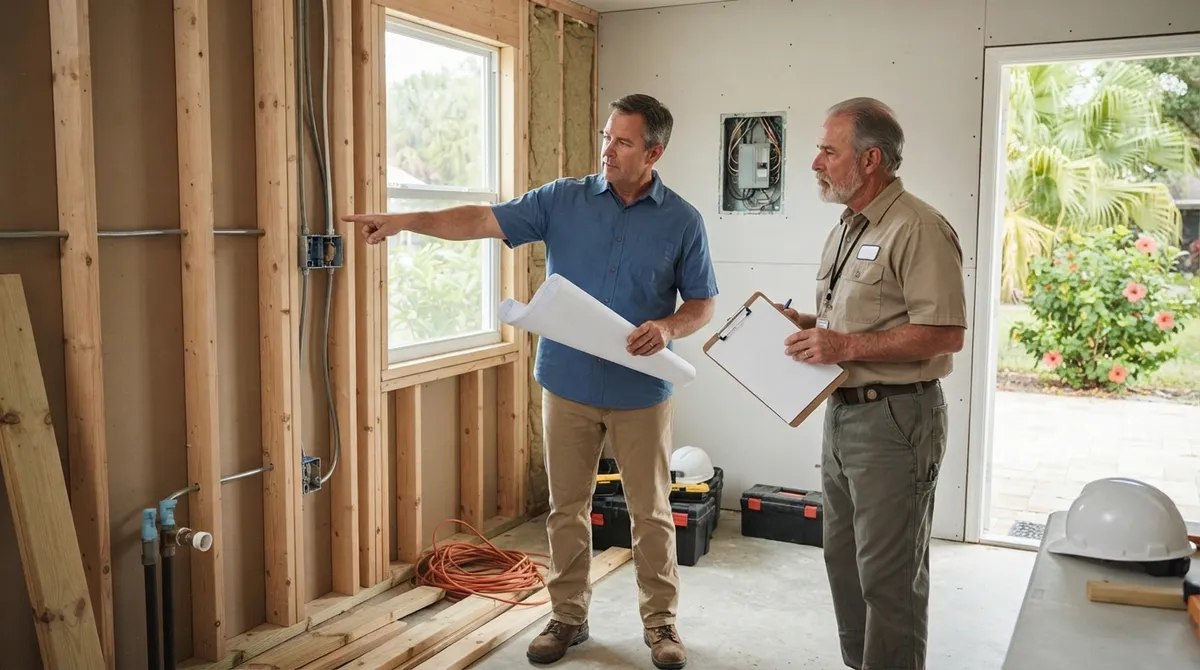
What an After the Fact Conversion Means in Florida
Florida Statutes §553.79(1)(a) generally makes it unlawful to construct, alter, repair, or demolish a building without first obtaining the required permit from the enforcing agency. Applying later does not erase the fact that work began early. It does, however, give you a way to bring the work into the official review process.
The local authority reviews your documents against the Florida Building Code and any local requirements. Inspectors may need to verify what is hidden behind finished walls and ceilings. Approval is never guaranteed, which is exactly why avoiding mistakes matters.
If you want a deeper walkthrough of the process, our team covers it in How to Get an After-the-Fact Permit in Florida.
Common Projects That Need After the Fact Review
- Garage conversions into living space
- Enclosed porches, lanais, and screen enclosures
- Interior remodels with moved walls, plumbing, or wiring
- Room additions and accessory structures
- Reroofs, windows, and solar installs done without a permit
- Commercial tenant build-outs and change-of-use work
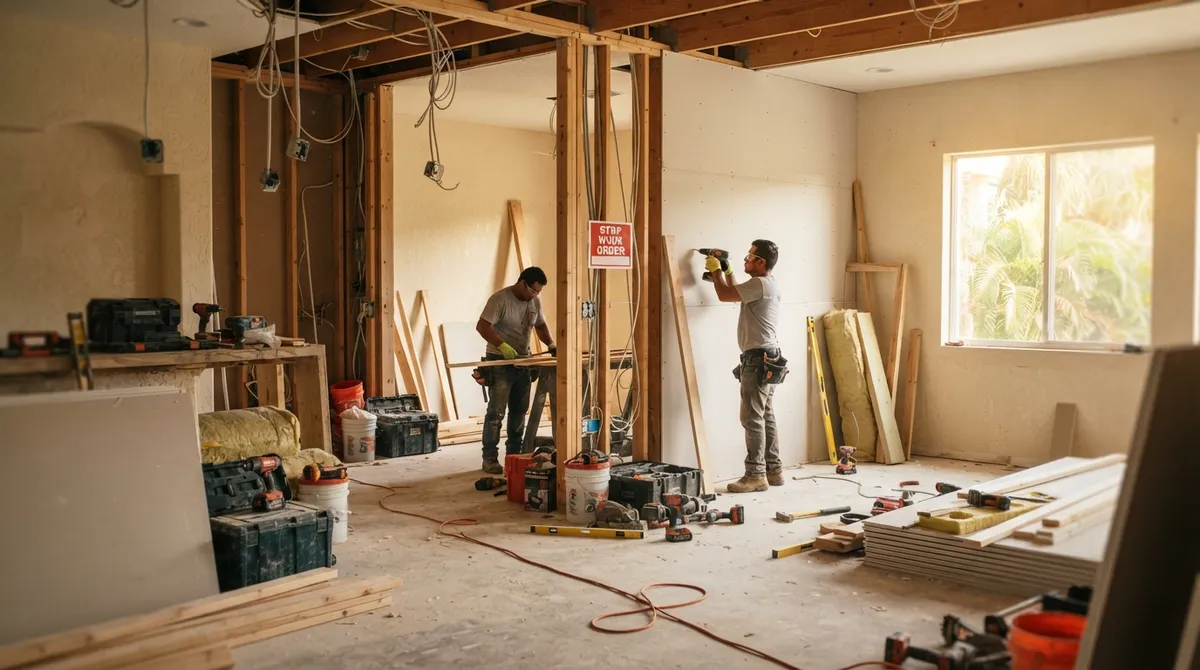
Mistake 1: Keeping Work Going After You Realize There's No Permit
This one hurts the most because it is so tempting. The project is 80 percent done, so why stop now? Because continuing can make everything more expensive and more complicated.
Hillsborough County's homeowner guidance, for example, tells owners to stop work immediately and contact Building Services about an after-the-fact permit. It also warns that continuing can lead to a citation of up to $500 per violation. That figure is one county's example, not a statewide penalty schedule, but the principle travels well: pause, then call.
Stopping also protects you from covering up even more work. The less hidden behind drywall, the easier verification becomes.
Mistake 2: Assuming Completed Work Will Automatically Be Approved
A beautiful finished room can still fail review. The building department is not judging looks. It is checking safety and code compliance, and it cannot verify what it cannot see.
If work does not meet code or cannot be verified, the authority may require:
- Corrective work to bring items up to code
- Removal or exposure of finished surfaces for inspection
- Revised plans reflecting what was actually built
- Additional inspections before approval or closure
Go in with realistic expectations and a plan for the possibility of opening a wall or two. A little openness up front beats a rejected application later.
Mistake 3: Guessing Which Agency Handles Your Property
Here is a sneaky one. The authority that reviews your after the fact conversion may be a city, a town, or the county, and that can differ even within the same county. Properties near city lines are the usual culprits.
Filing with the wrong office wastes weeks and sometimes fees. Before you do anything else, confirm who actually controls your address. Our Building Department Lookup tool is a quick way to point you in the right direction, and our guide on which Florida jurisdiction reviews my project explains the logic.
Mistake 4: Submitting Plans That Show Only the New Design
An after the fact application is different from a standard permit. Reviewers generally want to understand what existed before, what exists now, and what is proposed to correct anything that falls short. Plans that show only a clean, idealized version of the project often get sent back.
A typical packet may include:
- A permit application with property and project details
- Plans showing existing and as-built conditions
- Contractor information where applicable
- Supporting engineering or product documentation
This is a common example, not a uniform statewide checklist. Your local authority's checklist controls. Accurate as-built drawings are often the backbone of a successful submission.
Mistake 5: Skipping Engineering When the Reviewer Will Expect It
Plenty of conversions touch structure, wind resistance, or electrical and plumbing systems. When a reviewer cannot confirm that a beam, truss, tie-down, or panel is adequate by eye, they may ask for a sealed document from a licensed professional.
That might be an engineer letter, structural verification, or MEP documentation. Trying to talk your way around it rarely works. Planning for it from the start saves you a resubmittal. If you are curious how this works, take a look at is a sealed drawing required for after-the-fact permits and our engineer letters service.
Mistake 6: Ignoring Inspections and Hoping They Won't Notice
Some folks submit paperwork and then dread the inspection. Others hope it never happens. Inspections are a normal and necessary part of this process, and a prepared owner usually has a smoother experience than a nervous one.
Inspectors may check framing, electrical, plumbing, mechanical systems, egress, smoke and carbon monoxide detectors, and more, depending on the project. Having documentation ready and access to key areas makes the visit faster. Our article on what happens during a Florida ATF site inspection shows what to expect.
Mistake 7: Not Budgeting for Fees, Corrections, and Time
There is no statewide standard fee or uniform after-the-fact penalty amount in the sources we reviewed. Fees, penalties, forms, and review steps vary by county or municipality, and some jurisdictions charge more for work done before the permit than for a standard application.
Here is a simple way to think about where your money may go:
| Cost Category | What It Covers | Varies By |
|---|---|---|
| Permit and review fees | Application, plan review, and inspections | County or municipality |
| Penalties or citations | Local enforcement for starting without a permit | Local code and case facts |
| Drafting and as-builts | Plans documenting existing conditions | Project size and complexity |
| Engineering | Sealed letters or structural and MEP verification | Scope and what must be verified |
| Corrective work | Fixes, exposed finishes, rework | What inspectors find |
Always confirm numbers with your local building department. For more on typical ranges, see after the fact permit Florida cost.
Mistake 8: Trying to Go It Alone When the Clock Is Ticking
A DIY approach can work for a small, simple project. But when a closing date, a lender, an insurance claim, or a code enforcement notice is attached, going solo can cost you time you do not have.
Here is a quick comparison to help you decide:
| Situation | DIY May Be Fine | Professional Help Is Wise |
|---|---|---|
| Small, simple, fully accessible work | Yes, with care | Optional |
| Structural, electrical, or plumbing changes | Rarely | Strongly recommended |
| Active closing or lender requirement | No | Yes |
| Stop work order or code citation | No | Yes |
| Multiple counties or jurisdictions | No | Yes |
If a violation is already in play, our guide to code compliance violation help in Florida is a useful companion.
A Calm, Step-by-Step Path Forward
If you have unpermitted work today, here is a gentle roadmap you can follow:
- Stop any further work. Do not close up more walls or finish more surfaces.
- Identify the correct authority. Confirm whether your city or county handles your address.
- Gather what you have. Photos, receipts, product specs, contractor info, and any old plans.
- Document existing conditions. Prepare as-built drawings that show what was actually built.
- Line up engineering if needed. Get sealed verification for structure or systems.
- Submit the application and respond to comments. Reviewers often have questions, and quick answers keep things moving.
- Complete inspections and corrections. Then work toward final approval and closeout.
Many owners find a real relief once the process is underway. For a related read, see 7 Steps to Legalize Unpermitted Work Florida (2026).
How Different Audiences Can Approach This
For Homeowners and Residential Property Owners
Start with your documents and your local department. If a conversion happened under a previous owner, you are far from alone. Our homeowner resources are designed for exactly this situation.
For General Contractors and Design Trade Professionals
If you inherited a client's unpermitted work, set expectations early about verification and possible corrections. Reliable drafting and sealed documents keep your schedule intact. See how we support general contractors.
For Solar Companies
Installs completed before permitting need documentation of structural attachment and electrical compliance. The earlier you gather those details, the smoother review tends to be. Learn more about solar contractor support.
For Real Estate Professionals
Unpermitted conversions can surface during inspections, appraisals, or title review and delay closings. Raising the issue early gives your client options. Our realtor and closing support is built for tight timelines.
How 1 Contractor Solutions Can Help
At 1 Contractor Solutions, we act as Florida's outsourced permitting department. We work in all 67 counties, and our drafting and engineering are done in house, with our own engineer sealing the work. That means when a reviewer flags something, we can fix it without waiting on an outside consultant. We also take on the after-the-fact and expired permit files other people decline. Explore our after the fact and expired permits service, or see how we handle permit facilitation and filing.
We respond within 30 minutes, day or night, and se habla español. You can also follow us on LinkedIn or follow us on Facebook for tips, and see what customers say when you visit us on Google — 1 Contractor Solutions.
For official statutory language, you can review Florida Statutes Chapter 553, Section 79 directly.
Wrapping Up: You Have More Options Than You Think
An after the fact conversion in Florida feels intimidating, but it is a solvable problem. Stop work, confirm the right authority, document what exists, expect inspections, and bring in engineering when the reviewer will want it. Avoid the eight mistakes above, and you give yourself the best shot at a clean approval.
Ready for a partner who has handled thousands of these? Get a free quote and let us help you turn that unpermitted project into a properly closed-out one.
FAQs
What is an after the fact conversion in Florida?
It generally means asking your local building department to review and approve work that was built or started without a required permit. It is not one statewide permit type, so your city or county sets the application steps and requirements.
Can I be fined for unpermitted construction in Florida?
Yes, it's possible. Penalties are set locally, and Hillsborough County, for example, notes citations of up to $500 per violation if work continues without a permit. Check with your own building department for the exact rules that apply to you.
Will the inspector make me open walls or remove finishes?
Sometimes, yes. If concealed work cannot be verified any other way, the authority may require exposure so it can confirm code compliance. Good documentation and engineering can sometimes reduce how much needs to be opened.
How much does an after the fact permit cost in Florida?
There is no statewide standard fee or uniform penalty. Costs vary by county or municipality and by project scope, so confirm current fees with your local building department before you budget.
Should I stop work if I started without a permit?
Yes, pause right away and contact your local building department. Continuing can make resolution more costly and may lead to citations, while stopping keeps more of the work accessible for verification.
We do this work every day across all 67 Florida counties. Call (866) 314-6931 and we will tell you what your situation actually requires — including when you do not need us.
Related services
Permit Facilitation & Filing
You have a crew scheduled, a client asking for dates, and a permit sitting somewhere in a queue you cannot see. We file it, w…
See the servicePlan Review Coordination
A permit in plan review is not one queue. On a commercial project it can be six queues, each with its own reviewer, its own c…
See the serviceReady to get your permit moving?
One call tells you which jurisdiction controls your project, what it will take, and what it will cost. Most of the time we can scope it on the phone.