
Blog
How Does After-the-Fact Permitting Work With a Florida Building Department?
Learn how after-the-fact permitting works with a Florida building department, from documents and fees to inspections and next steps.
Key Takeaways
-
Florida has no single statewide after-the-fact permit process; each local building department sets its own application steps, documents, inspections, and fees, so confirm jurisdiction first.
-
Under Florida Statutes §553.79, covered work needs a permit before it begins, and approval after construction is not automatic just because the work already exists.
-
Building officials may require concealed work to be exposed or documented, so photos, limited openings, or an engineer's field verification may suffice depending on the local decision.
-
Fees vary by jurisdiction: state law allows an additional fee for work started before a permit, but the dollar amount comes from the local schedule, so request it before budgeting.
-
Most delays come from filing with the wrong office, incomplete as-built drawings, missing engineering support, and unanswered review comments, all of which can be avoided upfront.
-
Unresolved unpermitted work can derail home sales, lender or title approvals, insurance claims, and Certificates of Occupancy, so act early rather than hoping it goes unnoticed.
Picture this: you're about to sell your Florida home, or maybe you just bought one, and the inspector mentions that the enclosed patio, the new water heater, or the roof was never permitted. Your stomach drops. First, take a breath. You are far from the first person to land here, and there is a path forward.
That path is usually called after-the-fact permitting, and it is a conversation you have with your local building department. It is not a single statewide program with one set of rules. Each jurisdiction runs its own process, sets its own fees, and decides what proof it needs. Florida law says covered work needs a permit before it begins, but the practical details of cleaning up after the fact happen at the local level.
In this guide, we'll walk through how after-the-fact permitting with a Florida building department really works, what to expect, what it may cost, and how to avoid the mistakes that slow people down. Whether you're a homeowner, contractor, solar installer, or real estate pro, you'll leave knowing your next move.
What Does After-the-Fact Permitting Mean in Florida?
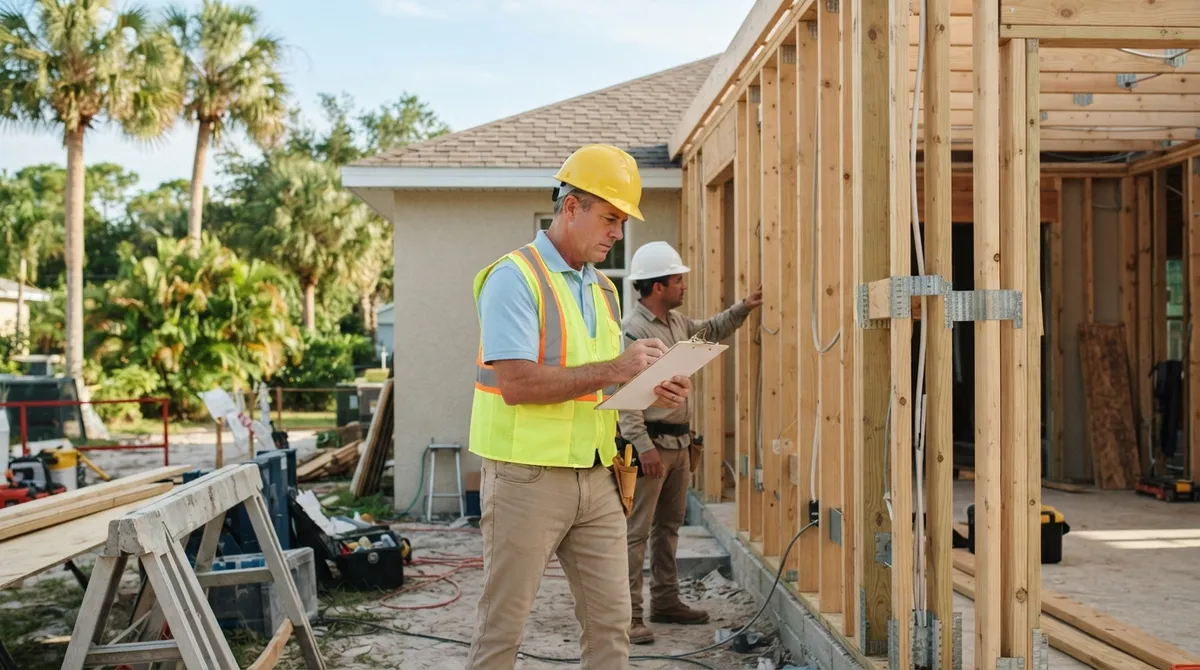
After-the-fact permitting is the common term for applying to legalize work that was started or finished without a required permit. You may also hear it called retroactive permitting, as-built permitting, or legalizing unpermitted work. They all describe the same basic goal: bring the work under the building department's oversight so it can be inspected and officially closed out.
Here is the part many people miss. There is no single statewide "after-the-fact permit" category. Under Florida Statutes §553.79, performing covered work without first obtaining the required permit is unlawful, subject to exceptions. The same statute allows an additional fee for work begun before the permit is issued. But the application steps, documents, inspections, and fee amounts are set by the local building department.
If you want a deeper walkthrough of the basics, our guide on what after-the-fact permitting in Florida is is a great companion read.
Why Florida Building Departments Care About Unpermitted Work
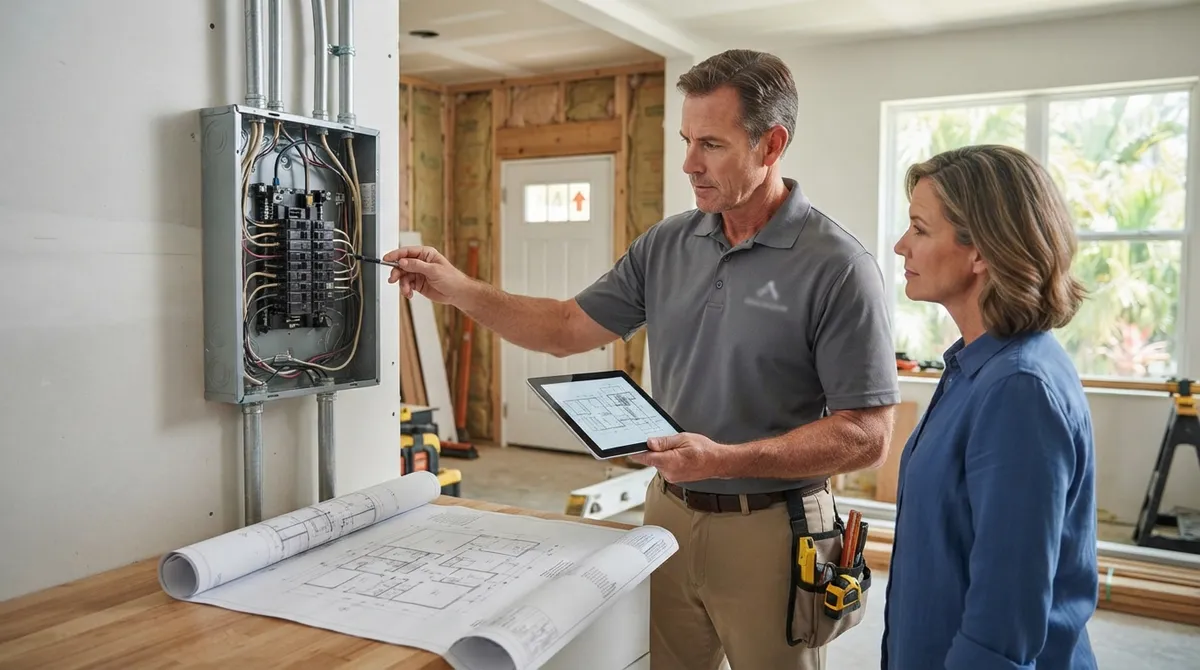
It can feel like paperwork for paperwork's sake, but permits exist for a reason. Florida's building codes address wind resistance, flood exposure, electrical safety, fire protection, and structural integrity. Inspections are how a building department confirms the work meets the code.
When work skips that process, nobody has verified that it is safe. That is why a building department will not simply stamp an approval because the work already exists. Under §553.79, the enforcing agency reviews required plans and specifications, and approval after construction is not automatic merely because the work is in place.
Unpermitted work also tends to surface at the worst times:
- During a home sale, appraisal, or home inspection
- When a lender or title company asks for permit history
- During an insurance claim or renewal
- After a neighbor complaint or code enforcement visit
- While applying for a Certificate of Occupancy or Certificate of Use
The good news is that most of these situations are fixable when you act early and work with the department rather than around it.
How the After-the-Fact Process Typically Works
While every jurisdiction is a little different, most follow a similar rhythm. Here is a general roadmap you can expect:
- Confirm the work required a permit. Not every small task needs one, and exemptions vary locally. Do not assume minor work is exempt statewide.
- Identify the authority having jurisdiction. The city and the county can have different departments, and lines near city borders can be tricky. Our building department lookup tool helps point you to the right office.
- Check for open or expired permits. Sometimes the work was permitted once and the permit simply lapsed. You can run an open permit search to see what is on record.
- Gather documentation. This often includes photos, a site plan, as-built drawings, and sometimes engineer letters or sealed drawings.
- Submit the application. The department reviews the packet against the Florida Building Code and local requirements.
- Complete inspections. Inspectors verify what they can see, and may require more evidence for what they cannot.
- Make corrections if required. Failed items must be fixed and re-inspected.
- Close out the permit. Once approved, the permit is finaled and the record is cleaned up.
For a more step-by-step version, see how to get an after-the-fact permit in Florida.
What Documents Will the Building Department Ask For?
The exact list depends on the scope of the work and the jurisdiction. Still, most departments want to see enough to prove the work is code compliant and safe. Common items include:
| Document | Why It Is Requested | Typically Needed For |
|---|---|---|
| As-built drawings | Shows what was actually built | Additions, enclosures, remodels |
| Site plan or survey | Confirms setbacks and placement | Structures, pools, sheds, fences |
| Engineer letter or sealed drawings | Verifies structural or system compliance | Roofs, trusses, load-bearing changes |
| Photos of the work | Documents conditions and materials | Nearly all projects |
| Product approvals or NOAs | Proves materials meet wind-load rules | Windows, doors, roofing |
| Contractor or owner-builder information | Identifies the responsible party | All permits |
If drawings are part of your packet, our team can help with as-built drawings and engineer letters, with sealed work produced in house.
Will the Building Department Make Me Open Walls?
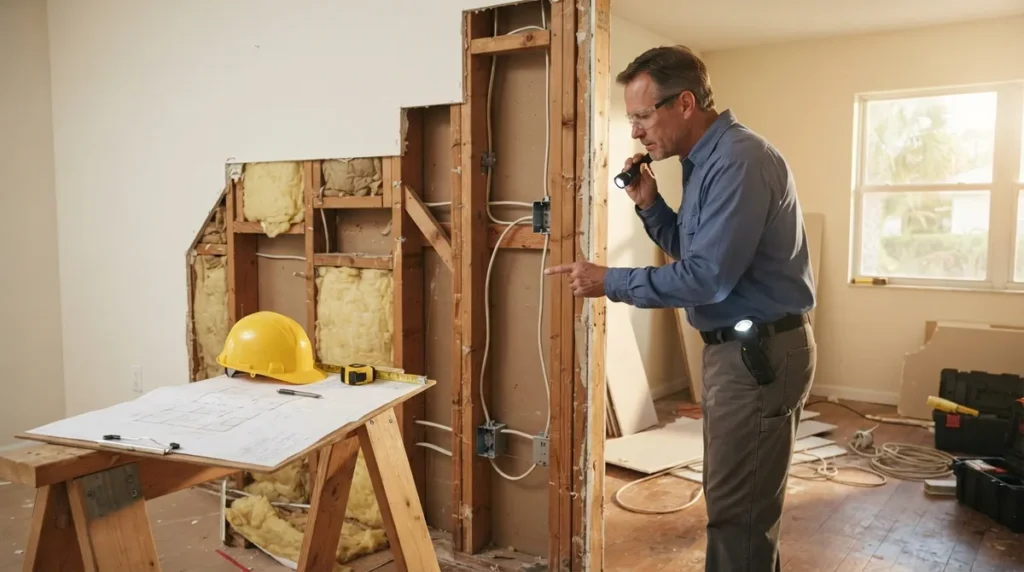
This is the question that worries people most, and it deserves an honest answer. The building official may require concealed work to be exposed or otherwise made available for inspection. If framing, wiring, plumbing, or other regulated work has been covered up, the department may ask for selective demolition, testing, or other acceptable documentation.
How much exposure is required is decided by the local official, not by a consultant and not by the statute alone. In many cases a few strategic openings, photos, or an engineer's field verification can satisfy the inspector. In other cases, more is needed. Being upfront and organized goes a long way here.
Plenty of owners worry about the worst-case scenario of tearing everything out. It does happen in some situations, but many projects are legalized with limited exposure and targeted corrections. To explore that fear in more detail, read will you really have to demolish unpermitted work.
How Much Does After-the-Fact Permitting Cost?
Florida Statutes §553.79 authorizes an additional fee for work begun before the required permit is obtained, but it does not set a statewide dollar amount. The surcharge, if any, comes from the local fee schedule. That means two homeowners with identical projects in different jurisdictions could pay different amounts.
Your total cost usually comes from several buckets:
- Standard permit fees based on project valuation or scope
- Added penalty or double-fee provisions if your department charges them
- Drawings and engineering such as as-builts, sealed plans, or letters
- Corrections needed to meet the code
- Exposure and repair if walls or finishes must be opened and restored
Because pricing is so local, ask your department for its current fee schedule before you budget. For more context, take a look at our breakdown of after-the-fact permit costs in Florida.
Common Reasons After-the-Fact Applications Stall
Most delays are avoidable. These are the patterns we see again and again:
| Problem | What It Looks Like | How to Avoid It |
|---|---|---|
| Filing with the wrong office | City and county overlap confusion | Confirm jurisdiction before applying |
| Incomplete drawings | Missing dimensions or details | Use accurate as-builts with proper scale |
| No engineering support | Reviewer questions structural safety | Include a sealed engineer letter where needed |
| Ignoring comments | Review letters go unanswered | Respond to every comment, in writing |
| Hidden work not addressed | Inspector cannot verify concealed items | Plan for exposure or acceptable documentation |
Revision cycles can drag on if comments are not addressed cleanly. Our revisions and resubmittals service exists for exactly that reason.
What Else Might You Need Besides a Building Permit?
The building department is only one piece of the puzzle. Depending on the project, other approvals may apply, including zoning, floodplain review, fire department sign-off, environmental permits, and homeowners association approval. A shed, pool, or seawall can trigger several of these at once.
Flood zones deserve special attention. Additions or improvements to older coastal homes can raise substantial improvement questions. If that sounds familiar, our article on the FEMA 50 percent rule in Florida is worth a look.
Consequences of Leaving Unpermitted Work Alone
It is tempting to hope nobody notices. Unfortunately, unresolved violations can follow a property for years. Depending on the jurisdiction and circumstances, a department may require corrections, extra inspections, or removal of noncompliant work, and unresolved issues can move into local code enforcement procedures.
Practical consequences also show up in real life:
- Delayed or collapsed closings when a buyer's inspector flags the work
- Lender or title company holds
- Insurance complications after a claim
- Trouble obtaining a Certificate of Occupancy or Certificate of Use
Contacting the building department promptly, rather than assuming a retroactive application will smooth over every issue, is the wiser approach. Learn more in our guide to the penalty for building without a permit in Florida.
Tips for Different Audiences
For Homeowners and Residential Property Owners
Start with a simple question: what was done, and when? Gather any receipts, photos, or contractor info you have. If a prior owner did the work, you can still resolve it. Our homeowner resources explain how we help owners get oriented.
For General Contractors and Design Trade Professionals
If a crew skipped a permit or a client changed scope mid-job, the sooner you engage the department, the better the relationship. Clean as-builts and clear documentation help reviewers say yes. See how we support general contractors with filing, tracking, and plan review coordination.
For Solar Companies
Installs completed before permit issuance can create interconnection and inspection headaches. Structural and electrical documentation matters, and so does timing. Our solar contractor support covers code-compliant documentation and permitting coordination.
For Real Estate Professionals
A permit surprise can derail a closing. Early research can save a deal. Our realtor closing support helps surface permit issues before they become last-minute emergencies.
How a Florida Permitting Professional Helps
You are allowed to handle the process yourself, and some owners do. But after-the-fact work often involves sorting out jurisdiction, building accurate drawings, coordinating licensed professionals, answering review comments, and tracking inspections. That adds up quickly.
A permitting professional can identify the right authority, assemble the application and plans, coordinate engineering where required, and track the permit through closeout. One important note: the local building official, not the consultant, decides whether the work complies and what evidence or corrective work is acceptable. A good partner will be upfront about that.
At 1 Contractor Solutions, we operate as Florida's outsourced permitting department across all 67 counties. Our drafting and engineering are in house, and our own engineer seals the work, so when a reviewer raises a flag we can fix it without waiting on an outside consultant. We even handle after-the-fact and expired permits, the files many firms decline. If you'd like to hear what clients say, you can visit us on Google and read 1 Contractor Solutions reviews.
A Few Local Realities Worth Knowing
Florida is large and varied, and local practice reflects that. Coastal counties may emphasize wind and flood requirements, while others weigh zoning and setbacks more heavily. If you work across multiple counties, expect different forms, different portals, and different reviewers.
If you are in a major market, you may find these local pages helpful: Hillsborough County, Miami-Dade County, and Broward County. You can also browse the full list of Florida counties we serve.
Your Next Steps
If you are staring at an unpermitted project and feeling unsure, here is a calm, simple plan:
- Pause any further work on the affected area.
- Confirm which department has jurisdiction.
- Check for open, expired, or prior permits on the property.
- Collect photos, receipts, and any existing drawings.
- Decide whether you need as-builts, an engineer letter, or both.
- Contact the building department, or have a professional do it for you.
If a stop work order or closing deadline is looming, our urgent permit rescue team can help you move quickly.
Final Thoughts
After-the-fact permitting with a Florida building department is very doable. It takes the right documents, honest communication, and a little patience. The most important thing is to act rather than hope the problem goes away. The earlier you engage the department, the more options you tend to have.
Ready to get unstuck? Get a free quote and let our team sort out your jurisdiction, plans, and filing. You can also follow us on LinkedIn or follow us on Facebook for more Florida permitting tips. We answer 24/7, respond within 30 minutes, and se habla español. Permits approved. Projects moving.
FAQs
How do I get an after-the-fact building permit in Florida?
Start by confirming which building department has jurisdiction, then gather photos, as-built drawings, and any engineering the work requires. Submit the application, pass the inspections, and make any corrections the reviewer asks for. A permitting professional can handle the paperwork and tracking if you would rather not.
How much does an after-the-fact permit cost in Florida?
Florida law allows an additional fee for work started before a permit, but the amount is set locally, so it varies by jurisdiction. Your total usually includes standard permit fees, any local surcharge, drawings or engineering, and the cost of corrections. Ask your building department for its current fee schedule.
Can a Florida building department make me open walls for inspection?
Yes, the building official may require concealed work to be exposed or otherwise made available for inspection. Sometimes photos, limited openings, or an engineer's field verification are enough. The local department decides what evidence it will accept.
Can unpermitted work be approved if it meets the Florida Building Code?
Often it can, but approval is not automatic just because the work is in place. The department still reviews plans, inspects the work, and may require corrections before it signs off. Meeting the code and proving it are two different steps.
Should I hire a Florida permitting service for unpermitted construction?
It is a smart move when the project involves multiple trades, structural questions, or a tight deadline like a closing. A permitting service can sort out jurisdiction, prepare drawings, coordinate engineering, and track inspections. Just remember the building official makes the final call on compliance.
We do this work every day across all 67 Florida counties. Call (866) 314-6931 and we will tell you what your situation actually requires — including when you do not need us.
Related services
Permit Facilitation & Filing
You have a crew scheduled, a client asking for dates, and a permit sitting somewhere in a queue you cannot see. We file it, w…
See the servicePlan Review Coordination
A permit in plan review is not one queue. On a commercial project it can be six queues, each with its own reviewer, its own c…
See the serviceReady to get your permit moving?
One call tells you which jurisdiction controls your project, what it will take, and what it will cost. Most of the time we can scope it on the phone.