
Blog
Why Does Flip House Unpermitted Work in Florida Bite Back?
Unpermitted work can stall a Florida flip. Learn how to check permit history, legalize work after the fact, and handle disclosure with confidence.
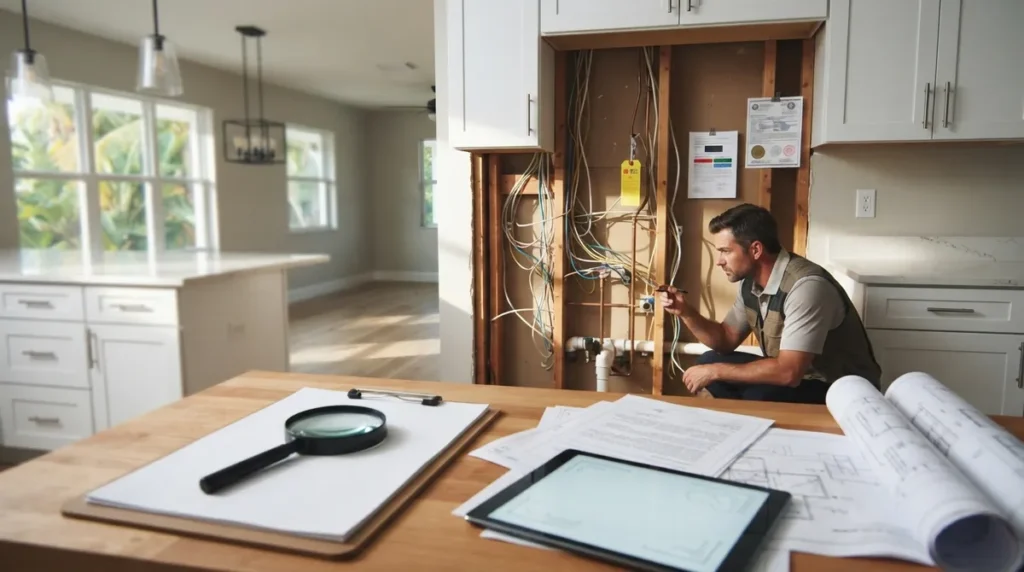
Key Takeaways
-
Research permit history before purchasing a flip property by checking the local building department's portal and calling to verify open, expired, or unclosed permits—discovering unpermitted work before closing saves thousands in legalization costs.
-
Unpermitted work on flips delays closings, triggers lender friction, and increases carrying costs; resolve permit issues before listing to avoid negotiating with buyers or having inspectors discover hidden defects.
-
Florida allows after-the-fact permits for most unpermitted work, but each city or county sets its own process, fees, and documentation requirements—expect to supply plans, pass inspections, and correct code violations before approval.
-
Sellers must disclose known unpermitted work under Florida's Johnson v. Davis rule since it materially affects value; consult a real estate attorney about your specific transaction to avoid legal exposure.
-
Budget for legalization costs including permit fees, as-built drawings, engineering seals, wall exposure inspections, and corrective construction—treating permitting as a line item rather than an afterthought protects your flip's timeline and margin.
-
Hire licensed contractors who pull permits upfront for your rehab scope; work valued under $7,500 may have exemptions, but relying on this without confirming with your building department is risky on multi-scope flips.
Picture this: you found a great fixer-upper, finished the rehab, staged it beautifully, and got an offer within days. Then the buyer's inspector notices a kitchen remodel with no permit on file. Suddenly the closing is stalled, the lender is asking questions, and your carrying costs are ticking upward every day. If that scenario makes your stomach flip, you're in good company. Investors deal with this more often than you'd think.
Flip house unpermitted work in Florida is one of the most common (and most fixable) profit killers in real estate investing. Whether you inherited someone else's shortcuts or skipped a permit yourself to save time, the good news is that there's a path forward. In 2026, Florida investors have more tools than ever to research permit history, legalize completed work, and protect their margins.
In this friendly guide, we'll walk through why unpermitted work causes so many headaches on a flip, how to check a property before you buy, what an after-the-fact permit really involves, and how to handle disclosure when it's time to sell. Let's get your next flip closing on schedule.
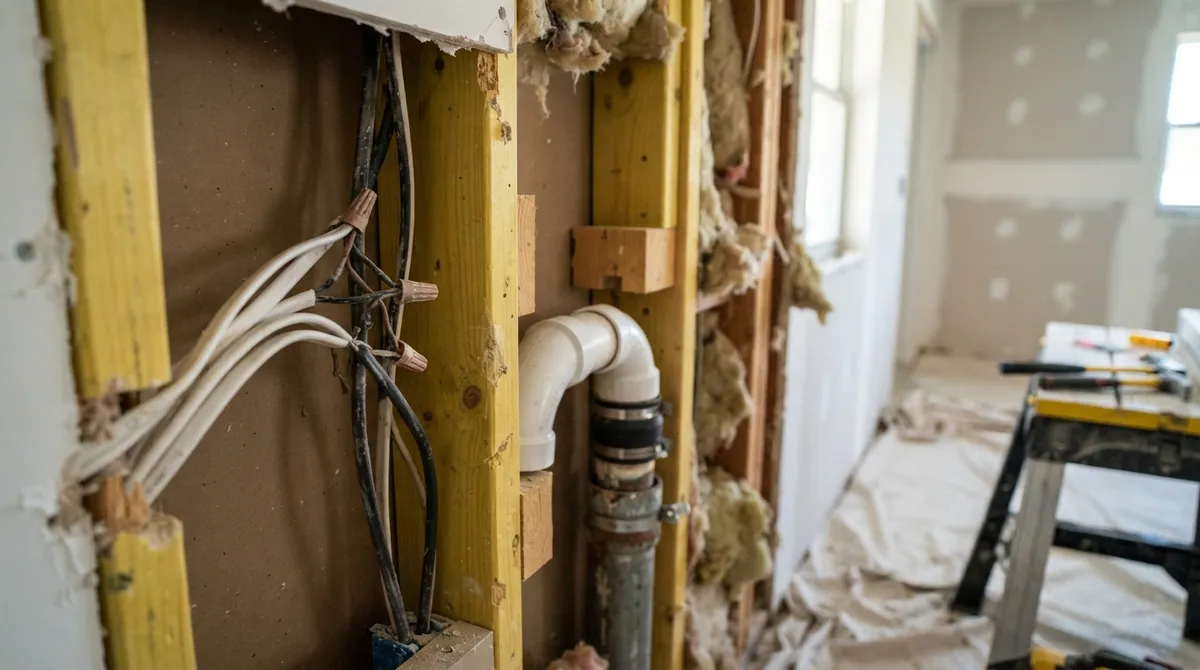
What Counts as Unpermitted Work on a Florida Flip?
Unpermitted work is any construction, alteration, repair, or demolition that legally required a permit but never received one. On a flip, that could be a wall removed without engineering, a bathroom added with DIY plumbing, an electrical panel upgrade done off the books, or a roof replaced without a permit.
Florida Statutes §553.79 generally requires a permit before covered construction, alteration, repair, or demolition begins, and the local building department is the enforcing agency. Because enforcement is handled locally, the exact rules, forms, and fees depend on the city or county where the property sits.
The Under-$7,500 Exemption: Handle With Care
You may have heard that small jobs don't need permits. The current text of §553.79 does include an exemption for an owner of a single-family dwelling, or the owner's contractor, for work valued at less than $7,500. But it is a limited statutory exemption, not a free pass. It doesn't erase other applicable requirements, and local interpretation varies. On a flip, where multiple small scopes often add up to one big renovation, relying on that exemption without checking with the building department is a risky bet.
Common Flip Scopes That Trigger Permit Trouble
- Structural changes such as removing or altering walls, headers, or roof framing
- Electrical work including panel changes, new circuits, and rewiring
- Plumbing additions, relocations, and water heater replacements
- HVAC replacements or duct modifications
- Roof replacements and window or door changes
- Room additions, garage conversions, and enclosed patios
If your flip includes any of these, plan on a permit conversation early. It's far cheaper than a legalization project later.
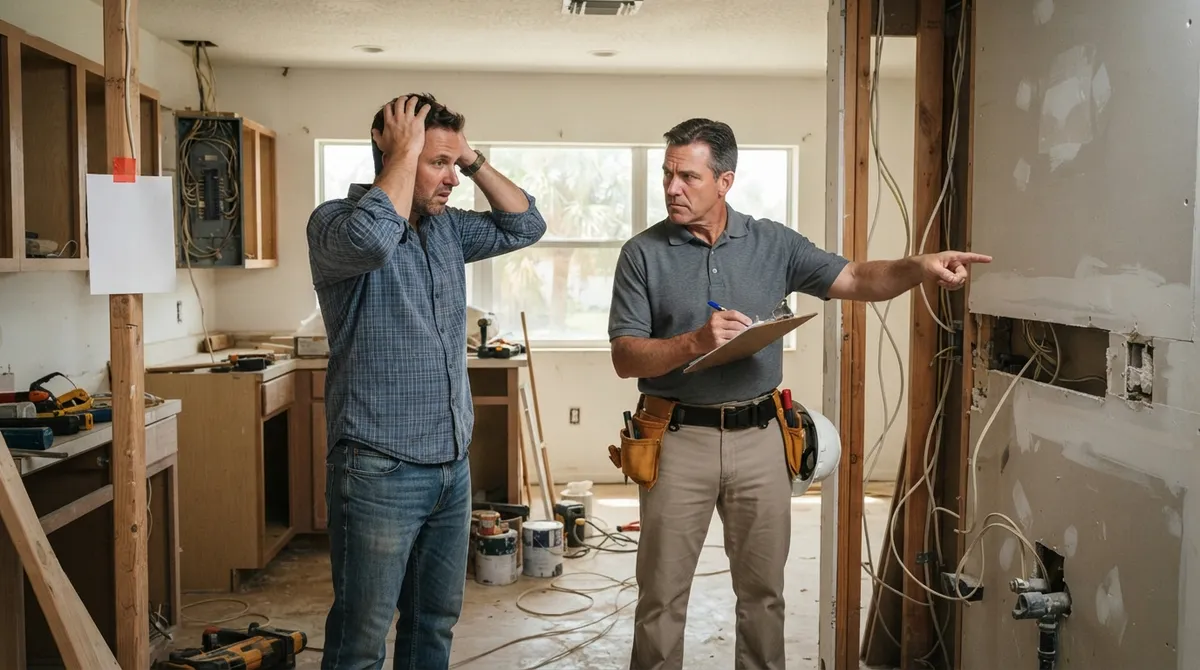
Why Unpermitted Work Hurts Flippers More Than Anyone
Long-term owners can sometimes live with an unpermitted upgrade for years. Flippers can't. Your whole business model depends on speed, predictable costs, and a clean sale. Unpermitted work attacks all three.
- Financing friction. Buyers' lenders and appraisers may flag improvements that don't match the permit record, which can delay or derail a loan.
- Inspection surprises. A buyer's inspector or the city may spot work that doesn't line up with recorded permits.
- Cost overruns. Fixing problems after the fact usually costs more than doing it right the first time.
- Timeline drag. Every week spent legalizing work is another week of taxes, insurance, utilities, and loan interest.
- Legal exposure. Sellers have disclosure duties, which we'll cover below.
Notice that most of these costs are avoidable with a little upfront research. That's where smart due diligence comes in.
How Do You Find Out If a Property Has Unpermitted Work?
The best time to discover unpermitted work is before you close on the purchase. Here's a friendly, practical checklist you can follow on any fixer-upper.
- Identify the authority having jurisdiction. Near city lines, the controlling department isn't always obvious. Our building department lookup can help you confirm who actually has authority.
- Pull the permit history. Search the local permit portal for the address, and try our open permit search tool as a starting point.
- Compare records to reality. Walk the property with the permit list in hand. Does the finished basement, added bath, or new roof appear in the records?
- Call the building department. Online records may not tell the full story, so a quick phone call can uncover expired, open, or unclosed permits.
- Request the current checklist and fee schedule. Knowing the requirements upfront lets you budget accurately.
No Permit vs. Open, Expired, or Unclosed Permit
These situations sound similar but are handled differently. Understanding which one you have saves time and money.
| Situation | What It Means | Typical Path Forward |
|---|---|---|
| No permit on record | Work was completed without any permit being issued | Apply for an after-the-fact permit with your local building department |
| Open permit | A permit was issued but never finaled | Complete remaining inspections and close it out |
| Expired permit | The permit lapsed before final approval | Renew, reinstate, or reapply per local rules |
| Unclosed permit | Inspections were done in part but never completed | Schedule outstanding inspections and correct any issues |
If you're staring at an expired or open permit, our guide on how to close an expired permit in Florida walks through the process, and you can also read what to do when an open permit is found at closing.
Can You Legalize Unpermitted Work After the Fact?
In most cases, yes, and this is the part that should make you feel better. Florida doesn't have a single statewide after-the-fact permit process. Instead, your city or county building department determines the application, plans, inspections, fees, and acceptable evidence.
Here's the important expectation to set: an after-the-fact permit does not automatically approve completed work. Generally, the owner applies for the permit that should have been obtained, supplies requested plans or records, and completes the required inspections and corrections before the permit can be closed. Think of it as going through the normal permit process in reverse, with extra scrutiny on the parts nobody could see being built.
Will Inspectors Make You Open Walls?
Sometimes, yes. Inspectors may require concealed work, such as wiring, plumbing, or structural connections, to be exposed so they can verify it. Depending on the jurisdiction and the work involved, the building department may also consider engineering documentation or other evidence in place of (or in addition to) exposure. Acceptance isn't guaranteed, so it's smart to ask early what your department will take.
This is where in-house engineering makes a real difference. When a reviewer flags something, having engineer letters, as-built drawings, and structural engineering under one roof keeps the process moving instead of stalling while you wait for an outside consultant to call back.
What Documents Might You Need?
- As-built drawings or a sketch showing what was actually constructed
- Site plans when the footprint or setbacks are affected
- Engineer letters or sealed drawings for structural, electrical, or mechanical work
- Product approvals for items like windows, doors, and roofing materials
- Photos of the work and any available contractor invoices
- The department's completed application and fee payment
Requirements differ from one jurisdiction to the next, so treat this list as a starting point rather than a guarantee. For a deeper walkthrough, see our overview of how to legalize unpermitted work in Florida.
What Does It Cost to Legalize Unpermitted Work?
Let's be honest and upfront: there's no reliable statewide fee or processing-time figure for after-the-fact permits. Fees, documentation rules, and review timelines are set or administered locally, and they vary by jurisdiction. Anyone who quotes you a single flat number for all of Florida is guessing.
What we can tell you is what drives the total cost of legalizing a flip's unpermitted work:
| Cost Driver | Why It Matters |
|---|---|
| Permit and penalty fees | Set locally; some departments charge additional fees for work done without a permit |
| Plans and drafting | As-built or permit drawings may be required to document what exists |
| Engineering | Sealed letters or drawings may be needed for structural, electrical, or mechanical work |
| Exposure of concealed work | Opening walls or ceilings and restoring finishes adds labor and materials |
| Corrective construction | Anything that doesn't meet current code must be fixed before final approval |
| Carrying costs | Every extra week adds interest, taxes, insurance, and utilities |
For a closer look at budgeting, check out our breakdown of after-the-fact permit costs in Florida.
Do You Have to Disclose Unpermitted Work When Selling a Flip?
This is the question that keeps many investors up at night, so let's tackle it gently. Florida sellers have a disclosure duty rooted in the Florida Supreme Court's decision in Johnson v. Davis, 480 So. 2d 625 (Fla. 1985). Under that material-fact rule, known facts that materially affect a property's value and are not readily observable must be disclosed to the buyer.
Unpermitted work you know about can fall squarely into that category, particularly if it's hidden behind finished walls. An as-is sale does not by itself eliminate the duty to disclose known hidden material conditions. Since every transaction is different, it's wise to speak with a real estate attorney about your specific situation.
The takeaway for flippers is refreshingly simple: resolving permit issues before you list is almost always easier than negotiating around them after a buyer finds them. If you're already in contract and hit a snag, our article on what disclosures are required for unpermitted work in Florida is a helpful next read, along with this guide on whether a permit hold can delay a Florida real estate closing.
How Should Investors Build Permitting Into Their Flip Strategy?
The most profitable flippers treat permitting as a line item, not an afterthought. A little planning goes a long way toward protecting your timeline and your margin.
- Research before you make an offer. Compare the permit history with the visible improvements and factor any gaps into your purchase price.
- Budget for legalization. If you spot unpermitted work, price in documentation, inspections, possible exposure, and corrective construction.
- Pull permits for your own scope. Get the right permit for your rehab before work begins, and make sure it gets finaled.
- Hire licensed contractors who pull permits. If someone tells you they'll handle it later, read what happens when a homeowner said they would pull the permit.
- Close out every permit. An open permit can be just as troublesome as no permit at all when it's time to sell.
- Keep a clean file. Save permits, final inspection records, and sealed documents for your buyer and their lender.
Working with a team that handles permit facilitation and filing, plan review coordination, and realtor and closing support can take a huge amount of stress off your plate. Investors and agents can find more on how we help at our page for realtors and title companies.
Where Does 1 Contractor Solutions Fit In?
1 Contractor Solutions is Florida's outsourced permitting department. We're not a construction contractor. We're the team investors and contractors call when the permit is the thing standing between them and a closing or a scheduled crew. We handle after-the-fact and expired permits, prepare the plans, file the application, track it, work every reviewer comment, and carry it through approval and closeout.
Because our drafting and engineering are in house and our own engineer signs and seals the work, a reviewer's comment turns into a quick fix rather than a waiting game. We work across all 67 Florida counties, including busy investor markets like Hillsborough County, Miami-Dade County, and Orange County. If a closing is at risk, our urgent permit rescue service is built for exactly that moment. Curious how our customers feel? You can visit us on Google — 1 Contractor Solutions to read reviews, and you can also follow us on LinkedIn or follow us on Facebook for more Florida permitting tips.
For extra reading on the law itself, you can review the current text of Florida Statutes §553.79 on Online Sunshine, then confirm how your local department applies it.
Ready to Keep Your Next Flip on Schedule?
Unpermitted work doesn't have to sink a flip. With early research, honest budgeting, and the right team in your corner, most permit problems can be documented, inspected, corrected, and closed out. The key is acting early, before a buyer, lender, or inspector finds the issue for you. If you're staring down a permit gap on a Florida flip right now, take a deep breath and reach out. We'd love to help you turn that headache into a closed file. Get a free quote today, and let's get your project moving.
FAQs
How do I find out whether a flipped house in Florida has unpermitted work?
Start by identifying the correct building department, then search its permit portal and compare the records to the actual improvements on site. It's also smart to call the department directly, since online records may not show open, expired, or unclosed permits.
Can I get an after-the-fact permit for renovations in Florida?
In most cases you can apply for the permit that should have been obtained originally. Each city or county sets its own process, so expect to supply plans or records, pass inspections, and make any needed corrections before the permit closes.
Will Florida inspectors make me open walls to inspect unpermitted work?
Sometimes they will, especially for concealed wiring, plumbing, or structural connections. Depending on the jurisdiction, engineering documentation or other evidence may be considered too, but acceptance isn't guaranteed, so ask your department early.
Do I have to disclose unpermitted renovations when selling a Florida house?
Under the Johnson v. Davis material-fact rule, sellers must disclose known facts that materially affect value and aren't readily observable. An as-is sale doesn't automatically remove that duty, so talk with a real estate attorney about your specific deal.
How much does an after-the-fact permit cost in Florida?
There's no single statewide figure because fees, documentation rules, and timelines are set locally and vary by jurisdiction. Your total will also depend on drafting, engineering, any exposure of concealed work, and corrective construction.
We do this work every day across all 67 Florida counties. Call (866) 314-6931 and we will tell you what your situation actually requires — including when you do not need us.
Related services
Permit Facilitation & Filing
You have a crew scheduled, a client asking for dates, and a permit sitting somewhere in a queue you cannot see. We file it, w…
See the servicePlan Review Coordination
A permit in plan review is not one queue. On a commercial project it can be six queues, each with its own reviewer, its own c…
See the serviceReady to get your permit moving?
One call tells you which jurisdiction controls your project, what it will take, and what it will cost. Most of the time we can scope it on the phone.