
Blog
13 Owner Builder Permit Miami Facts to Know in 2026
Thinking about being your own contractor? Learn 13 key facts about the owner builder permit Miami process, from jurisdiction to inspections.
Key Takeaways
-
Miami is not one permitting authority: Miami-Dade has 35 municipalities, and properties inside a city apply through that city's building department while unincorporated areas go through the County.
-
Florida Statute § 489.103 allows an owner to act as their own contractor only for a one-family or two-family residence or farm outbuilding on their own property, not built for sale or lease.
-
Owner-builders must personally appear and sign the permit application and disclosure, and may face a local interview, exam, or validation appointment before the permit is issued.
-
Florida law generally bars selling or leasing an owner-built residence for one year after completion, subject to statutory exceptions, so check before listing or renting.
-
An owner-builder cannot hire an unlicensed person to act as contractor or supervise the work, though licensed subcontractors can pull permits for their own portions.
-
Owner-builder status is not a waiver: inspections are required before work is covered, and approved plans and the permit must be kept available at the site.
Picture this: you've got a great plan for your Miami home, a quote from a contractor that made your eyebrows climb, and a little voice saying, "Could I just do this myself?" You're not alone. Plenty of homeowners look into an owner builder permit in Miami every year, hoping to take the wheel on their own project.
Here's the friendly truth: it can be a great option, but it comes with real responsibility. The permit doesn't skip plan review, code requirements, or inspections. It simply puts you in the contractor's seat. And because "Miami" isn't a single permitting authority, the rules depend on exactly where your property sits.
In this guide, we'll walk through 13 practical facts, from jurisdiction and eligibility to validation appointments, inspections, and the one-year sale rule. Think of it as a chat with a knowledgeable neighbor who has seen the paperwork up close. Let's dig in!
1. "Miami" Is Not One Permitting Authority
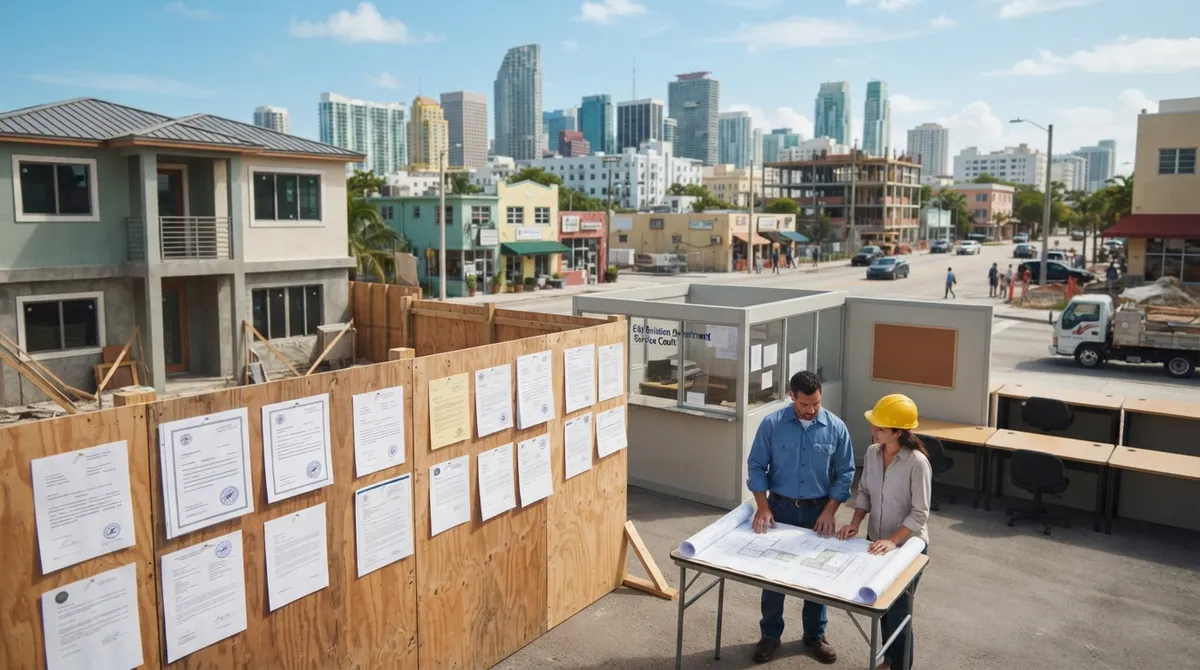
This is the first surprise for most owners. Miami-Dade County reports that it has 35 municipalities, and each has its own building official overseeing permits and inspections. Properties inside a city generally apply through that city's building department. Unincorporated properties apply through the County.
So before you download a single form, confirm your jurisdiction by property address or folio number. Near city lines, the answer isn't always obvious. If you want a quick sanity check, our guide to which Florida jurisdiction reviews your project can help.
| Where Your Property Is | Who Generally Handles Your Permit | What to Verify |
|---|---|---|
| Inside the City of Miami | City of Miami building department | City owner-builder program rules |
| Another Miami-Dade municipality | That city's building department | Local procedures and forms |
| Unincorporated Miami-Dade | Miami-Dade County | County owner-builder process |
2. Florida Statute § 489.103 Sets the Ground Rules
The state exemption comes from Florida Statute § 489.103. In general, it allows an owner to act as their own contractor for a one-family or two-family residence or a farm outbuilding on the owner's property. The work must be for your own use or occupancy, and it can't be built or substantially improved for sale or lease.
There's also a separate provision for certain owner-used commercial buildings costing no more than $75,000. That $75,000 ceiling applies only to that commercial exemption, not to the general residential owner-builder path. Always read the current statute before you apply.
3. You Must Appear and Sign Personally
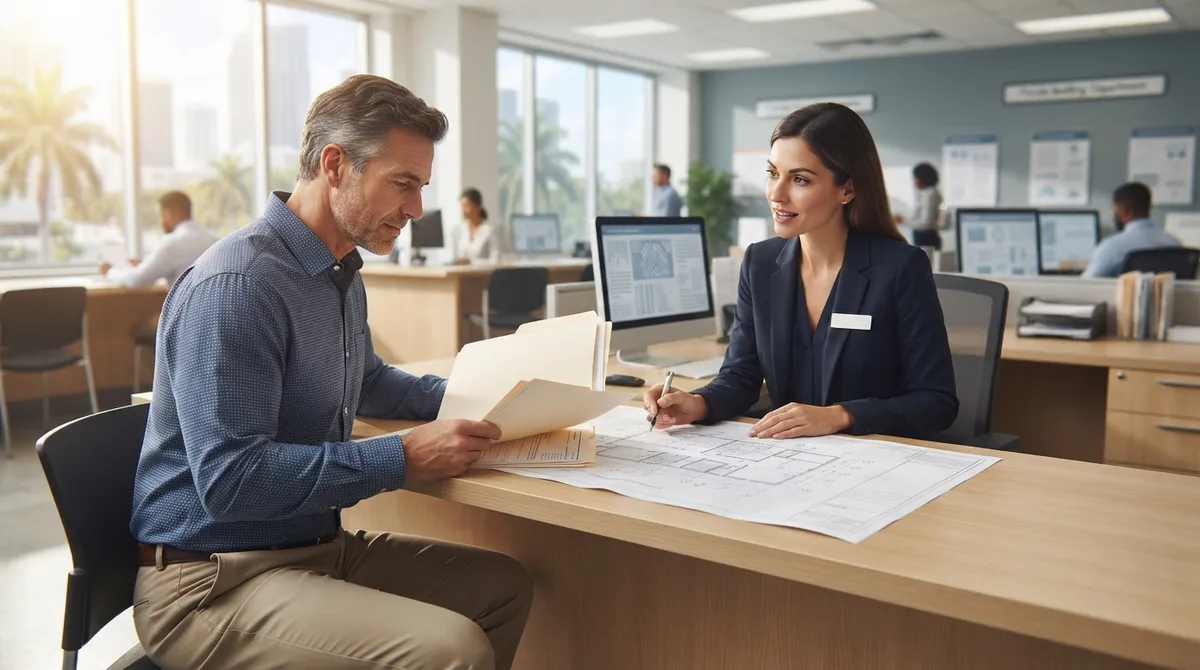
No sending a cousin, a friend, or a helpful handyman. An owner-builder must personally appear and sign the permit application and complete the statutory disclosure. Local agencies can add their own requirements to show you understand your legal obligations.
Those local steps may include an interview, a test, or a validation appointment. It's a lot less scary than it sounds, but it does mean you'll want to block off time on your calendar.
4. Miami-Dade County Has a Specific Sequence
Here's the County's general flow, as published:
- The owner submits the permit application and plans.
- The plans go through review and approval.
- After plan approval, the owner-builder validation is scheduled.
- The permit is issued only after the owner passes validation.
The County also states that plans prepared by a design professional must be provided electronically with digital signatures and seals. If your project needs professional drawings, plan for digital delivery from the start. Our team can help with plans, drafting and engineering built for exactly this kind of filing.
5. The City of Miami Has Its Own Program
If your home is within City of Miami limits, you'll follow the City's published program. It's limited to owner-occupied one-family and two-family residential properties. Published requirements include:
- Proof of ownership in the individual owner's name
- Proof of residence
- An in-person interview
- A short examination
Please don't assume these City-specific rules apply identically elsewhere in Miami-Dade. A neighboring municipality may ask for something different, so confirm with the department that actually has authority over your address.
| Step | Miami-Dade County (Unincorporated) | City of Miami |
|---|---|---|
| Eligibility focus | Owner-builder per state statute | Owner-occupied one- and two-family only |
| Owner action | Submit application and plans, then validation | Interview and short exam |
| Ownership proof | Verify with County | Individual owner's name required |
| Design documents | Electronic, digitally signed and sealed | Verify current City requirements |
6. You Take On Contractor-Like Responsibilities
Becoming an owner-builder is a bit like being promoted to site boss overnight. You become responsible for direct, onsite supervision of the work, plus code compliance and inspections. That's a real commitment of time and attention, especially on projects with multiple trades.
If that sounds like more than you want to juggle, you're in good company. Many owners decide a hybrid approach works best, and our owner-builder permit support exists for exactly that reason.
7. Hiring Rules Matter More Than You Think
Florida's disclosure warns that an owner-builder may not hire an unlicensed person to act as a contractor or supervise the work. In plain terms: you can hire licensed professionals, but you can't quietly use an unlicensed "project manager" to run the job for you.
Licensed subcontractors should obtain permits for their own portions of the work where required. Before anyone starts, verify each license and confirm who is pulling which permit. Missteps here are a common source of trouble, and we've seen how unlicensed contractor mistakes can snowball.
8. A Permit Is Still Required for Permitted Work
Owner-builder status is not a waiver. You still need permits for work that falls under permitting rules, plus plan review, zoning or other approvals, inspections, and compliance with the applicable building codes.
Miami-Dade County notes that inspections are required before construction is covered, and that approved plans and the permit must be available at the site. Covering work early is a classic way to get a failed inspection and a headache. If it happens, see how to handle covered work that missed inspection.
9. Know Your Inspection Schedule
Miami-Dade County lists inspection hours as 8 a.m. to 3:30 p.m., Monday through Friday, on its permit information page. Hours and scheduling procedures can change, and your city may run its own system, so verify with the relevant jurisdiction before building your timeline around them.
A smart habit: schedule inspections as soon as you reach each milestone, and keep a simple log of dates, inspectors, and results. Future-you will say thanks.
10. Prepare Your Documents Before You Apply
A tidy application moves faster. Here's a friendly checklist to gather first:
- Proof of ownership (in your individual name where required)
- Proof of residence, if your jurisdiction asks for it
- Property address and folio number
- Site plan and construction drawings, with digital seals where design professionals are involved
- Contractor license details for any subcontractors
- A scope-of-work description that matches your drawings
For structural or electrical work, drawings often need a design professional's seal. Wondering who handles that? Read who seals structural drawings for Florida permits.
11. The One-Year Sale and Lease Rule
This one catches people off guard. Florida law generally restricts the sale or lease of an owner-built residence for one year after completion, subject to statutory exceptions. The statute includes an exception for completing permit requirements when the listed contractor substantially completed the project, subject to local permitting-agency approval and determination.
If there's any chance you'll sell soon, talk through your plans before you apply. Investors and flippers especially should read our guide on selling an owner-builder home within a year, since this exemption is built for owners who live in or use the property.
12. Skipping the Permit Costs More Than It Saves
It's tempting to think, "I'll just do it quietly." But unpermitted work can surface at sale, during an insurance claim, or through a neighbor's complaint. Fixing it later is possible, yet it's usually slower and pricier than permitting properly in the first place.
If you've already inherited or built something without a permit, take a breath. There are paths forward, and you can learn how legalizing unpermitted work in Florida typically works. And if your owner-builder permit gets rejected, our guide to denied permit help in Miami shows how to fix and resubmit.
| Approach | Best For | Main Trade-Off |
|---|---|---|
| Owner-builder permit | Owner-occupied one- or two-family homes | You carry supervision and compliance duties |
| Hire a licensed contractor | Complex or multi-trade projects | Higher labor and overhead cost |
| Owner-builder plus permit support | Owners who want control without the paperwork stress | Service fee for expert help |
13. You Don't Have to Navigate It Alone
The best part? You can be an owner-builder and still have a pro in your corner. 1 Contractor Solutions works as Florida's outsourced permitting department. We handle filing, tracking, reviewer comments, revisions, and closeout, backed by in-house drafting and engineering with sealed drawings. That means when a reviewer flags something, we fix it rather than waiting on an outside consultant.
We also work across all 67 Florida counties and have filed in more than 400 municipalities, so we know which office really controls your property. Curious what customers say? Visit us on Google — 1 Contractor Solutions to read reviews, or follow us on LinkedIn and follow us on Facebook for Florida permitting tips.
Who Else Benefits From These Rules?
While the owner-builder path is built for homeowners, the lessons apply widely. General contractors can use these facts to explain jurisdiction differences to clients. Real estate professionals and investors should pay close attention to the one-year sale rule and open-permit risks. Solar companies and trade professionals will recognize how much smoother approvals go with clean, sealed documentation. And design professionals will appreciate that digital signatures and seals are now the County's expectation for submitted plans. For an extra layer of Miami-specific context, see our structural plans permit Miami-Dade filing guide.
Final Thoughts
An owner builder permit in Miami can be a smart, rewarding move when you understand what you're signing up for. Confirm your jurisdiction, review Florida Statute § 489.103, prepare your documents, plan for validation, and treat inspections as non-negotiable milestones.
Ready to take the stress out of the paperwork? Reach out and get a free quote from our team. We respond within 30 minutes, day or night, and we'd be happy to help you build with confidence. Built-in extra help is also available through Brain Buzz Marketing for the business side of your growth.
FAQs
How do I get an owner-builder permit in Miami?
First, confirm whether your property falls under Miami-Dade County or a city building department. Then submit the application and plans, personally sign the owner-builder disclosure, and complete any local interview, exam, or validation. The permit is typically issued only after you pass.
Who qualifies for an owner-builder permit in Florida?
Under Florida Statute § 489.103, an owner can generally act as their own contractor on a one-family or two-family residence or farm outbuilding on their own property. The work must be for your own use or occupancy, not built or substantially improved for sale or lease.
Can I sell or rent my home after doing owner-builder work?
Florida law generally restricts selling or leasing an owner-built residence for one year after completion, with statutory exceptions. Check the current statute and your local permitting agency before you list or rent the property.
Can I hire licensed subcontractors under an owner-builder permit?
Yes, you can hire licensed subcontractors, and they should obtain permits for their own portions of the work where required. What you can't do is hire an unlicensed person to act as a contractor or supervise the project.
Do I still need inspections as an owner-builder in Miami?
Absolutely. Owner-builder status doesn't waive plan review, zoning approvals, or inspections. Miami-Dade County says inspections are required before construction is covered, and approved plans and the permit must be available at the site.
We do this work every day across all 67 Florida counties. Call (866) 314-6931 and we will tell you what your situation actually requires — including when you do not need us.
Related services
Permit Facilitation & Filing
You have a crew scheduled, a client asking for dates, and a permit sitting somewhere in a queue you cannot see. We file it, w…
See the servicePlan Review Coordination
A permit in plan review is not one queue. On a commercial project it can be six queues, each with its own reviewer, its own c…
See the serviceReady to get your permit moving?
One call tells you which jurisdiction controls your project, what it will take, and what it will cost. Most of the time we can scope it on the phone.