
Blog
13 Hurricane Repair Permit Mistakes Florida Owners Make
Avoid 13 costly hurricane repair permit mistakes in Florida and learn how after-the-fact permitting works in 2026.
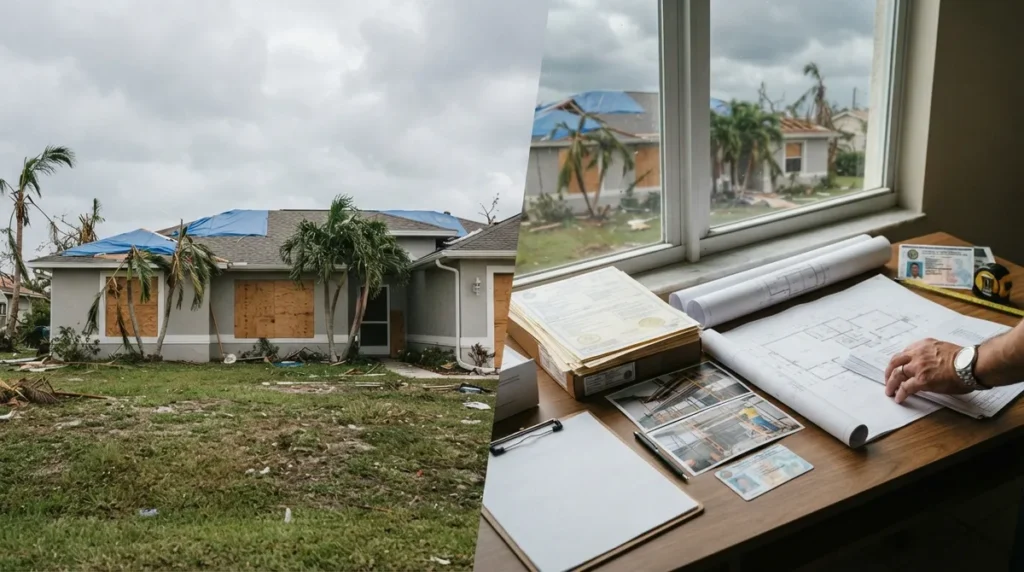
Key Takeaways
-
Florida has no statewide uniform after-the-fact permit process; requirements, forms, fees, and inspections vary by local building department, so contact your specific jurisdiction before assuming any repair is exempt.
-
Emergency conditions and temporary storm protection (tarps, boarding) do not automatically waive permit requirements for permanent replacement work like roofing, windows, structural repairs, or HVAC replacements.
-
Missing or open permits can surface during property sales, refinancing, appraisals, title searches, and insurance claims, so address permitting early rather than waiting until you're under contract or in a refinance.
-
Strong after-the-fact submissions require dated photographs, product approvals, contractor license information, as-built drawings, and sealed engineer letters; vague descriptions and blurry photos typically lead to rejection and delays.
-
Verify contractor licenses with the state before signing any contract and confirm in writing who is responsible for pulling the permit, as Florida law imposes enhanced criminal penalties for unlicensed contracting during declared emergencies.
-
Insurance claim approval and building permits are entirely separate; unpermitted work may not be covered by homeowners insurance, so contact your insurer directly to confirm coverage rather than assuming protection.
Here's a story we hear more often than you'd think. A storm rolls through, the roof is leaking, and a friendly crew shows up the next morning offering to fix everything fast. The repairs get done, the tarps come off, and everyone breathes a sigh of relief. Then, months later, a buyer's inspector, an insurance adjuster, or a code officer asks a simple question: "Where's the permit?"
If that sounds familiar, take a breath. You're far from alone, and it's very fixable. Finding the best hurricane repair after the fact permitting Florida help starts with understanding what went wrong and what the local building department will actually want to see. In 2026, Florida homeowners, contractors, and agents are still cleaning up the paperwork left behind by past storm seasons.
In this friendly guide, we walk through 13 common mistakes that turn a hurricane repair into a permit headache, plus how to fix each one. Whether you're a homeowner, a general contractor, a roofer, a solar installer, or a realtor, you'll find practical steps you can take today.
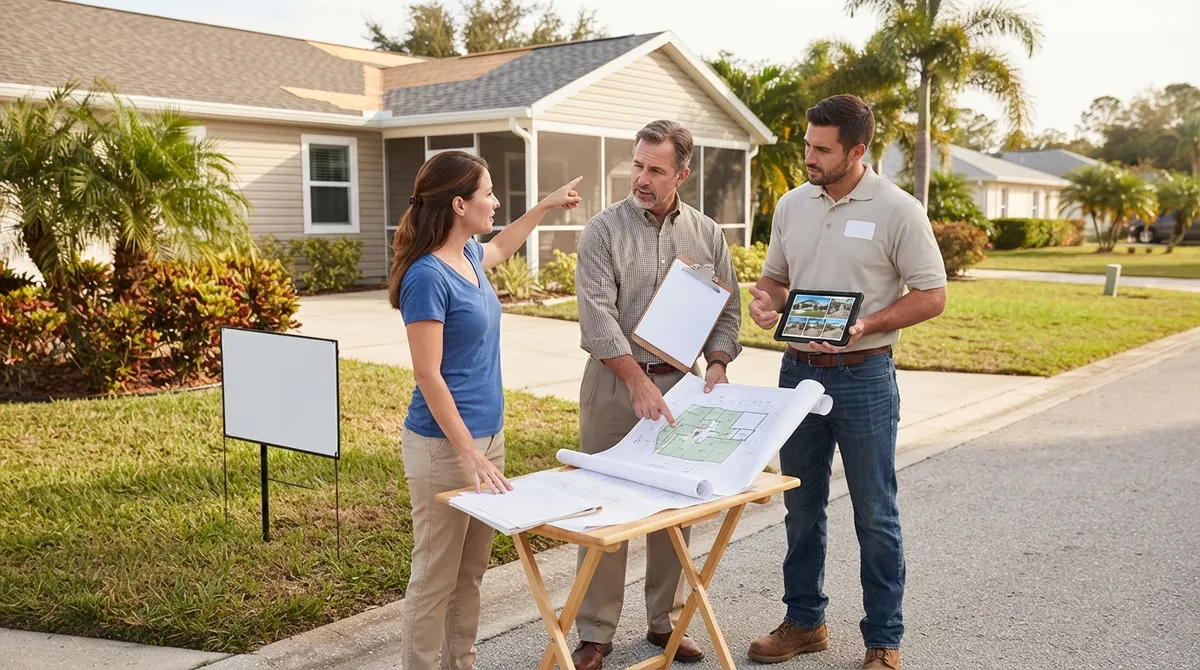
What After-the-Fact Permitting Means for Hurricane Repairs
An after-the-fact permit is generally needed when work that required a permit has already been completed without one. It documents the work and lets the local building department review it for code compliance and, where applicable, floodplain compliance. It does not automatically legalize unsafe or noncompliant work, so the review matters.
Here's the part that surprises people: Florida has no single statewide list of storm repairs that need permits, and no one uniform after-the-fact process. Requirements, forms, fees, inspections, and enforcement are all handled by the local building department. That means the right answer in Pinellas County may look different from the right answer in Lee County.
If you want a deeper walkthrough of the basics, our guide on how to get an after-the-fact permit in Florida is a great companion read.
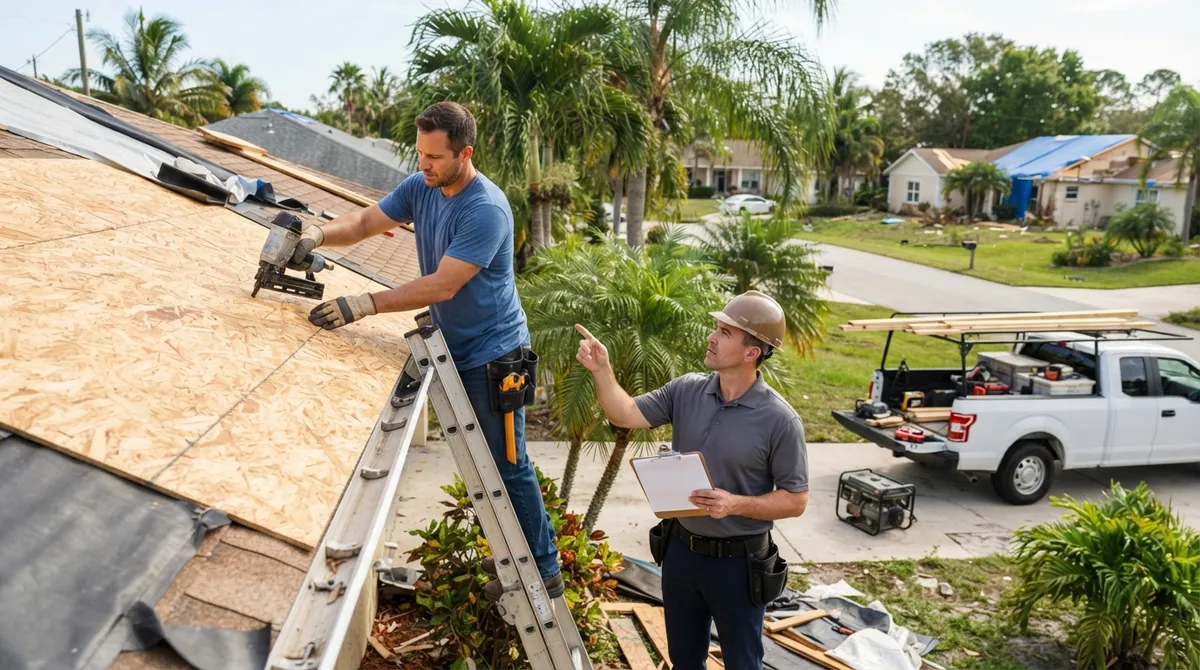
Mistake 1: Assuming Emergency Repairs Don't Need a Permit
It's natural to think that urgent storm repairs get a free pass. Often, they don't. Emergency conditions do not necessarily waive permit requirements. The City of Naples, for example, states that permits are required for reinstallation work related to Hurricane Helene or Milton damage, and its guidance says not to begin replacement work until a permit is issued.
Temporary protection, like a tarp or boarding up a window, is usually treated differently from permanent replacement work. The safest move is a quick call to your building department before the permanent work begins.
Mistake 2: Guessing Which Repairs Need Permits
Many owners assume only "big" jobs count. Pinellas County's storm-recovery guidance lists drywall, roofing, structural repairs, cabinetry, siding, soffit and fascia, windows and doors, pool enclosures, and electrical, plumbing, or HVAC work among the repairs that may require permits. Exact scope and local exemptions vary, so always confirm with your jurisdiction.
Here's a quick reference table showing common storm repairs and why they tend to trigger review:
| Storm Repair | Why a Permit May Apply | Typical Documentation |
|---|---|---|
| Roof replacement or major repair | Wind resistance, decking, and underlayment compliance | Product approvals, roof plan, inspection photos |
| Windows and doors | Impact or pressure-rated product requirements | Product approval, installation details |
| Structural repairs | Load path and framing safety | Sealed drawings or engineer letter |
| Electrical, plumbing, HVAC | Life-safety and licensed trade work | Trade license info, inspections |
| Pool enclosures and screen rooms | Wind loading and anchoring | Engineered plans, product data |
| Drywall and cabinetry | Often tied to wider remodel scope | Scope description, photos |
Mistake 3: Ignoring Local Thresholds
Some jurisdictions set size thresholds. Seminole County, for instance, lists roof repairs exceeding 100 square feet as requiring a permit. That's a county-specific example, not a statewide Florida rule, which is exactly why guessing gets people in trouble.
Before you assume a repair is "small enough," use our building department lookup tool to find the office that actually controls your address. Near city lines, the answer isn't always obvious.
Mistake 4: Hiring an Unlicensed Storm Chaser
After a hurricane, unsolicited offers flood neighborhoods. Florida contractor licensing rules apply to storm repairs, and Chapter 489 of the Florida Statutes generally requires appropriate state certification or registration for regulated categories of contracting work. Florida law also provides enhanced criminal consequences for unlicensed contracting during a declared state of emergency.
Protect yourself with this quick checklist:
- Verify the contractor's license with the state before signing anything.
- Confirm in writing who is responsible for pulling the permit.
- Be cautious of anyone who says a permit "isn't needed" or asks you to pull it yourself without explanation.
- Avoid large upfront payments and keep copies of every contract.
Our Florida contractor license requirements article explains what to look for in more detail.
Mistake 5: Believing Insurance Approval Replaces a Permit
An insurance claim approval and a building permit are two completely different things. Seminole County warns that work done without a required permit may not be covered by homeowners' insurance. Coverage depends on your specific policy and insurer, so don't assume anything. Call your insurance company and ask directly.
For more on this connection, read expired permits and insurance claims in Florida.
Mistake 6: Waiting Until a Sale or Refinance to Deal With It
Permit status can matter for insurance, property sales, refinancing, and future renovations. Waiting until you're under contract puts you on someone else's timeline, and that's stressful. An open or missing permit can surface during a title search, an appraisal, or a lender's review.
If you're an agent or investor, you can see how this plays out in can a permit hold delay a Florida real estate closing. Our realtor and closing support team helps keep deals moving.
Mistake 7: Showing Up Without the Right Documents
An after-the-fact review may require plans, contractor information, photographs, product approvals, engineering documents, and inspections. Arriving with a vague description and a few phone pics usually leads to rejection and delay.
Here's a helpful comparison of what a weak submission and a strong submission tend to look like:
| Item | Weak Submission | Strong Submission |
|---|---|---|
| Plans | Hand sketch or none | Drafted as-built plan set |
| Photos | A few blurry images | Dated, labeled photos of all affected areas |
| Product data | "Same as before" | Current product approvals attached |
| Engineering | Missing | Sealed letter or drawings when required |
| Contractor info | Verbal only | License number and contract copy |
Our as-built drawings and engineer letters services are built for exactly this situation.
Mistake 8: Forgetting About Concealed Work
Storm repairs often get covered up fast with new drywall, roofing, or siding. If concealed work can't be verified, the building official may require it to be exposed or otherwise documented. Nobody loves hearing that, but there's usually a smarter path.
Photos taken during the original repair, material receipts, and a sealed engineer's evaluation can sometimes reduce what has to be opened up. What's accepted varies by jurisdiction, so confirm the evidence and inspection sequence with the local authority first. For roof framing questions, see truss verification after the fact in Florida.
Mistake 9: Skipping Product Approvals on Roofs and Openings
Hurricane repairs often involve roofing materials, impact windows, and doors. These products generally need to meet Florida's product approval standards, and in Miami-Dade a separate approval system applies. If the installed products can't be documented, the review slows down.
Compare the two systems in Miami-Dade NOA vs. Florida product approval, and see our dedicated roof permits and impact window and door permits pages for help.
Mistake 10: Letting an Old Permit Quietly Expire
Sometimes a permit was pulled, but the final inspection never happened. The crew moved on, the permit lapsed, and nobody noticed. That's a different problem from no permit at all, and it needs a different fix.
Not sure which situation you're in? Run an address through our open permit search, then read how to close an expired permit in Florida. Our after-the-fact and expired permits team takes on the files other people decline.
Mistake 11: Not Understanding Substantial Damage Rules
If your property sits in a flood zone and the storm caused heavy damage, floodplain rules may come into play. Local floodplain administrators review repair costs against the building's value, and that can change what's required. This is one more reason the permit file needs to be accurate and complete.
Learn how it works in our explainer on the FEMA 50 percent rule in Florida.
Mistake 12: Ignoring a Notice or Stop Work Order
Few things feel worse than a code enforcement notice taped to your door. But ignoring it makes everything harder, since fines and deadlines can stack up. The calmer approach is to respond quickly, gather your documents, and start the permit process.
Our code compliance violations service and the urgent permit rescue page are made for moments like this. You can also read got a code enforcement notice in Florida? Do this now.
Mistake 13: Going It Alone When the Paperwork Gets Complicated
You can absolutely tackle simple filings yourself. But when plans, engineering, and multiple reviewers are involved, a misstep can cost weeks. The "best" after-the-fact help is the kind that handles the whole job: figuring out which jurisdiction controls the project, preparing drawings, filing, tracking, and working every reviewer comment.
That's what we do at 1 Contractor Solutions. Our drafting and engineering are in house, and our own engineer signs and seals the work, so when a reviewer flags something, we fix it without waiting on an outside consultant. We serve all 67 Florida counties with same-day response. You can visit us on Google — 1 Contractor Solutions to see what customers say.
A Simple Roadmap to Get Your Hurricane Repair Permitted
If you're ready to fix this, here's a friendly step-by-step path:
- Identify the right jurisdiction. Confirm which city or county building department controls your property.
- Ask what they require. Request their after-the-fact process, forms, fees, and inspection sequence.
- Gather your evidence. Collect photos, receipts, contracts, product approvals, and contractor license details.
- Prepare plans and engineering. Get as-built drawings and, if required, a sealed engineer letter.
- File and track the application. Stay on top of reviewer comments and respond promptly.
- Pass the inspections. Schedule inspections and correct anything flagged.
- Close it out. Make sure the permit is finaled so it doesn't linger open.
Costs vary widely by jurisdiction and scope, so see our breakdown of after-the-fact permit costs in Florida for realistic expectations.
Who Benefits Most From Professional Help
- General contractors: keep jobs moving when a past storm repair is holding up a project. See our general contractors page.
- Roofing contractors: explore the Roof Permit Partnership Program.
- Solar companies: avoid delays when roof repairs affect an install. Visit solar contractors.
- Realtors and investors: clear permit surprises before closing.
- Homeowners: get clear, calm guidance. See our homeowners page.
Final Thoughts: You Can Fix This
Storm repairs are stressful enough without paperwork piling on. The good news is that most unpermitted hurricane repairs can be brought into the light with the right documents, honest communication with your building department, and a patient process. The earlier you start, the more options you have.
When you're ready for a team that handles the whole process from plans to final inspection, get a free quote and let us take the permit off your plate. And if you'd like helpful tips along the way, follow us on LinkedIn or follow us on Facebook. For the statutory background on contractor licensing, you can also review Florida Statutes Section 489.127.
FAQs
Do I need an after-the-fact permit for hurricane repairs in Florida?
If the repair would normally require a permit and the work is already finished without one, you'll generally need an after-the-fact permit through your local building department. Requirements differ by city and county, so a quick call to your jurisdiction is the best first step.
What documents are needed to permit completed hurricane repair work?
Most departments want some combination of plans, contractor information, dated photographs, product approvals, engineering documents, and inspections. If concealed work can't be verified, the building official may ask for it to be exposed or otherwise documented.
What happens if hurricane repairs were done without a permit in Florida?
You may face a code enforcement notice, fines, or a request to bring the work into compliance, and the missing permit can surface during a sale, refinance, or insurance claim. Starting the after-the-fact process early usually keeps things calmer and less costly.
Will homeowners insurance cover repairs completed without a permit?
It depends on your policy and your insurer. Some counties warn that unpermitted work may not be covered, so contact your insurance company directly rather than assuming either way.
How can I verify that a Florida storm-repair contractor is licensed?
Check the contractor's license with the state licensing authority before you sign a contract, and confirm in writing who will pull the permit. Be extra careful with unsolicited storm-repair offers, since unlicensed contracting during a declared state of emergency carries enhanced penalties.
We do this work every day across all 67 Florida counties. Call (866) 314-6931 and we will tell you what your situation actually requires — including when you do not need us.
Related services
Permit Facilitation & Filing
You have a crew scheduled, a client asking for dates, and a permit sitting somewhere in a queue you cannot see. We file it, w…
See the servicePlan Review Coordination
A permit in plan review is not one queue. On a commercial project it can be six queues, each with its own reviewer, its own c…
See the serviceReady to get your permit moving?
One call tells you which jurisdiction controls your project, what it will take, and what it will cost. Most of the time we can scope it on the phone.