
Blog
10 Hurricane Shutter Permit West Palm Beach FL Tips (2026)
Learn how to navigate a hurricane shutter permit in West Palm Beach, FL with 10 practical tips on jurisdiction, code, documents, and inspections.
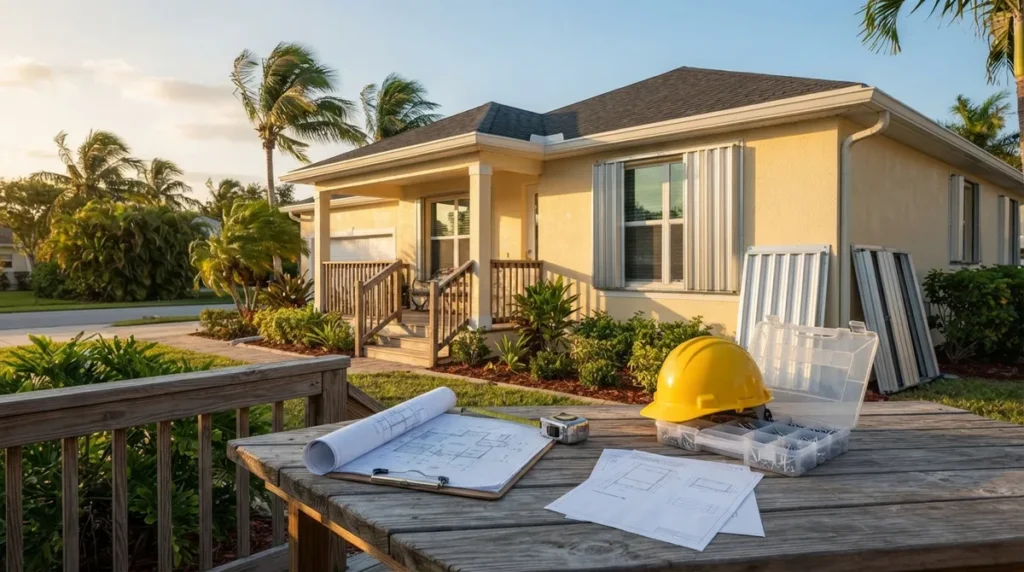
Key Takeaways
-
Verify the authority having jurisdiction for your exact parcel first, since a West Palm Beach mailing address does not always mean you are inside city limits or under city permitting.
-
Do not assume hurricane shutters are exempt from permits; the city's narrow exemptions cover certain temporary flood barriers, so ask the Building Division before installing anything.
-
Match your shutter product to its approval for the specific wind pressures, impact criteria, substrate, fasteners, and spacing, because a general approval number alone does not prove your installation is acceptable.
-
Under the 2023 Florida Building Code, openings at or below 30 feet above grade generally need large-missile impact protection, while higher openings generally use small-missile criteria.
-
Prepare a complete application with a permit form, opening schedule, product approval documents, and installation details, since missing items are the most common reason applications get kicked back.
-
Get HOA or condo board approval separately, because association sign-off does not replace a city building permit and a permit does not replace association approval.
If you have ever stood in your driveway in August, staring at a stack of shutters and wondering whether the city wants paperwork before you bolt them on, you are in good company. A hurricane shutter permit in West Palm Beach, FL is one of those topics that sounds simple until you start asking questions. Which office handles it? What documents do they want? Does a product approval number settle everything?
Here is the friendly truth: the process is very manageable once you know the moving pieces. Whether you are a general contractor lining up a crew, a realtor helping a buyer, or a homeowner getting ready for storm season in 2026, the ten tips below will keep you on track. We will walk through jurisdiction, code basics, paperwork, product approvals, inspections, and the mistakes that quietly slow people down.
One quick note before we dive in: always confirm current requirements, fees, and checklists directly with the permitting authority. Rules and portals change, and your specific address matters. Think of this guide as your map, and the Building Division as the final word.
1. Confirm Who Actually Has Jurisdiction Over Your Address
This is the first fork in the road, and it trips up more people than you would expect. The City of West Palm Beach is its own jurisdiction. Unincorporated Palm Beach County and neighboring municipalities are separate, and each can have its own procedures and fees.
A mailing address that says "West Palm Beach" does not always mean the property sits inside city limits. Many addresses near the edges are actually in unincorporated county areas or other towns. Before you gather a single document, verify the authority having jurisdiction (AHJ) for the parcel.
- Check the property address against the city's jurisdiction information.
- Look up the parcel through county property records if the boundary is unclear.
- Call the Building Division if anything seems uncertain.
Our building department lookup tool can also help you narrow down which office controls your project.
2. Know Where the City Handles Permits
In the City of West Palm Beach, the Building Division handles building permits, and applications are generally submitted through the city's online Civic Access portal. Setting up an account early saves you from scrambling on the day you want to apply.
The city's published guidance says replacement windows and doors require permits, and the selected products must meet local wind loads and be installed according to their product-approval documents. Shutters are closely related to that opening-protection conversation, but the exact permit category for your shutter scope should be confirmed with the Building Division before you apply.
If you want to see how other Florida cities approach similar work, our guide on how to get a hurricane shutter permit in Fort Myers, FL offers a helpful comparison.
3. Do Not Assume Shutters Are Exempt
Here is a myth worth busting. The city's residential permit exemptions describe certain temporary flood-protection walls or barriers, subject to specific conditions and a written exemption request. That is a narrow carve-out, and it is not a blanket exemption for hurricane shutters.
So when someone tells you, "Oh, shutters never need a permit," take a breath and verify. The safest move is to ask the Building Division whether your proposed shutter work requires a permit. A quick question up front can save you a stop-work notice later.
If you have ever dealt with that headache, our walkthrough on how to clear a stop work order in West Palm Beach explains what recovery looks like.
4. Understand the 2023 Florida Building Code Basics
The 2023 Florida Building Code, 8th Edition, took effect on December 31, 2023, and it is the framework most projects in 2026 are measured against. For hurricane protection, the big idea is straightforward: glazed openings in wind-borne-debris regions generally need to be impact-resistant or protected by an approved impact-resistant covering, subject to code exceptions.
In plain English, you can protect windows and doors in a couple of code-compliant ways:
- Install approved hurricane shutters over the openings.
- Install impact-resistant windows and doors.
Either route can satisfy the opening-protection requirement, as long as the products and the installation meet the applicable criteria.
5. Know the 30-Foot Rule and Why Height Matters
The code treats openings differently depending on how high they sit. Under the 2023 Florida Building Code, glazed openings at or below 30 feet above grade in wind-borne-debris regions are generally subject to large-missile impact protection. Openings higher than 30 feet generally use small-missile criteria, subject to code provisions and exceptions.
| Opening Location | General Impact Criteria | Why It Matters |
|---|---|---|
| At or below 30 feet above grade | Large-missile impact protection | Ground-level and lower-story openings face the toughest debris test |
| Higher than 30 feet above grade | Small-missile impact criteria | Upper-story openings may qualify under a different test |
Design pressures and product suitability also depend on the specific building and site. A contractor or design professional should verify these rather than relying on a generic shutter rating you saw on a box.
6. Match the Product to the Approval, Not Just the Label
Here is where many projects stumble. Having a product approval number is a great start, but approval alone does not prove your particular installation is acceptable. The product must be approved for the applicable pressures and impact criteria, and it must be installed exactly as its approval allows.
That includes details like permitted substrates, fasteners, spacing, and configuration. A shutter approved for concrete block might not be approved for a wood-frame wall, for example. If you want to learn how to read these references, see our explainer on how to read a Florida product approval number, which applies the same thinking to a different product type.
7. Gather the Right Documents Before You Apply
A permit submission commonly needs a few core items. The exact City of West Palm Beach checklist can vary by project, so verify current requirements in the portal or with the Building Division. Still, most applicants should be ready with the following:
- A completed permit application.
- A plan or opening schedule identifying every window and door being protected.
- Product approval documentation for the shutter system.
- Installation details showing fasteners, anchors, and the substrate.
- Contractor license and insurance information, when applicable.
- Any required owner authorization or notice paperwork.
Missing pieces are the number one reason applications get kicked back. Our guide on documents needed for a window replacement permit overlaps a lot with this list and can serve as a handy cross-check.
8. Sort Out Who Is Allowed to Pull the Permit
A Florida-licensed contractor may be needed for installation and for submitting the permit application, depending on the scope of work and the applicant's eligibility. Owner-builder rules exist, but they come with conditions, so confirm eligibility before assuming you can do it yourself.
Also remember that condominium and homeowners-association approvals are separate matters. A private association sign-off does not replace a building permit, and a building permit does not replace association approval. You usually need both.
For a deeper look at your options, read who can pull a permit in Florida.
9. Expect Inspections, Fees, and Review Timelines to Vary
People always ask how much a hurricane shutter permit costs and how long approval takes. The honest answer is that fees, review times, and inspection requirements depend on the project and the current city schedule. Confirm them in the Civic Access portal or with the Building Division rather than trusting a number from an old blog post.
| Item | What to Do |
|---|---|
| Permit fees | Check the city's current fee schedule or portal estimate |
| Review time | Ask the Building Division for current turnaround |
| Inspections | Confirm required inspection types and scheduling steps |
| Revisions | Respond promptly to reviewer comments to avoid delays |
If your project stalls in review, you are not alone. Our post on permit expediting in West Palm Beach shares practical ways to keep things moving.
10. Avoid the Common Mistakes That Slow Everyone Down
After years of watching Florida permits move through the system, a few patterns keep showing up. Dodge these and you will already be ahead of the pack.
- Skipping the permit question entirely. Unpermitted work can complicate closings, insurance, and future sales.
- Submitting vague opening schedules. Reviewers want to see exactly what is protected.
- Using the wrong product for the wall type. Check the approval for substrate and fastener limits.
- Confusing temporary storm panels with permanent systems. Do not assume plywood or temporary panels are exempt. Ask the city first.
- Forgetting the HOA or condo board. Approval from them is separate from the city's.
The code does allow qualifying wood structural panels for certain Group R-3 or R-4 buildings when the mean roof height is 33 feet or less and the ultimate wind speed is 180 mph or less. Those panels must be at least 7/16 inch thick, and the fastener-line span cannot exceed 44 inches. That said, whether and how your specific property can use that option is exactly the kind of thing to confirm with the Building Division before you rely on it.
Already installed shutters without a permit? Do not panic. Our guide on 7 steps to legalize unpermitted work in Florida lays out a calm path forward, and our overview of after-the-fact permit requirements explains what to expect.
How a Permitting Partner Can Make This Easier
Permitting is not anyone's favorite part of a storm-protection project, and that is perfectly normal. 1 Contractor Solutions acts as an outsourced permitting department across all 67 Florida counties. We prepare or review plans, file the application, track it, work reviewer comments, and carry it through closeout. Our drafting and engineering are in house, so when a reviewer flags something, we can address it quickly.
Curious what other homeowners and contractors think? You can see what our 1 Contractor Solutions customers say on Google. We also share Florida permitting updates when you follow us on LinkedIn or follow us on Facebook, and our website partner is Brain Buzz Marketing.
Quick Reference: Your Hurricane Shutter Permit Checklist
- Verify the correct jurisdiction for your address.
- Ask the Building Division about the permit category for your shutter scope.
- Choose a product with approval for your pressures and impact criteria.
- Confirm installation details match the approval, including substrate and fasteners.
- Assemble the application, opening schedule, and approval documents.
- Confirm who is eligible to pull the permit.
- Obtain any HOA or condo approvals separately.
- Submit through the city portal and respond quickly to comments.
- Schedule and pass the required inspections.
Final Thoughts: Protect Your Property and Skip the Stress
Getting a hurricane shutter permit in West Palm Beach, FL does not need to feel like a maze. Start with jurisdiction, respect the code basics, match your product to its approval, and keep your paperwork tidy. Do those things and you are most of the way there.
If you would rather hand off the paperwork and keep your crew or your weekend free, we would love to help. Get a free quote and let our team take the permit off your plate, so your shutters are ready long before the next storm lines up.
FAQs
Do I need a permit to install hurricane shutters in West Palm Beach, Florida?
Not so fast on assuming shutters are exempt. The city's limited exemptions cover certain temporary flood barriers, not hurricane shutters in general. Ask the Building Division whether your specific shutter scope needs a permit before you install anything.
Can I install hurricane shutters myself, or must a licensed contractor apply for the permit?
It depends on the work and who is eligible to apply. A Florida-licensed contractor may be needed, and owner-builder rules come with conditions. Confirm eligibility with the Building Division, and remember HOA or condo approval is separate from the permit.
What documents are required for a hurricane shutter permit in West Palm Beach?
Most applications include a completed permit form, a plan or opening schedule, product approval documents, and installation details. The exact checklist can vary by project, so verify current requirements in the city's Civic Access portal.
Are temporary storm panels or plywood exempt from a permit?
Do not assume so. The code allows qualifying wood structural panels in certain cases, such as specific Group R-3 or R-4 buildings with limits on roof height, wind speed, panel thickness, and fastener spacing. Check with the city before relying on that option.
How do I know whether the City of West Palm Beach or Palm Beach County handles my permit?
It depends on where the property actually sits, not just the mailing address. Verify the authority having jurisdiction through parcel records or a call to the Building Division, since procedures and fees can differ between the city, the county, and nearby municipalities.
We do this work every day across all 67 Florida counties. Call (866) 314-6931 and we will tell you what your situation actually requires — including when you do not need us.
Related services
Permit Facilitation & Filing
You have a crew scheduled, a client asking for dates, and a permit sitting somewhere in a queue you cannot see. We file it, w…
See the servicePlan Review Coordination
A permit in plan review is not one queue. On a commercial project it can be six queues, each with its own reviewer, its own c…
See the serviceReady to get your permit moving?
One call tells you which jurisdiction controls your project, what it will take, and what it will cost. Most of the time we can scope it on the phone.