
Blog
Why Is Your Florida Home Sale Delayed by Permits?
Learn why unpermitted construction delays Florida home sales, how to check permit history, and the steps to legalize work before closing.
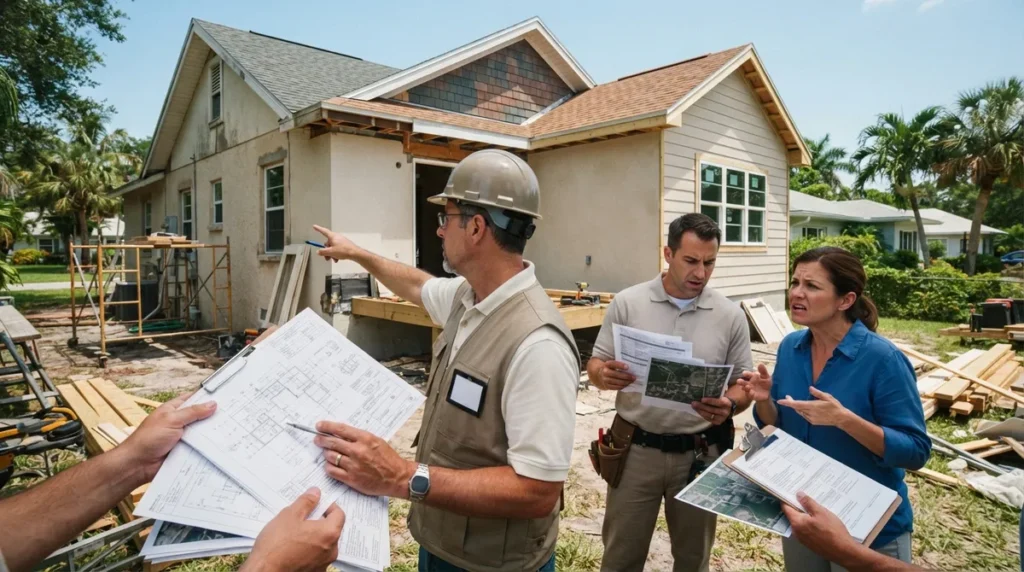
Key Takeaways
-
Florida doesn't have a statewide after-the-fact permit process; each of 67 counties sets its own fees, documentation requirements, and review timelines, so solutions vary significantly by jurisdiction.
-
Unpermitted construction is typically discovered by buyers' inspectors, lenders, title companies, or insurance companies during due diligence, and any of these can halt closing until the issue is resolved.
-
Unpermitted issues fall into distinct categories—open permits, never-permitted work, failed inspections, or scope mismatches—each requiring a different resolution path and documentation strategy.
-
Sellers should proactively request permit history reports before listing, compare them against actual construction, and address open or expired permits well before entering a contract to avoid transaction delays.
-
Most permit issues are fixable through either permit closure with final inspection, full after-the-fact applications with as-built drawings, or engineering letters proving code compliance, though corrections may be required.
-
Florida sellers must disclose known unpermitted work that materially affects property value per Johnson v. Davis precedent; consulting a real estate attorney about disclosure obligations is essential before closing.
Picture this: you've got a buyer, a signed contract, and a closing date circled on the calendar. Then, out of nowhere, the title company flags an open permit or the buyer's inspector spots a lanai enclosure that never made it into city records. Suddenly your "sure thing" sale is on pause. If this sounds familiar, take a breath — you are not alone, and this happens across Florida every single week, from Tampa to Fort Lauderdale to Naples.
A home sale delayed by unpermitted construction in Florida is one of the most common (and most fixable) closing hiccups our team sees. Whether you're a homeowner, a real estate agent, or a general contractor trying to help a client cross the finish line, understanding why this happens — and what actually resolves it — can save you weeks of stress. Let's walk through it together, county by county nuance and all.
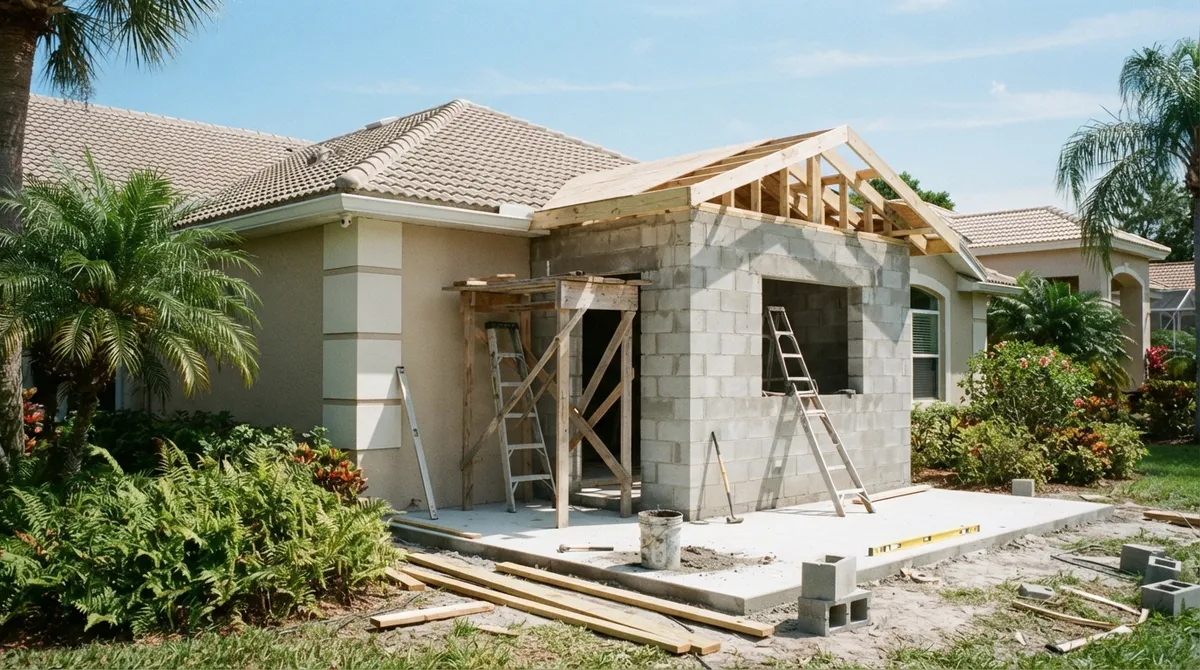
What Counts as Unpermitted Construction in Florida
Under Florida Statutes §553.79(1)(a), most construction, alteration, repair, or demolition work requires a permit from the local enforcing agency before work begins. That means additions, enclosed patios, converted garages, pool decks, electrical upgrades, and even some interior remodels typically need a permit trail. When that trail is missing — or was started but never finished — it becomes a red flag during a sale.
Here's the tricky part: not every unpermitted issue looks the same. Some are permits that were pulled but never closed out. Others involve work that was never permitted at all. Each situation requires a different fix.
Two Very Different Problems, Two Different Fixes
- Open or expired permits: A permit was issued, but required inspections were never completed or the permit lapsed before final approval.
- Never-permitted work: Construction happened with no permit application at all, often by a previous owner or a well-meaning DIY project.
- Failed final inspection: The permit exists, but the last inspection didn't pass and nothing was done to correct it.
- Scope mismatch: The permit on file doesn't match what was actually built (say, a permit for a 200-square-foot addition that somehow became 400 square feet).
Confused about which category your property falls into? That's exactly the kind of research our open permit search tool and building department lookup tool were built to help with.

Why Permit Problems Derail Closings
It's rarely the seller alone who discovers the issue. More often, it's one of these parties doing their job:
| Who Flags It | Why It Matters |
|---|---|
| Buyer's Inspector | Notices construction that doesn't match permit records or looks non-standard |
| Lender | Requires clear title and code compliance before funding a mortgage |
| Insurance Company | Won't issue a policy on structures without proper documentation |
| Title Company | Runs a permit history check as part of due diligence |
| Local Building Department | May have an active code enforcement case tied to the address |
Any one of these can hit pause on your transaction. And here's the honest truth: online permit records aren't always complete or up to date. That's why it pays to confirm directly with the city or county that has jurisdiction over the property, rather than relying solely on a website search.
Step-by-Step: How to Untangle an Unpermitted Construction Issue
Feeling overwhelmed? Don't be. Here's the general roadmap that tends to work, whether the property is in Hillsborough County, Pinellas County, or Miami-Dade County.
- Pull the full permit history. Check with the local building department for every permit ever issued on the property, including status and final inspection dates.
- Compare permits to actual construction. Walk the property (or review photos) against what's on file. Look for additions, converted spaces, or electrical/plumbing changes that don't match.
- Determine the right path. Some issues just need a permit closed out with a final inspection. Others require a full after-the-fact application.
- Assemble documentation. This might include as-built drawings, contractor affidavits, or engineering letters proving the work meets current code.
- Open concealed areas if required. Inspectors sometimes need to see behind drywall or under flooring to verify structural, electrical, or plumbing work.
- Correct deficiencies. If something doesn't meet code, it needs to be fixed before final approval — no shortcuts here.
- Confirm the permit is truly closed. Submitting an application isn't enough. Make sure inspections pass and the jurisdiction's records show the permit as finalized.
This is precisely the kind of coordination our team handles daily through after-the-fact and expired permit services, paired with plan review coordination so nothing falls through the cracks.
After-the-Fact Permits: There's No One-Size-Fits-All Process
Here's something that surprises a lot of sellers: Florida doesn't have a single statewide after-the-fact permit application or a standard timeline. Each of the state's 67 counties — and the hundreds of municipalities within them — sets its own fees, documentation requirements, and review process.
That means a garage conversion in Broward County might follow a very different path than the same issue in Orange County or Duval County. Depending on the work involved, legalization can call for:
- As-built plans prepared by a licensed drafter or engineer
- Structural or MEP engineering review and engineer letters
- Contractor affidavits confirming the work's history
- Multiple rounds of inspections
- Corrections to bring the work up to current code
Because our in-house team includes structural engineering and MEP engineering specialists, we can produce sealed drawings and documentation without bouncing you between multiple outside consultants. That in-house structure is a big part of why we can move faster than a patchwork of subcontracted reviewers.
Who Actually Pays for the Fix?
This question comes up constantly, and the honest answer is: it depends on the contract. In many Florida transactions, sellers agree to resolve permit issues before closing, sometimes through a price credit, sometimes by completing the legalization work themselves. Buyers occasionally agree to take on the project post-closing in exchange for a discount, though lenders and insurers may not allow financing until the permit issue is cleared.
| Scenario | Typical Approach |
|---|---|
| Seller resolves before closing | Seller hires permitting help, completes legalization, provides proof of closure |
| Price credit at closing | Buyer accepts a reduced price and handles permitting after taking ownership |
| Escrow holdback | Funds are held back until permit work is completed and closed |
| Deal falls through | Buyer walks if the issue can't be resolved in a reasonable timeframe |
Whichever route you take, moving quickly tends to preserve the most options. That's where a dedicated permitting partner earns its keep — coordinating plans, filings, and inspections while everyone else focuses on the transaction itself.
Disclosure: What Florida Sellers Need to Know
Florida takes seller disclosure seriously. The Florida Supreme Court's decision in Johnson v. Davis is widely cited for establishing a seller's duty to disclose known facts that materially affect a property's value when those facts aren't readily observable to a buyer. Whether a specific unpermitted improvement must be disclosed depends heavily on the facts of your situation.
We're permitting specialists, not attorneys, so we always recommend sellers talk to a qualified Florida real estate attorney about disclosure obligations — an "as-is" contract is not a substitute for that legal advice. What we can do is help you understand the permit history itself, which is often the missing piece needed to have that conversation with confidence.
How a Florida Permitting Service Fits Into the Picture
Whether you're a homeowner trying to sell your house, a realtor managing a transaction, or a general contractor brought in to fix the problem, a permitting specialist can help by:
- Researching complete permit history and identifying the correct jurisdiction
- Determining whether the issue needs permit closure or a full after-the-fact application
- Coordinating as-built drawings and licensed design professionals
- Submitting applications and tracking them through permit facilitation and filing
- Responding to reviewer comments and handling revisions and resubmittals
- Scheduling required inspections and confirming final closeout
What a permitting service cannot do is guarantee approval or override the authority of the local building department, licensed contractors, or your legal counsel. But having someone who knows the process — and who has relationships with reviewers across all 67 counties — makes an enormous difference in how quickly things move.
Our team at 1 Contractor Solutions has spent more than 15 years handling exactly this kind of work, and our realtor and closing support service exists specifically to keep transactions moving when permit surprises pop up. We're proud of the relationships we've built with agents and title companies from Sarasota to Palm Beach County, and you can see what our 1 Contractor Solutions customers say on Google for yourself.
A Quick Word for General Contractors and Solar Companies
If you're a general contractor called in mid-transaction to fix an unpermitted addition, or a solar installer discovering that a previous rooftop modification lacks proper documentation, the clock is ticking just as hard for you as it is for the seller. Having sealed drawings ready — rather than waiting on outside engineers — can be the difference between closing in weeks versus months. Our general contractor and solar contractor partners lean on our in-house drafting and engineering team precisely for this reason.
Preventing This Headache Before It Starts
If you're a homeowner planning to sell down the road, or a real estate investor evaluating a purchase, a little proactive checking goes a long way. Consider these steps:
- Request a permit history report before listing your home for sale.
- Compare that history against any known additions, remodels, or repairs.
- Address open or expired permits well before you're under contract.
- Keep contractor documentation and inspection records organized in one place.
- Ask your permitting partner about Certificate of Occupancy status if the home had major renovations.
Being proactive here isn't just about avoiding delays — it genuinely gives you peace of mind and stronger footing at the negotiating table.
Bringing It All Together
A home sale delayed by unpermitted construction in Florida can feel like a gut punch, especially when you thought the hard part — finding a buyer — was already behind you. But in our experience, most of these situations are entirely fixable once you understand exactly what's missing and which jurisdiction controls the process. It just takes the right documentation, the right professionals, and a little patience with local building departments.
You don't have to untangle this alone. Our team works across all 67 Florida counties, from Lee County to Duval County, and we answer calls 24/7 because permit emergencies rarely happen on a convenient schedule. If your closing is on hold because of a permitting issue, reach out and get a free quote so we can start mapping out your fastest path forward. You can also follow us on LinkedIn or follow us on Facebook for ongoing permitting tips and updates from around the state. We're rooting for your closing to go smoothly — let's get there together.
FAQs
Can I sell a house in Florida with unpermitted construction?
Yes, you absolutely can, though it often takes a bit of extra legwork first. Many sellers resolve the permit issue before closing, while others negotiate a price credit so the buyer handles it afterward — either way, transparency with your agent and attorney makes the whole process smoother.
Can unpermitted work delay closing on a Florida home sale?
It sure can, especially if a lender, insurer, or title company flags the issue during their review. The good news is that most delays are temporary once the right permitting steps are underway, so don't panic — just get moving on a resolution plan.
How do I check whether a Florida home has open or missing permits?
Start by contacting the local building department directly, since online records aren't always complete or current. A permitting specialist can also pull full permit history and compare it against the actual construction on the property to spot any gaps.
How long does retroactive permitting take in Florida, and does it vary by county?
There's no single statewide timeline — each of Florida's 67 counties (and the municipalities within them) sets its own fees, documentation requirements, and review process. That's exactly why working with a team that knows the local quirks in each jurisdiction can save you real time.
Does a Florida seller have to disclose known unpermitted work?
Florida law generally requires sellers to disclose known facts that materially affect a property's value and aren't easily visible to buyers, based on the Johnson v. Davis precedent. Because every situation is a little different, it's always worth chatting with a Florida real estate attorney to get advice specific to your circumstances.
We do this work every day across all 67 Florida counties. Call (866) 314-6931 and we will tell you what your situation actually requires — including when you do not need us.
Related services
Permit Facilitation & Filing
You have a crew scheduled, a client asking for dates, and a permit sitting somewhere in a queue you cannot see. We file it, w…
See the servicePlan Review Coordination
A permit in plan review is not one queue. On a commercial project it can be six queues, each with its own reviewer, its own c…
See the serviceReady to get your permit moving?
One call tells you which jurisdiction controls your project, what it will take, and what it will cost. Most of the time we can scope it on the phone.