
Blog
After-the-Fact Permits vs. DIY Fixes: Florida Wiring
Wondering if you can get an after-the-fact permit for unpermitted electrical work in Florida? Here's what property owners need to know.
Key Takeaways
-
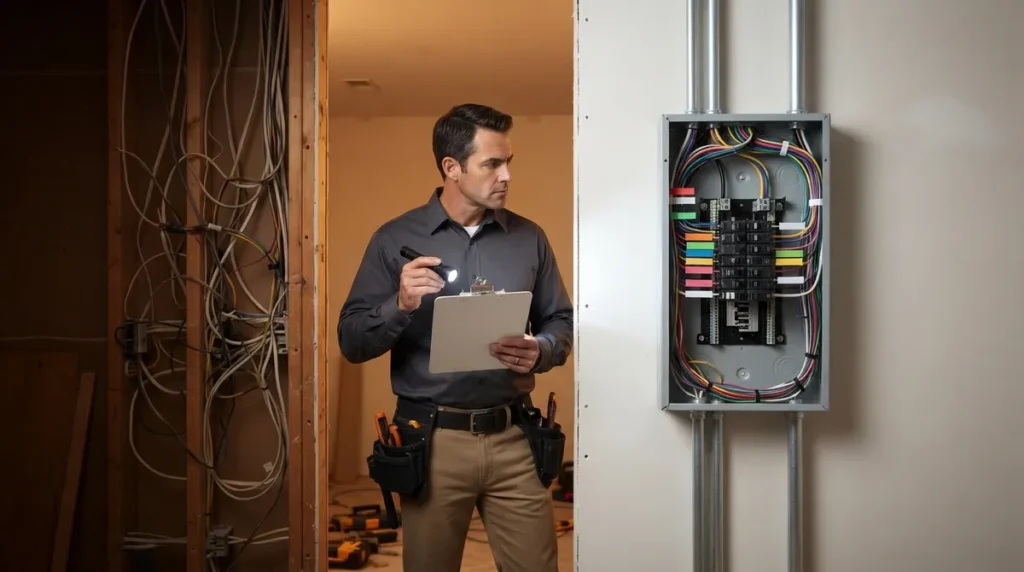
Florida homeowners and contractors can apply for after-the-fact electrical permits to legalize unpermitted work, but approval is never automatic—the local building department will review documentation and require inspection before sign-off.
-
Work must pass inspection to current code standards; inspectors may require opening walls to verify concealed wiring, and failed inspections result in corrections and reinspection fees before final approval.
-
If unlicensed individuals performed work requiring a licensed contractor under Florida Chapter 489, building departments may request additional documentation or require a licensed electrical contractor to sign off before approval.
-
DIY permitting involves significant risks and delays due to jurisdiction-specific requirements, documentation prep, and inspection coordination, while professional permitting services reduce denial risk and streamline timelines across 400+ Florida municipalities.
-
Required documentation typically includes a completed application, as-built drawings showing electrical layout, contractor license information, equipment specs, and applicable permit fees that vary by jurisdiction.
-
Common inspection failures include improper wire gauge, missing grounding, overloaded panels, buried junction boxes, and non-compliant outlet spacing—having a professional assess the work before submission can prevent costly corrections.
So you've got electrical work that was completed without a permit, and you're wondering if there's a way to make it right without tearing everything out. Good news: you're not alone, and yes, Florida homeowners and contractors can generally apply for an after-the-fact permit to legalize electrical work that should have been permitted in the first place. But here's the catch — it's not as simple as filling out a form and calling it done. The process depends heavily on your local building department, the condition of the work, and whether it was performed by a licensed electrician.
Whether you're a homeowner who inherited a mystery panel upgrade from a previous owner, a general contractor trying to close out a job before final walkthrough, or a real estate professional trying to unstick a closing, this guide walks through exactly how after-the-fact electrical permits work in Florida — and why choosing the DIY route versus hiring a permitting professional can make all the difference in how smoothly (and quickly) this gets resolved.
Can I Get After-the-Fact Permit for Electrical Work in Florida? The Short Answer
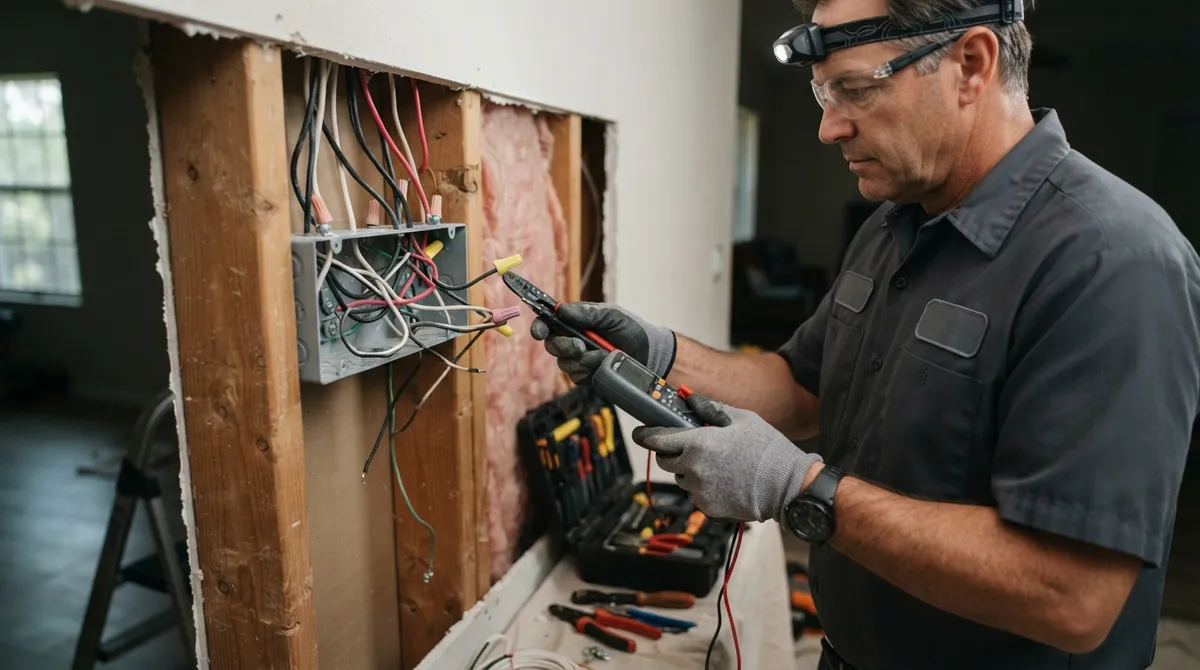
Yes. Florida property owners can generally apply for a retroactive, or "after-the-fact," permit for electrical work that required permitting but didn't get it. However, approval is never automatic. The local building department — city or county, depending on jurisdiction — reviews the application, may require documentation, and will almost always require an inspection before signing off.
A retroactive permit application doesn't magically make unpermitted wiring code-compliant. The inspector still has to verify the work meets current safety standards, and if it doesn't, you'll be asked to make corrections before anything gets closed out. This is where a lot of homeowners get surprised — they assume the permit itself is the finish line, when really it's just the starting gate for the inspection process.
Why Electrical Work Gets Unpermitted in the First Place
Unpermitted electrical work in Florida tends to happen for a few common reasons:
- A previous homeowner did DIY work without realizing a permit was required
- A contractor performed the job but skipped the permit to save time or money
- A solar installation added electrical components without proper coordination
- An addition or remodel included wiring changes that weren't part of the original permit scope
- A handyman or unlicensed individual performed work that legally required a licensed electrical contractor
Whatever the reason, the fix usually starts the same way: contacting the local building department and figuring out what it will take to legalize the work.
DIY After-the-Fact Permitting vs. Hiring a Permitting Professional
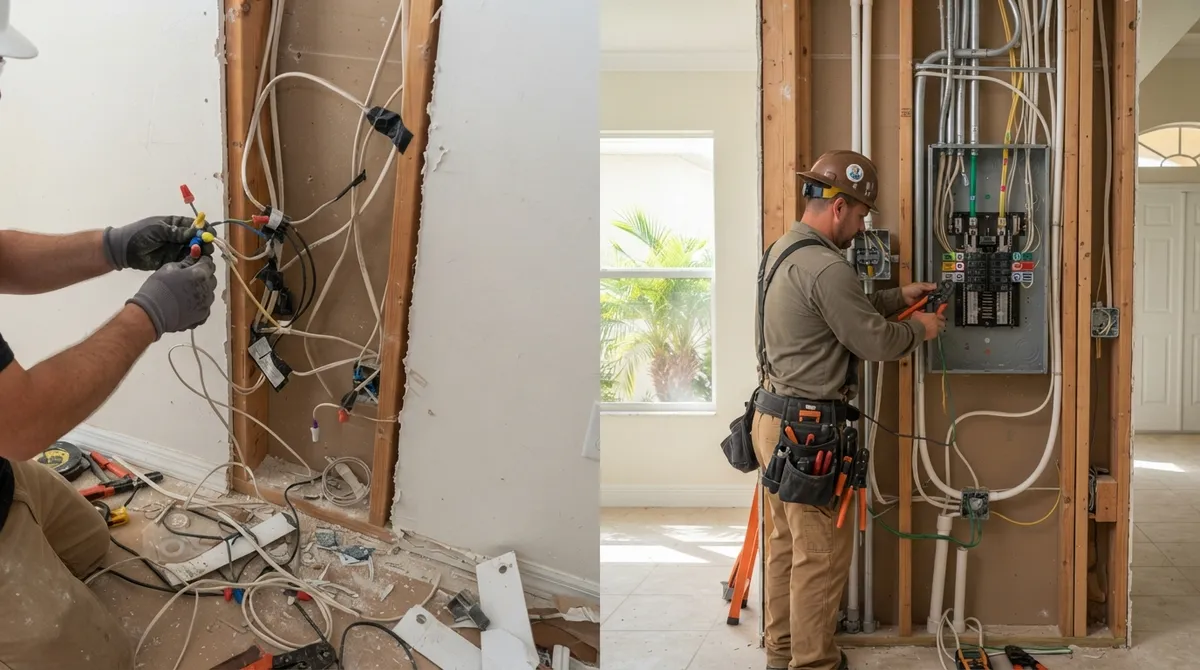
This is really the crux of the decision most Florida property owners face. Do you tackle the after-the-fact permit process yourself, or do you bring in a team that handles this daily across all 67 Florida counties? Let's break down both paths honestly.
| Factor | DIY Approach | Professional Permitting Service |
|---|---|---|
| Jurisdiction research | You must identify the correct building department and its specific requirements | Already known through experience across 400+ municipalities |
| Documentation prep | Time-consuming trial and error with as-built drawings, contractor info, and forms | In-house drafting and sealed engineering documents prepared quickly |
| Inspection coordination | You handle scheduling, corrections, and reinspection requests alone | Tracked and managed by a dedicated team, including private provider inspections |
| Licensing compliance | Risk of missing Chapter 489 requirements for licensed electrical contractors | Understands owner-builder exemptions and licensing rules by county |
| Timeline | Can stretch for months due to rejected applications or missing paperwork | Streamlined filing and tracking reduces back-and-forth delays |
| Risk of denial | Higher, especially without professional plan review experience | Lower, with corrections addressed proactively before submission |
For a lot of people, especially busy general contractors or solar companies juggling multiple job sites, the DIY route just isn't realistic. That's where a dedicated after-the-fact and expired permits service becomes less of a luxury and more of a practical necessity.
Florida's Legal Framework: What Chapter 489 Actually Says
Electrical contracting in Florida is regulated under Florida Statutes Chapter 489, which governs construction contracting and licensing. Generally speaking, electrical work requiring a contractor must be performed by someone holding an appropriate license. There is a limited owner-builder exemption available for qualifying work on a person's own property, but it comes with statutory conditions and doesn't exempt you from local permitting requirements.
This matters a lot when it comes to after-the-fact permits. If the original work was done by an unlicensed individual where licensure was legally required, that can complicate the retroactive approval process. Building departments may ask additional questions, request more documentation, or in some cases require a licensed electrical contractor to review and sign off on the installation before it can be approved.
What Documents Will the Building Department Ask For?
Every jurisdiction is a little different, but generally you should expect to provide:
- A completed after-the-fact permit application describing the work performed
- As-built drawings or plans showing the electrical layout, panel locations, and circuits
- Contractor information, including license number if applicable
- Supporting documents such as manufacturer specs for panels or equipment installed
- Payment for applicable permit fees and any additional charges specific to retroactive applications
Because these requirements genuinely differ from Miami-Dade to Hillsborough to Pinellas, it's worth checking with the building department lookup tool before assuming your paperwork is complete. Skipping this step is one of the most common reasons applications bounce back.
The Inspection Reality: Be Ready to Open Some Walls
Here's the part nobody loves talking about, but it's important to set expectations honestly. If electrical wiring or connections are concealed behind drywall, and the inspector can't visually verify the installation, they may require portions of the wall or ceiling to be opened up. This isn't the building department being difficult — it's the only way to confirm the wiring actually meets code.
If the inspection fails, you'll typically need to make corrections and schedule a reinspection. This can add time and cost, especially if multiple areas need to be opened. A licensed electrical contractor can help assess the situation ahead of time so there are fewer surprises during the actual inspection.
Common Reasons Electrical Inspections Fail During After-the-Fact Review
- Improper wire gauge for the circuit load
- Missing or incorrect grounding
- Overloaded panels or circuits
- Junction boxes buried behind finished walls without access
- Non-compliant outlet or breaker spacing
- Water exposure risk in outdoor or bathroom installations
If any of these sound familiar, it's worth having a professional assess the property before you even submit the application. Better to catch it early than after the inspector has already flagged it.
How This Plays Out for Different Florida Property Owners
General Contractors Managing Multiple Projects
If you're a general contractor juggling several job sites, the last thing you need is one unpermitted electrical detail holding up a certificate of occupancy. Working with a team that handles permit facilitation and filing across Florida counties means you're not the one stuck on hold with the building department while your crew waits around.
Solar Companies Navigating Retroactive Electrical Issues
Solar installations often involve electrical connections that intersect with panel upgrades, inverters, and interconnection agreements. When something gets missed on the permitting side, it can delay utility interconnection approval — which is money left on the table. Solar companies benefit from working with a team experienced in solar contractor permitting who understand both the electrical code side and the utility coordination side.
Real Estate Professionals Facing Closing Delays
Nothing stalls a closing faster than a title search revealing unpermitted electrical work. Buyers get nervous, lenders get cautious, and everyone starts pointing fingers. If you're a realtor or investor dealing with this, realtor and closing support services can help move things along without losing the deal entirely.
Florida Homeowners Just Trying to Do the Right Thing
Maybe you bought a house and discovered the previous owner did some electrical work off the books. Or maybe you did a small project yourself years ago and now realize you should have pulled a permit. Either way, homeowners have options, including the owner-builder permits pathway, though it comes with specific statutory limitations worth understanding first.
Estimated Costs and Timeline Expectations
While every jurisdiction sets its own fee schedule, here's a general sense of what factors influence cost and timeline for after-the-fact electrical permits in Florida:
| Factor | Impact on Cost/Timeline |
|---|---|
| Standard permit fee | Baseline cost set by local jurisdiction |
| After-the-fact penalty fee | Additional fee, jurisdiction-specific, sometimes a multiplier of standard fee |
| Documentation preparation | As-built drawings or engineer letters may add time if not already available |
| Inspection scheduling | Can range from days to weeks depending on department backlog |
| Corrections needed | Failed inspections add reinspection fees and additional time |
Because fees and penalties vary so much by city and county — and there's no statewide fixed multiplier — it really pays to confirm specifics with the authority having jurisdiction before you get started. A permitting professional who already knows these nuances across counties like Hillsborough, Pinellas, and Manatee can save you from guessing.
Step-by-Step: How the After-the-Fact Electrical Permit Process Typically Works
- Identify the correct jurisdiction. Confirm which city or county building department has authority over the property.
- Assess the existing electrical work. Have a licensed electrical contractor review the installation for obvious code issues.
- Gather documentation. Prepare as-built drawings, contractor licensing info, and any supporting specs.
- Submit the retroactive permit application. File with the building department, including any required fees.
- Schedule the inspection. Be prepared for the inspector to request access to concealed wiring.
- Address corrections if needed. Fix any code deficiencies identified during inspection.
- Pass final inspection and close out the permit. Once approved, the permit is finalized and the work is legally documented.
This process can feel overwhelming if you're doing it solo, especially while also managing a renovation, a sale, or a construction schedule. That's exactly why so many general contractors, solar companies, and homeowners across Florida turn to a dedicated permitting partner instead of trying to navigate it alone.
Why Working with a Permitting Team Makes This Easier
At 1 Contractor Solutions, we've spent over 15 years helping Florida property owners and contractors resolve exactly this kind of situation. Because our drafting and engineering teams work in-house, when an inspector flags a correction, we don't have to wait on an outside consultant to call back — we fix it directly. We're also a licensed private provider, meaning we can perform plan review ourselves rather than leaving your application sitting in a county queue.
Whether you're dealing with a single unpermitted panel upgrade or a portfolio of properties across Miami-Dade, Broward, or Orlando, we've likely seen a similar case before. We've handled more than 5,000 permits and projects across more than 400 Florida municipalities, and we answer calls 24/7 with a 30-minute response time, day or night. Se habla español, too.
Curious what others have experienced working with us? Feel free to visit us on Google — 1 Contractor Solutions to see reviews from real Florida contractors and homeowners. You can also follow us on LinkedIn or follow us on Facebook for ongoing updates on Florida permitting changes.
When It's Time to Bring in a Licensed Electrical Contractor
Not every after-the-fact situation requires a full engineering review, but many do — especially if the wiring is complex, involves panel upgrades, or intersects with structural changes like an addition. A licensed electrical contractor can assess whether the existing work is salvageable or whether portions need to be redone entirely.
If the situation also involves structural elements — say, an addition that included both framing and wiring — you may need coordinated structural engineering and MEP engineering review to satisfy the building department fully. This is where having one team handle both the electrical and structural side saves a tremendous amount of back-and-forth.
Final Thoughts: Don't Let Unpermitted Electrical Work Linger
Unpermitted electrical work doesn't get safer by ignoring it — and it definitely doesn't get easier to fix the longer it sits. Whether you're prepping a property for sale, closing out a renovation, or just discovered an issue during a routine inspection, the after-the-fact permit process in Florida is absolutely a workable path forward. It just requires patience, the right documentation, and sometimes a little help navigating local requirements that vary from county to county.
If you're feeling unsure about where to start, you don't have to figure it out alone. Our team at 1 Contractor Solutions has helped Florida homeowners, general contractors, solar companies, and real estate professionals resolve exactly these kinds of situations — often faster than expected once the right paperwork is in motion. Ready to get your electrical permit situation sorted out the right way? Get a free quote today and let's figure out your next step together.
FAQs
Can I get an after-the-fact electrical permit in Florida?
Yes, in most cases! Florida property owners can generally apply for a retroactive electrical permit through their local building department. Just keep in mind that approval isn't automatic — you'll need to satisfy the department that the work meets current code requirements, which usually means an inspection and possibly some corrections.
Will I have to open walls for an inspection of unpermitted electrical work?
It's definitely possible, especially if wiring is hidden behind drywall or ceilings and the inspector can't verify it visually. We know that's not the news anyone wants to hear, but it's really the only reliable way to confirm the installation is safe and up to code.
How much does an after-the-fact electrical permit cost in Florida?
Costs vary quite a bit by city and county, so there's no one-size-fits-all number we can give you. Some jurisdictions charge an additional fee on top of the standard permit cost, so it's best to check with your local building department or a permitting professional before budgeting.
Do I need a licensed electrician to legalize unpermitted electrical work?
In most situations involving licensed contractor work, yes — Florida Statute Chapter 489 generally requires licensed electrical contractors for this type of work. There's a limited owner-builder exemption for certain projects on your own property, but it comes with specific conditions worth reviewing carefully.
What happens if unpermitted electrical work fails inspection in Florida?
If the inspection turns up code issues, you'll typically need to make corrections and schedule a reinspection before the permit can be closed out. It's a bit of an extra step, but think of it as a safety net — better to catch problems now than deal with them down the road.
We do this work every day across all 67 Florida counties. Call (866) 314-6931 and we will tell you what your situation actually requires — including when you do not need us.
Related services
Permit Facilitation & Filing
You have a crew scheduled, a client asking for dates, and a permit sitting somewhere in a queue you cannot see. We file it, w…
See the servicePlan Review Coordination
A permit in plan review is not one queue. On a commercial project it can be six queues, each with its own reviewer, its own c…
See the serviceReady to get your permit moving?
One call tells you which jurisdiction controls your project, what it will take, and what it will cost. Most of the time we can scope it on the phone.