
Blog
Florida After-the-Fact Permitting: Your County-by-County Guide
Confused about Florida after-the-fact permitting? Learn how the process works county by county, what it costs, and how to legalize unpermitted work.
Key Takeaways
-
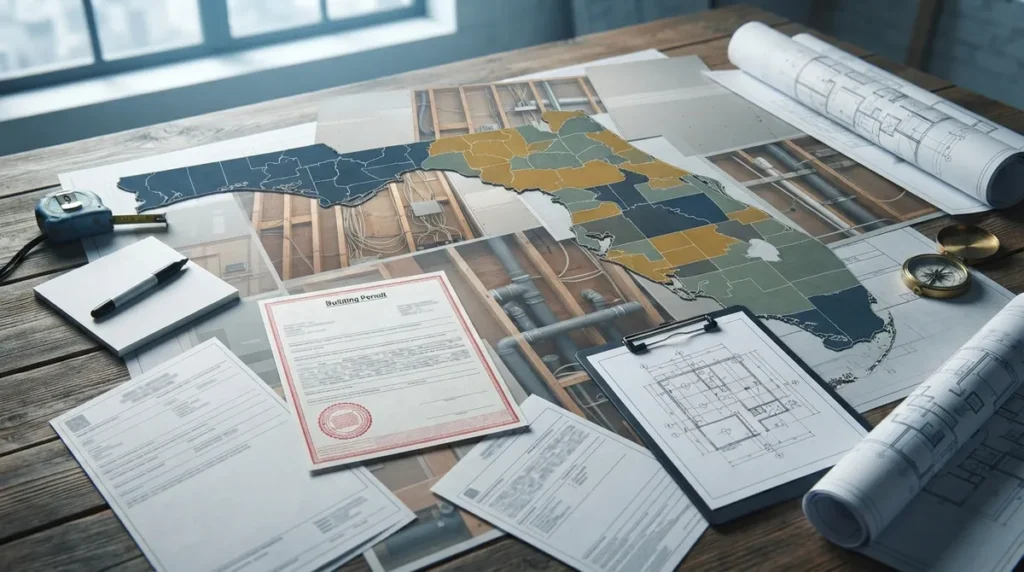
Florida has no statewide after-the-fact permitting process—all procedures, fees, and requirements are handled locally by county and city building departments, meaning what works in one jurisdiction may not apply to another.
-
Some Florida counties like St. Lucie double standard permit fees for after-the-fact applications, while others apply flat penalties; always confirm your specific jurisdiction's rates and requirements before applying.
-
Concealed work such as framing behind drywall often requires certification from a Florida-licensed design professional or engineer rather than physical opening, making professional support critical for efficient resolution.
-
Unpermitted work can surface during home sales, insurance claims, or code enforcement sweeps, resulting in doubled fees, liens, delayed closings, or claim denials—applying for after-the-fact permits proactively prevents these costly consequences.
-
The $7,500 exemption for single-family homes excludes electrical, plumbing, structural, mechanical, and gas work plus flood hazard areas; verify current applicability with your local building department as rules shift.
-
After-the-fact permitting is legally fixable and common; building departments handle these requests regularly, and working with a permitting partner familiar with local processes significantly speeds resolution.
So, you just found out that sunroom, roof replacement, or garage conversion never actually got a permit. Maybe you inherited the surprise from a previous owner, maybe a contractor skipped a step, or maybe life just got busy and the paperwork slipped through the cracks. Take a breath — you are definitely not alone, and this is fixable. Every week, our team at 1 Contractor Solutions helps homeowners, real estate professionals, and contractors across the state work through exactly this kind of situation.
Here's the friendly truth: there is no single "Florida statewide after-the-fact permitting" button you can push. Florida Statutes §553.79 sets the baseline rule that you need a permit before you build, alter, repair, or demolish covered structures, but the actual process, forms, fees, and inspection requirements are handled locally, county by county and city by city. That means what works in Tampa might look completely different in Fort Lauderdale. In this guide, we'll walk through what after-the-fact permitting really means, how the process generally works, what it might cost, and how a dedicated permitting partner can make the whole thing feel a lot less overwhelming.
What Is After-the-Fact Permitting in Florida?
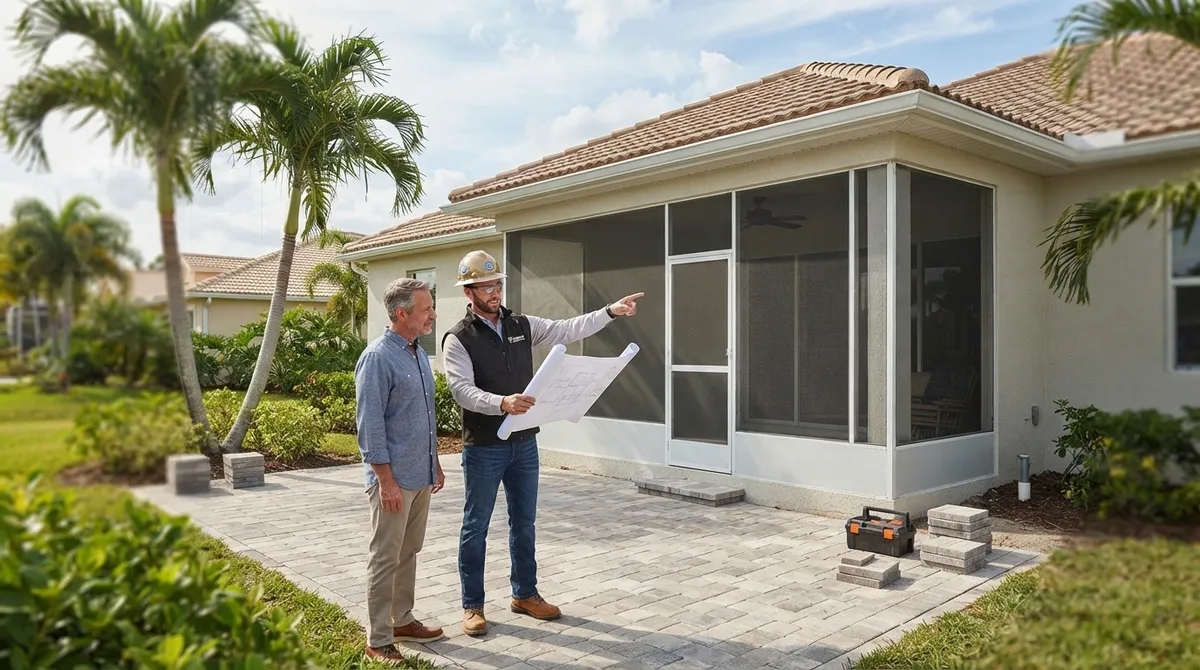
After-the-fact permitting is exactly what it sounds like: applying for a permit for work that has already started, or is already finished, without the required approval in hand. It's the legal path to bringing unpermitted construction into compliance rather than leaving it as an open liability on your property.
Florida Statutes §553.79(1)(a) makes it unlawful to construct, alter, repair, or demolish a building without first securing a permit from the appropriate enforcing agency, unless a specific exception applies. The Florida Building Code sets the technical standards everyone must meet, but your local building department is the one actually reviewing plans, collecting fees, and scheduling inspections. This local-first structure is why the process can feel like a moving target if you're not familiar with it.
Why There's No Single Statewide Process
Because permitting authority rests with local jurisdictions, procedures vary widely:
- Some counties charge double fees for after-the-fact applications; others apply standard rates plus a penalty
- Documentation requirements differ — some departments want a full plan set, others accept simplified drawings for minor work
- Inspection timelines and concealed-work rules aren't uniform
- Notice of Commencement thresholds and recording requirements can differ by county
This is precisely why so many general contractors, solar installers, and homeowners reach out to a firm that already knows the players. Our Building Department Lookup tool and Open Permit Search tool exist precisely because figuring out "who actually reviews this" is often half the battle.
How the After-the-Fact Process Generally Works
While every jurisdiction has its own flavor, most after-the-fact applications follow a similar arc. Here's a general roadmap:
- Identify the correct jurisdiction. Confirm whether your property falls under county or municipal authority — this isn't always obvious near city borders.
- Document the existing work. Photos, as-built measurements, and any original plans (if they exist) help establish what was actually built.
- Prepare compliant construction documents. If concealed work (like framing behind drywall) can't be inspected directly, a Florida-licensed design professional may need to evaluate and certify it.
- Submit the application and pay applicable fees. Expect the possibility of doubled fees, plus standard permit costs.
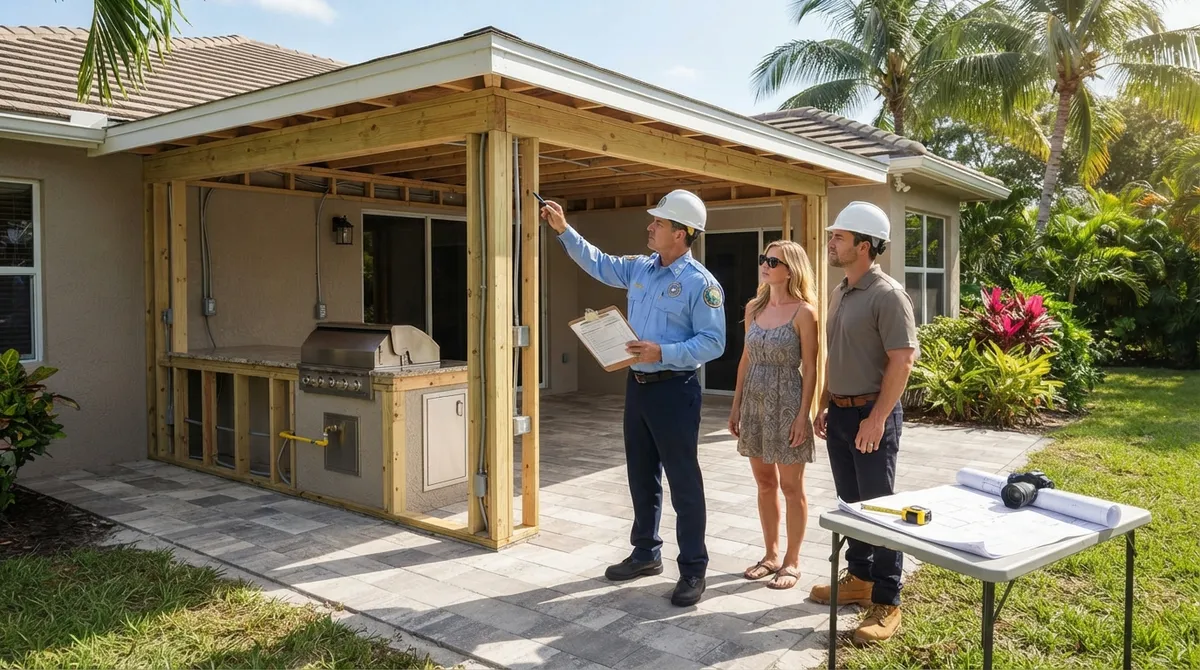
- Coordinate inspections. The building department verifies code compliance, sometimes requiring exploratory openings if work is hidden.
- Address any notices or violations. If a code enforcement case is already open, resolving the permit often resolves the underlying violation too.
- Receive final approval. Once everything checks out, the permit closes and your property record reflects legitimate, inspected work.
An after-the-fact application does not automatically legalize anything. You may still need to open up concealed areas, hire a licensed engineer to certify structural elements, or make physical corrections before the permit can close. This is where having in-house engineering and structural engineering support really pays off — instead of waiting on an outside consultant to circle back, corrections get handled quickly.
Local Examples: How Fees and Rules Can Differ
To show just how much variation exists, here's a quick snapshot based on published county practices:
| County | Notable After-the-Fact Practice | Source Detail |
|---|---|---|
| St. Lucie County | Doubles standard permit fee for after-the-fact applications | Concealed work may require third-party engineering analysis at owner's cost |
| Indian River County | Requires Notice of Commencement before first inspection if job value exceeds $2,500 | May require certification from a Florida-licensed design professional for concealed structural work |
| Charlotte County | Publishes specific guidance on what does and does not require a permit | Helps property owners self-check before applying |
These examples reinforce why local knowledge matters so much. If you're working across multiple counties — say you're a solar contractor installing systems in both Manatee County and Hillsborough County — the rules you follow in one jurisdiction may not transfer to the next.
What Documents Might Be Required
While requirements vary, here's a general list of what building departments commonly ask for:
- Completed after-the-fact or standard permit application
- Detailed construction documents or as-built drawings
- Site plan showing the affected structure or addition
- Engineer letter or certification for structural elements that can't be visually inspected
- Recorded Notice of Commencement (for jobs above certain dollar thresholds)
- Proof of contractor licensure, if applicable
- Any prior permit history or code enforcement case numbers
If your project involves electrical, plumbing, or mechanical work that's already concealed, don't panic — this is common, and it's manageable with the right documentation strategy. Our as-built drawings and engineer letters services exist specifically for these situations.
The $7,500 Exemption: What to Know
You may have heard about a $7,500 exemption for certain work on single-family homes under Florida Statutes §553.79. This exemption has real limits, though. It generally excludes:
- Work performed in a flood hazard area
- Electrical work
- Plumbing work
- Structural work
- Mechanical or gas work
Recent legislative activity, including Florida HB 803, has also brought renewed attention to permit thresholds and exceptions heading into 2026. Because these rules can shift and because local building departments interpret exemptions differently, it's always worth confirming current applicability with the jurisdiction before assuming your project qualifies. Our team stays current on these changes so you don't have to track legislative updates yourself.
What Happens If You Skip Permitting Altogether?
Ignoring unpermitted work rarely makes it disappear. Instead, it tends to surface at the worst possible moments — during a home sale, an insurance claim, or a code enforcement sweep. Consequences can include:
- Notices of violation and escalating fines
- Liens placed on the property
- Doubled or tripled permit fees once you do apply
- Delayed real estate closings when open permits or unpermitted work surface during title searches
- Insurance claim denials tied to uninspected construction
If you're a real estate professional, this is a familiar headache. An open permit found at closing can stall a deal for weeks. Getting ahead of it with proactive realtor closing support often saves everyone involved a lot of stress.
Who Benefits Most From Professional After-the-Fact Support
General Contractors
When you're managing multiple job sites, an after-the-fact permit issue on one project can eat into time you need for the next five. Having a team that files, tracks, and pushes plan review forward means your crews stay scheduled instead of standing around waiting on paperwork.
Solar Companies
Solar installations often move fast, and sometimes documentation lags behind installation. If your structural or electrical filings need to catch up, code-compliant drawings and coordinated permitting can get you back in good standing without derailing your installation pipeline.
Real Estate Professionals
Whether you're an agent, investor, or buyer's representative, unpermitted work discovered during due diligence doesn't have to kill a deal. Fast documentation and a clear resolution path can keep closings on track.
Homeowners
If you just want your home legal, insurable, and easy to sell someday, after-the-fact permitting is simply the responsible next step. It's not about punishment — it's about peace of mind.
How a Permitting Partner Helps Across All 67 Counties
Because after-the-fact rules genuinely differ by jurisdiction, working with a firm that already understands the local landscape saves enormous time. Here's what that kind of support typically includes:
| Service Area | What It Solves |
|---|---|
| After-the-fact and expired permits | Handling files other providers decline, including complex or concealed work |
| Plan review coordination | Working every reviewer comment so applications don't stall |
| Code compliance and violations | Resolving notices tied to unpermitted construction |
| Private provider plan review | Bypassing the county queue with licensed private review |
1 Contractor Solutions operates as Florida's outsourced permitting department, working in all 67 counties and filed in more than 400 municipalities. Because drafting and engineering happen in-house, when a reviewer flags a correction, the fix happens quickly rather than waiting on a third-party consultant. That matters enormously in after-the-fact cases, where concealed work often needs prompt engineering certification.
You can browse coverage across specific regions, including Pinellas County, Miami-Dade County, and Broward County, or explore the full list of Florida counties served.
A Few Reassuring Reminders
- Unpermitted work is common — you're joining a long line of Floridians who've navigated this successfully
- Most jurisdictions want to help you get compliant, not punish you into oblivion
- Concealed work can often be certified by a licensed engineer without full demolition
- Getting ahead of it now is almost always cheaper and faster than waiting
For more background on related topics, our penalty for building without a permit in Florida guide and our piece on after-the-fact permit costs in Florida go deeper into specific scenarios.
You can also see what our clients say by visiting 1 Contractor Solutions on Google, or connect with us through our LinkedIn page and our Facebook page for regular updates on Florida permitting news.
Ready to Get Your Property Legal Again?
Unpermitted work doesn't have to hang over your head forever. Whether you're a homeowner who just discovered a surprise, a contractor juggling multiple jobs, or a realtor trying to save a closing, the after-the-fact process is absolutely navigable with the right support. According to the Florida Statutes governing building permits, compliance is always achievable through the correct local process, and our team is here to make that process as painless as possible.
Ready to stop worrying about it and start fixing it? Get a free quote today, and let's figure out exactly what your property needs.
FAQs
What is an after-the-fact building permit in Florida?
It's simply the process of applying for a permit after construction has already started or finished without one. It's the legal path to bring unpermitted work into compliance, and honestly, it's more common than you'd think — building departments handle these requests regularly.
Can I get a permit in Florida after construction is already complete?
Yes, in most cases you absolutely can! The building department will review your documentation, may require inspections or engineer certification for concealed work, and once everything checks out, your permit closes just like a normal one.
How much does an after-the-fact permit cost in Florida, and are fees doubled?
It depends entirely on your county — some jurisdictions, like St. Lucie County, do double the standard permit fee for after-the-fact applications, while others may apply a flat penalty. There's no single statewide fee, so it's worth checking with your local building department or a permitting partner who already knows the local rates.
What happens if I did work without a permit in Florida?
The good news is that it's fixable! You may face fines, notices of violation, or even liens if it goes unresolved, but applying for an after-the-fact permit typically resolves the underlying issue. The key is addressing it proactively rather than waiting for it to surface at a sale or insurance claim.
Do I need a permit for work under $7,500 on a Florida home?
There is an exemption threshold in Florida Statutes §553.79 for certain work under $7,500 on single-family homes, but it excludes electrical, plumbing, structural, mechanical, gas work, and anything in a flood hazard area. Always double-check with your local building department since exemptions can be interpreted differently county to county.
We do this work every day across all 67 Florida counties. Call (866) 314-6931 and we will tell you what your situation actually requires — including when you do not need us.
Related services
Permit Facilitation & Filing
You have a crew scheduled, a client asking for dates, and a permit sitting somewhere in a queue you cannot see. We file it, w…
See the servicePlan Review Coordination
A permit in plan review is not one queue. On a commercial project it can be six queues, each with its own reviewer, its own c…
See the serviceReady to get your permit moving?
One call tells you which jurisdiction controls your project, what it will take, and what it will cost. Most of the time we can scope it on the phone.