
Blog
Who Writes Engineer Letters for After-the-Fact Permits in FL
A Florida-licensed PE writes engineer letters for after-the-fact permits. Learn who qualifies, what they do, and what your building department decides.
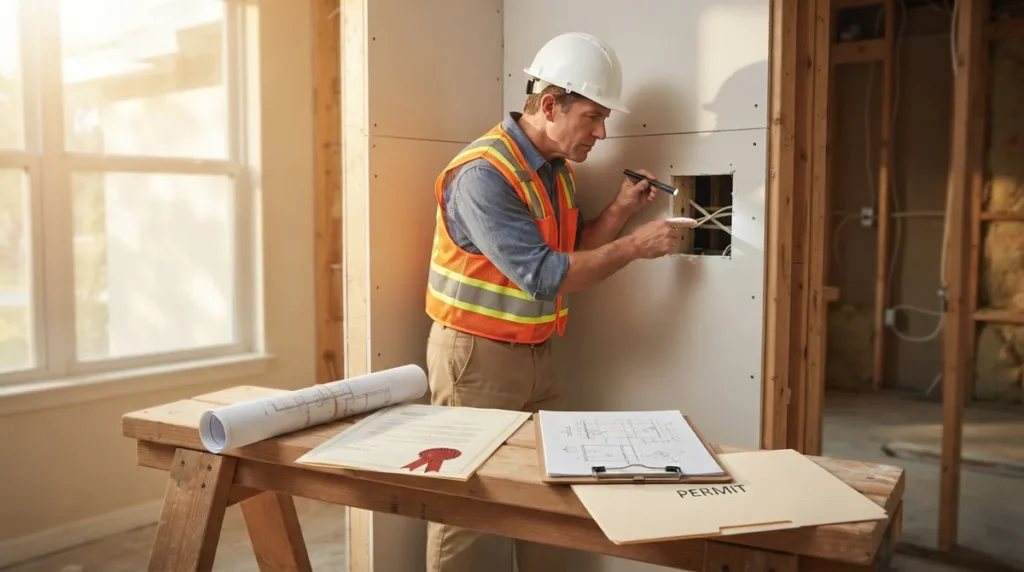
Key Takeaways
-
A Florida-licensed professional engineer with competence matching the work (usually structural for framing, roofs, or enclosures) writes the engineer letter; contractors and expediters cannot seal it.
-
Florida has no statewide engineer-letter form; your local building department (the AHJ) decides what documentation it requires, so call them for the written submittal checklist before hiring an engineer.
-
Under Florida Statute 471.025, engineering documents for public record or the owner must be signed, dated, and sealed, and engineers may only seal work within their licensure and competence.
-
An engineer letter is supporting evidence, not a permit; the AHJ may still require sealed as-built plans, calculations, testing, openings in finished surfaces, or corrective work with re-inspection.
-
Concealed work often cannot be verified by a letter alone, so a small inspection opening is usually far cheaper than tearing out finished walls and gives the engineer real evidence to evaluate.
-
Verify the engineer's license is active through the Florida DBPR license lookup and confirm their experience matches your specific type of work and local AHJ process before signing a contract.
So you've discovered unpermitted work on your property, or a building department just sent you a notice, and now someone has mentioned you need an "engineer letter." Take a breath. You're far from the first person to land here, and this is a very fixable situation.
The big question on most people's minds is simple: who writes engineer letters for after the fact permits in Florida? The short answer is a Florida-licensed professional engineer (PE) whose expertise matches the work in question. But there's more nuance than that, and getting it wrong can cost you weeks and money.
In this guide, we'll walk through who qualifies, what the engineer actually does, what the building department decides, and how to avoid the common missteps. Whether you're a general contractor cleaning up a job, a solar company with a missed inspection, a realtor racing toward closing, or a homeowner who inherited someone else's shortcuts, this is for you.

The Short Answer: A Florida-Licensed Professional Engineer
An engineer letter for an after-the-fact permit is generally prepared by a Florida-licensed professional engineer with relevant competence. For structural work like an addition, roof framing, or a screen enclosure, that usually means a structural engineer. For electrical, mechanical, or plumbing issues, the AHJ may want a MEP engineer or other qualified design professional.
Here's the important part: Florida does not have one statewide engineer-letter form or a single statewide approval process. The local building department, called the authority having jurisdiction (AHJ), decides what documentation it needs for your specific unpermitted work.
A few key points to keep in mind:
- The engineer must be actively licensed in Florida, not just licensed elsewhere.
- The engineer may only seal work within their licensure and professional competence.
- A contractor, permit expediter, or unlicensed consultant can coordinate the process but cannot issue or seal an engineering opinion.
If you want to see how this plays out in a typical project, our overview of who writes engineer letters for Florida permits is a helpful companion read.
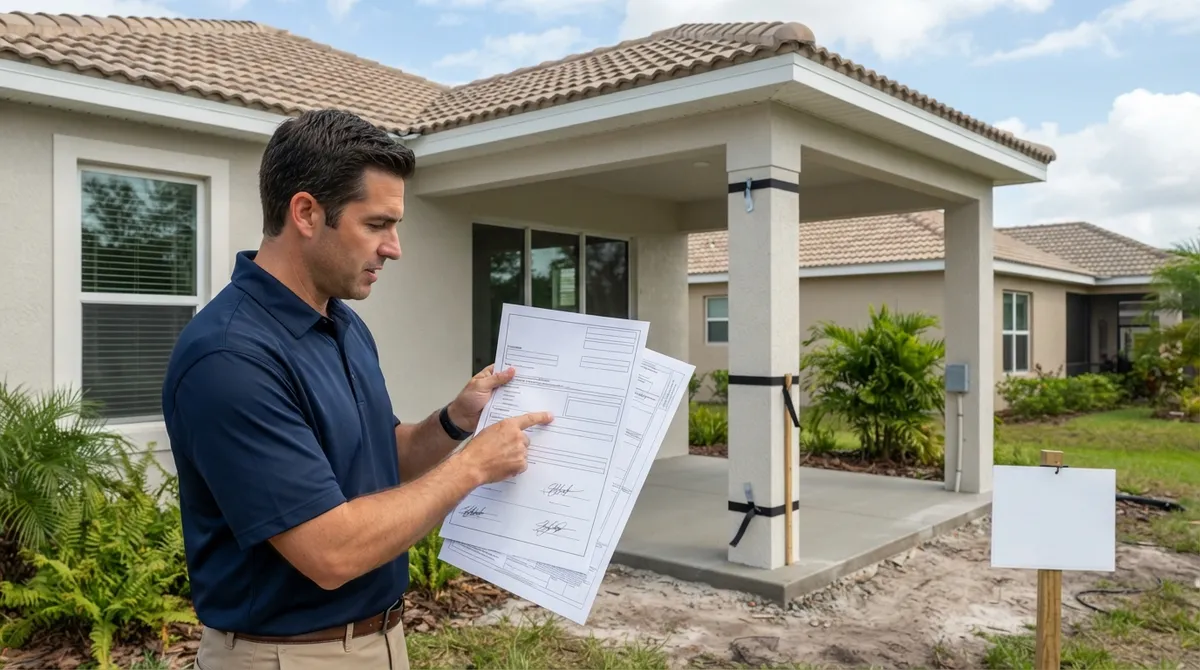
What an After-the-Fact Permit Actually Is
Before we go deeper, let's make sure we're speaking the same language. An after-the-fact permit is a permit obtained after work has already been started or completed without one. It's the formal path to bring unpermitted work into the record.
These permits are handled by your local building department. Because requirements vary by jurisdiction, project type, building age, and scope, there is no one-size-fits-all checklist. If you want the full process, see our guide on how to get an after-the-fact permit in Florida, or learn about our after-the-fact and expired permit services.
Who Can (and Can't) Write the Letter
Let's clear up the most common confusion. Many people assume anyone in the permitting world can produce an engineer letter. Not so. Here's a quick breakdown.
| Professional | Can Issue a Sealed Engineer Letter? | Typical Role |
|---|---|---|
| Florida-licensed structural PE | Yes, for structural work within their competence | Evaluates framing, foundations, trusses, connections |
| Florida-licensed MEP engineer | Yes, for electrical, mechanical, plumbing work | Evaluates systems and code compliance |
| General contractor | No | Coordinates work, corrections, and inspections |
| Permit expediter or consultant | No | Files, tracks, and coordinates the process |
| Out-of-state engineer without Florida license | No | Cannot seal for Florida public record |
The takeaway? Coordination and engineering are two different jobs. Both matter, but only the licensed engineer can stamp the opinion.
Why the Seal Matters: Florida Statute 471.025
You might wonder why everyone keeps saying "signed and sealed." It's not just a formality. Under Florida Statute 471.025, final engineering reports and other documents prepared or issued by a licensee for public record, or provided to the owner, must be signed, dated, and sealed.
That means an informal email or an unsigned note from a friendly engineer won't cut it. And remember, the engineer may only seal work within their own licensure and professional competence. A civil engineer who has never touched truss design shouldn't be sealing your truss evaluation.
What the Engineer Actually Does
Many owners picture an engineer glancing at a photo and signing a page. In reality, a responsible engineer follows a process. While the details vary, it typically looks like this:
- Review the scope. The engineer learns what was built, when, and what records exist.
- Gather available documents. Photos, old drawings, invoices, product approvals, and any prior permits.
- Visit the site. Where appropriate, the engineer inspects visible conditions firsthand.
- Evaluate against code. Visible conditions are assessed against the Florida Building Code and applicable standards.
- State findings and limitations. The letter explains what was observed, what was verified, and what couldn't be verified.
- Seal the document. The final product is signed, dated, and sealed per Florida law.
That last bit about limitations is important. If the work is concealed behind drywall, under a finished roof, or buried in a slab, the engineer can only speak to what's verifiable.
The Building Department Has the Final Say
Here's the part that surprises people. An engineer letter does not legalize your work. It's not a permit, it's not a guarantee of approval, and it doesn't replace required plans, inspections, or corrections.
The local building official decides whether your submitted evidence satisfies the Florida Building Code and local requirements. Depending on the situation, the AHJ may ask for:
- A simple engineer letter
- Sealed drawings or as-built plans
- Structural calculations
- Inspection or testing reports
- Openings made in finished surfaces so work can be seen
- Corrective work followed by re-inspection
For more on this, our article on whether a sealed drawing is required for after-the-fact permits goes into the details. You can also explore our engineer letters and as-built drawings services.
Letter vs. Sealed Plans vs. Testing: What Might Your AHJ Want?
Since every jurisdiction differs, it helps to understand the range of documents you might encounter.
| Document | When It Is Often Requested | What It Provides |
|---|---|---|
| Engineer letter | Minor or visibly verifiable work | Professional opinion on code compliance |
| Sealed as-built drawings | Additions, structural changes, enclosures | Documented record of what was built |
| Structural calculations | Load-bearing or wind-resistance questions | Technical proof the structure performs |
| Testing or inspection report | Concealed or questionable work | Evidence of installation quality |
| Corrective work plan | Deficiencies found during review | Path to bring work into compliance |
Notice there's no standard fee or turnaround time established statewide. Costs and timelines vary by local jurisdiction, project scope, and the engineering firm.
What About Work That's Already Covered Up?
This is one of the most common worries we hear. Can a structural engineer approve something that's already hidden behind finished walls or a completed roof?
Sometimes, but often not from a letter alone. If concealed work can't be verified, the AHJ may require selective openings, destructive testing, corrective work, or additional inspections rather than accepting a letter by itself. It's less dramatic than it sounds. A small inspection opening in a wall is a lot cheaper than tearing everything out, and it gives the engineer something real to evaluate.
For roof framing questions specifically, see truss verification after the fact in Florida.
Before You Hire: Call the Building Department First
Here's our friendliest piece of advice: before you hire any engineer, contact your local building department and ask for the exact written submittal requirements for an after-the-fact permit. Requirements can differ based on whether the work touches structural, electrical, plumbing, mechanical, fire-safety, or floodplain matters.
If you're not sure which agency even controls your property, especially near city lines, our building department lookup tool can point you in the right direction. You can also check for lingering paperwork using the open permit search.
Getting the checklist first means your engineer produces exactly what the reviewer expects, rather than a generic letter that gets kicked back.
How to Verify an Engineer's License
Trust, but verify. Checking an engineer's credentials takes just a few minutes and can save you from a rejected submission.
- Visit the Florida Department of Business and Professional Regulation (DBPR) license lookup, and confirm the engineer's license is active.
- Check that the license is for professional engineering in Florida.
- Ask about experience with your specific type of work, such as structural, electrical, or mechanical.
- Confirm they are familiar with your local AHJ's after-the-fact process.
- Request a clear scope and what the final deliverable will look like.
The state's own Chapter 471 of the Florida Statutes governs engineering licensure and practice, so it's a good reference if you want to understand the rules behind the seal.
Who Needs This, and Why It Matters to You
Different readers come to this topic with different stakes. Here's how it typically lands:
- General contractors often inherit jobs where a sub skipped a permit or an inspection lapsed. A sealed letter or as-builts can help close it out. See our page for general contractors.
- Solar companies sometimes need structural verification of roof attachments after an install proceeded without full documentation. Our solar contractor support covers this.
- Realtors and investors face closing deadlines when unpermitted work surfaces. Learn about realtor closing support.
- Homeowners who bought a property with a prior owner's unpermitted addition need a path to legalize it. Visit our homeowner resources.
Common Mistakes That Slow Things Down
After helping with many of these files, a few patterns show up again and again. Avoid these and you'll be ahead of the game:
- Hiring an engineer before calling the AHJ. You end up with a letter that doesn't match the checklist.
- Assuming a letter equals approval. It's evidence, not a permit.
- Using the wrong type of engineer. A mismatch between the work and the engineer's competence invites rejection.
- Skipping verification of the license. An inactive or out-of-scope license can sink the submission.
- Ignoring concealed work. Pretending hidden conditions don't exist usually backfires at inspection.
Our article on mistakes when hiring an engineer for unpermitted work digs into these further.
How 1 Contractor Solutions Helps
This is where having the right team really pays off. 1 Contractor Solutions is Florida's outsourced permitting department. Our drafting and engineering are in house, and our own engineer signs and seals the work. That means when a reviewer flags a comment, we can address it directly instead of waiting on an outside consultant to return a call.
We handle the whole picture: determining which jurisdiction actually controls your property, preparing the engineer letter or as-built plans, filing the application, tracking it, responding to reviewer comments, and carrying it through to closeout. We serve all 67 Florida counties and respond within 30 minutes, day or night. You can read what customers say by visiting our 1 Contractor Solutions Google profile, or follow us on LinkedIn and follow us on Facebook for updates.
Not sure whether your situation calls for a quick letter or full sealed plans? Our engineering team can help you figure that out, and if you're up against a deadline, our urgent permit rescue service is built for exactly that.
Putting It All Together
So, who writes engineer letters for after the fact permits in Florida? A Florida-licensed professional engineer with competence matched to your specific work, who signs, dates, and seals the document as required under Florida law. But the engineer is only one piece. The building department decides what it needs, and the process works best when you start with the AHJ's written requirements, hire the right-fit engineer, and plan for the possibility of testing or corrections.
It may feel like a lot, but you don't have to carry it alone, and the vast majority of these situations are resolvable. If you're ready to move forward, get a free quote and let us tell you exactly what your jurisdiction will require and how fast we can get it done.
FAQs
Who can write an engineer letter for an after-the-fact permit in Florida?
A Florida-licensed professional engineer whose expertise matches the unpermitted work, such as a structural engineer for framing or roof issues. Contractors and permit expediters can help coordinate, but they can't issue or seal the engineering opinion.
Does an engineer letter need to be signed and sealed in Florida?
Yes. Under Florida Statute 471.025, final engineering documents provided for public record or to the owner must be signed, dated, and sealed. The engineer can only seal work within their licensure and professional competence.
Will an engineer letter legalize unpermitted work in Florida?
Not by itself. The letter is supporting evidence, but your local building official decides whether it satisfies the Florida Building Code. They may also require sealed plans, inspections, testing, or corrective work.
Can a structural engineer approve work that's already covered up?
Sometimes, but often not from a letter alone. If concealed work can't be verified, the building department may require openings, testing, or added inspections so the engineer has something real to evaluate.
How do I verify that a Florida engineer is licensed?
Look up the engineer through the Florida Department of Business and Professional Regulation (DBPR) license search and confirm the license is active. It's also smart to make sure their experience fits the type of work you need evaluated.
We do this work every day across all 67 Florida counties. Call (866) 314-6931 and we will tell you what your situation actually requires — including when you do not need us.
Related services
Permit Facilitation & Filing
You have a crew scheduled, a client asking for dates, and a permit sitting somewhere in a queue you cannot see. We file it, w…
See the servicePlan Review Coordination
A permit in plan review is not one queue. On a commercial project it can be six queues, each with its own reviewer, its own c…
See the serviceReady to get your permit moving?
One call tells you which jurisdiction controls your project, what it will take, and what it will cost. Most of the time we can scope it on the phone.