
Blog
Unpermitted Solar Install in Florida: How to Fix It in 2026
Found an unpermitted solar install in Florida? Learn the steps, documents, and risks of legalizing your system with a corrective permit in 2026.
Key Takeaways
-
Florida requires separate building permits, utility interconnection approval, and contractor licensing for solar installations; missing any of these creates legal problems, so confirm which approvals are absent before attempting corrective action.
-
There is no statewide after-the-fact permit process in Florida—each city or county has its own requirements, fees, and penalties, meaning the same unpermitted system can be handled differently in Tampa versus Miami.
-
Unpermitted solar systems can block home sales, trigger insurance claim denials, attract code enforcement action, and create safety hazards; addressing the problem early prevents costly surprises during closings or inspections.
-
Legalizing an unpermitted system typically requires as-built plans, equipment specs, structural documentation, electrical diagrams, and proof of contractor licensing; concealed or buried wiring may require exposure for inspector approval.
-
A building permit alone does not authorize grid operation—you must separately confirm utility interconnection approval with your electric company to legally run a grid-tied system and protect net metering benefits.
-
The narrow homeowner exemption under §489.103 applies only to specific one- to three-family residences in certain jurisdictions, requires advance permitting agency approval, and mandates a licensed electrical contractor handle all wiring.
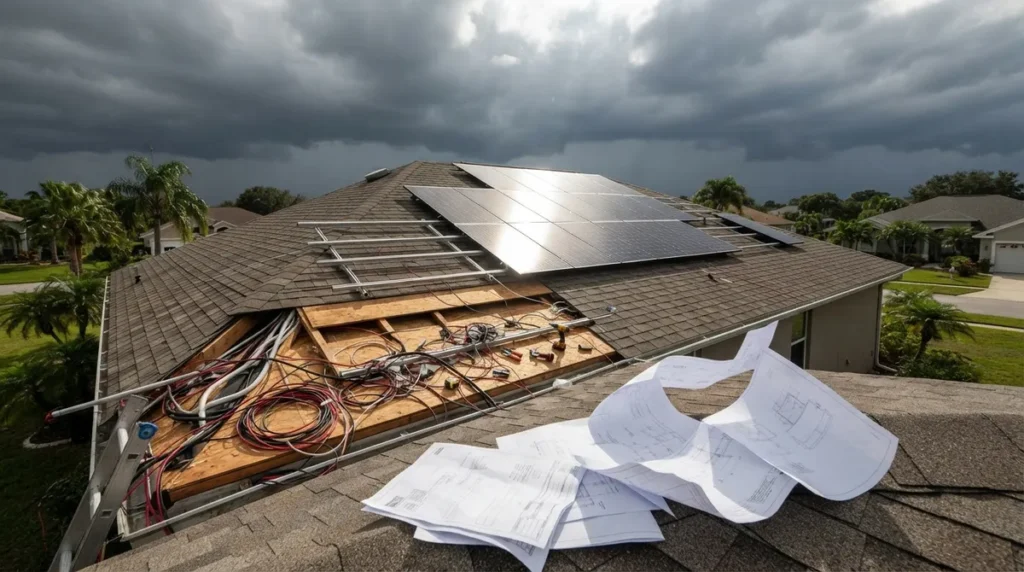
So you just found out your solar panels went up without a permit. Take a breath. You are not the first person in Florida to be in this spot, and you will not be the last. Whether you bought a home with an unpermitted solar install in Florida, hired an installer who skipped steps, or inherited a system from a previous owner, there is usually a path forward.
The good news is that building departments deal with this situation more often than you would think. The less good news is that the fix is rarely as simple as filling out one form. A solar system touches your roof, your electrical panel, and your utility connection, and each of those has its own approval trail.
In this guide, we walk through what an unpermitted solar install really means in Florida, what the law says, what a corrective permit usually involves, and how to protect yourself during a sale or insurance claim. We also cover who can help when the paperwork feels like too much. Let us get your system legal and your peace of mind back.
What Counts as an Unpermitted Solar Install in Florida?
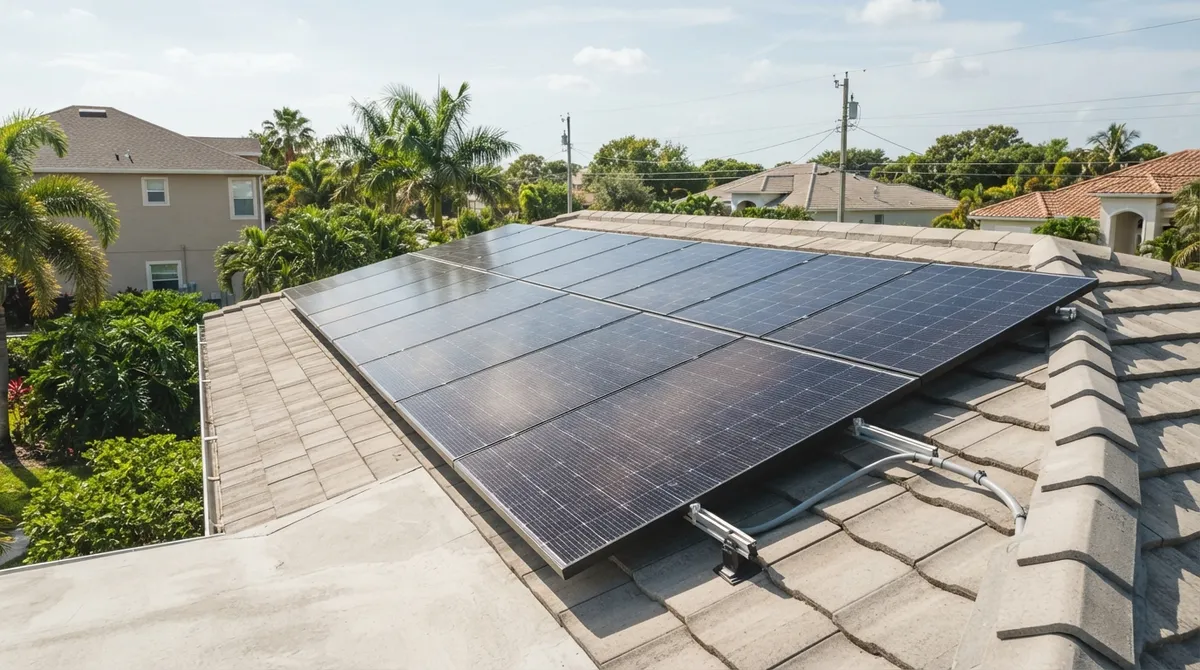
An unpermitted solar install in Florida is any photovoltaic system that was installed without the required building permit from the city or county with jurisdiction over the property. Florida Statutes §553.79 generally requires a permit before covered construction or alteration begins, and solar panels fall squarely into that category.
It also helps to know that a solar project actually involves three separate approvals. People mix these up all the time, so here is the breakdown.
| Approval | Who Issues It | What It Covers |
|---|---|---|
| Building/electrical permit | City or county building department | Structural attachment, wind load, electrical safety, inspections |
| Utility interconnection approval | Your serving electric utility | Permission to connect and operate a grid-tied system |
| Contractor licensing compliance | State licensing under Chapter 489 | Proof the right licensed professional performed the work |
A system can be missing one, two, or all three of these. That is why the first step is always figuring out exactly which pieces are absent.
What Florida Law Says About Solar Installation
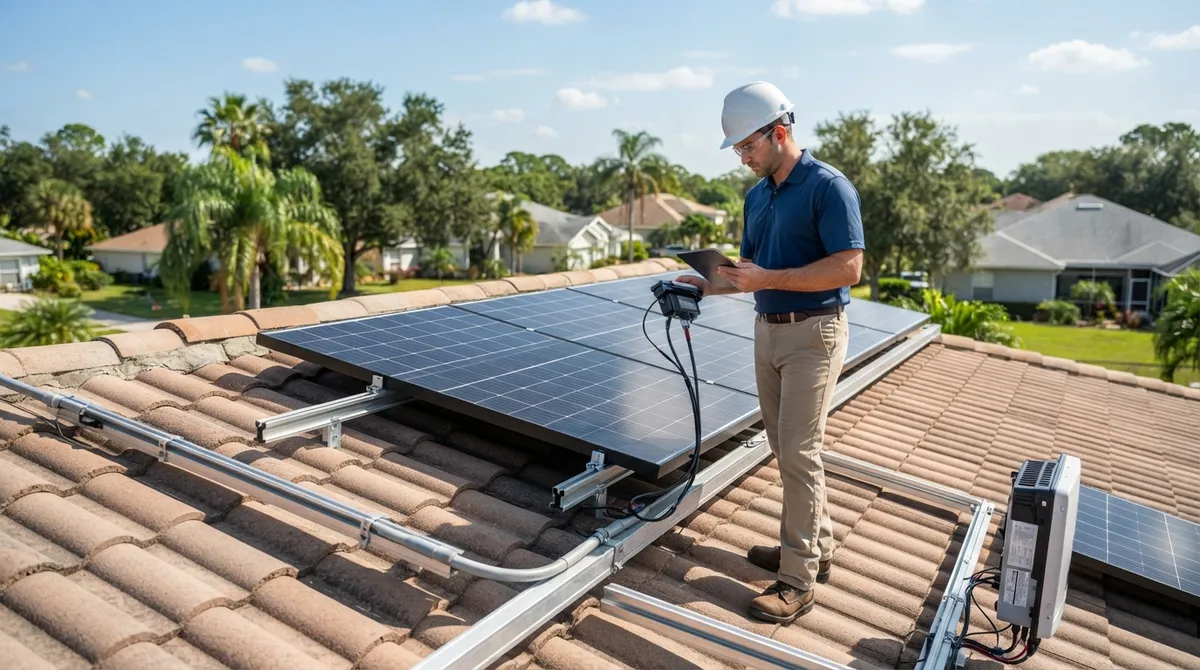
Solar work is regulated under Florida Statutes Chapter 489, which defines a solar contractor to include contractors who install photovoltaic systems and related equipment. That matters because licensing is part of the picture, not just the permit.
The Owner-Work Exemption Is Narrow
You may have heard that homeowners can install their own solar. The reality is more limited. Section 489.103 describes a narrow exemption that applies only under specific conditions, including certain one-, two-, or three-family residences in jurisdictions participating in the referenced federal Rooftop Solar Challenge program.
Even then, several rules apply:
- The local permitting agency must approve the work beforehand.
- The owner may not perform the system wiring.
- A licensed electrical contractor must handle the wiring, including interconnection to the home's electrical system.
Please do not assume this exemption covers your project. Confirm eligibility with your local building department first. If you are weighing the owner route, our guide to owner-builder permits explains how that process generally works.
Is There an After-the-Fact Solar Permit in Florida?
Here is where people get tripped up. There is no single statewide after-the-fact solar permit process or fee schedule. Each city or county building department decides whether it will accept a retroactive application and what it will require.
That means the same unpermitted solar install in Florida could be handled differently in Tampa, Orlando, and Miami. Some jurisdictions call it a corrective permit. Others call it a retroactive or after-the-fact permit. Some add penalties or double fees, and others do not.
One more important point: submitting paperwork does not automatically legalize the work. The building authority may still require corrections, extra engineering, additional inspections, or, if the system cannot be brought into compliance, removal or replacement.
For a deeper look at how this works generally, see our article on legalizing unpermitted work in Florida, or read about the after-the-fact and expired permits process we handle every week.
Step-by-Step: How to Legalize an Unpermitted Solar System
While the exact steps vary by jurisdiction, most corrective solar permits follow a similar rhythm. Here is a practical roadmap.
- Confirm your jurisdiction. Near city lines, it is not always obvious whether the city or the county controls your address. Our building department lookup tool can help you pin that down.
- Check for open or expired permits. Sometimes a permit was pulled but never finished. Run an open permit search before you assume nothing exists.
- Verify who installed it. Find out whether the installer held the proper Florida license. Missing licensure can complicate the corrective process.
- Gather system documentation. Collect equipment specs, invoices, photos, and any warranty paperwork.
- Prepare as-built plans and engineering. The department will want to see what is actually on your roof and in your panel.
- File the corrective application. Submit under the process your building department prescribes.
- Respond to reviewer comments. Expect questions and plan to answer them promptly.
- Pass inspections and finalize. Do not stop until the permit is closed out and you hold the approved plans and inspection records.
What Documents Will the Building Department Want?
Requirements differ by jurisdiction and system size, but a typical corrective solar review may call for the following.
| Document | Why It Matters |
|---|---|
| As-built site and roof layout | Shows panel locations, setbacks, and fire access pathways |
| Equipment specifications | Confirms panels, inverters, and racking are listed and approved |
| Attachment and racking details | Proves the system is secured to the roof correctly |
| Structural or wind-load documentation | Verifies the roof can carry the load in Florida wind conditions |
| Electrical single-line diagram | Shows wiring, disconnects, breakers, and grounding |
| Proof of contractor licensing | Confirms the work was performed by an appropriately licensed contractor |
That is a lot of technical material, and this is where in-house engineering earns its keep. Our team prepares as-built drawings and engineer letters that our own engineer signs and seals, so when a reviewer flags something we can fix it right away instead of waiting on an outside consultant.
The Hidden Problem: Concealed Work
Inspectors cannot approve what they cannot see. If wiring is buried, conduit is hidden, or roof attachments are covered, the department may ask you to expose the work or otherwise verify compliance.
This is a common source of surprise costs. It is also why photos from the original installation, if you have them, are worth their weight in gold. If you are a solar company trying to legalize a backlog of older jobs, see our thoughts on whether solar companies can legalize unpermitted installs.
A Permit Is Not Utility Permission
Here is a point that catches almost everyone. A building permit does not equal permission to operate a grid-tied system. Local building approval and utility interconnection are separate processes.
Before you run a grid-connected system, confirm interconnection status with your serving utility. Operating without it can create safety concerns and may cause problems with net metering or billing. Treat the permit and the interconnection as two checkboxes, and make sure both are checked.
What Can Go Wrong If You Leave It Unpermitted?
Ignoring the problem rarely makes it go away. Here are the most common ways an unpermitted solar install in Florida comes back to bite owners.
- Home sales and closings. Buyers, lenders, and title companies increasingly ask about permit status. Unresolved work can stall or sink a deal. Our post on open permits found at closing shows how this plays out.
- Insurance headaches. An insurer may question coverage if work was never approved, especially after a storm or fire. See our overview of expired permits and insurance claims in Florida.
- Code enforcement. A complaint or inspection can trigger a notice of violation. Learn what to expect in our guide to code compliance violations.
- Safety risks. Improper wiring, grounding, or roof attachment is a real hazard in a storm-prone state.
- Utility trouble. Without interconnection approval, the system may not legally operate on the grid.
For a full look at the consequences, read our breakdown of the penalty for building without a permit in Florida.
DIY Fix vs. Professional Help
Some owners want to tackle the corrective permit themselves. That can work for simple systems in friendly jurisdictions. Others find the process eats weeks of evenings and weekends. Here is an honest comparison.
| Factor | Handling It Yourself | Working With a Permitting Team |
|---|---|---|
| Knowing local rules | You research each requirement | Team already knows the jurisdiction |
| Plans and engineering | You hire and coordinate separately | Drafting and sealed engineering handled together |
| Reviewer comments | You respond and resubmit alone | Comments worked and resubmitted for you |
| Tracking and follow-up | You chase status calls | Filing and tracking handled start to finish |
| Risk of delays | Higher if documents are incomplete | Lower with complete first submission |
If you want help, our permit facilitation and filing service covers the whole journey, and our revisions and resubmittals support keeps things moving when a reviewer pushes back.
Tips for Different Readers
For Homeowners and Residential Property Owners
Start by finding out who installed the system and whether any permit exists in the county records. Keep every receipt and photo you can find. Our page for homeowners explains how we help, and we are glad to walk you through your options without any pressure.
For Solar Companies and General Contractors
If you have jobs that slipped through without permits, address them before an inspection or complaint finds them first. A clean, documented corrective process protects your license and your reputation. Take a look at our resources for solar contractors and general contractors, and see how we handle Florida solar permit timelines.
For Realtors, Investors, and Buyers
Ask for permit history early in the transaction. If a listing includes solar, confirm the permit is closed and the interconnection is active. Our realtor and closing support helps agents keep deals on schedule when permit surprises pop up.
Local Notes: It Varies by County and City
Because every building department sets its own process, local knowledge matters. A corrective solar application in Hillsborough County may look different from one in Miami-Dade County or Orange County. We work across all 67 Florida counties, so you can see our full coverage on our Florida service area page.
You can also see what other customers have to say, and visit us on Google — 1 Contractor Solutions to read reviews from Florida property owners and contractors we have helped.
Official Resources Worth Bookmarking
For the legal text itself, you can read the state's licensing rules directly in Florida Statutes §489.103, which describes the limited owner-work exemption. Pair that with your local building department's published solar checklist, and you will have both the law and the local process in front of you.
You Can Get This Fixed
An unpermitted solar install in Florida feels stressful, but it is a solvable problem. Confirm your jurisdiction, gather your documents, prepare accurate as-built plans and engineering, and work with your building department and utility to finish both approvals. The sooner you act, the fewer surprises you will face at a sale, an inspection, or an insurance claim.
If you would rather hand the heavy lifting to a team that does this every day, we are here. We respond within 30 minutes, day or night, and our in-house engineers seal the work. When you are ready, get a free quote and let us help you turn that unpermitted system into a fully approved, closed-out project. You can also follow us on LinkedIn or follow us on Facebook for more Florida permitting tips throughout 2026.
FAQs
Do I need a permit to install solar panels in Florida?
Yes, in general. Florida Statutes §553.79 requires a permit before covered construction begins, and solar photovoltaic systems typically fall under that rule. Your city or county building department decides the exact application, plans, and inspections required.
Can I get an after-the-fact permit for an unpermitted solar install in Florida?
Often you can, but there is no single statewide process. Your local building department decides whether to accept a retroactive application and what plans, inspections, fees, or corrections it wants. Submitting paperwork alone does not guarantee approval, so it helps to confirm the process with the department first.
Can I operate my solar panels without a permit or utility approval?
It is not a good idea. A building permit and utility interconnection are two separate approvals, and a grid-tied system generally needs both. Check with your serving utility before running the system to avoid safety and billing problems.
Can a homeowner install solar panels in Florida without a contractor?
Only in a very narrow set of cases. The owner-work exemption in §489.103 requires prior local permitting-agency approval and specific conditions, and the owner cannot do the wiring. A licensed electrical contractor must handle that part, so confirm eligibility locally before you start.
Will unpermitted solar panels affect selling my Florida home?
They can. Buyers, lenders, and title companies often check permit history, and unresolved work may delay or derail a closing. Legalizing the system and keeping your approved plans and inspection records on hand makes the sale much smoother.
We do this work every day across all 67 Florida counties. Call (866) 314-6931 and we will tell you what your situation actually requires — including when you do not need us.
Related services
Permit Facilitation & Filing
You have a crew scheduled, a client asking for dates, and a permit sitting somewhere in a queue you cannot see. We file it, w…
See the servicePlan Review Coordination
A permit in plan review is not one queue. On a commercial project it can be six queues, each with its own reviewer, its own c…
See the serviceReady to get your permit moving?
One call tells you which jurisdiction controls your project, what it will take, and what it will cost. Most of the time we can scope it on the phone.