
Blog
Permitted vs. Unpermitted Structures: Flood Insurance Impact
Does flood insurance care about unpermitted structures in Florida? Compare permitted vs. unpermitted work and learn how to protect your property.
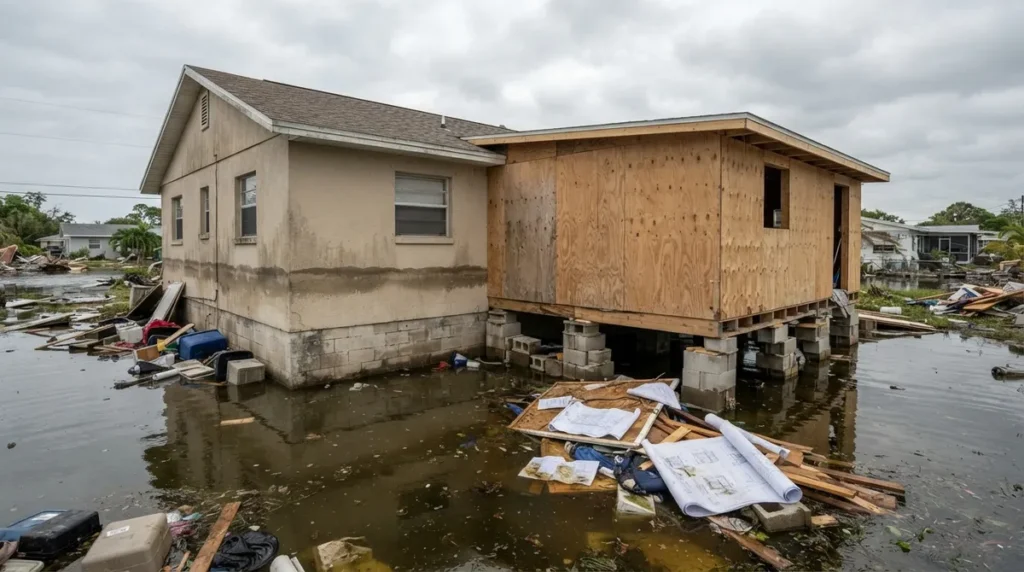
Key Takeaways
-
Flood insurance doesn't automatically exclude unpermitted structures, but unpermitted work can complicate claims by forcing adjusters to separate damage to original vs. later work and raising eligibility questions.
-
Local floodplain administrators care far more about permits than insurers do—in mapped flood zones, nearly all development requires permits, and violations can trigger stop-work orders and required corrections.
-
The 50% substantial-improvement rule means work costing 50% or more of a structure's market value in a flood zone typically requires elevation compliance; unpermitted additions can unknowingly trigger this threshold.
-
Permitted work creates a clear paper trail that simplifies claims and resale, while unpermitted work leaves gaps in documentation that can slow processing and raise red flags during appraisals or lender reviews.
-
An after-the-fact permit can resolve code compliance issues through as-built drawings and inspections, but it cannot guarantee insurance coverage or claim payment on its own.
-
Review your flood policy with your insurer before disaster strikes to clarify how additions, enclosures, and detached structures are covered, and submit proof of loss within 60 days of a flood event.
Picture this: a storm pushes water into your Florida backyard, and your enclosed patio takes a hit. You call your flood insurance company, feeling prepared. Then the adjuster asks a simple question: was that patio permitted? Suddenly, your stomach drops. So, does flood insurance care about unpermitted structures in Florida? The honest answer is that it can, though not always in the way people expect.
Flood insurance and building permits are two separate systems. They don't automatically talk to each other, but they can collide at the worst possible moment: when you file a claim. In this friendly guide, we'll compare permitted and unpermitted structures side by side, so you can see how each one tends to play out with flood coverage, local floodplain rules, and your peace of mind.
Whether you're a homeowner, a contractor, or a real estate pro, you'll walk away knowing what to check and what to fix before the water rises. Let's dig in together!
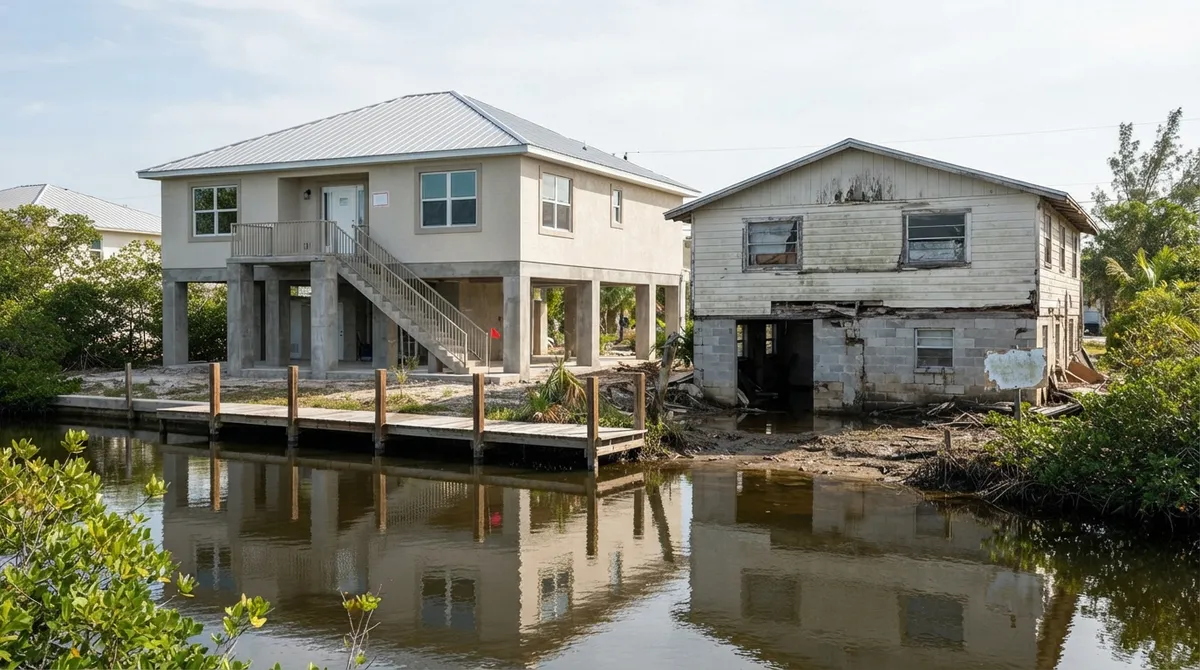
Why Permits and Flood Insurance Are Two Different Worlds
Here's the first thing to understand: a building permit is a local government approval, while flood insurance is a contract between you and an insurer (or the National Flood Insurance Program, known as the NFIP). They answer different questions.
- A permit asks: Was this work reviewed, approved, and inspected under local code and floodplain rules?
- A flood policy asks: Is this item an insured building or property, and was the loss caused by a covered flood?
Because of that split, an unpermitted addition is not automatically excluded from every flood policy. At the same time, a permit is not a magic shield that guarantees payment. Coverage depends on your policy language, the structure's eligibility, how the work connects to the insured building, and the facts of the loss.
The NFIP Standard Flood Insurance Policy defines what counts as an insured building, and it includes certain attached additions and extensions. It also lists limits and exclusions. Nowhere does local permit approval stand in as a substitute for insurance eligibility. Think of them as two keys that open two different doors.
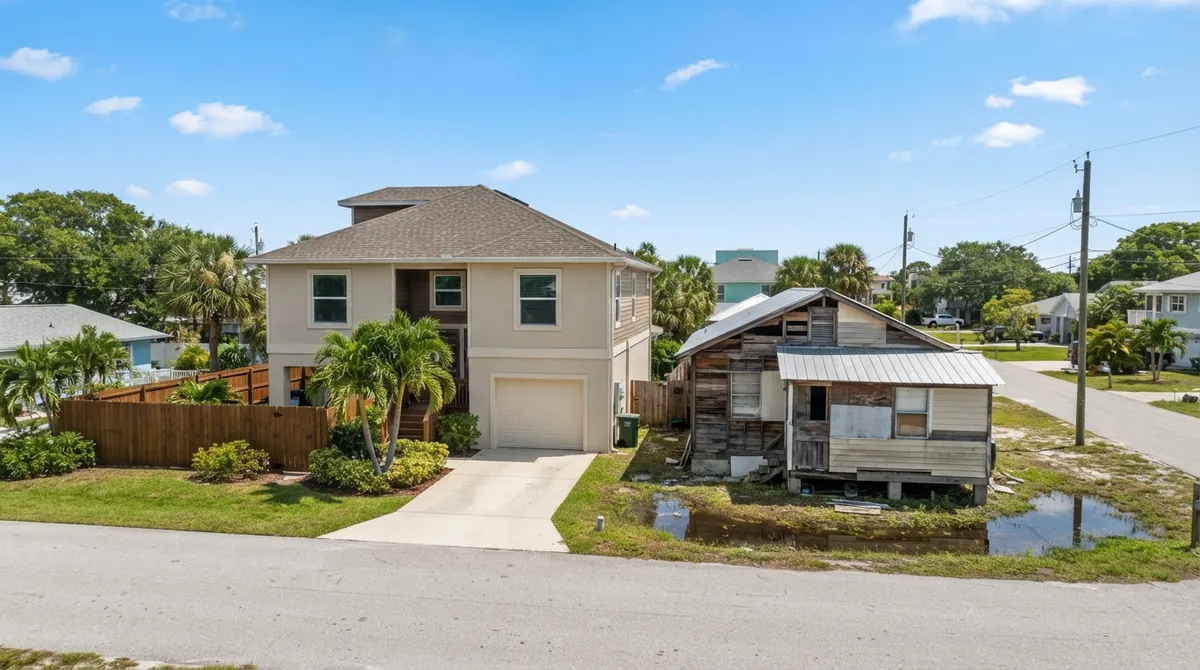
Permitted vs. Unpermitted Structures: A Side-by-Side Comparison
Let's put the two options head to head. This table shows how permitted and unpermitted work tend to compare in a flood-related situation. Keep in mind that every claim is fact-specific, so treat this as a general guide rather than a promise of coverage.
| Factor | Permitted Structure | Unpermitted Structure |
|---|---|---|
| Local records | Permit, plans, and inspections on file | No record, or an open/expired permit |
| Flood zone compliance | Reviewed against floodplain requirements | Never reviewed; elevation may be unknown |
| Claim documentation | Easier to show what was built and when | Adjuster may need to separate original vs. later work |
| Insurance eligibility | Clearer fit with the "insured building" definition | Depends on policy terms and how it attaches to the building |
| Resale and closing | Smoother appraisal and title review | Can trigger holds, disclosures, or lender concerns |
| Risk of code action | Low | Possible violations, fines, or required corrections |
Notice that the biggest differences aren't always about the insurance policy itself. They're about proof and compliance. Permitted work leaves a paper trail. Unpermitted work leaves questions.
How Unpermitted Work Can Complicate a Flood Claim
Let's be clear and fair: an insurer generally can't deny every flood claim just because something on the property lacks a permit. But unpermitted work can still create practical headaches. Here are the most common ones:
- Separating old from new. An adjuster may need to distinguish damage to the original permitted building from damage to later, unpermitted work. That can slow the claim down.
- Questions about eligibility. Whether a detached shed, enclosure, or converted garage is covered depends on the policy definitions, limits, and exclusions. It's not one-size-fits-all.
- Local official involvement. After a flood, building officials may require permits, inspections, corrections, or other documentation before repairs can proceed.
- Missing paperwork. Without plans or permit records, it's harder to prove what existed before the loss.
As one friendly reminder, the NFIP also has strict timing rules. The Florida Department of Financial Services notes that NFIP policyholders must submit a Proof of Loss within 60 days after a flood loss. Always verify current deadlines with your insurer and your policy documents, because missing paperwork on top of an unpermitted structure is a stressful combo.
What About Unpermitted Sheds, Garages, and Enclosures?
This is where homeowners get the most questions, so let's tackle the usual suspects one by one.
Attached additions and enclosures
Rooms, enclosed patios, and garage conversions that are attached to your home are the trickiest category. The NFIP policy's building definition can include certain attached additions and extensions, but the details matter. How the space was built, what it's used for, and what part of the structure was damaged can all affect how the claim is treated.
Detached structures like sheds
Detached structures are usually treated differently from your main building, and the policy may limit or exclude them. A detached shed with no permit and a detached shed with a permit could both face limits, so the permit question may matter less here than the policy's own terms.
Contents inside
The Florida Department of Financial Services points out that NFIP building coverage and contents coverage are applied for separately. If you only bought building coverage, your belongings in that unpermitted workshop may not be covered at all, permit or no permit.
The Floodplain Side: Permits Matter Even More in Flood Zones
Now for the part that surprises many property owners. Even if your insurance company is relaxed about it, your local floodplain administrator may not be.
NFIP rules require participating communities to review and permit development in mapped Special Flood Hazard Areas (SFHAs). FEMA's substantial-improvement guidance says a permit is required for almost every type of development proposed in an SFHA. That means a patio enclosure, an addition, or even certain site work in a flood zone isn't just a code matter. It's a floodplain-management matter.
The 50% substantial improvement rule
Here's the big one. Under NFIP floodplain-management rules, a substantial improvement generally means work whose cost equals or exceeds 50% of the structure's market value before the work begins. Local ordinances may be stricter, and each community decides how costs and project scope are calculated.
If a building is substantially improved in a regulated flood hazard area, it generally must be brought into compliance with current floodplain requirements. That can include elevating the lowest floor to or above the Base Flood Elevation. Requirements vary by flood zone, building type, and local ordinance.
Imagine finishing an unpermitted addition that quietly pushes your project past that 50% line. You'd have triggered elevation requirements without ever knowing it. If you want a deeper look, our guide to the FEMA 50 percent rule in Florida walks through the math in plain English.
Insurance Rules vs. Permit Rules: Who Cares About What?
Let's compare the two systems directly, so you can see who actually enforces what.
| Question | Flood Insurance (NFIP/Policy) | Local Permitting & Floodplain Office |
|---|---|---|
| Main purpose | Pay covered flood losses | Ensure lawful, code-compliant, flood-safe construction |
| Who decides | Insurer and policy terms | Building department and floodplain administrator |
| Cares about permit status? | Not as a standalone test, but it can affect claim facts | Yes, directly |
| Cares about elevation? | Affects rating and some coverage issues | Yes, for substantial improvements |
| Possible consequence | Claim delay, limits, or disputes | Violations, stop-work orders, required corrections |
The takeaway is simple: your insurer may not ask for a permit, but your county or city absolutely can. And after a flood, officials often take a closer look at damaged homes, which is when unpermitted work tends to surface.
Steps to Take If You Have Unpermitted Work in a Florida Flood Zone
Good news: you have options, and acting early is almost always cheaper than waiting for a storm. Here's a friendly, practical roadmap.
- Identify your jurisdiction and flood zone. Lines between cities and counties can be confusing, so confirm who actually controls your address. Our building department lookup tool can help.
- Check your permit history. Search for open, expired, or missing permits using the open permit search.
- Review your flood policy with your insurer. Ask specifically how additions, enclosures, and detached structures are treated, and what's limited or excluded.
- Determine whether the work could be a substantial improvement. If it might cross the 50% threshold, get that answer before you build or legalize.
- Pursue an after-the-fact permit if appropriate. Many Florida jurisdictions allow it, usually with updated plans, engineering, and inspections.
- Keep records. Save approved plans, inspection sign-offs, and final documents in one safe place.
Remember, an after-the-fact permit can help resolve code compliance, but it cannot guarantee insurance coverage or payment of a claim. Think of it as cleaning up your side of the street, not buying a coverage promise.
How After-the-Fact Permitting Fits In
If your structure was built without a permit, the path forward usually involves documenting what exists, proving it meets code, and getting it inspected. That often means measured as-built drawings, engineering letters, and sometimes structural or MEP review.
This is exactly the kind of work 1 Contractor Solutions handles every day. Our team prepares and reviews plans, files the application, tracks it, answers reviewer comments, and carries the project through closeout. Because our drafting and engineering are done in house, we can address reviewer flags quickly instead of waiting on an outside consultant. If you're curious about the details, explore our after-the-fact and expired permits service or our guide on how to legalize unpermitted work in Florida.
For flood-zone properties, we also help sort out whether work may qualify as substantial improvement, since that single question can change the entire scope of a project. You can see how our engineering services and as-built drawings support that process.
What This Means for Different Property Owners
Homeowners
If you've inherited a home with a mystery enclosure, don't panic. Start with a permit history check, then talk to your insurer. Our page for Florida homeowners explains how we guide you step by step.
Real estate professionals and buyers
Unpermitted work often shows up during appraisals, inspections, or lender reviews, and flood insurance requirements can add another layer. Catching it early keeps closings on track. Learn more about realtor and closing support.
Contractors and design professionals
If you build in mapped flood zones, documenting permits and elevation compliance protects your clients and your reputation. Our general contractor services cover filing, tracking, and sealed drawings across Florida's jurisdictions.
Should You Tell Your Insurer About Unpermitted Work?
This is a common and very reasonable question. The safest approach is open communication. Ask your insurance agent or the insurer directly how your policy treats the structure, and review your policy documents carefully. Because coverage is policy- and fact-specific, a quick, honest conversation now can prevent a surprise later. If you're unsure what to say, a permitting professional can help you gather the facts, and your insurer or an insurance professional can answer the coverage side.
The Bottom Line
So, does flood insurance care about unpermitted structures in Florida? Not in a simple yes-or-no way. Flood insurance isn't a permit inspector, but unpermitted work can still make a claim slower, murkier, and more stressful. Meanwhile, your local floodplain office cares a great deal, especially in mapped flood zones where nearly all development needs a permit.
The best move is to treat permits and insurance as a team: get the work properly permitted, understand your flood zone, and review your policy before the water ever rises. If you'd like a hand, our crew answers fast and knows Florida's jurisdictions inside and out. Ready to get started? Get a free quote and let's sort out your permits together. You can also see what customers say by reading reviews when you visit us on Google — 1 Contractor Solutions, and stay in touch when you follow us on LinkedIn or follow us on Facebook.
For official flood program details, you can also review the Florida Department of Financial Services flood insurance overview.
FAQs
Will flood insurance cover an unpermitted addition in Florida?
It depends! An unpermitted addition isn't automatically excluded, but coverage depends on your policy's definitions, limits, and exclusions, plus the facts of the loss. The best move is to review your policy with your insurer before you ever need to file a claim.
Can an insurer deny a flood claim because a structure was built without a permit?
A missing permit doesn't by itself decide every claim, but it can create complications, like separating damage to original work from later work. Whether a specific item is covered is policy- and fact-specific, so talk with your insurer and keep good records.
What is the 50% substantial-improvement rule for Florida flood zones?
Generally, it means work costing 50% or more of a structure's market value before the work begins. If triggered in a regulated flood zone, the building usually must meet current floodplain requirements, which can include elevating the lowest floor. Your local floodplain administrator sets the exact rules.
Can I get an after-the-fact permit for unpermitted work in Florida?
Often, yes! Many Florida jurisdictions allow after-the-fact permits, typically requiring as-built plans, engineering, and inspections. It can fix code compliance, though it can't guarantee insurance coverage, so a permitting pro can help you plan the best path.
How do I find out whether a Florida property has open or missing permits?
Start by confirming which jurisdiction controls the address, then search that building department's permit records. Tools like an open permit search can speed things up, and a permitting team can dig deeper if records look incomplete.
We do this work every day across all 67 Florida counties. Call (866) 314-6931 and we will tell you what your situation actually requires — including when you do not need us.
Related services
Permit Facilitation & Filing
You have a crew scheduled, a client asking for dates, and a permit sitting somewhere in a queue you cannot see. We file it, w…
See the servicePlan Review Coordination
A permit in plan review is not one queue. On a commercial project it can be six queues, each with its own reviewer, its own c…
See the serviceReady to get your permit moving?
One call tells you which jurisdiction controls your project, what it will take, and what it will cost. Most of the time we can scope it on the phone.