
Blog
Structural Engineer vs. Permit Alone: ATF Fixes in Florida?
Compare permit-only vs. engineer-supported after-the-fact fixes in Florida and learn when a structural engineer is required to legalize completed work.
Key Takeaways
-
Structural engineers are required for after-the-fact permits involving framing, foundations, roofs, load-bearing walls, additions, and solar installations; skipping this step often results in permit rejection and costly delays.
-
Each Florida jurisdiction sets its own ATF permit requirements, fees, and penalties—confirm your local building department's specific checklist before commissioning any documents or paying for engineering work.
-
Concealed structural work (hidden behind drywall, concrete, or stucco) typically requires selective demolition, access openings, or testing for the engineer to certify compliance; plan these exposure points early to minimize repair costs.
-
An engineer's sealed report does not guarantee permit approval—the building department still reviews the package, performs inspections, and may request additional information, repairs, or corrections before final approval.
-
Filing a permit-only approach for structural work risks rejection and having to pay twice and wait longer; engineer-supported documentation front-loads reviewer requirements and reduces repeat submittals.
-
Non-structural interior finishes, fixture swaps, or like-for-like replacements may need only permit paperwork and inspection, but electrical, plumbing, mechanical, zoning, or floodplain requirements may still apply.
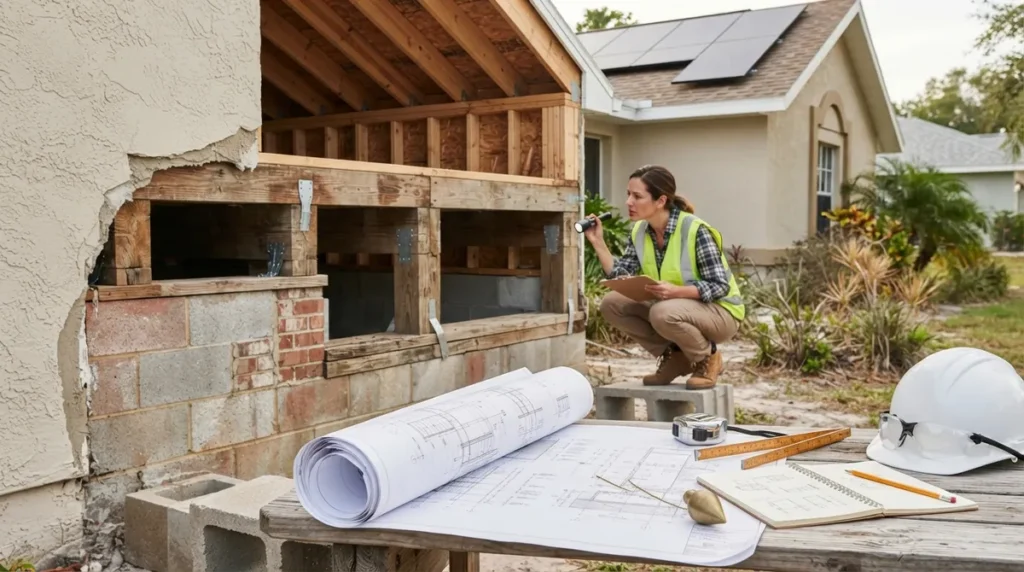
So you just learned that a wall, a roof, a patio cover, or an addition at your Florida property was built without a permit. Take a breath. It happens far more often than you would think, and there is a well-worn path to fix it. The big question most people ask next is this: do I need a structural engineer after the fact in Florida, or can I just file the paperwork and move on?
The honest answer is that it depends on what was built, what is hidden behind the finishes, and what your local building department says. Some after-the-fact (ATF) permits are mostly paperwork and inspections. Others require a Florida-licensed engineer to inspect the work, run calculations, and seal documents. In this guide, we compare the two approaches side by side so you can see which one fits your situation, whether you are a homeowner, a general contractor, a solar installer, or a real estate professional with a closing on the calendar.
What an After-the-Fact Permit Actually Is
An after-the-fact permit is a local building permit process for work that was already completed without a required permit. It is not a statewide program with one fee or one form. Each city and county sets its own requirements, review steps, and penalties, so the first move is always to find out who actually has jurisdiction over your address. Our building department lookup tool can help with that.
If you want the deeper background, our guide on what after-the-fact permitting in Florida involves walks through the basics. For this article, we are focused on one specific question: when does the structural side of the project call for an engineer?

Structural Engineer vs. Permit Paperwork Alone
Think of this as two paths. Path one is a permit-only approach: you submit forms, pay fees, and schedule inspections with little or no engineering. Path two adds a Florida-licensed professional engineer who inspects the existing work and seals the documents. Here is how they compare.
| Factor | Permit Paperwork Only | With a Structural Engineer |
|---|---|---|
| Best for | Minor, non-structural, visible work | Framing, foundations, roofs, additions, load-bearing changes |
| What you submit | Application, basic drawings, fees | Sealed as-builts, calculations, inspection findings |
| Concealed work | Inspector may still request exposure | Engineer documents conditions and recommends testing or access |
| Risk of rejection | Higher for structural scopes | Lower when documents match the field conditions |
| Typical outcome | Approval or requests for more information | Approval, corrections, or repair details with reinspection |
Notice what is missing from both columns: a guarantee. An engineer's report does not legalize the work by itself, and it does not promise approval. The building official still reviews the package and runs the inspections.
When You Almost Certainly Need an Engineer
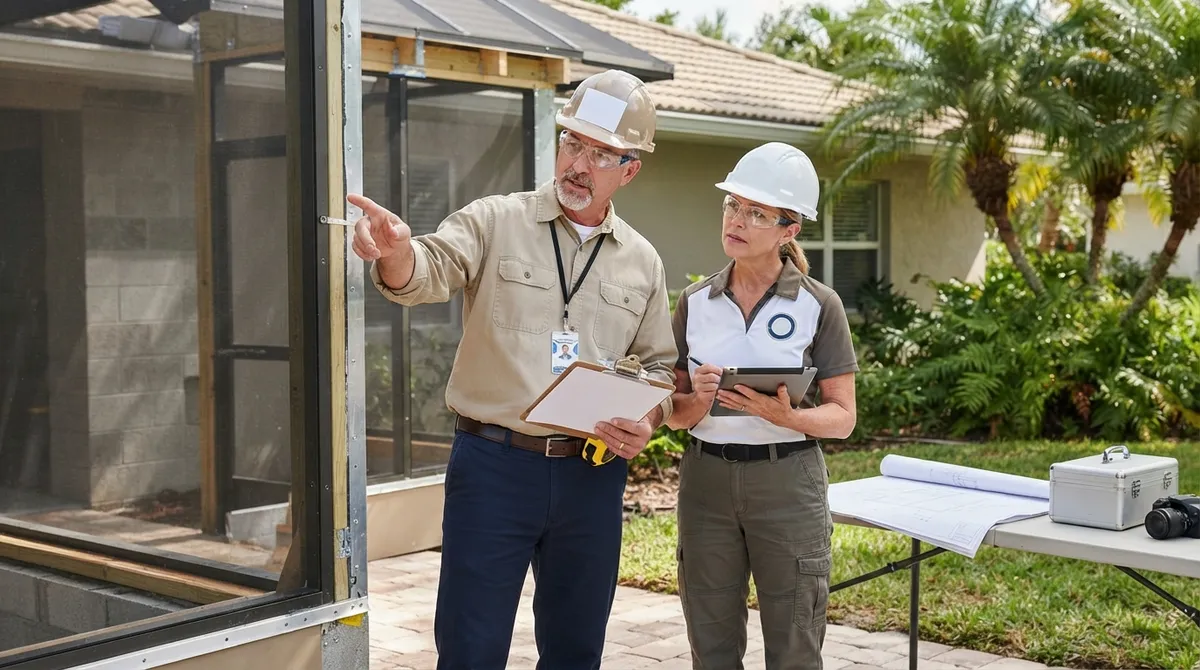
For structural work, the building department may require a Florida-licensed professional engineer to inspect the existing work and prepare sealed as-built plans, calculations, inspection findings, and any corrective details. You should expect that requirement in situations like these:
- Room additions or enclosed patios and lanais
- Roof framing changes, re-trussing, or truss modifications
- Removed or altered load-bearing walls
- Retaining walls, pool cages, and carports
- Foundations, slabs, or footers poured without review
- Rooftop equipment or solar arrays added to existing roofs
If your project falls in one of these buckets, going straight to structural engineering support usually saves time. Filing first and then getting bounced back for engineering simply adds weeks.
When Permit Paperwork May Be Enough
Some situations are lighter. A non-structural interior finish, a fixture swap, or a simple like-for-like replacement may only need the permit, fees, and a final inspection. Even then, other trades such as electrical, plumbing, or mechanical may bring their own review requirements, and zoning or floodplain approvals can apply too.
The catch is that you will not always know where your project lands until someone reads the local rules. Several Florida departments publish their own guidance, and the requirements are not interchangeable from county to county.
Why Jurisdiction Changes Everything
Tampa's published legalization guidance is a good example of how detailed a local process can get. It applies to completed, concealed work that needs legalization, and it calls for an as-built and legalization certificate with supporting plans, specifications, and testing, signed and sealed by a Florida-licensed engineer or registered architect. It is not aimed at simple missed inspections on work that already had a permit.
Per that guidance, the professional's documents should:
- Describe the actual as-built condition
- Identify when the work was built and how that date was determined
- Address the applicable code and the current-code methodology
- Include structural calculations and the effect on existing construction
- Identify any remedial work needed for compliance
Please do not assume Tampa's package applies everywhere. Requirements are specific to that jurisdiction. If your property is in Tampa, Miami, or Orlando, confirm the local checklist before commissioning any documents.
The Rules Behind the Seal
Two Florida statutes frame how engineers fit into this process. Florida Statute 471.025 requires final engineering plans, reports, and other documents filed for public record or provided to the owner to be signed, dated, and sealed by the licensee. It also bars engineers from sealing work outside their competence or specialty. That matters when you are choosing who to hire, because a structural scope needs someone qualified in structural.
Florida Statute 553.79 addresses permits and inspections. For threshold buildings, it requires special inspections under a structural inspection plan prepared by the engineer or architect of record when construction or repair modifies the structural system or loading. That is a specific statutory requirement, not a blanket rule for every residential ATF permit, so please do not let anyone tell you otherwise.
What About Work You Cannot See?
This is the part that makes people nervous. A professional's conclusions must be based on direct inspection. If framing, rebar, or connections are hidden behind drywall, stucco, or concrete, the building official may require selective demolition, other access, testing, or additional documentation before accepting the work.
Here is the good news: it is rarely a full teardown. Often a few small openings, photographs, and signed and sealed testing reports give the engineer enough to evaluate the structure. Planning those access points ahead of time keeps repair costs low.
Can an Engineer Certify What Is Already Covered?
Not on a guess. If the engineer cannot verify the condition through direct observation or accepted testing, they should not seal it. Expect a site visit, a scope for exposure or testing, and a written finding before any certification.
Which Code Applies: Then or Now?
This is a common source of confusion. The as-built documents may need to describe the date the work was built and the code methodology used for evaluation. How that is handled can vary by department, so ask the reviewing office early. Your engineer can then tailor calculations and details to the standard the official expects.
Cost and Timeline Comparison
No statewide fee multiplier or standard ATF permit price was established by the official sources we reviewed. Fees and penalties are set locally, so any number you hear online should be verified with your building department. For a broader look, see our breakdown of after-the-fact permit costs in Florida.
| Cost Driver | Permit-Only Path | Engineer-Supported Path |
|---|---|---|
| Local permit and penalty fees | Set by the jurisdiction | Set by the jurisdiction |
| Engineering inspection and sealed documents | Not applicable | Depends on scope and complexity |
| Exposure, testing, and repairs | Only if requested | Likely if concealed conditions need verification |
| Rework risk | Higher if structural issues surface later | Lower when documents match field conditions |
The permit-only path can look cheaper on day one. But if the reviewer sends it back for engineering, you pay twice and wait longer. When a closing is looming, that delay can be the most expensive line item of all.
What Happens After the Engineer Reviews It
An ATF structural review can end several ways. The department may approve the package as submitted, request more information or exposure and testing, require repairs followed by reinspection, or deny the permit until the work is corrected. If the engineer finds something unsafe or noncompliant, the fix goes in the plan, gets built, and gets inspected. It is not the end of the road. It is the road.
A Step-by-Step Path to Legalize Structural Work
- Identify the jurisdiction. City lines can be tricky, so confirm who reviews your address.
- Ask for the ATF or legalization checklist. Get the department's current requirements in writing.
- Document what exists. Gather photos, receipts, and any old permits or approvals.
- Schedule the engineer's site inspection. Direct observation is the foundation of the report.
- Plan any exposure or testing. Open only what is needed.
- Submit sealed plans and calculations. Include corrective details if required.
- Complete inspections and close out. Finish with final approval.
If you are juggling several steps at once, our team can coordinate the full workflow through after-the-fact and expired permit services, from filing to reviewer comments to closeout.
How This Plays Out for Different Readers
Homeowners and Residential Property Owners
If a previous owner built the addition or the patio enclosure, you inherited the problem, but you can still solve it. Start with the building department's checklist, then bring in an engineer if the work touches framing, foundations, or the roof. Our homeowner resources explain what to expect.
General Contractors and Design Trades
When a client's project turns up hidden unpermitted work, you need answers fast. A sealed as-built package prepared alongside the permit filing keeps your schedule intact. See how we support general contractors across Florida.
Solar Companies
Rooftop arrays on older roofs often need a structural check, especially if framing was altered before the install. Pairing the engineering letter with the electrical documentation avoids back-and-forth. Learn more on our solar contractor page.
Realtors and Investors
An open permit or unpermitted structure can stall a closing. Early research, a clear plan, and a realistic timeline make the difference. Our realtor closing support is built for exactly this.
Why Working With One Team Helps
One of the biggest headaches in ATF work is the handoff gap: the drafter, the engineer, and the permit filer are all different companies, and nobody owns the outcome. At 1 Contractor Solutions, drafting and engineering are in house, our own engineer signs and seals the work, and we handle filing, tracking, and reviewer comments across all 67 Florida counties. When a reviewer flags something, we fix it without chasing an outside consultant. You can read what customers say on our Google profile, and you can follow us on LinkedIn or follow us on Facebook for Florida permitting updates.
Final Verdict: Which Path Wins?
If the work is structural, concealed, or tied to a sale or financing deadline, the engineer-supported path usually wins. It front-loads the documentation reviewers want and reduces the chance of repeat submittals. If the work is minor and non-structural, permit paperwork alone may do the job, as long as your local department agrees.
Either way, confirm requirements with the authority having jurisdiction before you commission anything. Then pick a team that can handle both sides, the engineering and the filing, without making you play messenger.
Ready to sort out your project? Get a free quote and tell us the address and what was built. We will tell you which jurisdiction controls it, whether a structural engineer is needed, and what the fastest path to approval looks like.
FAQs
Do I need a structural engineer for an after-the-fact permit in Florida?
If the unpermitted work affects structural components like framing, foundations, roofs, or load-bearing walls, the building department may require a Florida-licensed engineer to inspect it and submit sealed documents. Requirements vary by jurisdiction, so check with your local office first.
Can a structural engineer certify work that is already covered by drywall or concrete?
Only if the condition can be verified. The engineer's conclusions must rest on direct inspection, so the building official may require selective demolition, access openings, or testing. Photos and signed, sealed testing reports can support the evaluation.
Does an engineer's letter guarantee my after-the-fact permit will be approved?
No. An engineer's report does not legalize the work by itself or guarantee approval. The building department still reviews the package and performs required inspections, and it may approve, request more information, require repairs, or deny until corrections are made.
How much does an after-the-fact permit and structural engineer inspection cost in Florida?
There is no statewide standard price. Permit fees and penalties are set locally, and engineering costs depend on the scope and complexity of the work. Ask your building department for its fee schedule and request a project-specific quote from your engineer.
We do this work every day across all 67 Florida counties. Call (866) 314-6931 and we will tell you what your situation actually requires — including when you do not need us.
Related services
Permit Facilitation & Filing
You have a crew scheduled, a client asking for dates, and a permit sitting somewhere in a queue you cannot see. We file it, w…
See the servicePlan Review Coordination
A permit in plan review is not one queue. On a commercial project it can be six queues, each with its own reviewer, its own c…
See the serviceReady to get your permit moving?
One call tells you which jurisdiction controls your project, what it will take, and what it will cost. Most of the time we can scope it on the phone.