
Blog
What Is Job Qualification for After-the-Fact Engineering?
Learn who qualifies for after-the-fact engineering in Florida, what the job involves, and how to get unpermitted work properly documented and legalized.
Key Takeaways
-
A Florida-licensed professional engineer (PE) whose expertise matches the project discipline is the core qualification for after-the-fact engineering; verify their active license with the Florida Board of Professional Engineers before hiring.
-
After-the-fact engineering is not a separate license or job title, but rather a service where a licensed engineer documents unpermitted work and evaluates if it meets Florida Building Code so the building department can decide whether to legalize it.
-
The engineer's role is evaluation and documentation only; the building official makes final approval decisions, and other licensed contractors may need to certify concealed electrical, plumbing, mechanical, or roofing work separately.
-
Local jurisdictions have different requirements for after-the-fact submissions, so confirm specific forms, fees, and documentation needs with your county or city building department before proceeding.
-
If unpermitted work doesn't meet code, the typical solution is corrective work specified by the engineer and performed by a licensed contractor, rather than demolition in most cases.
-
An engineer should not certify work hidden behind drywall or other finishes unless they can adequately observe and evaluate it; the building department may require concealed areas to be opened for inspection.
Picture this: you buy a lovely Florida home, and during the inspection someone notices the screened porch was enclosed years ago. No permit on file. Suddenly, a closing date is wobbling and everyone is asking the same question: who is qualified to sort this out?
That's where the phrase job qualification for after-the-fact engineering comes in. Here's the good news up front: it's not a mysterious credential. In Florida permitting, after-the-fact engineering simply means a licensed engineer evaluates and documents work that was built without a required permit, so the local building department can decide whether it can be legalized.
In this guide, we'll walk through what qualifies a person or firm to do this work, what the job actually involves, how local rules differ, and where contractors, homeowners, and real estate pros often trip up. Think of it as a friendly map for a bumpy road. And if you'd like a hand along the way, our team is happy to get you a free quote.

What Does "After-the-Fact Engineering" Actually Mean?
First, a quick reality check. "After-the-fact engineering" is not a separate Florida engineering license, and it isn't a standardized job title. It's a way of describing a service: engineering work used to document, evaluate, and help legalize construction completed without the proper permit.
The engineer's job is to answer one big question for the building official: is this work safe and does it meet the Florida Building Code? That might involve a deck, a patio enclosure, a roof truss modification, an addition, or an electrical upgrade that nobody ever filed.
If you want the broader picture of how these permits work, our guide on what after-the-fact permitting is in Florida is a great companion read.

The Core Qualification: A Florida-Licensed Professional Engineer
When it comes to structural safety and code compliance, the key qualification is straightforward. Florida Statute Chapter 471 reserves the practice of engineering, and the use of the "professional engineer" title, for people who hold an active Florida engineering license.
So when someone asks who is qualified for after-the-fact engineering, the short answer is a Florida-licensed professional engineer (PE) whose competence matches the discipline of the work being reviewed.
What a Florida PE Typically Needs to Earn a License
The Florida Board of Professional Engineers administers licensure. While the exact pathway depends on the applicant's education and the Board's current rules, it generally includes:
- An approved engineering education
- Qualifying engineering experience
- Passing the required examinations
- Maintaining an active, valid license in good standing
A friendly tip: don't rely on a job title or an out-of-state credential alone. Always verify current licensing status with the Florida Board of Professional Engineers before you hire anyone to seal documents.
Discipline Matters, Too
Being licensed isn't the whole story. The engineer's expertise should fit the project. A structural issue calls for structural competence, while concealed wiring or mechanical systems may call for MEP engineering. A good engineer knows the limits of their expertise and says so.
| Type of Unpermitted Work | Relevant Engineering Discipline | Common Documentation |
|---|---|---|
| Patio enclosure, addition, or porch conversion | Structural | As-built plans, calculations, sealed report |
| Roof framing or truss changes | Structural | Field verification, engineer letter, details |
| Electrical, plumbing, or HVAC upgrades | MEP | System evaluation, plans, trade permits |
| Retaining walls, fences, or site changes | Structural / Civil | Site plan, calculations, sealed drawings |
Why the Permit Rules Come First
Florida Statute 553.79 generally requires a permit before covered building construction, alteration, repair, or demolition. That's the rule the work skipped. An after-the-fact application doesn't automatically legalize anything. Instead, the local building department reviews the submission, may require inspections, and can ask for concealed work to be exposed so it can be examined.
That means the engineer is a key part of the team, but not the final decision-maker. The building official decides what's required, what's acceptable, and what must be corrected. Requirements vary by jurisdiction and project scope, so your county or city matters a lot.
What a Qualified Engineer Actually Does
Now for the fun part: the day-to-day work. A qualified engineer handling after-the-fact projects typically performs tasks like these:
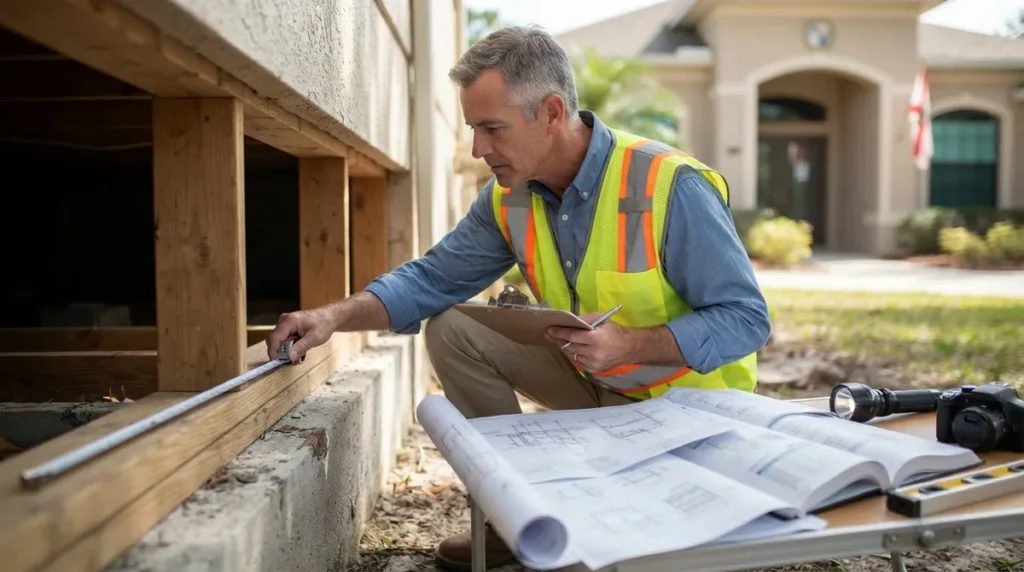
- Site visit and measurements. The engineer examines the structure in person and records dimensions, materials, and visible connections.
- As-built documentation. Existing conditions are drawn up, often through as-built drawings, so the building department sees what was really built.
- Structural analysis and calculations. The engineer checks whether the work can carry loads and resist wind, a big deal in Florida.
- Review of materials and connections. Fasteners, framing, anchorage, and product approvals get a careful look.
- Corrective work specifications. If something falls short, the engineer specifies the fix.
- Signed-and-sealed plans or report. The final package is prepared for submission to the building department.
A trustworthy engineer will describe the inspection and testing they actually performed. They should not certify concealed conditions they couldn't adequately observe or evaluate. If something is hidden behind drywall, honesty about that limitation protects everyone.
For a deeper look at the paperwork itself, see our article explaining structural engineer letters for Florida permits.
A Local Example: How Requirements Differ
Because local rules vary, a real example helps. Indian River County and the City of Vero Beach guidance calls for a Florida-licensed design professional to inspect and certify certain existing unpermitted structural work that's no longer open for inspection. That professional provides a signed and sealed report to the Building Official, and also submits signed and sealed construction documents showing the work.
This is a local example, not a statewide checklist. Your county, whether it's Hillsborough County, Pinellas County, or Manatee County, may have its own forms, fees, and preferences. Our building department lookup tool can help you confirm which jurisdiction controls your property.
The Engineer Is Not the Contractor (and Vice Versa)
Here's a point that surprises many people. An engineer's seal does not replace trade permits, contractor qualifications, inspections, or approvals from other authorities.
Local guidance may require trade contractors or their company qualifiers to certify concealed electrical, plumbing, mechanical, roofing, or insulation work. Planning, utilities, environmental health, or other agencies may also have a say.
| Role | What They Typically Provide | What They Cannot Replace |
|---|---|---|
| Florida-licensed PE | Evaluation, calculations, signed and sealed documents | Contractor certifications or required inspections |
| Licensed contractor / qualifier | Trade certifications, corrective work, permits | Engineering analysis and seal |
| Building official | Review, inspection requirements, final approval | N/A: this is the deciding authority |
| Permitting firm | Coordination, filing, tracking, revisions | The engineer's seal or the official's approval |
Can a Contractor or Homeowner Certify the Work Instead?
This is one of the most common questions we hear. When the issue involves structural safety or code compliance, the building department typically expects a Florida-licensed engineer or other qualified design professional, not a contractor's or homeowner's opinion.
A contractor may still play an important role, especially for trade work. But if you're an owner-builder or a homeowner hoping to self-certify, it's worth checking local rules early. Our page on owner-builder permits explains what's possible.
How Different Audiences Should Think About Qualification
Every reader comes to this topic from a slightly different angle. Here's how it tends to play out:
- Homeowners: You want to know the person sealing your documents is truly licensed and that the work will satisfy the county. Ask for license numbers and verify them.
- General contractors: You need an engineer who understands field conditions and can turn around sealed documents without stalling your schedule. See how we support general contractors.
- Solar companies: If an installation went in without proper structural or electrical documentation, a qualified engineer can evaluate roof loading and attachment details. Learn more for solar contractors.
- Real estate professionals: Open or missing permits can derail a closing. Quick, credible engineering support helps keep deals moving, as covered on our realtors page.
- Architects, designers, and trades: You may only need drafting support while using your own engineer. Our drafting-only service fits that need.
Documents Typically Needed to Legalize Unpermitted Work
While every jurisdiction differs, an after-the-fact package often includes some combination of the following:
- A permit application marked as after-the-fact or similar
- Existing-conditions or as-built drawings
- A site plan or survey, where relevant
- Signed and sealed engineering documents or an engineer letter
- Product approval or material information for components like windows or roofing
- Trade contractor certifications for concealed systems
- Photos documenting visible and exposed conditions
Preparing these in a clean, organized way makes review smoother. For the broader application process, you might enjoy our walkthrough on the after-the-fact permit application in Florida.
What Happens If the Work Doesn't Meet Code?
It's natural to worry about this one. If the engineer finds problems, the usual path is corrective work. The engineer specifies the fix, a licensed contractor performs it, and inspections confirm it.
In rare cases, work that cannot be brought into compliance may need to be removed. Most projects, however, can be corrected and approved with the right documentation. Our article on whether you'll really have to demolish unpermitted work explores that fear in more detail.
Tips for Choosing a Qualified Engineer or Permitting Partner
Before you hire, run through this simple checklist:
- Verify the license. Confirm the engineer holds an active Florida PE license with the Florida Board of Professional Engineers.
- Match the discipline. Make sure their expertise fits structural, MEP, or site needs.
- Ask about field inspection. A real site visit matters, especially for concealed work.
- Confirm local experience. Familiarity with your building department saves time.
- Get clear scope and deliverables. Know exactly what you'll receive: letter, report, sealed drawings, or all three.
- Look for coordination support. Filing, tracking, and responding to reviewer comments is half the battle.
At 1 Contractor Solutions, our drafting and engineering are in house, and our own engineer signs and seals the work. When a reviewer raises a comment, we address it directly instead of waiting on an outside consultant. We handle after-the-fact and expired permits across all 67 Florida counties, and you can read what clients say on our Google listing for 1 Contractor Solutions.
A Note on Costs and Timing
Many people ask how much an after-the-fact engineering inspection or report costs. The honest answer: it depends. Scope, size, number of disciplines involved, access to concealed work, and your jurisdiction's requirements all influence the price and timeline.
Rather than guess, request a project-specific estimate. For general context on fees, our overview of after-the-fact permit costs in Florida is a helpful starting point.
Where to Verify Rules and Stay Informed
For the legal foundation, you can review Florida Statute 553.79 on building permit requirements and the licensing framework in Chapter 471 governing engineering practice. Statutes are updated periodically, so always check for the current version and confirm details with your local building department.
Want tips as Florida permitting evolves? You can follow us on LinkedIn or follow us on Facebook for updates.
Wrapping It Up: You've Got This
So, what is job qualification for after-the-fact engineering? In plain English: it's a Florida-licensed professional engineer, with expertise that fits your project, who honestly evaluates what was built, documents it properly, and prepares sealed materials the building official can review. It's not a special license, and it's not a shortcut. It's careful, honest engineering applied to work that skipped a step.
The process can feel intimidating, but with the right team it's very manageable. If you're staring at unpermitted work, a stalled closing, or a violation notice, you don't have to untangle it alone. When you're ready, get a free quote from our team and let's get your permit moving again. We respond within 30 minutes, day or night, and se habla español.
FAQs
What qualifications does an engineer need to prepare an after-the-fact permit in Florida?
The engineer should hold an active Florida professional engineer license, and their expertise should match the project, such as structural or MEP. You can verify any license directly with the Florida Board of Professional Engineers before hiring.
Can a contractor or homeowner certify unpermitted structural work instead of an engineer?
Usually not for structural safety or code compliance. Building departments typically expect a Florida-licensed engineer or design professional, though contractors may still need to certify certain concealed trade work like electrical or plumbing.
Can an engineer certify work that is already covered by drywall or other finishes?
Only if the concealed conditions can be adequately observed or evaluated. A responsible engineer won't certify what they couldn't see, so the building department may ask for areas to be opened up for inspection.
Does an after-the-fact permit automatically legalize the work?
No, and that's an important thing to know. The local building department reviews the submission, may require inspections, and decides whether the work meets the Florida Building Code, which can mean corrective work.
What documents are usually needed to legalize unpermitted construction in Florida?
Commonly you'll need an after-the-fact application, as-built or existing-conditions drawings, and signed and sealed engineering documents. Depending on your jurisdiction, you may also need trade contractor certifications and product approvals.
We do this work every day across all 67 Florida counties. Call (866) 314-6931 and we will tell you what your situation actually requires — including when you do not need us.
Related services
Permit Facilitation & Filing
You have a crew scheduled, a client asking for dates, and a permit sitting somewhere in a queue you cannot see. We file it, w…
See the servicePlan Review Coordination
A permit in plan review is not one queue. On a commercial project it can be six queues, each with its own reviewer, its own c…
See the serviceReady to get your permit moving?
One call tells you which jurisdiction controls your project, what it will take, and what it will cost. Most of the time we can scope it on the phone.