
Blog
How to Legalize an Unpermitted Pool Cage in Florida (2026)
Learn how to legalize an unpermitted pool cage in Florida: after-the-fact permits, engineering, inspections, documents, and closeout, step by step.
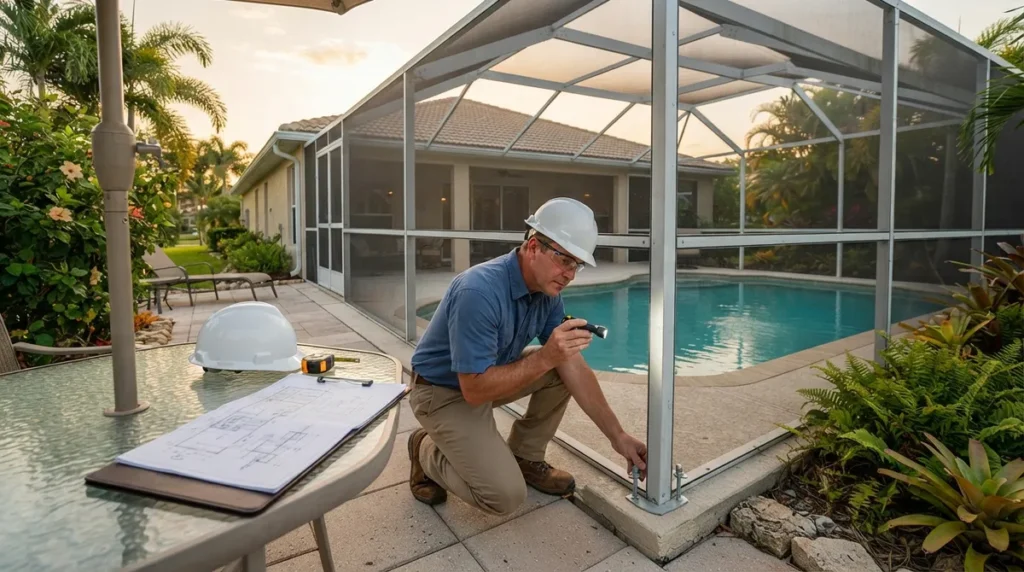
Key Takeaways
-
Contact your local building department first to learn its after-the-fact permit process, since requirements, forms, and fees vary by city and county with no single statewide checklist.
-
Do not alter, conceal, or dismantle any panels or connections before the building department tells you what evidence it needs, as this can make legalization harder.
-
Age alone does not grandfather an unpermitted pool cage; you will likely need a survey, site plan, and documentation proving the structure meets the Florida Building Code.
-
A Florida-licensed engineer may be required to inspect the existing enclosure and provide an engineer letter or sealed plans, especially when no original drawings exist.
-
Expect inspections of footings, anchorage, framing, and setbacks, and be ready to correct any deficiencies and request re-inspections as needed.
-
Confirm the permit is formally finaled after all inspections pass, because an open permit can resurface during a home sale or closing.
So you just found out your pool cage was never permitted. Maybe a home inspector flagged it during a sale. Maybe a neighbor mentioned it, or a code officer left a notice on your door. Take a breath. You are far from the first Florida homeowner to land here, and in most cases there is a clear path forward.
If you have been asking yourself, how do i legalize an unpermitted pool cage in florida, the short answer is this: you work with your local building department to file an after-the-fact permit, document the existing enclosure, prove it meets the Florida Building Code, pass inspections, and fix anything that falls short. The details change from city to city and county to county, so there is no single statewide checklist.
In this guide, we walk through the whole process in plain English. You will learn what documents to gather, when an engineer comes into play, what inspectors look for, and the mistakes that slow people down. We also cover what you should not do before talking to the building department. Let's get your screen enclosure on solid, legal ground.
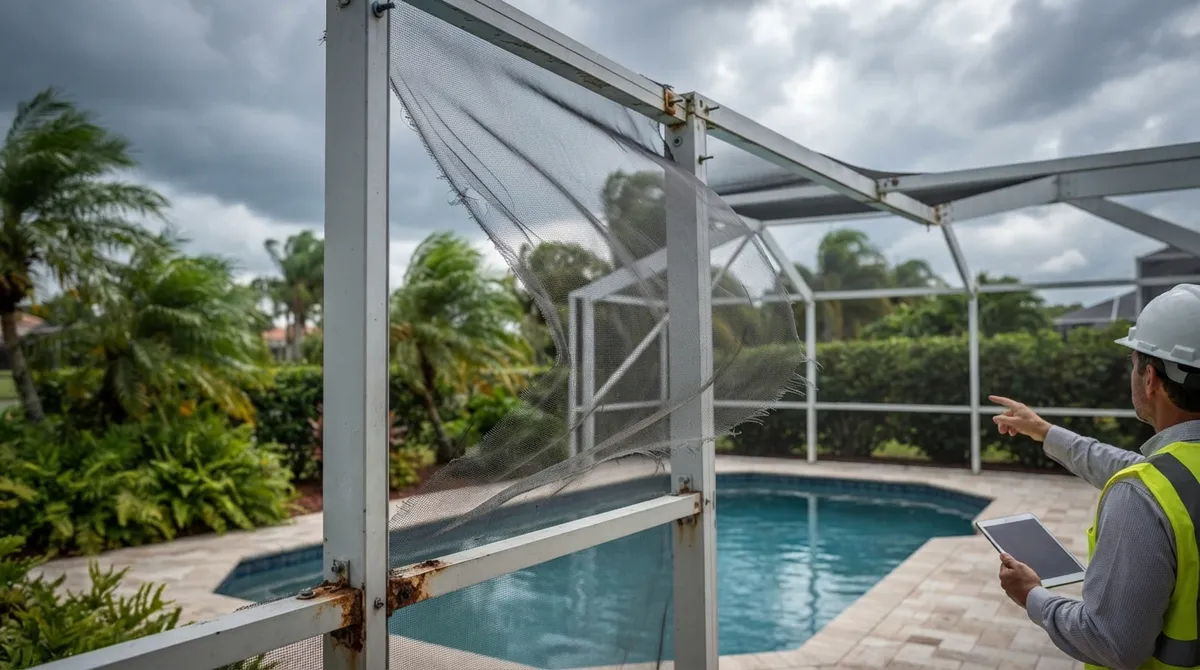
Why a Pool Cage Needs a Permit in the First Place
A pool cage looks light and airy, but the building department treats it as a real structure. A screen enclosure has aluminum framing, footings, anchors, and connections that must resist Florida wind loads. That is why it is generally treated as building work, not decor.
Whether a permit was required for your specific enclosure depends on the work performed and the local rules where you live. Do not assume an older cage is exempt or automatically legal just because it has stood for years. Age alone does not grandfather in an unpermitted structure.
Here is why it matters:
- Safety: Enclosures that were never engineered can fail in high winds and damage your home or your neighbors.
- Selling: Buyers, lenders, and title companies often flag unpermitted structures during closing.
- Insurance: Carriers may question claims involving structures with no permit history.
- Code enforcement: A complaint can trigger a notice, fines, or a demand to correct the problem.
If a closing is already in motion, our guide on whether a permit hold can delay a Florida real estate closing explains what to expect.
The Short Version: How to Legalize an Unpermitted Pool Cage
Every jurisdiction has its own forms and fees, but the overall roadmap looks very similar across Florida. Here is the process in order:
- Confirm the permit status. Check whether any permit ever existed for the enclosure.
- Contact your local building department. Ask about its after-the-fact (also called retroactive) permit process.
- Document the existing enclosure. Gather photos, measurements, and any records you have.
- Get a survey and site plan. Show where the cage sits and its setbacks.
- Prove structural compliance. This often means engineering and sealed drawings.
- Submit the application. File the packet with the right department.
- Pass inspections. Correct any deficiencies the inspector finds.
- Close out the permit. Make sure the permit is formally completed.
We will break each of these down below. For a broader look at the process, see our walkthrough on how to get an after-the-fact permit in Florida.
Step 1: Find Out Whether Your Pool Cage Has a Permit
Before assuming the worst, confirm what actually exists on record. Sometimes a previous owner pulled a permit that was never closed, and that is a different problem with a different fix.
You can start with the building department's online records, or use our open permit search tool to look for open or expired permits tied to your address. If you are not sure which office controls your property, the building department lookup can point you in the right direction. That matters more than you might think, because properties near city lines are not always in the jurisdiction people assume.
Three outcomes are common:
| What You Find | What It Means | Typical Next Step |
|---|---|---|
| No permit on record | The enclosure was likely built without approval | Apply for an after-the-fact permit |
| Permit exists but is expired or open | Work may have been done but never finaled | Reinstate or close the permit, plus inspections |
| Permit closed with final approval | The enclosure is already legal | Keep the records handy for future sales |
If you land in the second row, our article on how to close an expired permit in Florida will be more useful than the rest of this guide.
Step 2: Talk to Your Local Building Department First
This is the single most important move. Contact the city or county building department where the property sits and ask how it handles after-the-fact permits for existing screen enclosures. Requirements, forms, fees, and enforcement procedures vary by jurisdiction, so the local office is the final word.
Here are good questions to ask:
- Does this jurisdiction accept after-the-fact permits for existing pool cages?
- What forms and documents are required?
- Is a Florida-licensed engineer required to evaluate the existing work?
- Will the inspector need to see footings or concealed connections?
- What are the fees, and are there penalty multipliers?
- Is there an open code case I should know about?
One important warning: do not conceal, alter, or dismantle structural components before asking the building department what evidence it needs. Tearing off panels or covering up connections can make the process harder, not easier. Keep any existing plans, contractor records, product approvals, and photographs on hand.
Step 3: Gather the Documents You Will Need
Most departments want a tidy packet that shows what was built, where it sits, and whether it is safe. Requirements differ by location. For example, Flagler County's owner-builder screen enclosure checklist lists an application, a site plan, a survey, and code-compliant construction drawings, plus a recorded Notice of Commencement for projects over $5,000. That is one local example, not a universal rule.
A typical document list looks like this:
- Completed permit application for the enclosure
- Property survey showing the cage location and setbacks
- Site plan of the lot
- Construction drawings of the existing enclosure
- Product information and approvals for framing and components
- Engineering letter or sealed plans, if required
- Contractor or owner-builder paperwork
- Notice of Commencement, where the local rules call for one
If a Notice of Commencement comes up, our overview of the Notice of Commencement in Florida covers when and why it is used.
Step 4: Understand the Engineering Side
This is where many homeowners feel nervous, so let's keep it simple. The enclosure must be evaluated against the applicable Florida Building Code and local requirements, including structural adequacy and wind design. Since the cage already exists, nobody can simply point to the original drawings, especially if there are none.
That is why a Florida-licensed engineer may need to inspect the existing work and prepare or seal site-specific plans. This happens when the building department requires it, or when the original design cannot be verified. The engineer looks at things like the framing, anchoring, footings, and how the enclosure ties into your home.
You may also run into screen-related design language. Florida Building Code Commission material on a screen-removal design alternative applies to enclosures with 100% screen and requires site-specific signed and sealed engineering. Under that alternative, designated panels must be removed, retracted, or cut when wind speeds are forecast to exceed 75 mph. Whether it applies to you depends on the design and the code provisions used, so ask your engineer and your building department.
Here is how the engineering pieces generally compare:
| Document | What It Does | When It Is Often Used |
|---|---|---|
| Engineer letter | Confirms the existing structure meets code or lists needed fixes | When the work is simple and the department accepts a letter |
| Sealed structural plans | Shows site-specific design, anchors, and wind resistance | When the department needs full drawings |
| As-built drawings | Records exactly what was built | When no original plans exist |
| Site plan or survey | Shows location and setbacks | Nearly every after-the-fact application |
Want to know more about these? Take a look at our pages on engineer letters, structural engineering, and as-built drawings. And if you are wondering about the seal itself, we explain whether a sealed drawing is required for after-the-fact permits.
Step 5: Submit the After-the-Fact Application
Once your packet is ready, you file it with the city or county. Some jurisdictions use online portals, others still prefer paper, and a few have special after-the-fact review tracks. Fees and timelines are not standardized statewide, so confirm both with the local office rather than relying on a number you saw online.
Expect the reviewer to compare your drawings to the Florida Building Code and any local amendments. If something is missing, you will get a correction notice. Do not panic when that happens; it is a normal part of the process. Responding quickly and precisely keeps things moving, and our guide to responding to a correction notice after the fact shows how.
If you want a professional to handle the paperwork, permit facilitation and filing covers application prep, submittal, and tracking, while plan review coordination helps you work through reviewer comments.
Step 6: Inspections and Corrections
Approval of the application is not the finish line. The building department may require inspections, exposure of concealed connections or footings, or corrective work before it approves the enclosure. Plan on at least one site visit.
Inspectors commonly look at:
- Footings and slab connections
- Anchorage to the slab and to the house
- Framing members, sizes, and spacing
- Screen and panel condition
- Doors, hardware, and bracing
- Distance from property lines and easements
If something fails, you will receive a list of corrections. Fix the items, request a re-inspection, and keep going. If the structure truly cannot be brought into compliance, the owner may have to modify or remove it. That is the less common outcome, but you should confirm the specific remedy with your local authority. For a deeper look, read what happens during a Florida after-the-fact site inspection.
Step 7: Close Out the Permit Properly
Here is the step people miss. A permit is not closed just because the application was approved. Required inspections must be passed and the permit formally completed. Flagler County's published checklist, for instance, states that all inspections must be complete to close out the permit.
An open permit can follow your property for years. It can surface at the worst moment, like a closing. Make sure you receive confirmation that the permit is finaled, and file that paperwork with your home records. Our guide on what to do when an open permit is found at closing shows why this matters.
What Does It Cost and How Long Does It Take?
This is the question everyone asks, and the honest answer is: it depends. No statewide fee or standard processing time for after-the-fact pool cage permits exists in the available sources, so any single number you see online should be treated with caution.
Costs generally come from a handful of buckets:
- Permit and review fees, which may include after-the-fact surcharges set locally
- Survey or site plan preparation
- Drafting or as-built drawings
- Engineering inspection and sealed documents
- Corrective work, if the inspector requires it
- Re-inspection fees, if items fail the first time
Timelines depend on how busy the department is, how complete your packet is, and whether corrections are needed. A clean submittal usually moves faster than one that triggers several rounds of comments. For perspective on typical expenses, see our breakdown of after-the-fact permit costs in Florida.
Common Mistakes That Slow Things Down
A little preparation prevents a lot of frustration. Here are the missteps we see most often:
- Altering the structure first. Removing or covering components before talking to the building department can erase evidence you need.
- Skipping the survey. Setback questions are a frequent reason for delays.
- Using generic drawings. Departments usually want site-specific details, not a template.
- Ignoring the jurisdiction question. Filing with the wrong office wastes weeks.
- Letting the permit sit open. Without final inspections, the permit never closes.
- Hiring an unlicensed helper. Informal fixes can create a second problem on top of the first.
If a code notice is already in your mailbox, speed matters. Our article on what to do when you get a code enforcement notice in Florida lays out the immediate steps, and our code compliance violations service page explains how we support those cases.
Who Can Help You Through the Process?
Different readers need different kinds of help, so here is how the pieces fit together:
- Homeowners and residential property owners: You need someone to translate the local requirements and assemble a packet that passes review the first time.
- Real estate professionals and buyers: You need fast answers on whether an enclosure will block a closing, and a realistic path to fix it. Our realtor and closing support is built for that.
- General contractors and pool and spa pros: You need a dependable partner for drawings and filing across multiple jurisdictions. See our pages for pool and spa contractors and general contractors.
- Architects, designers, and trades: You may only need drawings or engineering to complete your own project, which is where drafting only comes in.
A Florida permitting professional can coordinate records, plans, engineering review, application submittal, and inspections, but no one can guarantee approval. Be wary of anyone who promises otherwise. What a good partner can do is shorten the learning curve, keep your file organized, and make sure every correction gets answered cleanly.
At 1 Contractor Solutions, we act as Florida's outsourced permitting department. We are not a construction contractor. Our drafting and engineering are in house, our own engineer seals the work, and we handle the filing, tracking, reviewer comments, and closeout across all 67 Florida counties. If your situation is urgent, our urgent permit rescue team is ready to jump in, and you can read what clients say in our reviews. You can also visit us on Google — 1 Contractor Solutions to see feedback from other Florida property owners.
Plan for the Weather and the Law
Florida's building rules change over time, and local departments add their own twists. Statutes such as Section 553.79 of the Florida Statutes shape how building permits and inspections work statewide, but your city or county still decides how an after-the-fact application is handled. The Florida Building Commission also publishes screen enclosure code language that engineers reference when evaluating existing cages.
When in doubt, follow the local department's guidance and keep everything in writing. Photos, emails, receipts, and inspection reports all become part of your protective paper trail.
Ready to Make Your Pool Cage Legal?
An unpermitted pool cage feels stressful, but it is a solvable problem. Confirm what is on record, talk to your building department before touching anything, gather your survey and drawings, bring in an engineer when required, pass your inspections, and make sure the permit is formally closed. Take it one step at a time and you will get there.
You do not have to figure it out alone. If you want a team that handles the plans, engineering, filing, and follow-through, get a free quote and tell us your address and what you know so far. We will tell you which jurisdiction controls your property and what it will take to get the cage legalized. You can also follow us on LinkedIn or follow us on Facebook for more Florida permitting tips. Permits approved. Projects moving.
FAQs
How do I find out whether my pool cage has a permit in Florida?
Start with your city or county building department's online permit records, or call the office and ask. You can also run your address through our open permit search tool. If nothing turns up, you will likely need an after-the-fact permit.
Do I need an engineer to permit an existing pool cage?
Often, yes. A Florida-licensed engineer may need to inspect the existing work and seal site-specific plans if your building department requires it or the original design can't be verified. Your local office will tell you exactly what it wants.
Will the county make me remove an unpermitted pool cage?
Not usually, as long as it can be brought into compliance. If the enclosure can't meet code, you may have to modify or remove it, so confirm the specific remedy with your local building department before making any changes.
How much does an after-the-fact pool cage permit cost in Florida?
There is no statewide fee or standard timeline, so costs vary by city and county. Expect permit fees, possible after-the-fact surcharges, drawings, engineering, and any corrective work. Your local building department can confirm its fee schedule.
What inspections are required for an existing pool cage permit?
Requirements vary by jurisdiction, but inspectors often check footings, anchorage, framing, and connections, and may ask to see concealed components. The permit isn't closed until all required inspections are passed and the department formally completes it.
We do this work every day across all 67 Florida counties. Call (866) 314-6931 and we will tell you what your situation actually requires — including when you do not need us.
Related services
Permit Facilitation & Filing
You have a crew scheduled, a client asking for dates, and a permit sitting somewhere in a queue you cannot see. We file it, w…
See the servicePlan Review Coordination
A permit in plan review is not one queue. On a commercial project it can be six queues, each with its own reviewer, its own c…
See the serviceReady to get your permit moving?
One call tells you which jurisdiction controls your project, what it will take, and what it will cost. Most of the time we can scope it on the phone.