
Blog
How to Handle Foreclosure Unpermitted Work in Florida
Foreclosure doesn't erase unpermitted work in Florida. Learn how to research, legalize, and resolve permit issues before and after you buy.
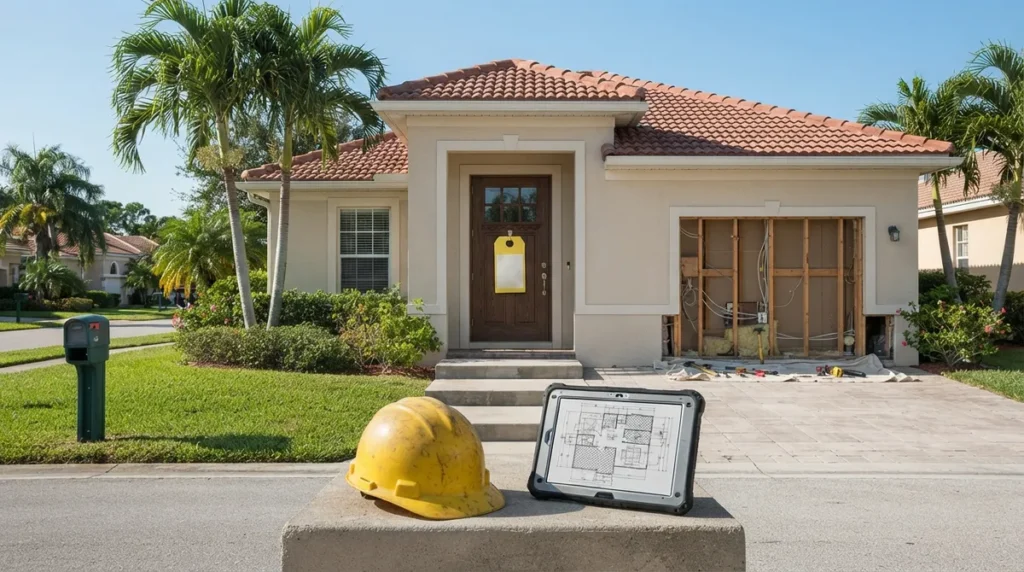
Key Takeaways
-
Foreclosure does not erase unpermitted work, open permits, or code-enforcement cases; these issues stay with the property and the new owner may need to resolve them.
-
Before bidding, check the permit history, open permits, and code-enforcement records for the parcel, and compare them to the property's actual footprint and listing photos.
-
Florida has no statewide after-the-fact permit process, so each local building department sets its own requirements, fees, inspections, and timelines.
-
Retroactive approval is never guaranteed; concealed work may need to be exposed for inspection, and noncompliant work may require corrections or removal.
-
Unpermitted work can affect financing, appraisal, insurance, and resale, so confirm requirements directly with your lender and insurer before committing.
-
Build a permit-and-repair contingency into your budget and plan as though the permitting issue is yours to resolve, since sellers and lenders often won't fix it after the sale.
Picture this: you've been eyeing a foreclosed home in Florida for weeks. The price looks fantastic, the neighborhood is perfect, and you can already imagine the cookout in that screened-in lanai. Then somebody mentions the lanai might not have a permit. Suddenly, your dream deal feels a little less dreamy.
Here's the good news: you are not alone, and this is very fixable. Foreclosure unpermitted work in Florida is a common surprise for bidders, investors, and new owners. The key is knowing what the foreclosure did and did not change. A foreclosure transfers ownership, but it does not erase unpermitted construction, open permits, or code-enforcement cases. Those issues stay with the property.
In this friendly guide, we'll walk through exactly how to find, evaluate, and resolve unpermitted work on a Florida foreclosure property. Whether you're a real estate pro, a general contractor, or a homeowner planning your next move, you'll leave with a clear, practical roadmap.
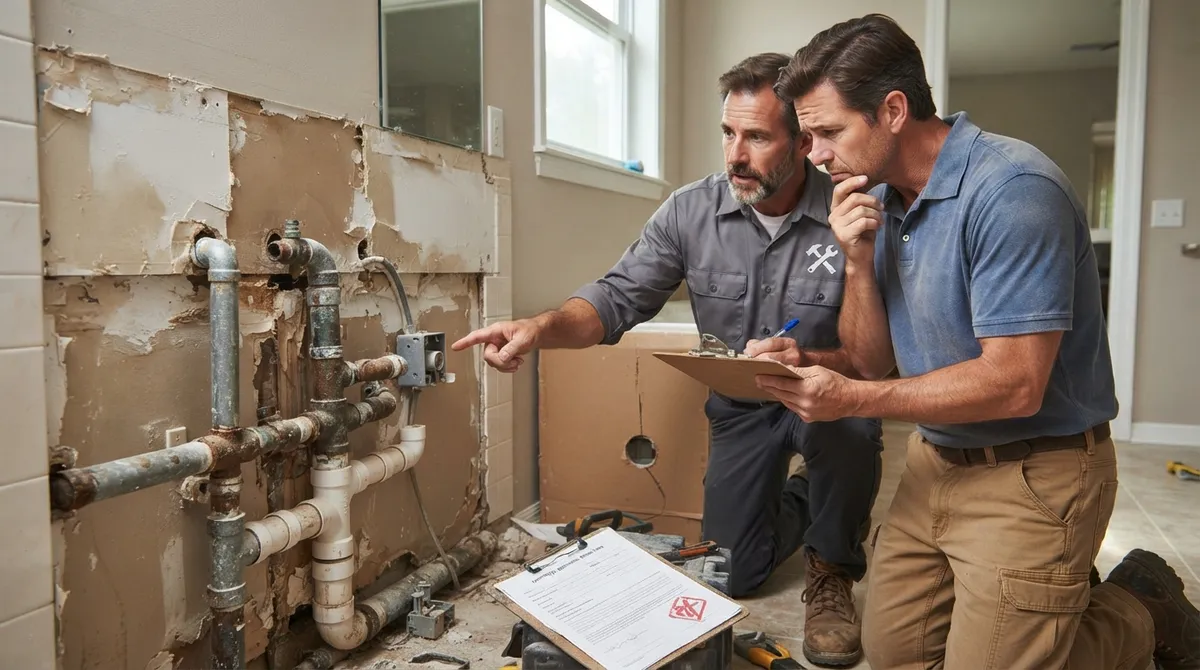
Why Foreclosure Doesn't Wipe Out Unpermitted Work
It's tempting to think a bank sale gives you a clean slate. Unfortunately, that's not how Florida permitting works. Florida Statutes §553.79 generally requires a permit before covered construction, alteration, repair, or demolition. If work happened without one, the property still carries that issue regardless of who holds the deed.
A foreclosure or bank-owned sale does not legalize unpermitted work. It also doesn't close an open permit or resolve a code-enforcement case. Many foreclosed homes are sold "as-is," which means the new owner often inherits the problem along with the keys.
That said, responsibility and available remedies can depend on the foreclosure documents, the sale terms, and your local enforcement process. If you're in a dispute about liability or disclosures, it's wise to get legal advice. For everything permit-related, that's where a team like 1 Contractor Solutions comes in.
Three Common Problems You'll See
- Unpermitted project: Work was done (an addition, roof, remodel, pool cage) with no permit ever pulled.
- Expired or open permit: A permit was issued but lapsed before the work was finished or approved.
- Missing final inspection: Work was built under a permit, but the final inspection never happened.
Each of these has a different fix, which is why identifying the exact problem comes first.
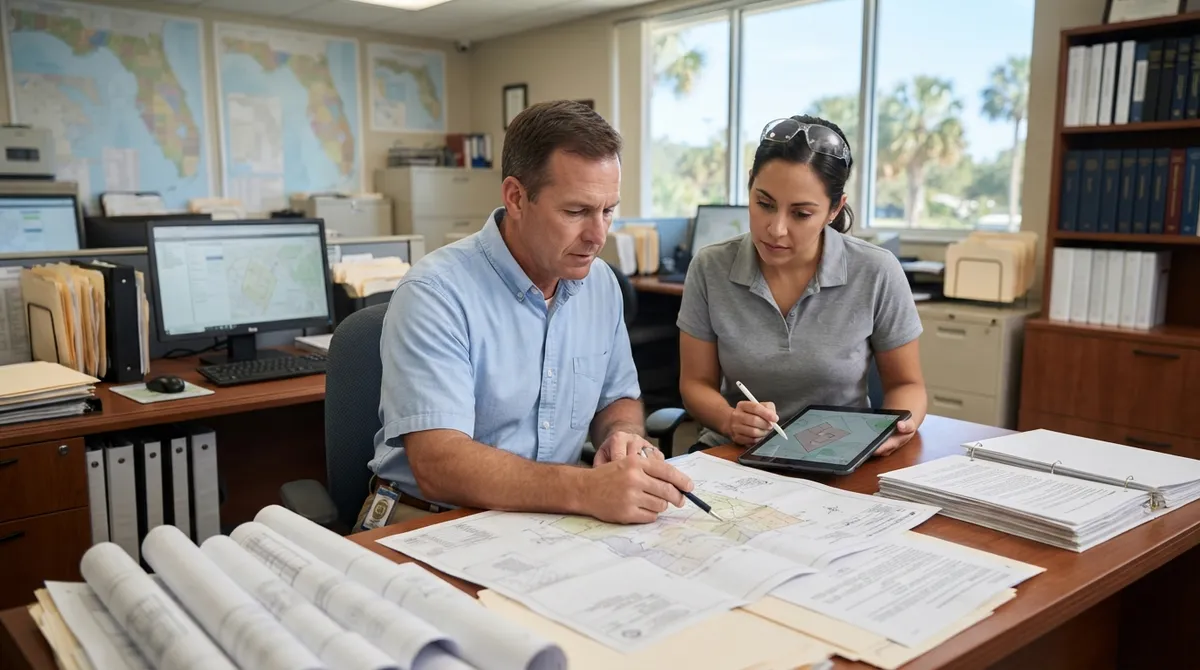
Step 1: Research Permit and Enforcement Records Before You Bid
The best time to find unpermitted work is before you own it. Timing matters most for foreclosure auctions, where you often can't tour the interior. A little homework can save you thousands of dollars.
- Identify the correct authority. The permitting authority may be a city, town, or county. Properties near city lines can be tricky. Our building department lookup tool helps you confirm who actually controls the address.
- Pull the permit history. Ask for all permits on the parcel, including closed, expired, and canceled ones.
- Search for code-enforcement cases. Open violations, liens, and fines are often tracked separately from permits.
- Run an open permit search. Use our open permit search to spot lapsed or unfinished permits.
- Compare records to reality. Look at listing photos, aerial imagery, and the property's actual footprint. Does the square footage match what's on record?
- Request a pre-bid review. A permitting professional can flag red flags you might miss.
Red Flags That Suggest Unpermitted Work
- Enclosed porches, garages, or lanais that don't appear in county records
- A newer-looking roof with no roofing permit on file
- Extra bedrooms, bathrooms, or kitchens not reflected in property data
- Visible electrical panels, water heaters, or HVAC units with no matching permits
- Sheds, carports, pool cages, fences, or retaining walls with no paperwork
If you spot any of these, treat them as questions to investigate, not automatic dealbreakers.
Step 2: Figure Out What Type of Problem You Have
Once you've collected records, sort the issue into the right bucket. This helps you choose the correct path and avoid wasted effort.
| Situation | What It Means | Typical Path Forward |
|---|---|---|
| No permit ever pulled | Work exists with no record | After-the-fact permit application, as-built plans, inspections |
| Expired permit | Permit lapsed before approval | Reactivation, renewal, or new permit depending on local rules |
| Missing final inspection | Work finished but never closed out | Schedule final inspection, possibly with documentation |
| Open code case | Enforcement action is active | Resolve violation, often by permitting or correcting the work |
For deeper help on each route, explore our guides on after-the-fact and expired permits and code compliance violations.
Step 3: Understand How After-the-Fact Permitting Works in Florida
Here's something that surprises many buyers: Florida has no single statewide after-the-fact permit application. There's no uniform process, fee schedule, or processing time. Local building departments set their own application requirements, documentation, inspections, fees, and enforcement procedures.
That means what works in Tampa may differ from what's needed in Miami-Dade or Orlando. It's also why local knowledge matters. For more on this, see our article on whether the Florida Building Code allows after-the-fact permits.
What the Jurisdiction May Ask For
- A completed after-the-fact or retroactive permit application
- As-built drawings showing what was actually built
- Engineer letters or sealed structural/MEP documentation
- Licensed-trade documentation for electrical, plumbing, or mechanical work
- Photos and field verification of concealed conditions
- Inspections, corrections, and fees
Our in-house team prepares as-built drawings and engineer letters, and our own engineer signs and seals the work. That means fewer delays when a reviewer has questions.
Step 4: Plan for Inspections, Exposed Work, and Possible Corrections
Retroactive approval is never automatic. An after-the-fact permit is a request, not a guarantee. Inspectors need to verify that the work meets applicable code and zoning requirements.
Concealed work, like wiring behind drywall or framing behind finishes, may need to be exposed so it can be inspected. If something fails code, the owner may need to correct it. In some cases, noncompliant work may even need to be removed.
This is exactly why you should budget for contingencies when buying a foreclosure. We've covered this reality in will you really have to demolish unpermitted work, and the honest answer is: sometimes, but often it can be legalized with proper documentation and targeted corrections.
Typical Resolution Path
- Confirm the exact issue through permit and code records.
- Document the existing conditions with measurements and photos.
- Prepare as-built plans and any required engineering.
- Submit the after-the-fact application to the correct authority.
- Respond to plan review comments and revisions.
- Complete inspections and make any required corrections.
- Obtain final approval and close the permit.
If you want a deeper walkthrough, our guide on 7 steps to legalize unpermitted work in Florida covers the process in detail.
Step 5: Check How Unpermitted Work Affects Financing, Insurance, and Resale
Permit issues don't just affect the building department. They can ripple into your money decisions, too. Unpermitted work can affect financing, appraisal, insurance, resale, and occupancy decisions.
Requirements vary by lender, insurer, project, and jurisdiction, so never assume the work will be accepted just because it "looks fine." Confirm directly with your lender and insurance provider before relying on any assumption.
| Area | How Unpermitted Work Can Matter |
|---|---|
| Financing | Lenders may question or restrict loans on properties with unresolved permit issues |
| Appraisal | Unpermitted square footage may not be counted in value |
| Insurance | Coverage questions can arise for unpermitted or unfinished work |
| Resale | Future buyers and their lenders may demand permit resolution |
| Occupancy | Certificate of Occupancy or Use issues may arise |
Cash buyers often think they're immune, but resale is where the bill comes due. A buyer's lender or inspector will likely find the same issue you did. Resolving it early keeps your exit strategy clean. For realtors, our realtor and closing support helps keep deals on track.
Who Is Responsible After You Buy?
This is the question everyone asks. The honest answer is that it depends. The current owner may need to address unresolved permitting issues, but the details can hinge on the foreclosure documents, sale terms, local enforcement process, and facts of the case.
Do not assume the lender or prior owner will fix the problem after the sale. In most cases, they won't. Plan as though the issue is yours to resolve, and build the cost and timeline into your numbers.
For disputes about liability or disclosures, consult a Florida real estate attorney. For the practical permitting side, we're happy to help you sort out options. You can get a free quote any time.
Who Should Be on Your Team?
Different readers need different support. Here's how a permitting partner can help each group:
- Investors and real estate pros: Pre-bid permit research and closing support to avoid costly surprises.
- General contractors: Permit filing, tracking, and revisions so crews stay on schedule.
- Homeowners: Plain-English guidance and complete document packages.
- Design and trade professionals: Outsourced drafting and engineering when you need extra capacity.
We also help with Certificate of Occupancy issues and permit facilitation and filing across all 67 Florida counties. If your situation is urgent, our urgent permit rescue service handles denials, stop work orders, and closings held up by permit issues.
Costs and Timelines: What to Expect
Here's where we want to be honest and upfront. There's no reliable statewide figure for the cost to legalize unpermitted work, and no uniform processing time. Costs and timelines depend on the scope of work, the jurisdiction, required engineering, inspection results, and any corrections.
Instead of guessing, confirm fees and requirements with the local building department and qualified professionals. Our overview of after-the-fact permit costs in Florida can help you build a realistic budget.
Factors That Influence Your Budget
- Size and complexity of the unpermitted work
- Whether engineering or sealed drawings are required
- Whether concealed work must be opened up for inspection
- Local application, penalty, and inspection fees
- Corrections or upgrades needed to meet code
- Reviewer comments and resubmittals
Smart Bidding Tips for Florida Foreclosures
A few practical habits can protect you on your next foreclosure purchase:
- Always run permit and code-enforcement searches before bidding.
- Build a permit-and-repair contingency into your budget.
- Don't rely on listing descriptions for square footage or bedroom counts.
- Confirm lender and insurer requirements before you commit.
- Talk to a permitting professional before auction day, not after.
Local rules also vary widely by area. If you're working in a specific market, check our county pages such as Hillsborough County, Miami-Dade County, and Orange County. You can also visit our 1 Contractor Solutions Google profile to see what customers say about working with us.
Official Resources Worth Bookmarking
For the legal backbone of permitting requirements, review the text of Florida Statutes §553.79 to see the statewide permit requirement. For local rules, always go straight to the building department with jurisdiction. You can also stay in the loop by following us on LinkedIn or following us on Facebook for permitting tips and updates.
Ready to Move Forward With Confidence?
Unpermitted work on a foreclosure doesn't have to be a deal-killer. With the right research up front, a clear understanding of how local after-the-fact permitting works, and an experienced team in your corner, you can turn a risky property into a solid investment or a safe, legal home.
Remember the big takeaways: foreclosure doesn't erase permit issues, every Florida jurisdiction handles retroactive permits differently, and approval is never guaranteed. Do your homework early and plan for the unexpected.
We're Florida's outsourced permitting department, and we respond within 30 minutes, day or night. If you're eyeing a foreclosure or already dealing with unpermitted work, get a free quote and let's talk through your options. Permits approved. Projects moving.
FAQs
How do I check for unpermitted work on a Florida foreclosure property?
Start by confirming which building department has jurisdiction, then request the full permit history and search for open code-enforcement cases. Compare those records to the home's actual condition, and consider having a permitting professional review the file before you bid.
Does foreclosure get rid of unpermitted work in Florida?
No, it doesn't. A foreclosure or bank-owned sale does not legalize unpermitted work or close an open permit or code case, so the new owner may need to resolve it. Check your sale terms and get legal advice if liability is unclear.
Can I get an after-the-fact permit for a foreclosure property in Florida?
Often yes, but it's never guaranteed. Florida has no single statewide process, so each local building department sets its own requirements, which may include as-built plans, engineering, inspections, and corrections.
Can unpermitted work prevent financing or insurance on a Florida foreclosure?
It can. Lenders, appraisers, and insurers may treat unpermitted work as a concern, and requirements vary by company and project, so confirm directly with them before you rely on any assumption.
Should I hire a Florida permitting service before bidding on a foreclosed property?
It's a smart move, especially if the home has additions, a newer roof, or any visible changes. A permitting team can research records, flag likely issues, and help you estimate the path to legalization before you commit your money.
We do this work every day across all 67 Florida counties. Call (866) 314-6931 and we will tell you what your situation actually requires — including when you do not need us.
Related services
Permit Facilitation & Filing
You have a crew scheduled, a client asking for dates, and a permit sitting somewhere in a queue you cannot see. We file it, w…
See the servicePlan Review Coordination
A permit in plan review is not one queue. On a commercial project it can be six queues, each with its own reviewer, its own c…
See the serviceReady to get your permit moving?
One call tells you which jurisdiction controls your project, what it will take, and what it will cost. Most of the time we can scope it on the phone.