
Blog
How to Handle an Accessory Structure Without Permit in Florida
Built a shed or garage without a permit in Florida? Learn how to check requirements, avoid risks, and legalize it step by step.
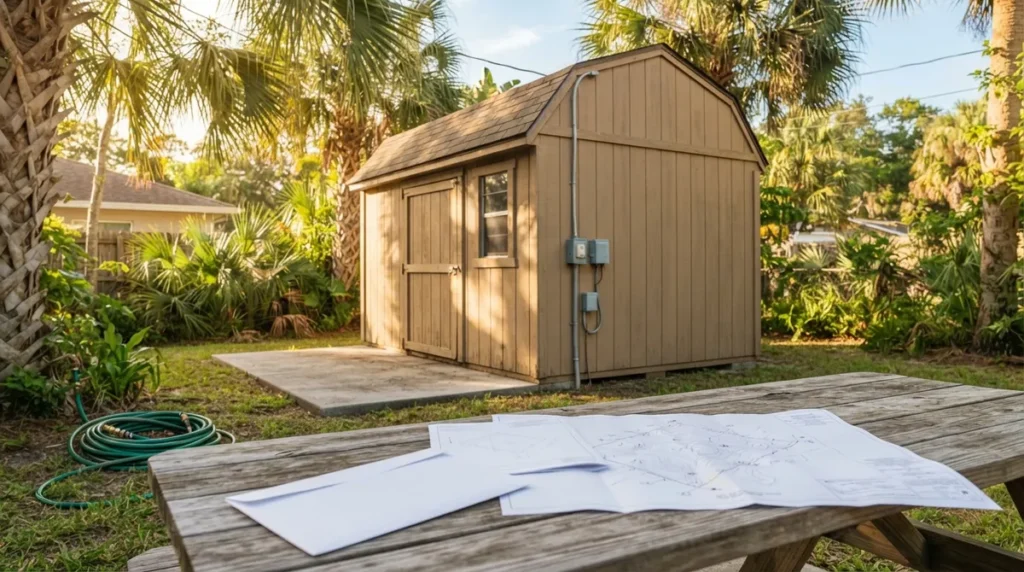
Key Takeaways
-
Florida has no statewide rule exempting small sheds from permits; whether one is needed depends on the structure, the work involved, and your local building department.
-
Start by searching for existing permits on your jurisdiction's portal and calling the building department to ask, ideally in writing, whether your exact structure needs a permit.
-
Features like a permanent foundation, electrical, plumbing, or HVAC usually trigger a permit requirement, even for accessory structures.
-
The manufactured shed exemption under Florida Statutes § 553.80(3) limits local plan review only; site assembly, anchoring, and utilities still require local permits and inspections.
-
Zoning, setbacks, easements, flood rules, and HOA restrictions apply even when no building permit is required, so check them separately.
-
An unpermitted structure can complicate home sales, insurance claims, and refinancing, so legalizing it early through an after-the-fact permit is usually smoother than waiting for a violation notice.
So you've got a shed, a detached garage, a workshop, or maybe a backyard cabana, and a nagging thought: did anyone ever pull a permit for this thing? Take a breath. You're in good company. Florida homeowners, buyers, and contractors run into an accessory structure without permit in Florida all the time, and the good news is that most situations have a clear path forward.
Here's the catch. Florida has no single statewide rule saying every small shed is automatically permit-free. Whether you needed a permit depends on the structure, the work involved, and your local building department. Zoning, setbacks, and flood rules can apply even when a building permit does not.
In this guide, we'll walk through how to figure out whether your structure needed a permit, what to do if it did, and how to get it legalized without losing your sanity. We'll also share where 1 Contractor Solutions fits in when you'd rather hand the paperwork to a team that does this every day.
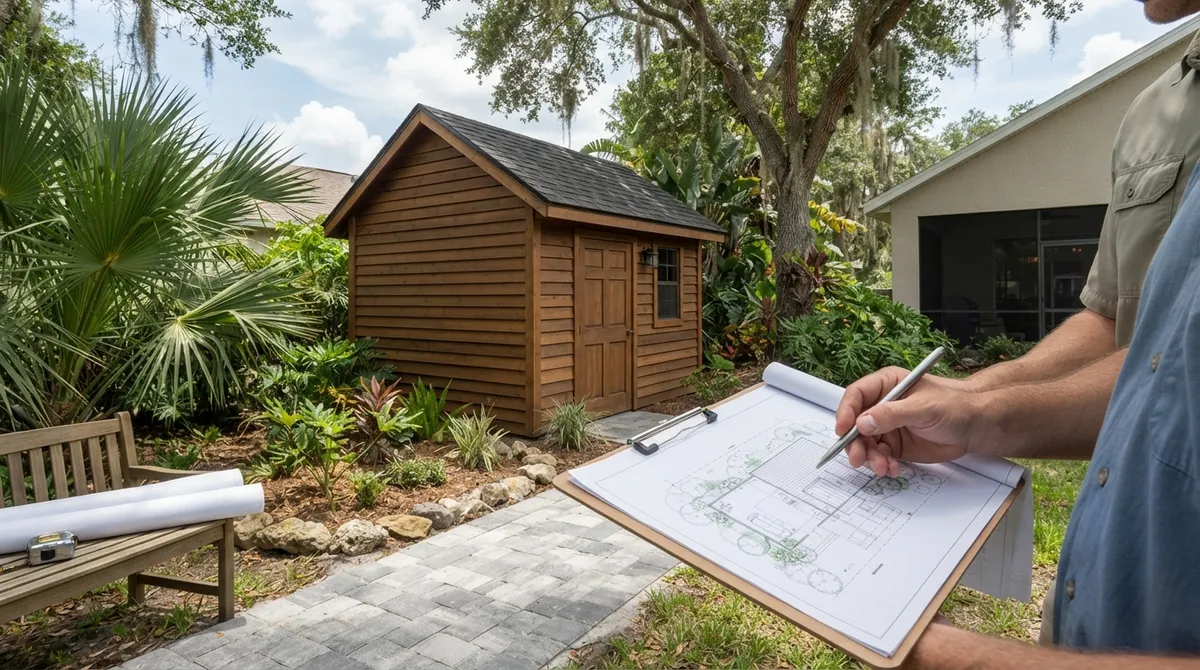
What Florida Law Actually Says About Accessory Structures
Florida's baseline rule is simple. Under Florida Statutes § 553.79(1)(a), a permit is generally required before you construct, erect, alter, or modify a building, unless a specific exemption applies. That's the starting point for every accessory structure, from a garden shed to a detached garage.
Notice what the statute does not say. It doesn't hand out a blanket "under 120 square feet, no permit needed" pass. Some other states do that. Florida leaves a lot to the Florida Building Code and the local authority having jurisdiction.
Common Accessory Structures
- Storage sheds and lawn-storage buildings
- Detached garages and carports
- Workshops and home studios
- Gazebos, pergolas, and cabanas
- Pool houses and outdoor kitchens
- Detached guest houses (often treated very differently)
Why "It Depends" Is the Honest Answer
Your local building department decides how the code applies to your property. Two neighbors in different cities can get opposite answers about the same size shed. That's why verifying locally beats trusting a rule of thumb from a forum.
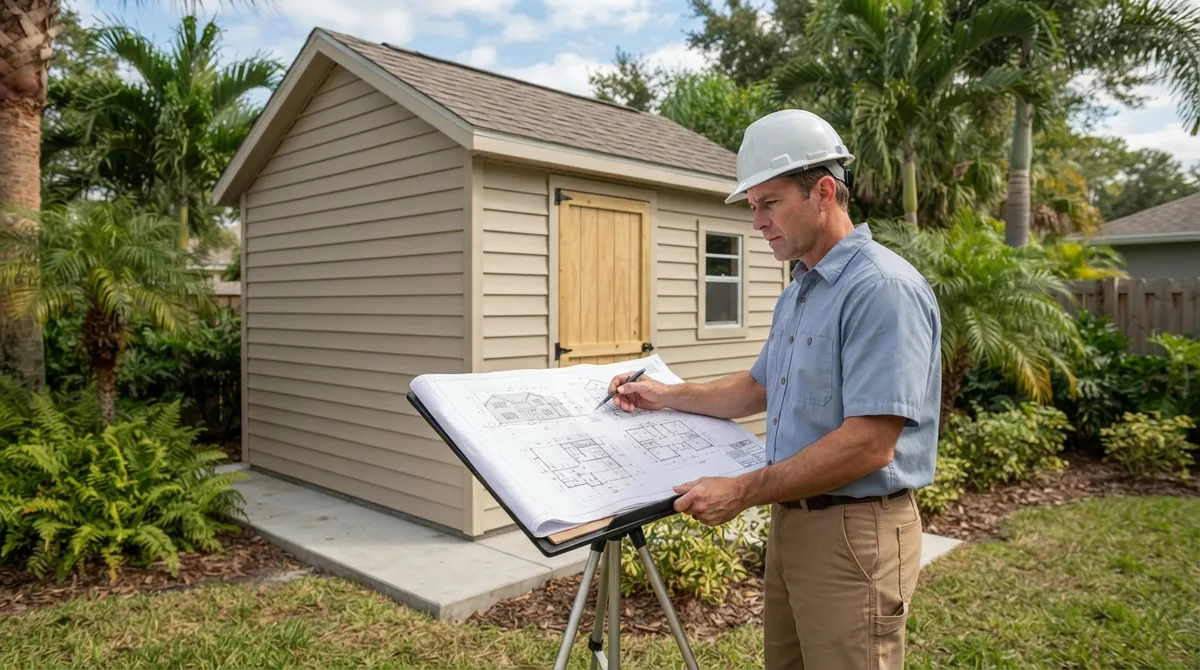
Step 1: Figure Out Whether a Permit Was Required
Before you panic or celebrate, do some detective work. Here's a simple process that works for most Florida properties.
- Identify your jurisdiction. City lines are sneaky. Your mailing address may say one city while the parcel sits in unincorporated county land. Our building department lookup tool can help you find the right office.
- Search for existing permits. Run an address search on your jurisdiction's portal, or try our open permit search. A closed permit means you're likely in good shape. No record can mean the structure was never permitted.
- Describe the structure precisely. Note the size, height, foundation type, roof framing, and whether it has electrical, plumbing, or HVAC.
- Call or email the building department. Ask whether that exact structure needs a building permit. Get the answer in writing when you can.
- Check zoning separately. Setbacks, lot coverage, height limits, easements, and HOA rules are a different conversation.
Features That Usually Trigger a Permit Requirement
| Feature | Why It Matters | Permit Likely? |
|---|---|---|
| Permanent foundation or slab | Structural and wind-load review | Often yes |
| Electrical service or lighting | Safety and code inspection | Yes |
| Plumbing or sink | Sanitary and backflow concerns | Yes |
| Air conditioning or heating | Mechanical code and energy rules | Yes |
| Site-built, larger frame structure | Wind resistance and engineering | Often yes |
| Flood zone location | Floodplain management rules | Often yes |
Step 2: Understand the Manufactured Shed Exception
Here's where many people get tangled up. Florida Statutes § 553.80(3) exempts certain state-approved manufactured buildings, including some lawn-storage buildings and sheds, from local plan review. That sounds like a free pass, but it isn't.
The exemption covers plan review, not the work you do on your lot. Site assembly, anchoring, and erection remain subject to local permitting and inspections. So a prefab shed that arrives on a truck can still require a permit for how it's installed.
Manufactured Shed vs. Site-Built Structure
| Question | State-Approved Manufactured Shed | Site-Built Structure |
|---|---|---|
| Local plan review | May be limited under § 553.80(3) | Typically required |
| Site erection and anchoring | Still subject to local rules | Subject to local rules |
| Utilities added | Separate permits likely | Separate permits likely |
| Zoning and setbacks | Still apply | Still apply |
What About the $7,500 Owner Exemption?
You may have heard about a 2026 statutory exemption for qualifying work valued below $7,500 on an owner's single-family property. It's real, but it comes with strings. There are exclusions, and you generally must submit a written exemption request with documentation.
Please don't assume this covers building an accessory structure. Local governments implement these exemptions differently. For example, Collier County's published guidance says its under-$7,500 exemption, effective July 1, 2026, applies only to specified work on detached single-family properties and excludes structural, mechanical, electrical, plumbing, and gas work. That's one county's approach, not a statewide shed rule.
The takeaway: confirm with your building department before you rely on any exemption. A quick phone call is far cheaper than a violation notice.
Step 3: Know the Risks of Leaving It Unpermitted
Let's be friendly but honest. Ignoring an unpermitted structure rarely makes it go away. It tends to resurface at the worst moments.
Where Unpermitted Structures Cause Trouble
- Home sales and closings. Title searches, buyer inspections, and appraisals can flag unpermitted work, and a permit hold can delay a closing.
- Insurance claims. An insurer may question coverage for an unpermitted structure after a storm or fire.
- Code enforcement. A neighbor complaint can trigger a notice of violation, fines, and a required cleanup.
- Refinancing or HELOCs. Lenders and appraisers sometimes require legalization first.
- Safety. Anchoring, wind resistance, and wiring problems are real hazards in hurricane country.
Penalties and processes vary by jurisdiction, so don't expect the same outcome everywhere. If you want a deeper look, our guide on the penalty for building without a permit in Florida breaks it down.
Step 4: Legalize It With an After-the-Fact Permit
If your structure needed a permit and never got one, an after-the-fact permit is usually the path forward. The idea is to bring the existing structure into the permit system, prove it meets code, and close it out properly.
Depending on the jurisdiction, the building department may require plans, engineering or other documentation, inspections, corrections, and applicable fees. Concealed work may need to be exposed so an inspector can see it. If that sounds like a lot, it's manageable when you break it into steps.
- Contact the building department. Ask about their after-the-fact or retroactive permitting process and what documents they want.
- Gather your information. Photos, measurements, a survey, and any purchase paperwork for a prefab unit all help.
- Prepare as-built drawings. These document what actually exists. Learn more about as-built drawings and why reviewers love them.
- Get engineering if needed. A sealed engineer letter or structural review can verify anchoring, framing, and wind resistance.
- Submit the permit application. Include site plan, drawings, and any required forms.
- Address reviewer comments. Expect a correction round or two. It's normal.
- Pass inspections and close the permit. Final approval is what you want in your file.
Want the full walkthrough? Our guide to how to get an after-the-fact permit in Florida goes step by step, and our after-the-fact and expired permits service handles these files from start to finish.
Documents That Commonly Help
| Document | Purpose |
|---|---|
| Property survey or site plan | Shows setbacks, easements, and lot coverage |
| As-built drawings | Documents dimensions, framing, and layout |
| Engineer letter or sealed drawings | Verifies structural adequacy and wind load |
| Product approvals or manufacturer specs | Supports prefab shed and window compliance |
| Photos of construction details | Helps when work is concealed |
| Electrical or plumbing details | Needed if utilities were added |
Step 5: Don't Forget Zoning, Setbacks, and Flood Rules
Here's a trap that catches careful people. Even if your structure is exempt from a building permit, it still has to follow local zoning and land-development rules. A permit-free shed built two feet from the property line can still violate setbacks.
Items to Check Separately
- Setbacks: Minimum distances from property lines and the main home.
- Lot coverage: Limits on total building footprint.
- Height limits: Many codes cap accessory structure height.
- Easements: Utility and drainage easements can prohibit building.
- Flood zones: Structures in a floodplain may need elevation or flood venting. See our explainer on the FEMA 50 percent rule in Florida.
- HOA restrictions: Your association may require approval regardless of the city's view.
If your structure violates zoning, legalizing it may require a variance or modification in addition to the building permit. Better to learn that early.
Review Timelines: What to Expect After You Apply
Florida Statutes § 553.792 sets statutory review timeframes for certain complete permit applications, including accessory-structure permits. For structures under 7,500 square feet, the timeframe is 30 business days, and for 7,500 square feet or larger it's 60 business days, with separate provisions for certain lower-value work on existing single-family dwellings.
Important note: these are application-review deadlines for complete submissions. They aren't permission to build before you have a permit. A complete, well-prepared package is the best way to stay inside those windows. For real-world expectations, see how long a building permit takes in Florida.
Who Should Handle This: DIY, Contractor, or Permitting Pro?
Different readers have different needs, so here's how to think about it.
- Homeowners: You may qualify to act as an owner-builder in some cases, but legalizing existing work is paperwork-heavy. Our homeowner services take the guesswork out.
- Real estate professionals and investors: A permit gap can stall a deal. Early research and legalization protect your closing date. See our realtor and closing support.
- General contractors: If a client's accessory structure turned up unpermitted, you need clean plans and a reliable filing process. Check our page for general contractors.
- Design and trade professionals: If you need dependable outsourced drafting or MEP and structural support, our plans and engineering team is built for that.
Where 1 Contractor Solutions Fits In
We like to think of 1 Contractor Solutions as Florida's outsourced permitting department. We're not a construction contractor. We're the team you call when the permit is the thing standing in the way. We work across all 67 Florida counties, and our drafting and engineering are in house, with our own engineer sealing the work.
For an unpermitted accessory structure, that usually means we research your jurisdiction, prepare as-built drawings, coordinate engineering when needed, file the application, track it, and work through reviewer comments until the permit is closed. You can see what customers say about us by visiting our Google profile for 1 Contractor Solutions, and you can follow us on LinkedIn for permitting tips as well.
Common Mistakes to Avoid
- Assuming a size limit applies everywhere. There's no universal statewide threshold.
- Skipping the local call. One phone call can save weeks.
- Ignoring zoning. Building permit exemption does not equal zoning approval.
- Hiding the structure at closing. Surprises erode trust and can kill deals.
- Hiring unlicensed help. Make sure anyone pulling permits is properly qualified. Our guide on who can pull a permit in Florida explains the rules.
- Waiting for a violation notice. Proactive legalization is usually smoother than responding under pressure.
A Quick Decision Guide
| Your Situation | Best Next Move |
|---|---|
| Not sure if a permit was ever pulled | Run an address permit search and call the building department |
| Planning to build a new shed | Confirm permit and zoning rules before purchasing or building |
| Existing structure, no permit on record | Start an after-the-fact permit with as-builts and engineering |
| Received a code violation notice | Respond quickly and begin the compliance process |
| Selling or refinancing soon | Legalize early to prevent closing delays |
Ready to Sort Out Your Accessory Structure?
An accessory structure without a permit in Florida isn't the end of the world. It's a fixable problem, and the sooner you tackle it, the easier it tends to be. Start by confirming what your local jurisdiction requires, gather your documentation, and move through the after-the-fact process one step at a time.
If you'd rather not do it alone, we're here to help. Whether you're a homeowner, agent, or contractor, get a free quote and let us take the permitting weight off your shoulders. We respond fast, and we'll tell you exactly what your structure needs.
FAQs
Do I need a permit for a shed or accessory structure in Florida?
Often, yes, but it depends. Florida Statutes § 553.79 generally requires a permit before building, unless an exemption applies, and there's no single statewide size rule for sheds. Check with your local building department before you build, and don't forget zoning and setback rules.
Does Florida exempt prefabricated sheds from permits?
Not entirely. Under § 553.80(3), certain state-approved manufactured buildings, including some lawn-storage sheds, get limited local plan-review treatment. The on-site assembly, anchoring, and any utilities can still require local permits and inspections.
Can I get an after-the-fact permit for an unpermitted shed in Florida?
Usually, yes! Most jurisdictions offer an after-the-fact process where you submit documentation, such as as-built drawings and possibly an engineer letter, then pass inspections. Requirements and fees vary locally, so a quick call to your building department is a great first step.
What happens if I build an accessory structure without a permit in Florida?
You may face code enforcement notices, fines, and a requirement to legalize or remove the structure. It can also complicate home sales, insurance claims, and refinancing. Penalties vary by jurisdiction, which is why acting early helps.
Do zoning setbacks still apply if my shed is exempt from a building permit?
Yes, they do. A building-permit exemption doesn't override zoning, setbacks, lot coverage, easements, floodplain rules, or HOA restrictions, so check those separately before building or legalizing.
We do this work every day across all 67 Florida counties. Call (866) 314-6931 and we will tell you what your situation actually requires — including when you do not need us.
Related services
Permit Facilitation & Filing
You have a crew scheduled, a client asking for dates, and a permit sitting somewhere in a queue you cannot see. We file it, w…
See the servicePlan Review Coordination
A permit in plan review is not one queue. On a commercial project it can be six queues, each with its own reviewer, its own c…
See the serviceReady to get your permit moving?
One call tells you which jurisdiction controls your project, what it will take, and what it will cost. Most of the time we can scope it on the phone.