
Blog
How to Get the Best Help for Unpermitted Work Before Selling
Selling a Florida home with unpermitted work? Learn the steps, options, and professional help that keep your closing on track in 2026.

Key Takeaways
-
Start by confirming what is actually unpermitted through permit searches, code enforcement records, and property walk-throughs before spending money on solutions or making promises to buyers.
-
After-the-fact permits are often achievable and most preferred by sellers; they require as-built drawings, inspections, and sometimes engineer letters, with costs and timelines varying by Florida jurisdiction.
-
Assemble a coordinated professional team including a permitting service, drafter, licensed engineer, and real estate attorney to handle applications, inspections, and disclosure rather than attempting to navigate the process alone.
-
Disclose unpermitted work accurately and early to buyers; Florida law requires disclosure of facts materially affecting value, so hide nothing, provide documentation, and put agreements in writing.
-
Contact your permitting professional immediately upon discovering unpermitted work and get the building department's specific requirements before commissioning drawings to avoid wasted expense and missed deadlines.
-
Understand that each Florida jurisdiction has different requirements and timelines, so confirm current fees and processes directly with your local building department rather than relying on generic estimates.
Picture this: your buyer is excited, your agent is smiling, and the closing date is circled on the calendar. Then a permit search, an appraisal, or a home inspector turns up that finished garage, enclosed patio, or reroof that never got a permit. Suddenly your smooth sale feels a lot less smooth.
Take a breath. You are far from alone, and this is fixable. Finding the best help for sellers with unpermitted construction in Florida comes down to knowing what to check, whom to call, and what order to do things in. This guide walks you through it in plain English, with a friendly nudge toward the steps that save the most time.
We will cover how to confirm what is actually unpermitted, how after-the-fact permitting works, which professionals you may need, what to say to buyers, and how to keep your closing on track. This article is general information, not legal advice, and every Florida jurisdiction runs its own process, so always confirm specifics with the local building department.
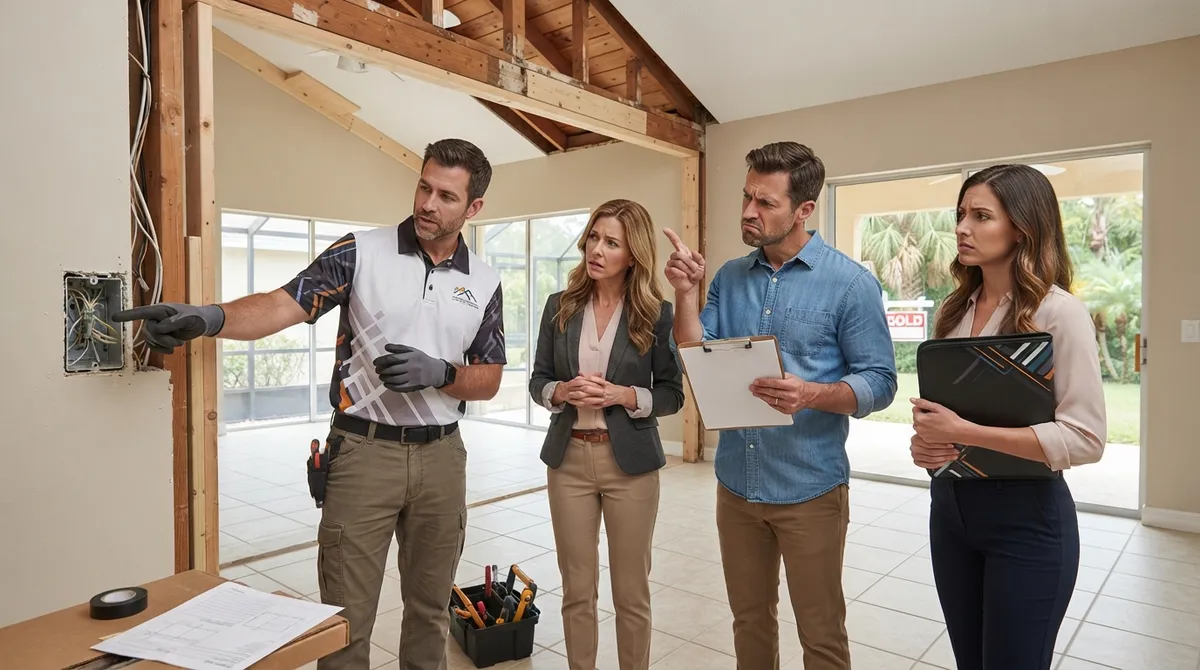
Why Unpermitted Work Becomes a Big Deal at Sale Time
Florida law generally requires a permit before you construct, alter, repair, or demolish a building, with some statutory exceptions (see Florida Statutes Section 553.79). When work skips that step, nobody has verified it against code through inspections. Buyers, lenders, insurers, and appraisers all care about that.
Here is where unpermitted work tends to cause friction during a sale:
- Buyer due diligence: Buyers and their agents often run permit searches and may ask uncomfortable questions.
- Financing: Some lenders hesitate when livable space or major systems were never approved.
- Insurance: Carriers may question coverage for work with no permit history.
- Appraisal: Square footage that was never permitted can complicate value conclusions.
- Title and closing: Open or expired permits can surface late and stall things. If that sounds familiar, see our guide on what to do when an open permit is found at closing.
The good news is that most of these problems shrink dramatically once you have a documented plan to resolve the work.
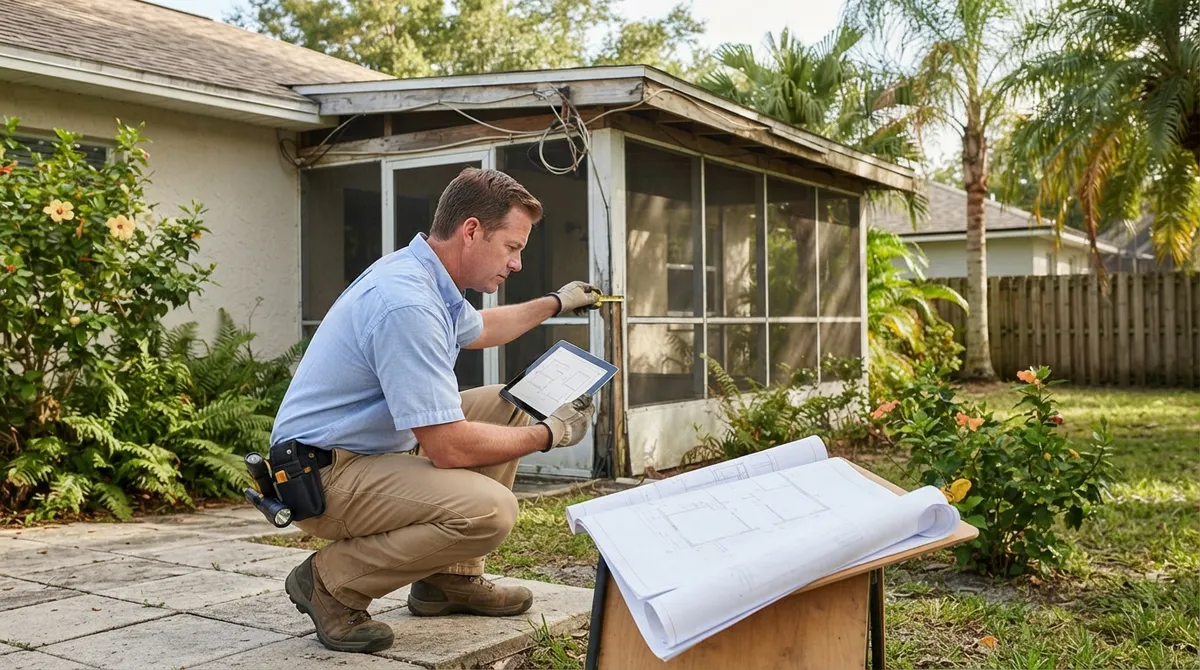
Step 1: Confirm What Is Actually Unpermitted
Before you spend a dollar, get clear on facts. Sellers are often surprised in both directions: sometimes a permit exists that they did not know about, and sometimes a prior owner skipped one.
- Identify the exact jurisdiction. Florida has 67 counties, but cities and towns often run their own building departments. The address on your mailbox does not always tell you who controls the permit. Our building department lookup tool can point you in the right direction.
- Pull the permit history. Search the local portal or request records for your parcel, including closed, expired, and open permits. You can also try our open permit search.
- Check code enforcement records. Look for any notices or violations tied to the property.
- Walk the property with the records in hand. Compare what is on paper with what exists: additions, converted garages, enclosed lanais, pool cages, kitchen or bath remodels, electrical or plumbing changes, roofs, windows, and fences.
- Gather your own paperwork. Collect contractor invoices, old plans, photos, warranties, and any emails. If you inherited the issue from a prior owner, see 4 steps if a prior owner skipped permits in Florida.
Keep everything in one folder. Permit searches, applications, inspection results, and written communications become valuable proof that you acted in good faith.
Step 2: Understand Your Resolution Options
Once you know what is unpermitted, you generally have a few paths. The right one depends on the work, the jurisdiction, your timeline, and your buyer.
| Option | What It Means | Best When | Watch Out For |
|---|---|---|---|
| After-the-fact permit | Apply for the permit that should have been pulled originally, documenting work already built | The work is code-compliant or can be corrected | Plans, inspections, and sometimes opening walls or ceilings may be required |
| Correct, then permit | Fix deficiencies first, then permit and inspect | Inspectors or engineers find non-compliant items | Added cost and time for repairs |
| Remove or restore | Take out the work and return the space to its permitted condition | The work cannot reasonably be made compliant | Demolition and restoration costs |
| Sell with disclosure | Disclose accurately and let the buyer take on resolution | Time is tight or the buyer is an investor | Fewer buyers, possible price or financing impact; get legal advice |
Most sellers who want the cleanest sale pursue the first or second path. Our deeper dive on how to legalize unpermitted work in Florida explains the process in more detail, and will you really have to demolish unpermitted work? may ease some worries.
Step 3: Know How After-the-Fact Permitting Works
An after-the-fact permit is exactly what it sounds like: you apply for the permit that would have been required, and you identify that the work is already complete. Approval is never automatic, but it is very often achievable.
Many local departments will ask for some combination of the following:
- A permit application that identifies the work as completed
- As-built drawings or plans showing what exists
- A site plan or survey
- Product approvals or specification information
- Drawings or letters prepared or sealed by a Florida-licensed architect or engineer, where required
- Inspections, sometimes with access to concealed work
- Payment of applicable fees, which vary by jurisdiction
There is no single statewide after-the-fact form or fee schedule. Costs and timelines vary by county, city, and project type, so confirm current figures directly with the building department before you promise anything to a buyer. For a sense of how pricing factors work, see our article on after-the-fact permit costs in Florida, and for the process itself, how to get an after-the-fact permit in Florida.
What Inspectors Typically Look For
Inspectors want to see that the work meets the code that applies. Depending on what you built, that can include structural connections, electrical safety, plumbing and venting, egress, smoke and carbon monoxide alarms, wind and flood requirements, and energy compliance. If hidden framing, wiring, or plumbing cannot be verified by eye, expect a conversation about field verification, exploratory openings, or an engineer letter.
Step 4: Build Your Professional Support Team
The best help for sellers with unpermitted construction in Florida usually is not one person. It is a coordinated team that talks to each other. Here is who does what.
| Professional | What They Do for You |
|---|---|
| Permitting service | Researches permit history, identifies the right jurisdiction and permit types, files and tracks applications, answers reviewer comments, schedules inspections |
| Drafter / designer | Prepares as-built drawings and site plans that match what exists |
| Florida-licensed engineer | Evaluates structural, electrical, or mechanical conditions and seals drawings or letters when required |
| Licensed contractor | Performs corrections or repairs found during review |
| Real estate attorney | Advises on disclosure duties, contract terms, and closing strategy |
| Real estate agent | Coordinates timing, buyer communication, and negotiations |
A single-source team simplifies things. For example, 1 Contractor Solutions is an outsourced permitting department covering all 67 Florida counties, with in-house drafting and engineering and our own engineer signing and sealing the work. That means when a reviewer flags something, there is no waiting on an outside consultant to call back. You can explore the pieces that matter most to sellers here:
- After-the-fact and expired permits
- As-built drawings
- Engineer letters
- Realtor and closing support
- Code compliance and violations
One honest caveat: no permitting company can guarantee approval or replace the decision of the building official. What a good one can do is make sure your package is complete, correct, and filed with the right agency the first time.
Step 5: Handle Disclosure the Smart Way
Disclosure is where sellers get nervous, so let us keep it simple. Florida does not have one blanket statute that says every unpermitted improvement must always be disclosed. However, the Florida Supreme Court's decision in Johnson v. Davis requires sellers of residential property to disclose known facts that materially affect the property's value and are not readily observable. Your contract and the facts of your transaction matter too.
Translation: do not hide it, and do not guess. Here is a friendly checklist:
- Talk to a real estate attorney early about what you know and what your contract requires.
- Be accurate. Never tell a buyer that work is approved unless the building department has actually closed the permit.
- Share your documentation: permit searches, applications, inspection results, plans, and contractor records.
- Put commitments in writing, including any agreed credits, escrow, or timelines.
Honesty plus a clear plan builds trust, and trust keeps deals alive. For a closer look, read what disclosures are required for unpermitted work in Florida.
Step 6: Keep Your Closing on Track
Timing is everything when a contract is ticking. If you are already under contract, speed and communication matter most.
- Call your permitting professional the moment you learn about the issue. A same-day response can protect your inspection and financing deadlines.
- Ask the building department what resolves the problem. Get their requirements before commissioning drawings.
- Share a timeline with your agent and the buyer. Even a rough, honest schedule calms nerves.
- Consider negotiated options. Some deals use a closing extension, price credit, or escrow arrangement while an after-the-fact permit finishes. Have your attorney review any such terms.
- Document final approval. A closed permit or final inspection record is the clearest proof you can hand a buyer.
If a lender or closing is already stalled, our resources on fixing a Florida closing held up by unpermitted work and urgent permit rescue can help you move quickly.
Common Seller Mistakes to Avoid
- Assuming the buyer will not notice. Permit searches are routine, and inspectors know what to look for.
- Commissioning drawings before asking the jurisdiction. Requirements vary, and paying for the wrong documents wastes money.
- Promising approval. Only the building official can approve work.
- Ignoring code enforcement notices. Fines and deadlines can grow, so respond promptly.
- Skipping legal advice. Disclosure and contract questions deserve a qualified attorney.
- Waiting until the week of closing. Inspections and plan reviews take time, so start early.
Who Benefits From Which Kind of Help
Different sellers have different needs, and the right support fits the situation:
- Homeowners often need a guide through the process, plus as-builts and permit filing. See our page for homeowners and owner-builders.
- Investors and flippers benefit from fast research and bulk coordination across properties.
- Real estate professionals need quick permit research and clear timelines to protect deals. Learn more about support for realtors and title companies.
- General contractors asked to correct prior work need accurate plans and reliable filing. Visit our general contractor page.
No matter who you are, the goal is the same: replace uncertainty with a documented path forward.
Why Local Knowledge Matters Across Florida
Every jurisdiction does things a little differently. Seminole County's building department publishes its own requirements, Miami-Dade has unique product approval rules, and coastal and wind-borne debris regions add structural considerations. A service that works statewide, yet understands each local desk, saves you from guesswork. If you are in a specific area, you can check pages for Hillsborough County, Sarasota County, Orange County, Miami-Dade County, and more on our Florida counties we serve page.
Final Thoughts and Your Next Step
Unpermitted construction does not have to derail your sale. Confirm the facts, ask the local building department what resolves the issue, assemble the right professionals, communicate honestly with buyers, and keep your documentation tidy. Most sellers who follow that path end up with a smoother closing and a lot more peace of mind.
If you want a team that handles the research, drawings, engineering, filing, and follow-through under one roof, we would love to help. Get a free quote and tell us your address and your timeline. You can also see what customers say when you visit us on Google — 1 Contractor Solutions, and stay connected when you follow us on LinkedIn or follow us on Facebook.
You have got this, and we are here to help you cross the finish line.
FAQs
How can I find out whether my Florida home has unpermitted construction?
Start by identifying the exact jurisdiction, then search that city or county's permit and code enforcement records for your parcel. Compare what you find with the work that actually exists at the property. A permitting professional can speed this up and spot gaps you might miss.
Can unpermitted work be legalized with an after-the-fact permit in Florida?
Often, yes, though approval is never automatic. Local building departments typically look for an application, as-built drawings, inspections, and sometimes an engineer letter, and they may require corrections. Always confirm what your specific jurisdiction requires before you promise a buyer anything.
Do Florida sellers have to disclose unpermitted renovations?
Florida case law (Johnson v. Davis) requires sellers to disclose known facts that materially affect value and are not readily observable, and your contract matters too. Because the details depend on your situation, talk with a real estate attorney before you list or negotiate.
Can unpermitted work delay or stop a home sale?
It can, since buyers, lenders, insurers, and appraisers may all react to unpermitted improvements. The good news is that a documented plan, such as an after-the-fact permit in progress, often keeps deals moving. Starting early gives you the most options.
How can a Florida permitting service help me before closing?
A good service researches your permit history, identifies the right jurisdiction, coordinates as-built plans and licensed professionals, files and tracks the application, and arranges inspections. They cannot guarantee approval, but they can keep the process organized and moving so you are not scrambling near your closing date.
We do this work every day across all 67 Florida counties. Call (866) 314-6931 and we will tell you what your situation actually requires — including when you do not need us.
Related services
Permit Facilitation & Filing
You have a crew scheduled, a client asking for dates, and a permit sitting somewhere in a queue you cannot see. We file it, w…
See the servicePlan Review Coordination
A permit in plan review is not one queue. On a commercial project it can be six queues, each with its own reviewer, its own c…
See the serviceReady to get your permit moving?
One call tells you which jurisdiction controls your project, what it will take, and what it will cost. Most of the time we can scope it on the phone.