
Blog
How to Get After the Fact Permitting in Miami Right
Learn how after the fact permitting in Miami works: jurisdiction, fees, plans, inspections, and mistakes to avoid when legalizing unpermitted work in 2026.
Key Takeaways
-
Confirm your jurisdiction first—Miami can mean City of Miami, unincorporated Miami-Dade County, or other municipalities, each with different procedures and fees, so verify before filing anything.
-
After-the-fact permits cost significantly more than standard permits: City of Miami charges 2-4x the scheduled fee for homesteads, while Miami-Dade County doubles the fee, plus costs for plans, engineering, and corrective work.
-
Document existing work with as-built drawings, bring in a structural engineer for any work involving loads or concealed systems, and be prepared for inspectors to open walls and ceilings to verify code compliance.
-
Search for open or expired permits before assuming work was never permitted—an expired permit can be cheaper and faster to reopen than filing a new after-the-fact application.
-
Respond completely to every plan review comment and resubmit quickly, as incomplete responses are the leading cause of delays; incomplete revisions extend timelines significantly.
-
Unpermitted work can surface during appraisals, insurance claims, refinancing, or sales and may result in stalled closings, reduced resale value, or code enforcement fines, so legalizing before listing is typically the smoothest route.
Let's be honest: finding out that a deck, a bathroom remodel, or a rooftop solar array went in without a permit is a stomach-dropping moment. Maybe you bought the house that way. Maybe a prior contractor swore they'd pull the permit and never did. Maybe a code officer left a notice on your door. Whatever brought you here, take a breath. You have options, and thousands of Miami owners have walked this road before you.
After the fact permitting in Miami is the process of asking the building department to approve regulated work that was built, or started, without the required permit. It is not a magic eraser, and it isn't free. But in most cases it is the cleanest path to making your property legal, insurable, and sellable again.
In this friendly, step-by-step guide, we'll walk through who handles your permit, what it costs, what inspectors look for, and how to avoid the mistakes that slow people down in 2026. Whether you are a homeowner, contractor, solar company, or real estate pro, you'll leave knowing exactly what to do next.
What After the Fact Permitting in Miami Actually Means
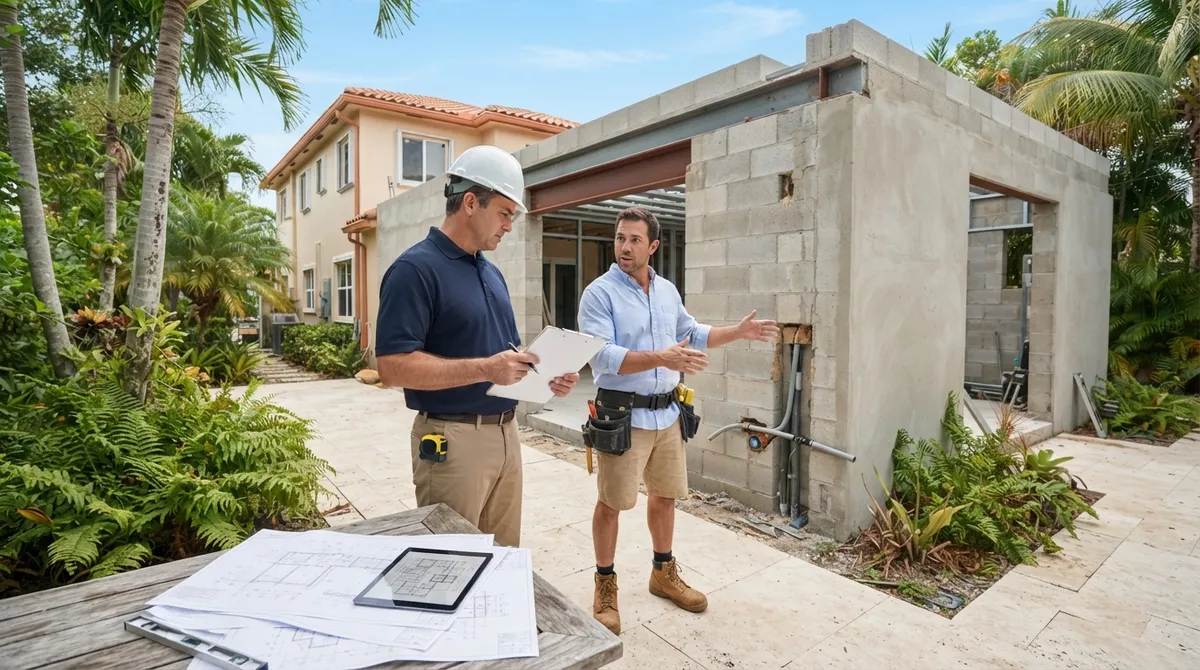
An after-the-fact permit (often shortened to ATF) is a permit application filed to legalize work that was already completed or begun without approval. The building department reviews it much like a new-construction permit, but with an extra twist: they must verify that what's already built meets the Florida Building Code.
Here is what it does and does not do:
- It does create an official permit record for the existing work.
- It does give you a path to final inspection and closeout.
- It does not automatically waive code requirements.
- It does not erase fines or enforcement action that may already exist.
Think of it as hitting the reset button on paperwork, not on the building code. If the work passes, you get a closed permit. If it doesn't, you correct the deficiencies and try again.
Step 1: Confirm Which Jurisdiction Controls Your Property
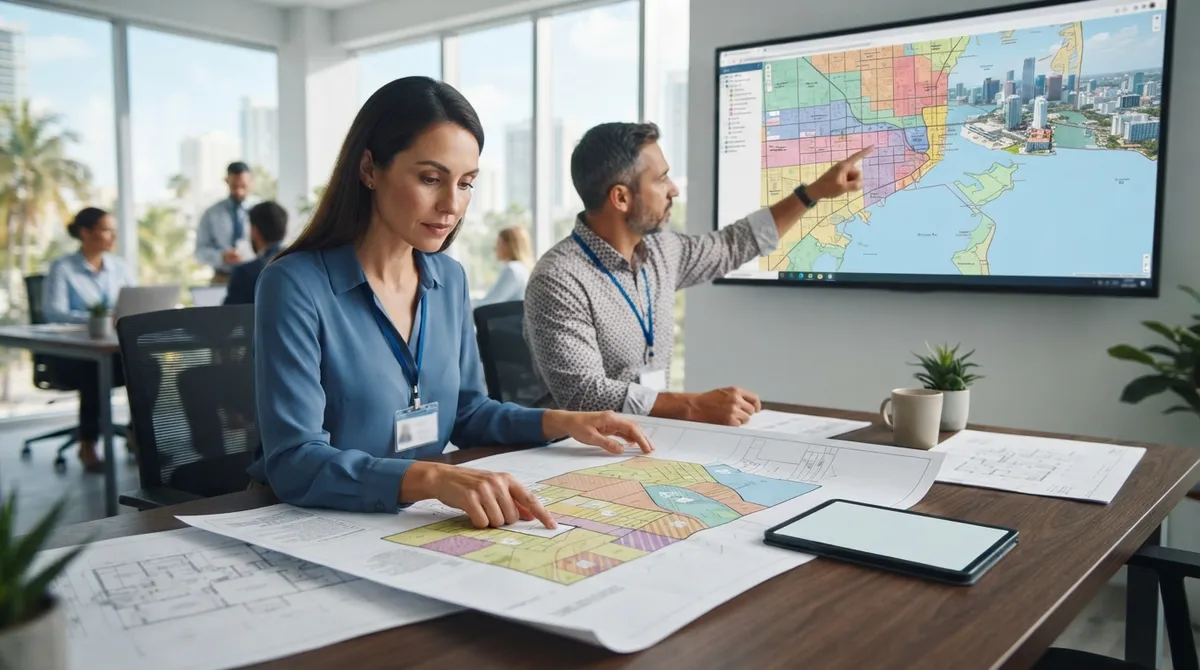
This is the step people skip, and it costs them weeks. "Miami" can mean several different permitting authorities, and each has its own procedures and fee schedule.
| Where Your Property Sits | Who Handles the Permit |
|---|---|
| City of Miami limits | City of Miami Building Department |
| Unincorporated Miami-Dade County | Miami-Dade County Permitting |
| Other incorporated cities (Coral Gables, Hialeah, Miami Beach, etc.) | That municipality's own building department |
Mailing addresses are misleading near city lines. A home with a "Miami" address may actually sit in a different municipality or in unincorporated county territory. Our free building department lookup tool can help you confirm who has jurisdiction before you file anything. You can also read more about our work in Miami and across Miami-Dade County.
Step 2: Search for Open or Expired Permits First
Before you assume nothing was ever pulled, check the record. Sometimes a permit was filed, never finaled, and has since expired. That is a different fix than true unpermitted work, and it can be cheaper and faster.
Run an open permit search for your address, and look for:
- Permits that were issued but never received a final inspection
- Permits that expired before the work was completed
- Old permits for different scopes that may touch the same area
- Violation or code-enforcement cases tied to the property
If you find an expired permit, our guide on after-the-fact and expired permits explains how those cases differ and when reopening beats starting over.
Step 3: Understand What You'll Pay
Cost is the question we hear most, so let's tackle it head-on. Fees vary by jurisdiction, scope, and property classification, and schedules change, so always verify the current numbers before you budget.
| Jurisdiction | Published Penalty for Work Started Without a Permit |
|---|---|
| City of Miami | Up to four times the scheduled fee plus an additional base fee for non-homestead or commercial properties; two times the scheduled fee plus an additional base fee for homestead properties |
| Miami-Dade County (unincorporated) | An additional fee equal to 100% of the usual permit fee, which effectively doubles it |
A few important notes on those numbers:
- Paying the doubled or quadrupled fee does not wipe out separate penalties set by law.
- Homestead classification can significantly lower the City of Miami multiplier, so confirm how your property is classified.
- Miami-Dade's published schedule lists additional inspections beyond the initial and one follow-up at a set per-inspection fee, so failed inspections add up.
Fees are only part of the picture. You may also pay for plan drafting, engineering, corrective work, and any opening-up of concealed construction. For a deeper breakdown, see our guide to after-the-fact permit costs in Florida.
Step 4: Gather the Documents and Plans You'll Need
The exact submittal list depends on your scope and your building department, but most Miami ATF applications include a combination of the following:
- Completed permit application for each applicable trade (building, electrical, plumbing, mechanical, roofing)
- Plans describing the existing work, usually as-built drawings that show what was actually constructed
- Site plan or survey when the work affects setbacks, footprint, or lot coverage
- Product approvals for windows, doors, roofing materials, and similar items, which in Miami-Dade often means a Notice of Acceptance
- Structural or engineering documentation when the work involves loads, framing, anchoring, or wind resistance
- Proof of ownership and contractor information, or an owner-builder affidavit where allowed
Don't have plans? That's extremely common. Nobody drew plans for the work because nobody pulled a permit. This is where professional as-built drawings come in. A drafter documents what exists so the reviewer can evaluate it.
Step 5: Bring in an Engineer When the Work Is Structural or Concealed
Reviewers can't see inside a finished wall. So for anything involving structure, wind loading, or hidden systems, expect questions. A sealed engineer letter, or a full set of structural engineering drawings, can answer them on paper and sometimes reduce how much needs to be opened up.
Common situations that call for engineering:
- Room additions and patio enclosures
- Garage conversions
- Roof structure changes and truss modifications
- Pool cages, retaining walls, and large fences
- Rooftop solar on older framing
- Interior wall removals
Because engineering and drafting are handled in house at 1 Contractor Solutions, when a reviewer comments, the same team that prepared the drawings revises them. There's no waiting on an outside consultant to return a call. Learn more about our engineering services and engineer letters.
Step 6: File, Track, and Respond to Plan Review Comments
Once your package is assembled, it's time to file. Your application goes to the building department with jurisdiction, then enters plan review. Expect comments. Almost everyone gets them, and that's perfectly normal.
Here's a simple workflow to keep things moving:
- File the complete package with the correct jurisdiction.
- Track status daily so you catch comments the day they post.
- Answer every comment completely, with revised sheets where needed.
- Resubmit quickly to keep your place moving through review.
- Pay fees promptly when the permit is ready to issue.
Incomplete responses are the number-one reason ATF reviews drag on. Our plan review coordination and revisions and resubmittals services exist for precisely this stage, and permit facilitation and filing covers the front end.
Step 7: Prepare for Inspections, Including Opening Up Concealed Work
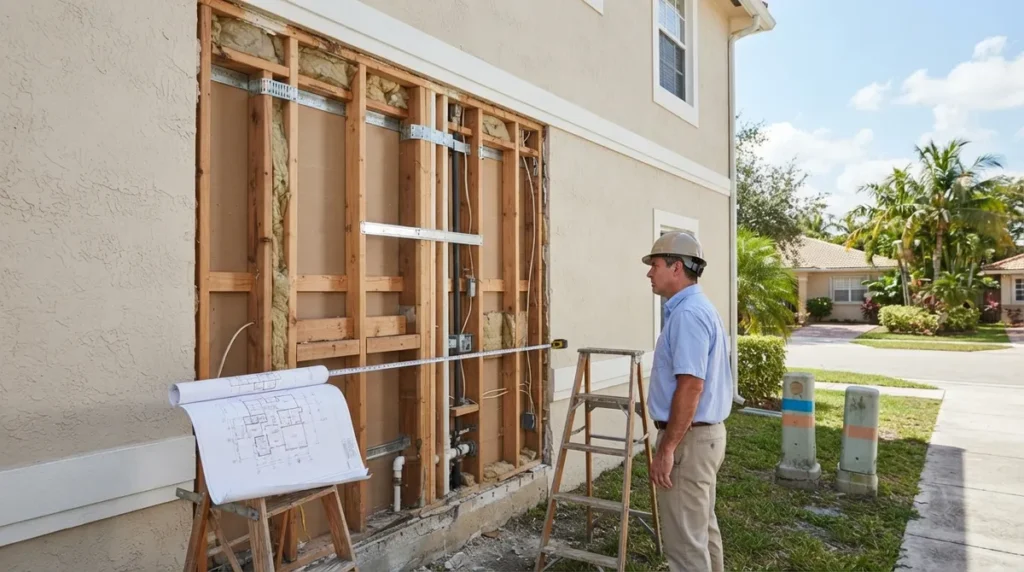
Here's the part that makes people nervous. Miami-Dade guidance states that work done without a permit may need to be uncovered so inspectors can verify it was performed correctly and meets code. Translation: you may have to open a wall, ceiling, or floor section.
What inspectors typically want to verify:
- Electrical wiring, grounding, and panel connections
- Plumbing supply, drain, and venting
- Framing, fastening, and structural connections
- Insulation and fire-blocking where applicable
- Mechanical equipment installation and clearances
Pro tip: take dated photos before you close anything back up, and keep receipts and product labels. If concealed work can be documented by an engineer or verified another way, ask your building department whether that's acceptable before you start tearing into drywall.
Some owners also choose a private provider to speed up plan review and inspections where the jurisdiction allows it. Our overview of how private provider plan review works in Miami-Dade explains the process.
Typical ATF Scenarios in Miami and What They Involve
| Scenario | Common Documentation | Likely Challenge |
|---|---|---|
| Unpermitted patio enclosure | As-builts, site plan, structural letter | Setbacks and lot coverage |
| Unpermitted roof replacement | Product approval, roofing permit, deck attachment verification | Proving underlayment and fastening |
| Kitchen or bath remodel | Trade permits, floor plan | Opening walls for rough-in checks |
| Solar array installed without permit | Structural letter, electrical diagram | Roof framing and interconnection records |
| Impact windows and doors | Product approvals, installation details | Anchoring and glazing verification |
Every case is a little different, but the pattern is consistent: document what exists, prove it meets code, fix what doesn't, and close it out.
Why Fixing It Matters for Selling, Insuring, and Refinancing
It's tempting to leave sleeping dogs lie, but unpermitted work tends to wake up at the worst moments. Appraisals, inspections, insurance claims, and title searches can all surface it. Here's what typically happens when it does:
- Closings stall while buyers or lenders demand resolution.
- Insurers may push back on claims tied to unpermitted areas.
- Code enforcement can issue notices, fines, or liens.
- Resale value suffers when buyers discount for risk.
If you're a real estate professional, our realtor and closing support is built for this situation. For emergencies, such as a closing date looming, see urgent permit rescue.
Common Mistakes to Avoid
After seeing hundreds of ATF files, a few missteps come up again and again:
- Filing in the wrong jurisdiction. Confirm first, file second.
- Submitting vague or missing as-builts. Reviewers need dimensions and details.
- Ignoring open violations. A permit application doesn't resolve a violation on its own. See our guide to code compliance violations.
- Skipping product approvals. Miami-Dade's product rules are strict.
- Closing walls before photographing. You may need that evidence later.
- Letting the permit expire again. Schedule inspections and finish the job.
Want more on this topic? Our article on 14 after the fact permit Miami-Dade mistakes to avoid goes deeper, and 6 steps to legalize unpermitted construction in Miami offers a condensed roadmap.
Who Should Handle Your After the Fact Permit?
You can absolutely tackle some ATF permits yourself, especially smaller scopes. But many owners, contractors, and agents hire help because the process rewards experience. A good partner will identify the controlling jurisdiction, prepare or review plans, file correctly, answer comments, and carry the permit through final inspection.
At 1 Contractor Solutions, we act as Florida's outsourced permitting department. We work in all 67 Florida counties, have filed in more than 400 municipalities, and respond within 30 minutes, day or night. Our in-house drafters and engineer mean your plans are corrected fast when a reviewer asks. You can read what others say on our reviews page, or visit us on Google — 1 Contractor Solutions to see feedback from Miami-area customers.
Keep up with permitting tips by choosing to follow us on LinkedIn or follow us on Facebook. For official fee and procedure details, always cross-check the Miami-Dade County building fee schedule before you finalize your budget.
Your Next Move
Unpermitted work feels heavy, but it is solvable. Confirm your jurisdiction, check for open permits, document the existing work, bring in engineering when needed, respond to every review comment, and prepare for inspection. Do those things in order, and most Miami properties can be brought back into good standing.
If you'd rather not go it alone, we'd love to help. Get a free quote and tell us your address and your situation. We'll tell you which jurisdiction controls it, what it will take, and then we'll go do it. Permits approved. Projects moving.
FAQs
Can I get a permit for work that has already been completed in Miami?
Yes! After the fact permitting exists for exactly this reason. You apply through the building department with jurisdiction over your property, submit plans documenting the existing work, and pass inspections, which may include opening up concealed areas.
How much does an after the fact permit cost in Miami?
It depends on your jurisdiction and scope. Miami-Dade County's published schedule adds a fee equal to 100% of the usual permit fee, while the City of Miami's schedule can charge two to four times the scheduled fee plus a base fee. Always confirm current amounts, and budget for plans and any corrective work too.
Will I have to open walls or ceilings for inspection?
Possibly. Miami-Dade guidance notes that existing unpermitted work may need to be uncovered so inspectors can verify code compliance. Ask your building department whether photos, engineer letters, or other documentation can reduce how much needs to be exposed.
Which department handles my after the fact permit in Miami?
It depends on where the property sits. The City of Miami, unincorporated Miami-Dade County, and other incorporated cities each run their own building departments, so confirm jurisdiction before filing to avoid lost time.
Can unpermitted work affect selling or refinancing my Miami home?
It certainly can. Appraisals, inspections, and title reviews often uncover unpermitted work, which can delay or derail closings and financing. Legalizing it through an after the fact permit before you list is usually the smoother route.
We do this work every day across all 67 Florida counties. Call (866) 314-6931 and we will tell you what your situation actually requires — including when you do not need us.
Related services
Permit Facilitation & Filing
You have a crew scheduled, a client asking for dates, and a permit sitting somewhere in a queue you cannot see. We file it, w…
See the servicePlan Review Coordination
A permit in plan review is not one queue. On a commercial project it can be six queues, each with its own reviewer, its own c…
See the serviceReady to get your permit moving?
One call tells you which jurisdiction controls your project, what it will take, and what it will cost. Most of the time we can scope it on the phone.