
Blog
How to Get a Mold Assessment for Permit in Port Charlotte
Learn how a mold assessment fits into a Port Charlotte permit, who is licensed to do it, and how to prepare your paperwork the right way in 2026.
Key Takeaways
-
A mold assessment documents conditions and does not authorize work; a building permit from the local authority is the separate approval needed to begin repairs.
-
Florida licenses individual mold assessors and remediators through DBPR, so verify the person's name and license number on MyFloridaLicense.com rather than trusting a company name.
-
Under Florida Statute 468.8419, an assessor or their company generally cannot remediate a structure they assessed within the preceding 12 months, so hire two separate professionals.
-
An assessment is not a blanket permit requirement, but it is useful for water damage repair opening walls, storm recovery, demolition, pre-closing deals, and insurance claims.
-
Stop the moisture source, photograph damage with visible dates, and confirm your Charlotte County permitting jurisdiction before filing anything.
-
Ask the building department which documents, inspections, and closeout evidence your specific scope requires, since requirements and forms can change over time.
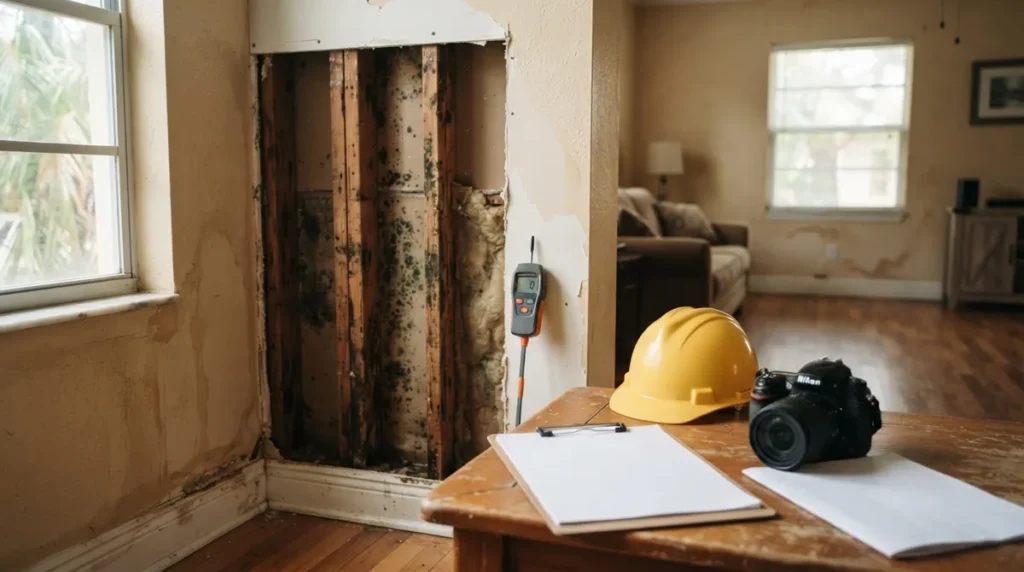
You pull back a soggy piece of drywall in your Port Charlotte home and find fuzzy dark spots. Your stomach drops. Then the next question hits: do you need a permit before you fix it? And where does a mold assessment for permit purposes fit into all of this?
Take a breath. This is more common than you might think in Southwest Florida, where humidity, storms, and plumbing leaks keep homes on their toes. The good news is that the process is manageable once you understand who does what.
Here is the key idea. In Florida, a mold assessment is a state-regulated professional service, and a building permit is a separate local approval. One documents the problem. The other authorizes the repair. In this guide, we will walk through how they connect, who is licensed to do the assessment, and how to line up your paperwork so your project keeps moving. Whether you are a homeowner, a contractor, a realtor, or an investor, you will find clear steps below.
What a Mold Assessment for a Permit Really Means
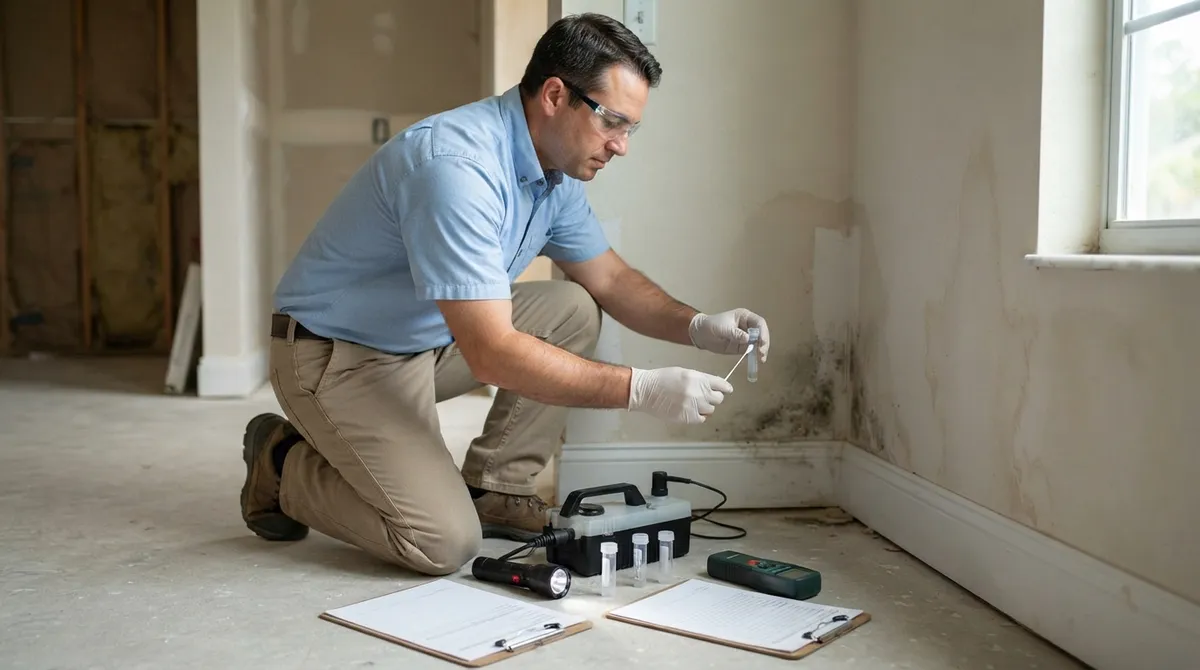
Let us clear up a common mix-up first. A mold assessment is not a universal permit you apply for on its own. Instead, it is a professional report that documents mold or moisture conditions before permitted repair, demolition, or reconstruction work begins.
Your local building department decides what permits and supporting documents your proposed work needs. The assessment can support that application by showing what was found, where, and what work is recommended. However, the report does not itself authorize any construction or remediation.
Think of it like a medical chart. The assessment tells the story of what is going on. The permit is the official green light to start treatment.
Assessment, Remediation, and Permit: Three Different Things
| Item | What It Is | Who Handles It |
|---|---|---|
| Mold assessment | Professional documentation of visible conditions, moisture sources, affected areas, and recommended next steps | State-licensed mold assessor |
| Mold remediation | The actual cleanup and removal work | State-licensed mold remediator |
| Building permit | Local approval for repair, demolition, or reconstruction work | Local building department (applicant is typically a licensed contractor or an eligible owner-builder) |
Keeping these three roles straight will save you time, money, and headaches.
Who Is Licensed to Perform a Mold Assessment in Florida
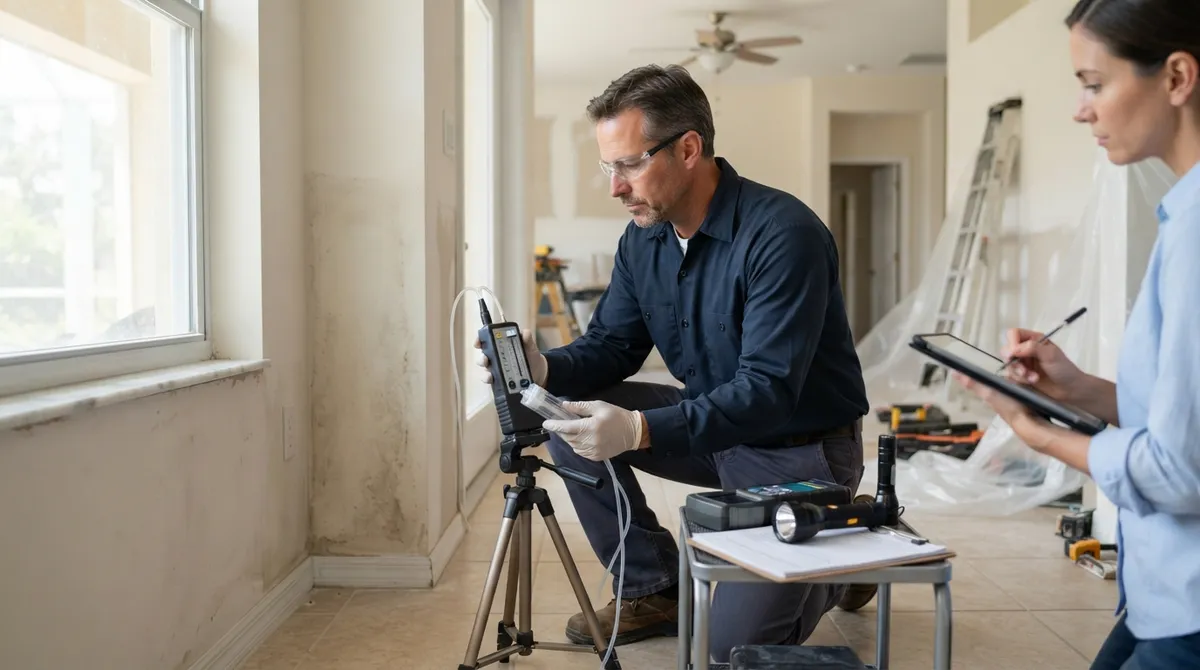
Florida takes mold work seriously. The Florida Department of Business and Professional Regulation (DBPR) licenses individual mold assessors and remediators under Chapter 468, Part XVI, Florida Statutes, and Rule 61-31 of the Florida Administrative Code. Importantly, DBPR states that it licenses the individuals, not the businesses that employ them.
That detail matters when you are hiring. A slick company name or a certification badge on a truck is not proof that the person standing in your living room holds a Florida license. Always verify the individual.
How to Verify a Mold Assessor in 5 Steps
- Ask for the full name and license number of the individual who will perform the assessment.
- Visit the state licensing lookup on MyFloridaLicense.com, which is run by DBPR.
- Search by name or license number and confirm the license is current and in good standing.
- Check that the license category is mold assessor, not just remediator.
- Save a copy of the verification for your permit file and your records.
This takes about ten minutes, and it can prevent a rejected report later. If you want to read the state's own guidance, the DBPR mold-related services FAQs are a good place to start.
The 12-Month Rule: Why Assessors and Remediators Stay Separate
Here is a rule that surprises many property owners. Florida generally separates assessment from remediation to reduce conflicts of interest. Under Florida Statute 468.8419, an assessor, or the assessor's company, may not remediate a structure it assessed during the preceding 12 months. The statute includes a limited exception for certain Division I contractors. It also restricts assessors from assessing a structure that they or their company recently remediated.
Why does this matter? Imagine a company that finds mold and then sells you the cleanup. The incentive to overstate the problem is obvious. The law removes that temptation by keeping the two jobs apart.
In practical terms, plan on two separate professionals. One assesses. A different one remediates. You can read the full text in Florida Statute 468.8419.
Do You Need a Mold Assessment to Get a Building Permit in Port Charlotte?
The honest answer is: it depends on your project. Based on the research available, an assessment is not a blanket requirement for every permit application. Likewise, official sources do not establish that testing or air sampling is required for every mold concern.
That said, an assessment can be very useful when your project involves any of these situations:
- Water damage repair that opens walls, ceilings, or floors
- Hurricane or storm recovery where moisture sat for days
- Demolition or reconstruction of a damaged structure
- A pre-closing situation where a buyer or lender wants documented conditions
- An insurance claim that requires a record of what was found
The smartest move is to ask the permitting authority directly. They know what your specific scope of work requires, and requirements can change over time.
Confirm Your Port Charlotte Permitting Jurisdiction First
Port Charlotte sits in Charlotte County, but do not assume that settles it. Jurisdiction and procedures can depend on the exact parcel location and the type of work. Some addresses near city lines surprise owners.
Before you apply, confirm which office controls your property and what its current submittal requirements are. You can use our building department lookup tool to point you in the right direction, and our Charlotte County page explains how local filing works. If you are still deciding who handles the application, this guide on what a building permit service in Port Charlotte does breaks it down nicely.
Always confirm current requirements directly with the local authority, because forms, fees, and document lists change.
How to Get a Mold Assessment for Permit Work: Step by Step
Ready to move? Here is a friendly, practical sequence you can follow from the first stain to the permit application.
- Stop the moisture source. Mold needs water. Fix the leak, dry the area, or shut off the supply if it is safe to do so. An assessment is far less useful if the water is still flowing.
- Take photos right away. Capture wide shots and close-ups of damage with the date visible. These support your assessor's report and any insurance claim.
- Hire a verified, state-licensed mold assessor. Use the verification steps above, and remember the assessor should not be the company you plan to hire for the cleanup.
- Define the scope. Tell the assessor you need documentation for a permitted repair. Ask what the report will cover, such as visible conditions, moisture readings, affected areas, and recommendations.
- Review the report. Make sure the findings match what you observed and that recommended work is clearly stated.
- Confirm permit needs with the building department. Share the scope of repair work and ask which permits, documents, and inspections apply.
- Hire a separate licensed remediator and contractor. Keep the assessor and the remediator separate, as the 12-month rule requires.
- File the permit and keep records. Submit the application with your supporting documents and track it through approval and closeout.
What a Good Assessment Report Should Include
Not every report is equally helpful to a permit file. For permit-related work, a useful report should clearly identify the following items.
| Report Element | Why It Helps |
|---|---|
| Property address and parcel identification | Ties the report to the exact structure in the permit file |
| Assessment date and scope | Shows when conditions were observed and what was covered |
| Observed damage and moisture conditions | Documents the problem a reviewer or lender wants to understand |
| Affected areas | Helps define the repair scope on your plans |
| Sampling results, if performed | Included only when sampling was appropriate and conducted |
| Recommended next steps | Guides the remediation and repair work |
| Assessor name and license number | Lets anyone verify the professional's credentials |
Ask the local building department whether it wants particular documents, inspections, or closeout evidence for your specific project. A quick call now can save a resubmittal later.
Does Mold Remediation Need a Permit?
This is one of the most common questions we hear, and the answer is not one-size-fits-all. Whether repair, demolition, reconstruction, or other work requires a permit depends on the scope of the work and the applicable local building rules. Cleaning surface mold may look very different, permit-wise, than tearing out and rebuilding a wall assembly.
When the work touches structure, plumbing, electrical, or mechanical systems, permits are far more likely. For example, if the moisture came from a failed pipe and you are replacing plumbing, or if you are opening walls to rewire, you are in permit territory. If a larger demolition is involved, you may also need to think about other surveys. Our guide on asbestos surveys before Port Charlotte demolition covers that related step.
For storm-related work, you may also want to read about the hurricane damage permit process in a neighboring community, since the logic is similar. And if you are only dealing with water intrusion, this comparison of mold assessments and building permits adds helpful context.
Tips for Different Readers
Homeowners
Do not tackle a large mold problem without understanding the rules. Document everything, verify your assessor, and confirm permit needs before demolition. If you are the owner pulling your own permit, see our walkthrough on getting an owner-builder permit in Port Charlotte.
General Contractors and Trades
Expect to coordinate with a separate assessor and remediator. Build the assessment into your schedule, because a report in hand early prevents arguments about scope later. When plan changes arise from what the assessor finds, you will want revised drawings ready.
Realtors and Investors
A documented assessment can help a deal keep moving, especially when conditions surface during inspection. If a closing is at risk, our guide to open permit mistakes before closing in Port Charlotte is worth a look, as is our overview of permit due diligence in Port Charlotte.
Common Mistakes to Avoid
- Hiring a company instead of verifying the person. DBPR licenses individuals, so check the individual's license.
- Using one company for assessment and cleanup. The 12-month separation rule exists for a reason.
- Assuming the report is a permit. It documents conditions only. It authorizes nothing.
- Skipping the jurisdiction check. Confirm who controls your parcel before you file.
- Assuming testing is mandatory. Sampling can be appropriate in some cases, but it is not established as required for every concern.
- Starting repair work before confirming permits. Unpermitted work can lead to stop work orders and closing headaches. If that has already happened, see what to do after a stop work order in Port Charlotte.
Where Plans and Engineering Come In
Sometimes the assessment reveals more than surface mold. Rot, compromised framing, or failed assemblies may mean the repair needs drawings, and possibly engineering. In those cases, reviewers often want clear plans that match the documented scope.
This is where a permitting partner earns their keep. At 1 Contractor Solutions, we act as Florida's outsourced permitting department. We confirm which jurisdiction actually controls your address, prepare or review the plans, file the application, track it, and work through reviewer comments. Because our drafting and engineering are in house, a flagged comment gets fixed quickly instead of waiting on an outside consultant. You can see how it works on our environmental, asbestos, and mold services page and our permit facilitation and filing page. When structural questions come up, our structural engineering team is ready to help.
We also respond within 30 minutes day or night, and se habla español. If you like seeing how neighbors feel about working with us, Visit us on Google — 1 Contractor Solutions to read reviews.
A Quick Checklist Before You File
- Moisture source identified and stopped
- Photos taken with dates
- Mold assessor's license verified through DBPR
- Assessment report received and reviewed
- Permit jurisdiction confirmed for your Port Charlotte parcel
- Local department asked about required documents and inspections
- Separate remediator and licensed contractor lined up
- Records organized for closeout
If you check each box, you will be far ahead of most property owners.
Ready to Keep Your Port Charlotte Project Moving?
Mold can feel scary, but the path forward is straightforward. Document the problem with a verified, state-licensed assessor. Keep assessment and remediation separate. Confirm your jurisdiction and permit needs with the local authority. Then let the right team handle the filing and plans.
If you would rather not tackle the paperwork alone, we are happy to help. Reach out and get a free quote from our team, and we will tell you which office controls your project and what it will take to get it approved. Want to stay connected? You can follow us on LinkedIn or follow us on Facebook for more Florida permitting tips, and our website partners at Brain Buzz Marketing help us share them. Permits approved. Projects moving.
FAQs
Do I need a mold assessment to get a building permit in Port Charlotte, Florida?
Not always. A mold assessment is not a universal requirement for every permit, and it does not authorize any work by itself. Your local permitting authority decides which documents your specific project needs, so a quick call before you apply is a great idea.
Can the same company assess mold and perform the remediation in Florida?
Generally, no. Florida law bars an assessor or the assessor's company from remediating a structure it assessed within the previous 12 months, with a limited exception for certain Division I contractors. Plan on hiring two separate professionals.
How can I verify a Florida mold assessor's license?
Look up the individual on MyFloridaLicense.com, which is run by DBPR. DBPR licenses individual assessors, not companies, so confirm the person's name and license number rather than relying on a business name or certification claim.
Does Florida require mold testing or air samples before remediation?
Sampling can be appropriate in some cases, but the available official sources do not establish that testing is required for every mold concern or permit application. Ask your licensed assessor whether sampling makes sense for your situation.
Which office handles permits for my Port Charlotte property?
Port Charlotte is in Charlotte County, but jurisdiction can depend on your exact parcel location and the type of work. Confirm the controlling office and its current submittal requirements before you file, and our team can help sort it out if the answer is not obvious.
We do this work every day across all 67 Florida counties. Call (866) 314-6931 and we will tell you what your situation actually requires — including when you do not need us.
Related services
Permit Facilitation & Filing
You have a crew scheduled, a client asking for dates, and a permit sitting somewhere in a queue you cannot see. We file it, w…
See the servicePlan Review Coordination
A permit in plan review is not one queue. On a commercial project it can be six queues, each with its own reviewer, its own c…
See the serviceReady to get your permit moving?
One call tells you which jurisdiction controls your project, what it will take, and what it will cost. Most of the time we can scope it on the phone.