
Blog
Demolition Permit Cape Coral: 2026 Fees and Steps
Planning a teardown? Learn Cape Coral demolition permit fees for 2026, utility and asbestos prep, common delays, and how to keep your project moving.
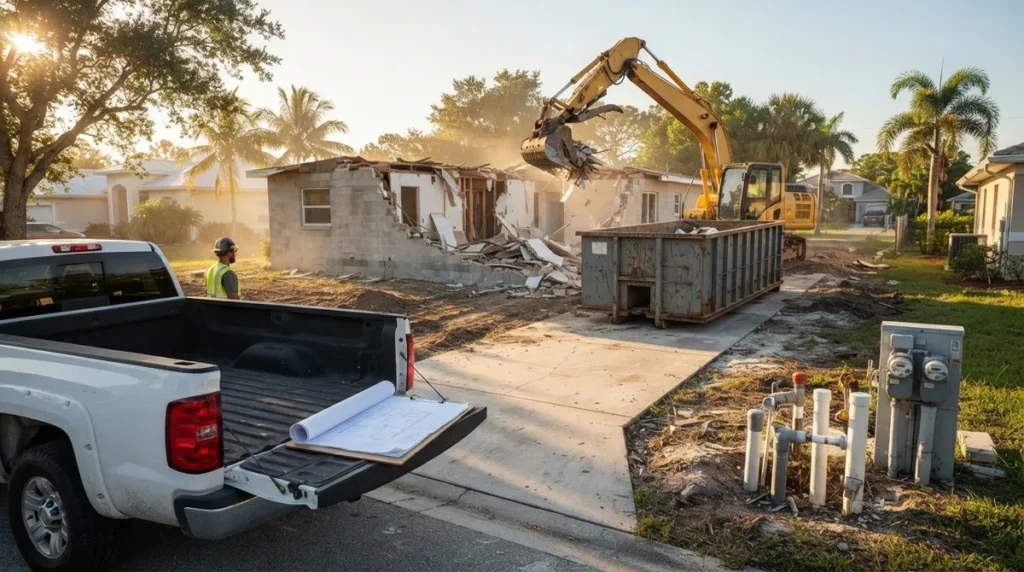
Key Takeaways
-
A demolition permit in Cape Coral is typically required before demolishing any building or structure, and applications start with the City's Building Division, so confirm your specific permit type before scheduling crews.
-
The City's 2026 fee schedule lists a $127 base fee for residential demolition and $341 for commercial, but additional fees may apply and a 2.5% Florida Building Code surcharge may apply, so verify the total.
-
A demolition permit only authorizes the teardown; new construction, site work, utility work, and other trades each need separate permits, so plan those in parallel to avoid a cleared lot sitting idle.
-
Arrange utility disconnections and clearances for electric, water, sewer, gas, and communications early, confirming requirements directly with each provider and the City to avoid hazards and delays.
-
Determine whether asbestos or other regulated materials require assessment before demolition by consulting an environmental authority or qualified professional, since skipping this is a common cause of stalled projects.
-
Track your application closely and respond promptly to reviewer comments, because unanswered comments and unresolved open permits are among the most common causes of demolition permit delays.
Tearing down a building sounds simple until the paperwork shows up. If you are planning a teardown in Lee County's largest city, a demolition permit in Cape Coral is the first official step, and it is the one that keeps your project legal, safe, and on schedule. Whether you are a contractor clearing a lot for a new build, an investor prepping a property, or a homeowner removing a damaged structure, knowing how the process works saves you real time and real money.
Here is the good news: the process is very manageable once you know what to expect. In this guide, we will walk through who handles the permit, what the City's 2026 fee schedule says, what to arrange before the excavator arrives, and where projects commonly get stuck. We will keep things friendly and practical, and we will point out where it pays to confirm details directly with the City, because requirements can vary by property.
Do You Need a Demolition Permit in Cape Coral?
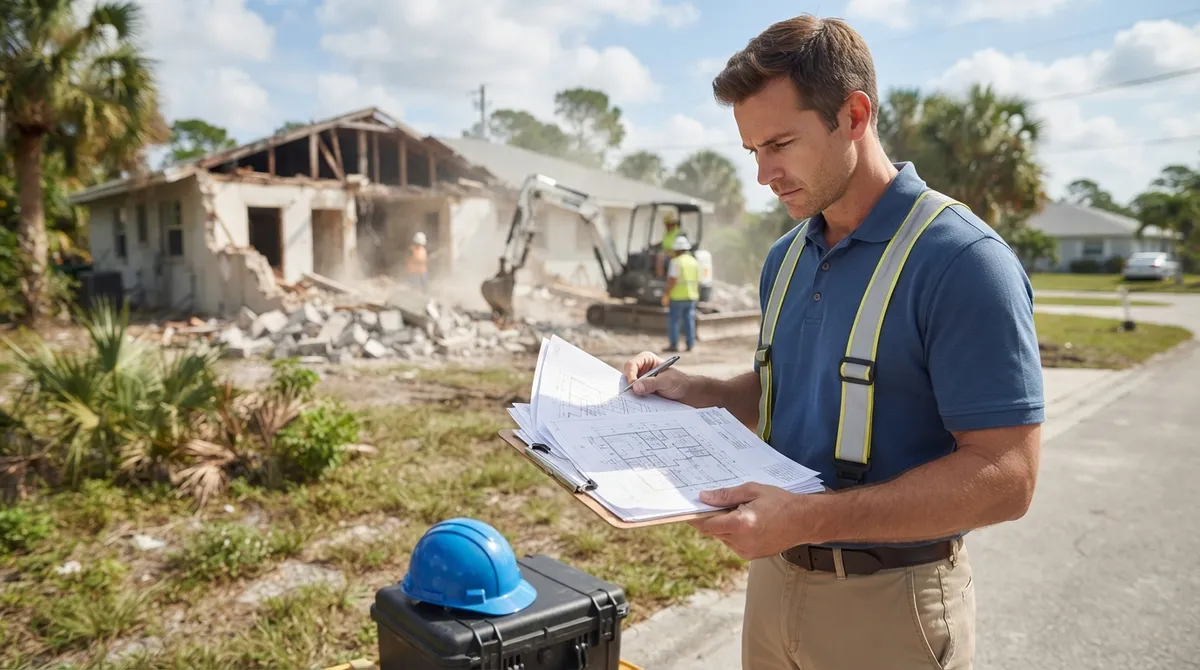
In general, yes. A demolition permit is typically required before you demolish a building or structure in Cape Coral. The City's Building Division administers building permits, so that is where your application starts. Because the exact permit type and submittal requirements depend on the scope of work, it is smart to confirm what applies to your specific structure before you schedule any crews.
Not every teardown looks the same. Removing a detached shed is very different from taking down a multi-story commercial building or a home with attached structures. Scope, use, and property conditions all shape the paperwork.
If you are weighing a smaller project, our guide on how to find out if you need a permit to demolish a shed in Florida can help you sort out the basics.
Cape Coral Demolition Permit Fees in 2026
Let's talk numbers, because budgeting is where most people want clarity first. The City of Cape Coral publishes a miscellaneous building permit fee schedule effective January 1, 2026. It lists the following base fees for demolition:
| Permit Type | Published Base Fee (2026) | Notes |
|---|---|---|
| Residential demolition | $127 | Additional fees may apply |
| Commercial demolition | $341 | Additional fees may apply |
| Florida Building Code surcharge | 2.5% | Applies to permits associated with code enforcement; confirm how it applies to yours |
Two cautions are worth repeating. First, the schedule itself says additional fees may apply, so treat the base figure as a starting point rather than a final bill. Second, the 2.5% surcharge is tied to permits associated with Florida Building Code enforcement, and the schedule marks which permit types carry it. Verify the current total with the City before you finalize your budget.
For fee and application questions, the City lists Permitting Services at (239) 574-0546 and permits@capecoral.gov. A quick call or email can prevent surprises later.
What a Demolition Permit Does and Does Not Cover
This is a point that trips up even experienced builders. A demolition permit authorizes the teardown. It does not automatically authorize what comes next.
- New construction: A separate building permit is needed for whatever replaces the structure.
- Site work: Grading, fill, drainage, or driveway work may need their own approvals.
- Utility work: Disconnections and new service connections often involve the utility providers and may involve separate permits.
- Other trades: Electrical, plumbing, and mechanical work each have their own permitting paths.
Think of the demolition permit as chapter one of a longer story. If you plan for the full project from the start, you avoid the frustrating gap where the lot is cleared but the next permit is not ready.
Step-by-Step: How to Get a Demolition Permit in Cape Coral
Every project is a little different, but most follow a similar rhythm. Here is a practical order of operations:
- Confirm the scope. Decide whether you are demolishing an entire structure or only part of one, and note the use of the building (residential or commercial).
- Check the property. Look for open permits, special site constraints, or anything that could complicate the application. Our 5 steps for an open permit search in Cape Coral walks through this clearly.
- Review the current checklist. Ask Cape Coral Permitting Services for the up-to-date submittal requirements for your permit type.
- Plan for utilities. Coordinate disconnections and clearances with the relevant providers and the City.
- Address regulated materials. Determine whether an asbestos assessment or other environmental steps apply.
- Submit and track. File the application, pay the fees, and monitor the review so comments do not sit unanswered.
- Schedule inspections. Follow any required inspections through final approval.
That tracking step is where many projects lose weeks. A reviewer comment that sits unnoticed can stall a permit just as surely as a missing document.
Utility Coordination and Safe-Site Preparation
Before anything comes down, the site has to be safe. That means arranging disconnections or clearances for electric, water, sewer, gas, and communications lines as applicable. The available sources do not establish a definitive Cape Coral-specific list of required utility sign-offs, so the safest path is to confirm requirements directly with each utility provider and with the City.
Why does this matter so much? Live services during demolition create hazards for workers and neighbors, and they create delays when an inspector or contractor discovers a connection that was never shut off. A short phone call early in the process is far cheaper than a stalled job later.
Protecting Neighbors and Public Areas
Demolition work must protect workers, neighboring property, sidewalks, streets, and other public areas. The Florida Building Code contains demolition safeguards, and separate approvals may be needed if your work affects the public right-of-way. If your teardown will involve closing a sidewalk, staging equipment in the street, or placing a dumpster in a public area, ask the City whether additional approvals apply.
Asbestos and Other Regulated Materials
Older structures can contain materials that require careful handling. Asbestos and other regulated materials may require assessment and compliant handling before demolition. Florida asbestos rules and federal requirements can apply depending on the building, its use, and the project, so it is not safe to assume a survey is always required, or never required.
The right approach is to consult the appropriate environmental authority or a qualified professional rather than guessing. If you are in the planning stage, these resources are helpful:
- 5 asbestos survey mistakes that stall Cape Coral demolitions
- What is an FDEP notice of demolition? A 2026 Florida guide
- Asbestos, mold, and environmental support
Skipping this step is one of the most common reasons demolitions stall, so it deserves attention early rather than at the last minute.
Common Mistakes That Slow Down Demolition Permits
After watching countless projects move through Florida permitting offices, a few patterns show up again and again:
- Assuming the demo permit covers the rebuild. It does not. Plan the next permit in parallel.
- Ignoring open permits. Unresolved permits on a property can complicate new applications.
- Overlooking utilities. Live services discovered late cause delays and safety concerns.
- Skipping environmental questions. Regulated materials can pause a project if they surface mid-demolition.
- Budgeting only the base fee. Additional fees and the 2.5% surcharge can change the total.
- Letting review comments sit. Unanswered comments quietly burn schedule.
If your property has older work that was never properly permitted, that can also affect what you can do next. Our guide on whether you will really have to demolish unpermitted work is a useful read if that sounds familiar.
Who Benefits Most From Professional Permit Help
You can absolutely work through this yourself, but a few groups tend to gain the most from having a permitting team in their corner.
| Reader | Typical Challenge | Where Help Pays Off |
|---|---|---|
| General contractors | Tight schedules, crews waiting on approvals | Filing, tracking, and reviewer comment responses |
| Real estate professionals and investors | Evaluating a property before purchase | Permit research and clearing open items |
| Homeowners and residential owners | Unfamiliar process and terminology | Clear guidance on what to submit and when |
| Architects, designers, and trades | No in-house permit administration | Outsourced drafting, engineering, and permit coordination |
For contractors, the cost of a delayed permit is rarely the fee. It is the idle crew, the rescheduled equipment, and the client who is losing patience. That is why many builders hand off the administrative side and keep their focus on the work itself. Our page for general contractors explains how that partnership works.
Planning the Full Project Beyond the Teardown
The smartest demolition plans start with the end in mind. If you are clearing a lot to build, think about the new permits, the plans, and the engineering well before the old structure comes down. Sealed drawings, site plans, and structural or MEP documents all take time to prepare, and having them ready means your new construction permit can move right after demolition wraps up.
Cape Coral owners often run into other permit questions along the way, from roofing to tents to emergency repairs. If your project touches any of these, these guides may help:
- How to get a roof permit in Cape Coral, FL
- How to handle an emergency repair permit in Cape Coral
- 6 steps for permit due diligence in Cape Coral
And if you are comparing nearby jurisdictions, our walkthrough on how to get a demolition permit in Fort Myers shows how the process can differ across Lee County.
How 1 Contractor Solutions Can Help
1 Contractor Solutions is Florida's outsourced permitting department. Our team handles permit filing, tracking, plan review coordination, and revisions, backed by in-house drafting and engineering with our own engineer signing and sealing the work. We work across all 67 Florida counties, including Lee County, and we respond within 30 minutes, day or night. You can learn more about our demolition permit services or our local Cape Coral page.
Curious what other clients think? See what our customers say on Google by visiting Visit us on Google — 1 Contractor Solutions. You can also follow us on LinkedIn or follow us on Facebook for updates, and our website partner is Brain Buzz Marketing.
Final Thoughts
A demolition permit in Cape Coral does not have to be a headache. Confirm the permit type with the Building Division, budget for the published 2026 fees plus any additional charges, line up your utilities, address regulated materials early, and keep an eye on your application until approval. Do those things, and the teardown becomes a smooth first step instead of a roadblock.
If you would rather hand the paperwork to people who do it every day, we are ready to help. Reach out to get a free quote and let us take the permit off your plate so your project keeps moving.
FAQs
Do I need a demolition permit in Cape Coral, Florida?
In general, yes. A demolition permit is typically required before you demolish a building or structure in Cape Coral. Because requirements depend on your scope and property, confirm the exact permit type with the City's Building Division before work begins.
How much does a demolition permit cost in Cape Coral?
The City's fee schedule effective January 1, 2026 lists $127 for residential demolition and $341 for commercial demolition. Additional fees may apply, and a 2.5% surcharge can apply to permits tied to Florida Building Code enforcement, so verify your total with Cape Coral Permitting Services.
Do utilities need to be disconnected before demolition?
You should plan for utility coordination and safe-site preparation before demolition starts. The available sources do not give a definitive Cape Coral-specific list of required sign-offs, so confirm the necessary disconnections or clearances with each utility provider and the City.
Is an asbestos inspection required before demolishing a building in Florida?
It depends on the building, its use, and the project, since Florida and federal rules can apply. Rather than assuming a survey is always or never required, consult the appropriate environmental authority or a qualified professional early in your planning.
Does a demolition permit also cover building something new on the lot?
No. A demolition permit is separate from permits for new construction, site work, utility work, and other trades. Plan those approvals in parallel so your lot is not sitting cleared while the next permit catches up.
We do this work every day across all 67 Florida counties. Call (866) 314-6931 and we will tell you what your situation actually requires — including when you do not need us.
Related services
Permit Facilitation & Filing
You have a crew scheduled, a client asking for dates, and a permit sitting somewhere in a queue you cannot see. We file it, w…
See the servicePlan Review Coordination
A permit in plan review is not one queue. On a commercial project it can be six queues, each with its own reviewer, its own c…
See the serviceReady to get your permit moving?
One call tells you which jurisdiction controls your project, what it will take, and what it will cost. Most of the time we can scope it on the phone.