
Blog
Got a Stop Work Order in Port Charlotte? What Now?
Got a stop work order in Port Charlotte, FL? Learn who issues it, common causes, first-24-hour steps, and how permitting help can speed things up.
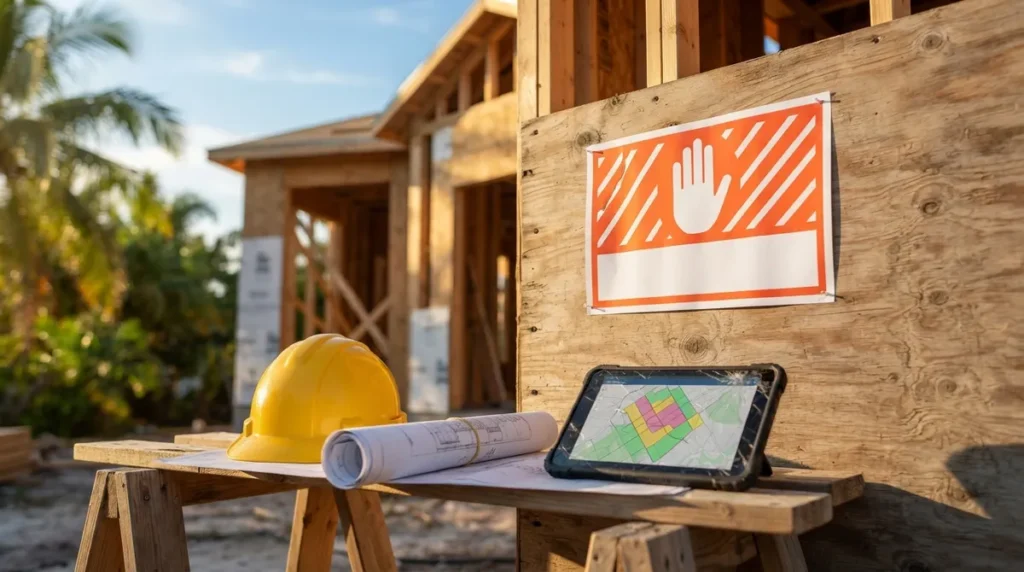
Key Takeaways
-
Stop all covered work immediately; continuing after a stop-work order can add fines and enforcement, and applying for a permit or scheduling an inspection does not authorize work to resume.
-
Only the authority that issued the order can formally lift it, so get the complete written notice, note the case or permit number, and request a written correction list and release procedure.
-
Read the order top to bottom: under Florida Statutes §553.791 it must state the reason for the order and the conditions for resuming, which serve as your roadmap to release.
-
Search the property's permit and code-violation records in Charlotte County's Citizen Access Portal to uncover open, expired, or never-finaled permits and failed inspections before they derail your project.
-
Expect the correction path to involve permit revisions, as-built drawings, sealed engineering where required, corrected work, passed inspections, and payment of applicable fees before written clearance.
-
If you believe the order is wrong, ask the issuing authority in writing about its appeal process and deadlines right away, since appeal windows can be short and the correct route depends on the order type.
Few things make a project grind to a halt faster than a bright notice taped to your door or job site. If you are searching for stop work order help in Port Charlotte, FL, take a breath first. You are not the first person to see one, and it is very often fixable. A stop-work order is the county's way of saying, "Pause here until we sort something out." It is not a verdict, and it is not the end of your project.
Whether you are a general contractor with a crew waiting, a solar company with an install on the calendar, a realtor with a closing on the line, or a homeowner in the middle of a remodel, the first few hours matter. What you do next can shorten the delay or stretch it out for weeks.
In this friendly guide, we will walk through who issues these orders in Port Charlotte, what typically triggers them, the exact steps to take, and how to avoid making things worse. We will also point out where a Florida permitting professional can genuinely help, and where only the county itself can make the call.
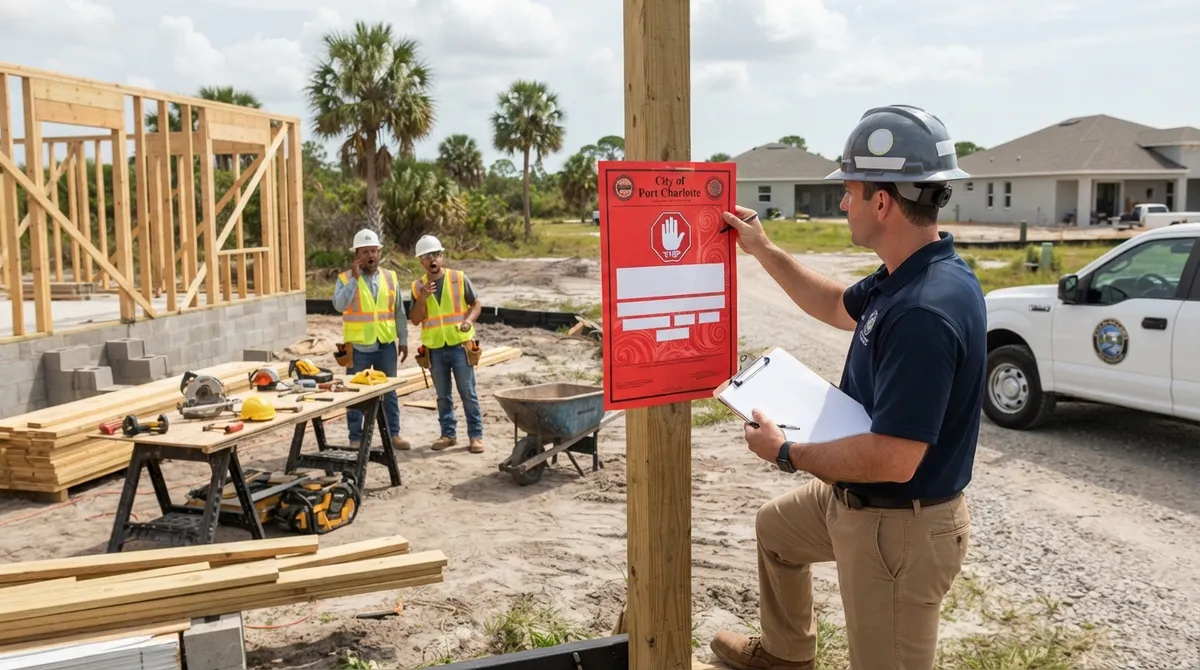
What Is a Stop-Work Order, Really?
Under Florida Statutes §553.791, a stop-work order is a written statement, directive, or order that states the reason for the order and the conditions under which the cited work may resume. That second part is important. A legitimate order should tell you why work stopped and what it will take to start again.
Here is what that means in plain English:
- It is written. A verbal warning is not the same thing as a posted or delivered order.
- It names a reason. Missing permit, plan deviation, failed inspection, or a code or site issue.
- It sets conditions for resuming. Those conditions are your roadmap.
- It may be limited. Some orders cover the entire project. Others only apply to one activity or one portion of the work.
Read yours carefully, top to bottom. Many people skim the notice, panic, and miss the part that says exactly what is required to move forward.
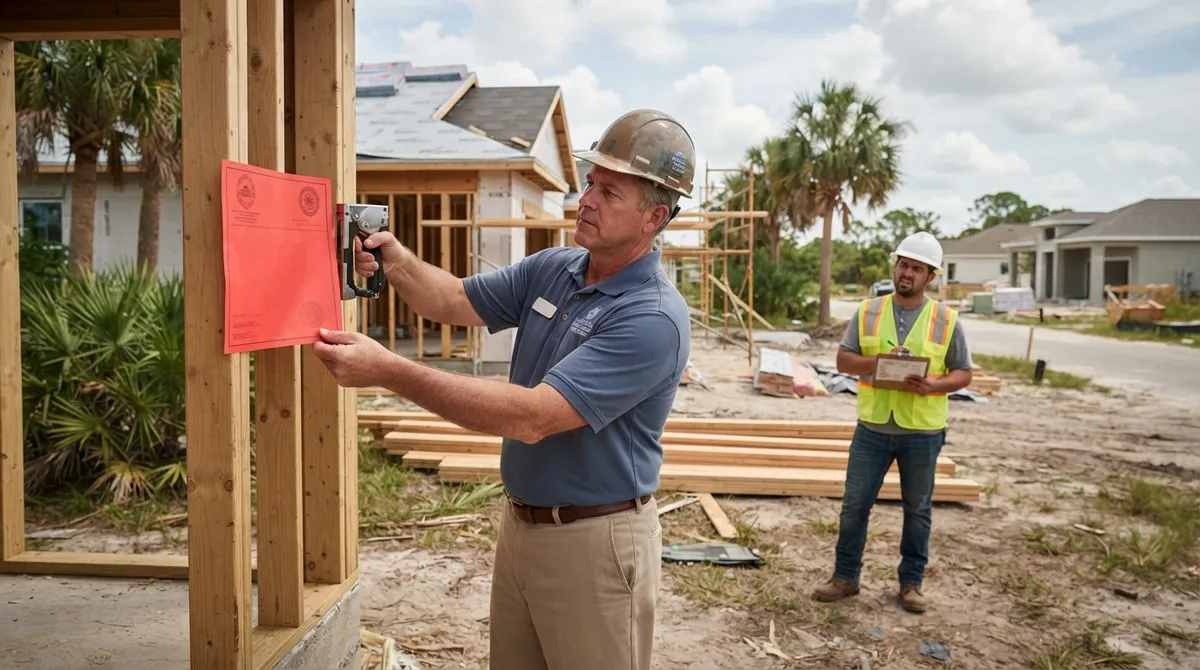
Who Issues a Stop-Work Order in Port Charlotte?
In Port Charlotte, building permits and inspections are generally handled by Charlotte County's Community Development Department. The Building Construction Division is located at 18500 Murdock Circle, Port Charlotte, FL 33948. The county lists 941-743-1200 as its main number and 941-743-1201 for building and inspection inquiries.
That said, who issued your order depends on the situation. The cited issue could be tied to a building permit, a code matter, or a site condition, and the process for resolving it can differ accordingly. The golden rule is simple: only the authority that issued the order can formally clear it. A consultant, contractor, or engineer can help you prepare the fix, but they cannot lift the order for you.
Common Reasons a Stop-Work Order Gets Issued
Every case is different, but the same handful of issues tend to show up again and again. The exact basis and remedy depend on your order and the permit or enforcement rules that apply.
| Common Trigger | What It Usually Looks Like | Typical Path Forward |
|---|---|---|
| Work without a required permit | Construction started before a permit was issued, or no permit was ever pulled | Apply for the proper permit, often with drawings of the existing conditions |
| Work differs from approved plans | Field changes were made that were never submitted for review | Submit a plan revision or correct the work to match approved plans |
| Failed or missed inspections | Work was covered up or continued after a failed or skipped inspection | Correct the deficiency, reschedule, and possibly document hidden work |
| Code or site violations | A site condition or code issue was cited | Follow the correction list from the issuing authority |
If your situation involves work that was never permitted, you may find our guide on 7 steps to legalize unpermitted work in Florida (2026) useful for understanding the bigger picture.
Your First 24 Hours: A Step-by-Step Plan
When the notice lands, momentum matters, but so does staying calm and methodical. Here is the order we recommend:
- Stop the covered work immediately. Do not assume that hiring a new contractor, applying for a permit, or scheduling an inspection automatically lets you resume.
- Get the complete order. Photograph or scan every page. Note the case or permit number, date, and the name of the issuing department or official.
- Identify the cited violation. Confirm exactly what the order says is wrong and which part of the project it covers.
- Secure the site. Protect materials and any open work from weather and safety hazards. Florida rain does not care about paperwork.
- Gather your documents. Approved plans, permits, inspection records, photographs, contractor information, and any engineer letters or product approvals.
- Contact the issuing office. Ask for a written correction list, any required permit revisions, inspections, fees, and the release procedure.
- Build your correction plan. Decide who prepares the drawings, who performs any repairs, and how inspections will be sequenced.
That sixth step is where many people get stuck, because they are not sure which questions to ask. A good rule of thumb is to leave every conversation with something in writing.
Can You Keep Working While You Fix It?
This one is a big source of confusion, so let us be direct. No, you should not continue the work covered by the order while you apply for a permit or correct a violation. Continuing can turn a manageable problem into a much bigger one, with potential fines, added enforcement, and a harder road to approval.
If you are curious about what is at stake, our article on what happens if you ignore a Florida stop work order lays out the risks. The short version: it is almost never worth it.
If you believe some portion of the work is not covered by the order, ask the issuing official to confirm that in writing before touching it. A quick email is far cheaper than a second violation.
Finding Your Permit or Case Records
One of the most helpful things you can do early is look up the paper trail. Charlotte County's Citizen Access Portal provides access to permit and code-violation records, along with inspection scheduling, for eligible users. Searching your property address can help you spot:
- Open, expired, or never-finaled permits attached to the property
- Code violation cases tied to the address
- Inspection history, including failed or missing inspections
- Contractor and applicant details on file
This matters especially for buyers and real estate professionals. A stop-work order or open permit discovered mid-transaction can derail a closing. If that sounds familiar, take a look at our guide on 6 open permit mistakes to avoid before closing in Port Charlotte.
What the County Will Likely Want to See
Every order is unique, so always rely on the correction list you receive. Still, these are the types of items counties commonly ask for when you are working toward release:
| Item | Why It Matters | Who Can Help Prepare It |
|---|---|---|
| Permit application or revision | Puts the work on the record or updates it to match what was built | Contractor or permitting consultant |
| Drawings or as-built plans | Shows existing conditions and code compliance | Drafter or design professional |
| Sealed engineering | Verifies structural or MEP adequacy where required | Licensed Florida engineer |
| Corrected work | Resolves the cited deficiency | Licensed contractor |
| Inspections | Confirms the correction was done properly | County or approved inspection provider |
| Fees | Required before the order can be lifted | Owner or contractor |
On fees, a county purchasing document surfaced during our research listing a $50 stop-work-order fee associated with lifting an order. That figure may not reflect every order or the current fee schedule, so confirm the exact amount directly with the county before relying on it.
Inspections Alone Do Not Lift the Order
Here is a common misunderstanding worth clearing up. Charlotte County offers an automated inspection line at 941-833-4086, and inspection requests submitted by 8 p.m. may qualify for next-business-day service. That is great for keeping projects moving, but scheduling an inspection does not itself lift a stop-work order.
Think of it this way: the inspection confirms the work, but the release comes from the authority that issued the order. Ask your contact exactly which inspections, approvals, or written clearances are required, and in what sequence.
If your project involves covered or hidden work, you may also want to read how to handle covered work that missed inspection in FL.
How a Florida Permitting Professional Can Help
Let us be honest about what outside help can and cannot do. A permitting consultant cannot guarantee an immediate release, and anyone who promises one is overselling. Only the government authority can determine compliance and formally authorize work to resume.
What a good professional can do is take the heavy lifting off your plate:
- Interpret the notice and identify what the county actually requires
- Check permit and property records for related issues
- Coordinate directly with county staff so questions get answered quickly
- Prepare or organize permit applications and plan revisions
- Produce as-built drawings, site plans, and sealed engineering when needed
- Track reviews, work reviewer comments, and manage resubmittals
- Coordinate inspections so nothing falls through the cracks
At 1 Contractor Solutions, we act as Florida's outsourced permitting department. Our drafting and engineering are in house, and our own engineer signs and seals the work, so when a reviewer flags something we can fix it without waiting on an outside consultant. If you want to see how our urgent response works, visit our urgent permit rescue page, or explore our after-the-fact and expired permit services.
For similar situations in nearby areas, you might also like our walkthroughs on what to do after a Cape Coral stop work order and stop work order help in North Port.
Who Benefits Most From Getting Help Early?
Different people feel this problem in different ways:
- General contractors: Idle crews cost money every day. Fast, accurate plan revisions and organized resubmittals keep the schedule alive.
- Solar companies: Code-compliant structural and electrical documentation helps resolve issues without restarting the whole permitting cycle.
- Realtors and investors: A stop-work order or open permit can threaten a closing, so a clear correction path protects the deal.
- Homeowners: You did not sign up to become a permitting expert. A guide who speaks both "county" and "human" is a relief.
- Architects, designers, and specialty trades: Outsourced drafting and engineering lets you stay focused on design and installation.
What If You Think the Order Is Wrong?
Sometimes the order itself is questionable. Maybe the work was permitted, the violation does not match the facts, or the wrong party was cited. In that case, ask the issuing authority in writing about its applicable review or appeal process and the deadlines that apply.
Florida statutes provide building-code appeal mechanisms, but the right route depends on who issued the order and what type it is. Do not assume every stop-work order follows the same appeal procedure. Deadlines can be short, so ask early and document everything.
It is also worth knowing that a 2026 Florida legislative bill concerning limits on certain stop-work orders surfaced in our research. A proposed bill is not necessarily enacted law, so verify the current statute and effective date before assuming any change applies to your situation.
Mistakes That Make a Stop-Work Order Worse
A few missteps come up again and again. Steer clear of these:
- Working "just a little" after the order. It is still a violation.
- Assuming a permit application equals permission. Approval, not application, is what authorizes work.
- Verbal-only agreements. If it is not in writing, it is hard to prove later.
- Hiding or tearing out evidence. This can create new problems and complicate the correction.
- Waiting too long. Delays can stack up fines and frustration.
- Hiring someone who promises a guaranteed release. No one can promise that.
If the project involves unpermitted work and you are worried about the worst-case outcome, our article on whether you will really have to demolish unpermitted work offers some reassurance and practical context.
A Realistic Look at the Path to Release
While every case differs, most successful resolutions follow a similar rhythm:
- Obtain the order and confirm the exact violation.
- Pull records and gather plans, permits, and photos.
- Get a written correction list from the issuing authority.
- Prepare any needed drawings, engineering, and permit revisions.
- Complete corrective work under the proper permit.
- Pass the required inspections.
- Pay applicable fees and obtain written clearance to resume.
Notice how much of that is preparation and coordination. That is exactly where an experienced team earns its keep. The better organized your submission, the fewer rounds of comments you tend to face.
Ready to Get Back to Work?
A stop-work order feels stressful in the moment, but it is a solvable problem. Stop the covered work, read the order carefully, gather your records, and get the correction list in writing. From there, the path to release is mostly a matter of clean paperwork, sound drawings, and good communication with the county.
If you would like a steady hand on the process, we are happy to help. Our team responds within 30 minutes, day or night, and works across all 67 Florida counties. When you are ready, get a free quote and tell us about your Port Charlotte project. You can also see what our 1 Contractor Solutions customers say on Google, or follow us on LinkedIn and follow us on Facebook for more Florida permitting tips. Our website and marketing are supported by Brain Buzz Marketing.
One last thing: you have got this. With the right information and the right help, that notice is just a pause button, not a stop sign.
FAQs
Who issues a stop-work order in Port Charlotte, Florida?
Building permits and inspections in Port Charlotte are generally handled by Charlotte County's Community Development Department. The exact issuing authority depends on your situation, so check the order itself. Only that authority can formally clear it.
What should I do first after receiving a stop-work order?
Stop the covered work right away, then get the complete written order and note the case or permit number. From there, gather your plans, permits, and photos, and ask the issuing office for a written correction list and release procedure.
Can I keep building while I apply for a permit or fix the violation?
No, not on the work the order covers. Applying for a permit or scheduling an inspection does not automatically authorize work to resume, so wait for written clearance from the issuing authority.
Can a Florida permitting service help with a stop-work order?
Absolutely. A permitting professional can interpret the notice, coordinate with the county, prepare permit revisions and drawings, and track inspections. They cannot guarantee a release, though, since only the government authority can lift the order.
How can I dispute or appeal a stop-work order in Port Charlotte?
Ask the issuing authority in writing about its review or appeal process and the deadlines that apply. The right route depends on the order type and who issued it, so do not assume every order follows the same procedure.
We do this work every day across all 67 Florida counties. Call (866) 314-6931 and we will tell you what your situation actually requires — including when you do not need us.
Related services
Permit Facilitation & Filing
You have a crew scheduled, a client asking for dates, and a permit sitting somewhere in a queue you cannot see. We file it, w…
See the servicePlan Review Coordination
A permit in plan review is not one queue. On a commercial project it can be six queues, each with its own reviewer, its own c…
See the serviceReady to get your permit moving?
One call tells you which jurisdiction controls your project, what it will take, and what it will cost. Most of the time we can scope it on the phone.