
Blog
How to Avoid Demolition of Unpermitted Work in Florida
Facing demolition of unpermitted work in Florida? Learn the steps, documents, and fixes that help you legalize it instead.
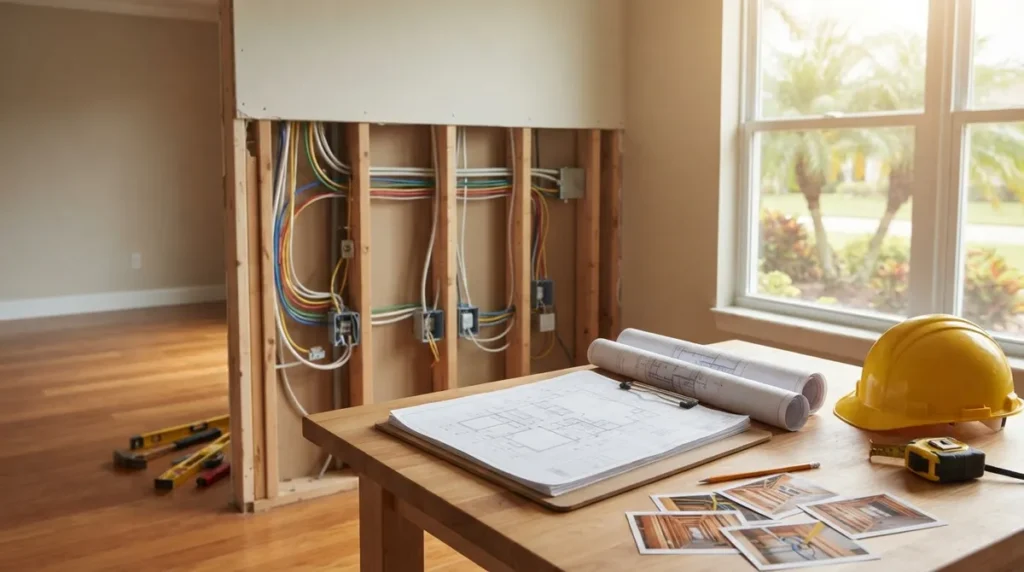
Key Takeaways
-
Act early: stop any unpermitted work, don't cover or alter evidence, and respond to any notice or deadline in writing before the stated date.
-
Identify the building department with jurisdiction first, since city and county lines can be unclear, and request the local after-the-fact forms, fees, and inspection requirements in writing.
-
Most owners avoid demolition by legalizing as-built or after corrections, which requires documentation like as-built drawings, receipts, photos, and a Florida-licensed engineer's letter.
-
Ask inspectors what they need before opening walls; a few targeted access points plus photos and an engineer's field verification often suffice instead of a blanket demolition.
-
Expect an additional local penalty fee on top of regular permit fees, which is usually far cheaper than rebuilding the structure from scratch.
-
Missed deadlines and ignored notices are the main triggers that escalate a fixable permit problem into fines or demolition, while no outcome can be guaranteed in advance.
Finding out that something you built, bought, or inherited was never permitted can make your stomach drop. Maybe it's a lanai enclosure, a garage conversion, a new roof, or a kitchen remodel that a previous owner swore was "all handled." Then a code officer, an inspector, or a lender mentions the word that every owner dreads: demolition.
Here's the good news. Demolition is not automatically where this story ends. If you're asking, how do I avoid demolition of unpermitted work in Florida, the short answer is to act early, talk to the right building department, and prove the work meets the Florida Building Code. Plenty of unpermitted projects get legalized through an after-the-fact process, though no one can promise an approval in advance.
In this guide, we'll walk through what actually triggers removal orders, the steps that protect your work, what documents you'll need, and when it makes sense to bring in professionals. Whether you're a homeowner, a contractor, a solar company, or a real estate pro, you'll leave with a clear plan and a lot less dread.
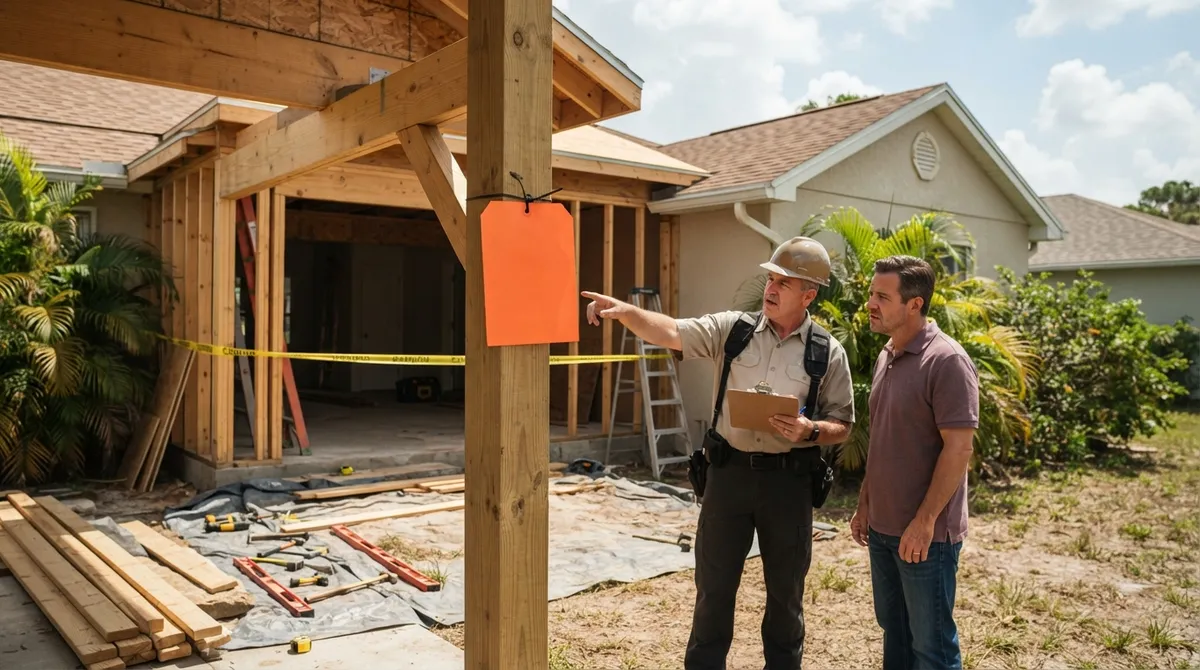
Why Unpermitted Work Becomes a Demolition Problem
Florida law is straightforward about the starting point. Under Florida Statutes §553.79(1)(a), a permit is generally required before covered construction, alteration, repair, or demolition begins. Local building departments administer those permits, which is why the rules, forms, and fees look different from one county or city to the next.
When work skips that step, the building department has no record that anyone checked the framing, wiring, plumbing, wind resistance, or structural connections. That's the real issue. The agency isn't trying to punish you; it's trying to confirm the work is safe and code-compliant.
Demolition tends to come up when:
- The work appears unsafe or structurally questionable
- The owner ignores official notices and deadlines
- The work violates zoning, setbacks, or flood-zone rules and can't be corrected
- Nobody can verify what's hidden behind walls or under finishes
- The owner never engages with the building department at all
Notice what's missing from that list: "the work was done without a permit." By itself, that's usually fixable. What escalates things is silence, deadlines missed, and work that can't be shown to be safe.
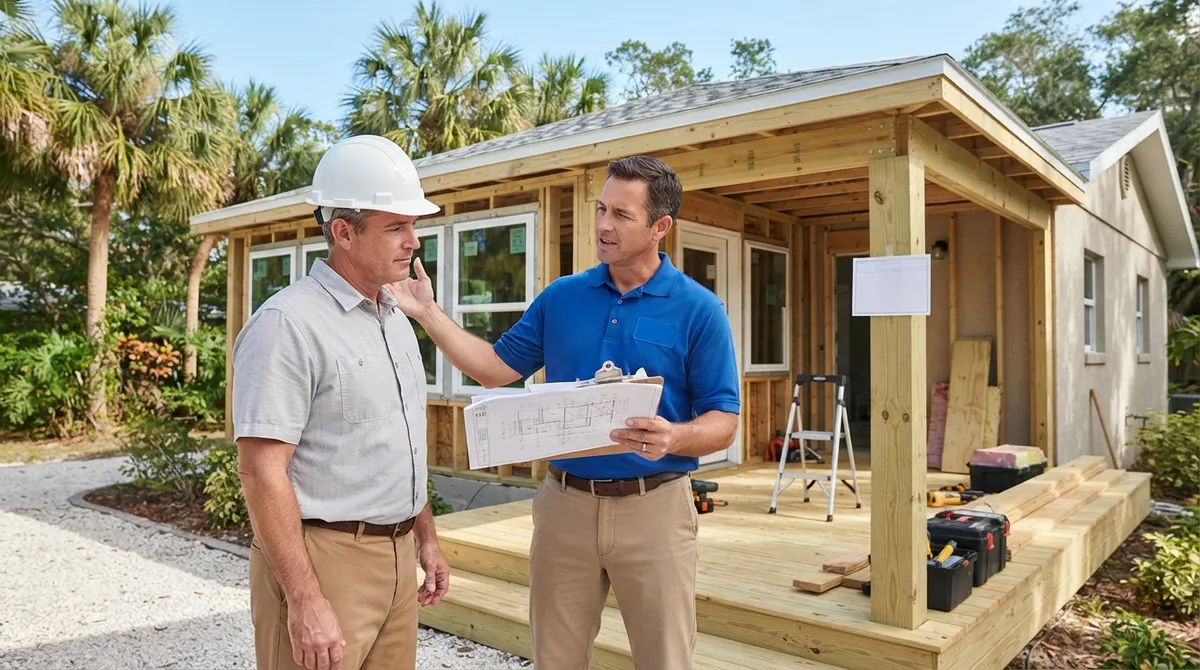
Demolition Isn't the Only Outcome (But There Are No Guarantees)
Let's be honest and upbeat at the same time. Demolition is not necessarily the first or only outcome, but no one can guarantee you'll avoid it. The result depends on your jurisdiction, the type of work, how well it was built, the documentation available, and what inspectors find.
Here's how the possible outcomes generally compare:
| Outcome | What It Means | When It Happens |
|---|---|---|
| Legalized as built | Permit issued after plans, inspections, and fees are completed | Work meets code and can be verified |
| Legalized with corrections | You fix deficiencies, then pass inspection | Minor to moderate code issues found |
| Partial removal | Only the non-compliant portion comes out | Part of the work can't be corrected or verified |
| Full removal | The entire unpermitted structure must be taken down | Work is unsafe, violates zoning, or can't be made compliant |
Most owners who engage early land in the first two rows. That's why timing matters so much.
Step-by-Step: What to Do If You Have Unpermitted Work
Think of this as your game plan. Take it one step at a time, and you'll be in much better shape than most people who find themselves in this situation.
- Stop the unpermitted portion of the work. If construction is still underway, pause it. Continuing to build makes verification harder and can make things look worse.
- Don't hide, cover, or alter anything. Resist the urge to drywall over, tear out, or "clean up" evidence before asking an inspector what's needed.
- Identify the building department with jurisdiction. This isn't always obvious near city lines. Our building department lookup tool can help you confirm who actually controls your property.
- Check for open cases or notices. Ask whether a code-enforcement case, stop-work order, or deadline is already in effect, and respond to any official notice by the date it states.
- Ask for the current after-the-fact process. Florida has no single statewide legalization procedure, so ask for the local forms, fees, and inspection requirements in writing.
- Gather documentation. Collect receipts, photos, contractor information, product data, and any earlier plans.
- Hire the right professionals. A licensed contractor and, where required, a Florida-licensed architect or engineer can document conditions and prepare corrective plans.
- Apply, inspect, and correct. Submit the permit application, schedule inspections, and fix anything the reviewer or inspector flags.
If you've already received a notice, our guide on what to do after a Florida code enforcement notice walks through the first moves in more detail.
Responding to Notices and Stop-Work Orders
If an official notice is already in your mailbox, take a deep breath. A notice is a conversation starter, not a verdict. But the clock on it is real.
Read the notice carefully and note three things: what the violation is, who issued it, and the compliance deadline. Then contact the issuing office promptly. Showing that you're actively working toward a permit, even before everything is approved, often changes how the case is handled.
A few friendly cautions:
- Never ignore a deadline. Missed deadlines are one of the fastest ways to move from a fixable problem to fines or enforcement escalation.
- Keep copies of every notice, email, and receipt.
- Ask whether a hearing date has been set and what extensions, if any, are possible.
- Don't continue work under a stop-work order unless the department says you may.
Facing a stop-work order specifically? See our walkthrough of how to clear a stop-work order in Florida, or if the situation is moving fast, our urgent permit rescue team is built for exactly this.
What Documents and Drawings You'll Typically Need
Building departments want to see that the work is code-compliant, and since they didn't watch it being built, you need to show them. The exact package varies by jurisdiction, but this table covers what's commonly requested.
| Document | Purpose | Who Usually Prepares It |
|---|---|---|
| Permit application describing existing work | Accurately states what was built | Owner, contractor, or permit professional |
| As-built drawings | Shows the work exactly as it exists today | Drafter, architect, or engineer |
| Site plan or survey | Confirms setbacks, lot coverage, and placement | Surveyor or site-plan drafter |
| Structural or engineer letter | Verifies framing, connections, and wind loads | Florida-licensed engineer |
| Product approvals and specs | Shows windows, doors, roofing, and fasteners meet code | Contractor or manufacturer |
| Photos and receipts | Supports timelines and materials used | Owner or contractor |
Two services do a lot of the heavy lifting here. As-built drawings document what exists, and a sealed engineer letter can give the reviewer confidence in what they can't see. If you're curious about the sealing question, our article on whether a sealed drawing is required for after-the-fact permits breaks it down.
Will Inspectors Make Me Open Up Walls?
This is one of the most common worries, and it's a fair one. The honest answer: sometimes.
Because concealed framing, wiring, plumbing, and other components may not be verifiable once they're covered, the authority may ask you to expose portions for inspection or provide other acceptable documentation. That could mean opening a small section of drywall, pulling back a ceiling panel, or providing an engineer's field verification.
The smartest approach is to ask the inspector what they need before you alter anything. Often a few strategic openings, combined with photos and an engineer's observations, are enough. Opening ten small access points is far better than a blanket demolition order.
You can learn more about what to expect in our piece on what happens during a Florida after-the-fact site inspection.
Fees and Penalties: What to Expect
Nobody loves talking about money, but it helps to go in with open eyes. Florida Building Code §109.4 allows local jurisdictions to charge an additional fee when work starts before a permit is issued. That fee is on top of your regular permit fees.
There is no single statewide figure. Amounts, fine structures, and enforcement consequences are set locally, so ask for the current written fee schedule from your building department. Our article on after-the-fact permit costs in Florida and the overview of the penalty for building without a permit in Florida can help you plan a realistic budget.
Here's a perspective that tends to cheer people up: paying double-fee penalties and engineering costs is almost always cheaper than rebuilding the structure from scratch.
Who Can Help You Avoid Demolition
You don't have to untangle this alone. Depending on your situation, a few different professionals can make a real difference.
- Licensed Florida contractor: Corrects deficiencies and performs any required work under permit.
- Florida-licensed engineer or architect: Documents conditions, verifies structural integrity, and prepares sealed corrective plans.
- Drafter: Produces accurate as-built and site drawings the reviewer can actually follow.
- Permitting consultant: Coordinates submissions, tracks reviews, and works through comments, though a consultant cannot guarantee approval or replace the authority having jurisdiction.
This is where having drafting, engineering, and permit filing under one roof pays off. At 1 Contractor Solutions, our in-house team handles after-the-fact and expired permits from first call to closeout, and our own engineer signs and seals the work. When a reviewer flags something, we fix it directly instead of waiting on an outside consultant to call back.
Tips for Different Readers
Every situation looks a little different. Here's how the advice shifts depending on who you are.
| If You Are... | Your Smartest First Move |
|---|---|
| A homeowner | Confirm your jurisdiction, then get as-built drawings before talking to the department |
| A general contractor | Document your scope and stop any unpermitted portion on the job immediately |
| A solar company | Gather installation records and structural data to support an after-the-fact filing |
| A realtor or investor | Run an open permit search before listing or closing |
| A trade professional | Outsource drafting and engineering so your project timeline stays intact |
If a closing is on the clock, you may also appreciate our resources on realtor and closing support and how permit holds can affect a sale.
Common Mistakes That Raise Demolition Risk
The good news is these are all avoidable:
- Waiting. Problems rarely shrink with time, and an unaddressed issue can turn into a formal case.
- Covering up evidence. Hiding work before an inspector sees it can undermine trust.
- Hiring an unlicensed fixer. This can create a second layer of violations.
- Guessing at the process. Rules vary by jurisdiction, so assumptions from another county can backfire.
- Submitting incomplete drawings. Weak plans cause rejection cycles that burn weeks.
For a deeper look at the demolition question itself, our article will you really have to demolish unpermitted work is a great companion read. And if you want to see how other owners have approached it, take a look at our guide to how to legalize unpermitted work in Florida.
Take the Next Step With Confidence
Avoiding demolition of unpermitted work in Florida comes down to a simple pattern: stop, don't hide anything, find the right building department, document the work, and apply through that department's after-the-fact process. Approval isn't automatic, and corrections may be needed, but owners who move early and bring solid documentation give themselves the best shot at keeping what they built.
You've already done the hardest part by reading up and taking the problem seriously. If you'd like a team that knows how to carry these projects through, get a free quote and tell us your address and your situation. We respond within 30 minutes, day or night, and we'll tell you which jurisdiction controls your project and what it will take to move forward.
Want to see how other customers feel about working with us? Visit us on Google — see what our 1 Contractor Solutions customers say. You can also follow us on LinkedIn or follow us on Facebook for more Florida permitting tips. For the statutory background, you can review Florida Statutes Chapter 553, Section 79 directly.
FAQs
Can I get an after-the-fact building permit in Florida?
In many cases, yes! Florida has no single statewide process, so you apply through the local building department that has jurisdiction over your property. They'll tell you which forms, drawings, fees, and inspections they require, and approval depends on the work meeting the Florida Building Code.
Will Florida make me demolish work that was done without a permit?
Not necessarily. Demolition isn't automatically the first or only outcome, since many projects are legalized as built or after corrections. That said, no one can guarantee you'll avoid it, because it depends on safety, code compliance, and what inspectors find.
What should I do if I receive a stop-work order or code-enforcement notice?
Stop the unpermitted portion of the work, read the notice carefully, and respond by the stated deadline. Contact the issuing building department, ask about the legalization process, and start gathering documents and drawings right away.
Will inspectors require me to open walls or ceilings?
Possibly. Because concealed framing, wiring, and plumbing can't be verified once covered, the inspector may ask you to expose small sections or provide acceptable documentation such as an engineer's field verification. Always ask the inspector what's needed before altering anything.
Can a permitting service help resolve unpermitted work?
Absolutely. A permitting team can coordinate drawings, filings, reviewer comments, and inspections, and an in-house engineer can seal corrective plans. While no service can guarantee approval or replace the building department, having experienced help makes the process smoother and faster.
We do this work every day across all 67 Florida counties. Call (866) 314-6931 and we will tell you what your situation actually requires — including when you do not need us.
Related services
Permit Facilitation & Filing
You have a crew scheduled, a client asking for dates, and a permit sitting somewhere in a queue you cannot see. We file it, w…
See the servicePlan Review Coordination
A permit in plan review is not one queue. On a commercial project it can be six queues, each with its own reviewer, its own c…
See the serviceReady to get your permit moving?
One call tells you which jurisdiction controls your project, what it will take, and what it will cost. Most of the time we can scope it on the phone.