
Blog
How Do You Clear a Stop Work Order in Florida?
Learn how to clear a stop work order in Florida: who issues it, the steps to release, appeal rules, and how a permitting pro can help.
Key Takeaways
-
A stop work order stays in effect until the issuing authority confirms release in writing or through its system, so never resume cited work just because corrections or a permit application are filed.
-
Identify who issued the order first: local building officials handle unpermitted work, code violations, and safety threats, while the state (DBPR, under Florida Statutes §489.127) handles unlicensed work.
-
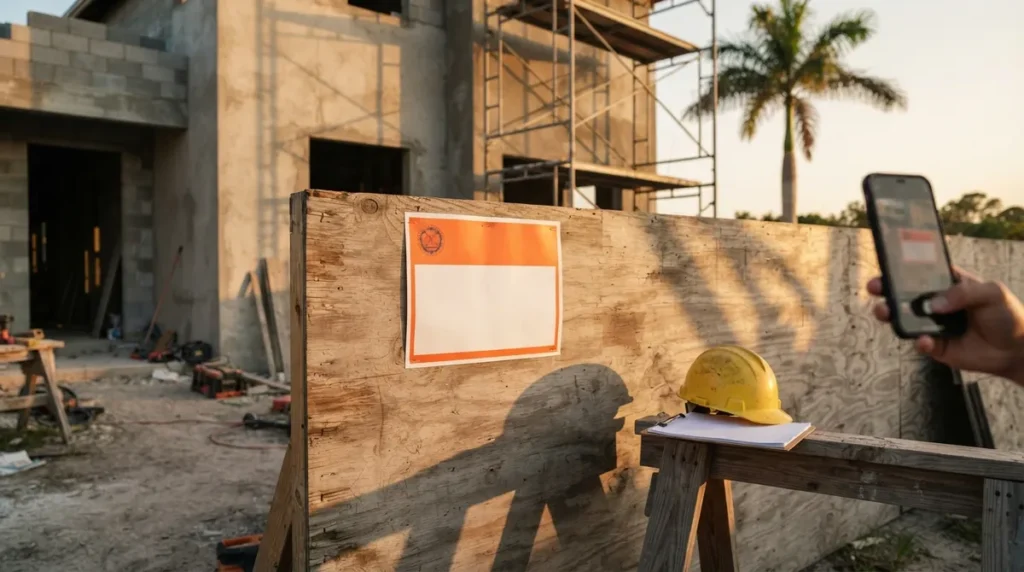
Read the order carefully for the stated reason, scope, and resumption conditions, and photograph the posted notice and site conditions immediately to preserve records.
-
Ask the issuing office whether any limited work, such as securing a hazard or weatherproofing, is permitted while the order is active, since this must be approved and cannot be assumed.
-
Check appeal language right away, because certain citations under §489.127 carry a 10-day window (excluding weekends and legal holidays) to request an administrative hearing.
Few things stop a project cold like a bright notice taped to your door or job-site fence. One minute the crew is framing, the next they're standing around with coffee, and you're staring at a piece of paper wondering what on earth just happened. Take a breath. It happens to good contractors and well-meaning homeowners all the time, and in most cases it's fixable.
Here's the short version: to clear a stop work order in Florida, you need to satisfy the specific conditions written in the order and get approval from the authority that issued it before any cited work resumes. That sounds simple, but the details change depending on who issued the order and why. A notice for unpermitted work looks very different from one for an unsafe condition or an unlicensed contractor.
In this friendly guide, we'll walk through who can issue these orders, what the typical path to release looks like, what not to do, and where a permitting professional fits in. Whether you're a general contractor, solar installer, realtor, or homeowner, you'll leave with a clear plan for your next steps.
What Is a Stop Work Order in Florida?
A stop work order is a written directive that tells you to halt some or all construction activity. It should identify the reason work must stop and the conditions under which the cited work may resume. That second part matters most, because the order itself tells you what needs to happen next.
Common triggers include:
- Work started without a required building permit
- Work that deviates from approved plans or violates code
- Conditions that threaten public safety or welfare
- Work performed by someone without a valid contractor license or registration
- Expired permits or missed inspections
Notice that a stop work order isn't a fine or a final judgment. Think of it as a hard pause button. The goal of the issuing authority is compliance, not punishment, and the path back to work usually runs straight through the permit and inspection process.

Who Can Issue a Stop Work Order?
Not every order comes from the same place, and that distinction shapes how you respond. Two main sources come up again and again in Florida.
| Issuing Authority | Typical Reason | Legal Basis | What It Usually Covers |
|---|---|---|---|
| Local building official or code enforcement | Unpermitted work, code violations, unsafe conditions, immediate threats to public safety | Florida Building Code and local ordinances | All or part of a project |
| State licensing enforcement (DBPR) | Probable cause that work requiring certification or registration is performed without a valid credential | Florida Statutes §489.127 | Work requiring contractor licensure |
| Private provider dispute with building official | Stop-work or permit-denial action involving a private provider | Florida Statutes §553.791 | Specific permitted work under private provider review |
Why does this matter? Because the first step in clearing any order is knowing exactly who issued it. A building department can release its own order. It cannot release a state-level order, and vice versa. If you're unsure which county or city controls your address, our building department lookup tool is a handy place to start.
Step One: Read the Order Carefully and Don't Panic
It's tempting to crumple the notice and start dialing. Resist that urge for about ten minutes and read every line. The order is your roadmap, and the answers are usually printed right there.
Look for these details:
- The issuing office and contact information. This tells you who can release the order.
- The stated reason. Is it a missing permit, a code issue, a safety concern, or a licensing problem?
- The scope. Does it cover the whole site or only one portion, like the electrical or the addition?
- The conditions for resumption. Many orders spell out what must be corrected, filed, or inspected.
- Any deadlines, hearing rights, or penalty language. Note dates carefully.
Take photos of the posted notice and the site conditions. Save the date and time you received it. Good records now will save headaches later, and they're exactly what a permitting professional will ask for.
Step Two: Contact the Issuing Office
Next, call or visit the office listed on the order. A friendly, cooperative tone goes a long way. Building officials and inspectors deal with frustrated people constantly, and the ones who calmly ask, "What do you need from me to get this lifted?" tend to get the clearest answers.
Ask these questions:
- What specifically must be corrected, filed, or inspected?
- Is a permit application, revised plan set, or engineering letter required?
- Are there fees or penalties tied to this order?
- Who confirms the release, and in what form (letter, system update, inspector sign-off)?
- Is any limited work, such as making the site safe, allowed while the order is active?
That last question is important. Sometimes weatherproofing or securing a hazard is permitted even during a stop work order, but only with approval. Never assume.
Step Three: Fix the Underlying Problem
Once you know the reason, you can tackle the root cause. The fix depends on what triggered the order. Here's how the most common scenarios typically play out.
| Trigger | Typical Resolution Path | Helpful Resources |
|---|---|---|
| Work without a permit | Apply for a permit, often with as-built drawings or engineering, then pass inspections | After-the-fact and expired permits |
| Expired permit | Reopen, renew, or reapply, then complete required inspections | How to close an expired permit |
| Code violation or non-compliant work | Correct the work, submit revised plans, schedule reinspection | Code compliance violations |
| Plans don't match what was built | Submit revisions or sealed as-built documentation | Revisions and resubmittals |
| Unsafe condition | Engineer evaluation, repair, and inspection before resuming | Engineering services |
| Unlicensed contractor | Resolve through the licensing authority; hire a properly licensed contractor | DBPR licensee processes |
In many cases, you'll need documents that the building department can actually review. That might include a site plan, structural details, or an engineer letter confirming the work meets code. A sealed engineer's evaluation often becomes the bridge between "it's already built" and "it's approved." If you're curious how that works, this walkthrough on stop work order after-the-fact help in Florida goes deeper.
Step Four: Get Permits, Plans, and Inspections in Order
After you understand the problem, you'll typically file or update the paperwork. This is where many people stall, because permit packages have to be complete, correctly formatted, and aligned with local requirements. A missing signature or mismatched detail can trigger another round of comments and add weeks.
A clean resolution package often includes:
- A completed permit application (new, after-the-fact, or renewal)
- Drawings or as-builts that reflect what actually exists on site
- Sealed structural or MEP documentation where required
- Proof of licensing and insurance for the contractor of record
- Payment of any applicable fees or penalties
Then comes the inspection phase. Inspectors may need to see exposed work, so avoid covering anything up until you've confirmed what they need to verify. If you're weighing the traditional route against a faster one, learn how a private provider compares to the building department, since private provider review can sometimes shorten the wait on plan review and inspections.
The Golden Rule: Don't Resume Work Until You Have the Release
This is the part we want to say gently but firmly: do not restart the cited work just because you filed a permit application or because you think the corrections look done. The order stays in effect until the authority that issued it confirms release.
Why so strict? Working during an active order can lead to additional penalties, escalated enforcement, and complications with insurance, lenders, and future sales. It can also undermine the cooperative relationship you're trying to build with the building official.
Instead, do this:
- Complete the required corrections and inspections.
- Get written or system-recorded confirmation that the order is released.
- Save a copy with your permit and inspection records.
- Brief your crew so everyone knows what's cleared and what isn't.
If the order covered only part of the project, ask for clarity on which tasks can continue and which must wait.
What About Appeals and Hearings?
Sometimes the best path is to dispute the order. Appeal and hearing rights vary by the type of order and the local jurisdiction, so there's no single universal rule.
A few facts worth knowing:
- Under Florida Statutes §489.127, certain citations carry a 10-day window, excluding weekends and legal holidays, to request an administrative hearing. That deadline should not be assumed to apply to every stop work order.
- For disputes involving a private provider under Florida Statutes §553.791, the local building official must be available to meet within two business days after specified stop-work or permit-denial actions. If it isn't resolved, the matter may go to a local board of appeals, where one exists.
- Local building departments often have their own appeal boards and timelines, which should be described in the order or the local code.
Because deadlines can be short, check the order for appeal language right away. If you're considering a challenge, consult a qualified professional or attorney familiar with Florida construction and code enforcement.
How Long Does It Take to Clear a Stop Work Order?
Everyone asks this, and the honest answer is: it depends. There's no statewide standard processing time or uniform fee for lifting these orders. Timelines, penalties, and release requirements are set by the applicable statute and the local authority.
Several things influence the pace:
- The reason for the order. A simple missing permit may move faster than a structural concern requiring engineering.
- Quality of your submission. Complete, accurate packages get through review faster.
- Local workload. Busy jurisdictions have longer queues. See how long a building permit takes in Florida for a sense of the variability.
- Inspection availability. Scheduling windows differ by county and city.
- Responsiveness to comments. Quick, well-prepared revisions keep things moving.
The upshot? The fastest route is a thorough one. Rushing in with an incomplete package usually costs more time than preparing it right the first time.
How a Permitting Professional Can Help
Let's be clear about what a permitting service can and can't do. No outside company can cancel an order or guarantee release. Only the authorized government official or body can lift it. What a good permitting team can do is shorten the path and take the stress off your plate.
That support often includes:
- Identifying the correct issuing authority and jurisdiction
- Reading the order and mapping out exactly what must be resolved
- Preparing plans, as-builts, and sealed engineering documents
- Filing permit applications and tracking them through review
- Working reviewer comments and handling revisions
- Coordinating inspections through closeout
At 1 Contractor Solutions, we act as Florida's outsourced permitting department. Because our drafting and engineering happen in house, with our own engineer sealing the work, reviewer comments get fixed fast instead of waiting on an outside consultant. If you're in the middle of a crisis, our urgent permit rescue service is built for exactly this situation, and you can follow us on LinkedIn for more practical Florida permitting tips.
Tips for Different Readers
General contractors: Document every change from approved plans and keep inspection logs current. Our general contractor support keeps jobs moving when paperwork gets in the way.
Solar companies: Make sure structural and electrical documentation matches what was installed. Delays here ripple into utility interconnection, so fast resolution matters.
Realtors and investors: An open order or unpermitted work can derail a closing. Check the permit history early using the open permit search tool.
Homeowners: If a contractor skipped the permit, the responsibility often lands on you. Getting help sooner almost always beats waiting, and our homeowner resources explain your options in plain language.
What Happens If You Ignore a Stop Work Order?
We know ignoring a problem is tempting, especially when deadlines loom. But continuing to work after an order is posted tends to make everything harder. Possible consequences include additional fines, escalated code enforcement, difficulty closing out permits, and trouble when you sell, refinance, or file an insurance claim.
The kinder path, for your budget and your stress level, is to engage early, communicate cooperatively with the issuing office, and resolve the root issue properly. Building departments generally respond well to people who show up prepared and willing to comply.
Wrapping It Up
Clearing a stop work order in Florida comes down to a handful of steady moves: read the order, contact the issuing authority, correct the underlying problem, complete the required permits and inspections, and wait for confirmed release before resuming work. It's a process, not a mystery, and you don't have to navigate it alone.
If you're staring at a posted notice right now and want a team that handles the filing, the drawings, the engineering, and the follow-through, we'd love to help. Prefer to see how others feel about working with us? You can visit us on Google — 1 Contractor Solutions to read reviews, and you can follow us on Facebook for updates. When you're ready to get moving again, get a free quote and let's get your project back on track.
FAQs
How do I clear a stop work order in Florida?
Start by reading the written order and contacting the office that issued it. Then correct the cited problem, whether that means obtaining a permit, submitting revised plans, or passing inspections, and wait for official confirmation of release before resuming the cited work.
Can I keep working after I fix the violation but before the order is released?
No, and this one is worth being careful about. The order stays active until the issuing authority confirms release, so resuming early can bring additional penalties. Always get written or system-recorded confirmation first.
Who can issue a stop work order on a Florida construction project?
Local building officials and code enforcement offices can issue them for unpermitted work, code violations, or safety threats. The state can also issue one under Florida Statutes §489.127 when there is probable cause that work requiring a contractor credential is being done without a valid one.
Can I appeal a Florida stop work order?
Often yes, but the process depends on the type of order and the local jurisdiction. For certain citations under §489.127, you have 10 days, excluding weekends and legal holidays, to request an administrative hearing, though that deadline isn't universal, so check your order right away.
Can a permitting service help resolve a stop work order?
Absolutely. A permitting team can review the order, prepare plans and engineering, file applications, coordinate inspections, and track everything to completion. They can't cancel the order or guarantee release, since only the issuing authority can do that.
We do this work every day across all 67 Florida counties. Call (866) 314-6931 and we will tell you what your situation actually requires — including when you do not need us.
Related services
Permit Facilitation & Filing
You have a crew scheduled, a client asking for dates, and a permit sitting somewhere in a queue you cannot see. We file it, w…
See the servicePlan Review Coordination
A permit in plan review is not one queue. On a commercial project it can be six queues, each with its own reviewer, its own c…
See the serviceReady to get your permit moving?
One call tells you which jurisdiction controls your project, what it will take, and what it will cost. Most of the time we can scope it on the phone.